Exploring Rome in just one day might feel like an ambitious challenge, but with a well-planned itinerary you can experience many of the best places in Rome, from ancient ruins to elegant squares and panoramic terraces. This guide gathers the top things to do in Rome, offering a fluid and discursive narrative that helps you understand not only what to see in Rome, but also how to move through the city in the smartest and most enjoyable way. Whether you’re interested in history, food, architecture or simply capturing unforgettable views, Rome rewards every step with something extraordinary.
- 1 Why Rome is the perfect city for a one-day adventure
- 2 Rome in one day itinerary
-
3
What to see in Rome in one day: the essential stops
- 3.1 Colosseum and Roman Forum: walking through ancient Rome
- 3.2 Piazza Venezia and the Altar of the Fatherland
- 3.3 Pantheon: the best-preserved temple of ancient Rome
- 3.4 Trevi Fountain and the ritual of the coin
- 3.5 Piazza di Spagna and the Spanish Steps
- 3.6 Piazza Navona: baroque elegance in the heart of the city
- 4 Iconic places to see in Rome for first-time visitors
- 5 Where to go in Rome for great views
- 6 How to reach Rome comfortably with Italo
Why Rome is the perfect city for a one-day adventure
Rome is a city like no other—compact yet overflowing with wonders. Its historical centre is a treasure chest of archaeological sites, Renaissance palaces, monumental fountains and shaded piazzas. Everything is close enough to explore by foot, allowing you to enjoy a full immersion even with limited time.

A timeless mix of history, food and unforgettable views
What makes Rome unique is its ability to blend millennia of history with everyday life. As you wander the streets, you shift effortlessly between the ancient world, the Baroque city of popes and artists, and the Rome of trattorias, cafés and bustling markets. Roman cuisine becomes part of the experience too: a quick supplì, a scoop of gelato, or a plate of cacio e pepe turns each break into a small celebration. It’s this balance of culture, flavour and atmosphere that makes Rome a perfect destination—even for a single day.
Rome in one day itinerary
Before diving into the list of essential stops, here is a detailed, hour-by-hour itinerary beginning at Roma Termini, the city’s main railway station. This route minimizes transfers and maximizes your time at the most important best Rome attractions.
| Time | Activity | Location / Notes |
| 08:00 | Start at Roma Termini | Grab a quick espresso or cornetto. |
| 08:15 – 08:30 | Walk or take Metro Line B to the Colosseum | 20-min walk or 5-min metro ride (Termini → Colosseo). |
| 08:30 – 09:30 | Explore the Colosseum (exterior & viewpoints) | Stunning morning light for photos. |
| 09:30 – 10:15 | Walk along Via dei Fori Imperiali | Admire panoramic views of ancient Rome. |
| 10:15 – 10:45 | Piazza Venezia & Altar of the Fatherland | Optional terrace climb for scenery. |
| 10:45 – 11:00 | Walk to the Pantheon | Through charming Renaissance alleys. |
| 11:00 – 11:30 | Visit the Pantheon | One of Rome’s best-preserved monuments. |
| 11:30 – 12:00 | Walk to Trevi Fountain | Enjoy classic Rome atmosphere. |
| 12:00 – 12:20 | Trevi Fountain & coin toss | A timeless ritual. |
| 12:20 – 13:00 | Walk to Piazza di Spagna | Good spot for lunch or gelato. |
| 13:00 – 13:45 | Spanish Steps | Relax and take in the views. |
| 13:45 – 14:15 | Metro A to Ottaviano | Quick transfer to Vatican area. |
| 14:15 – 15:00 | Explore St. Peter’s Square | Majestic architecture all around. |
| 15:00 – 15:30 | Walk to Castel Sant’Angelo | Scenic riverside path. |
| 15:30 – 16:15 | Castel Sant’Angelo (exterior) | Great photo opportunities. |
| 16:15 – 17:00 | Walk to Piazza Navona | Cross Ponte Sant’Angelo into the historic centre. |
| 17:00 – 17:30 | Piazza Navona | Baroque fountains and lively cafés. |
| 17:30 – 18:00 | Cross Ponte Sisto into Trastevere | Enter a charming evening atmosphere. |
| 18:00 – 20:00 | Dinner in Trastevere | Ideal for Roman cuisine. |
| 20:00 – 20:30 | Bus H back to Roma Termini | Direct, fast connection. |
From Roma Termini, head straight to the Colosseum to begin your day with Rome’s most iconic landmark. Walking along Via dei Fori Imperiali, the ancient city unfolds on both sides—once the beating heart of the Roman Empire. Your morning continues toward Piazza Venezia and the towering Altar of the Fatherland before entering the winding streets that lead to the Pantheon. This is where the city’s rhythm changes, with cafés, artisans and music filling the air.
The Trevi Fountain and Piazza di Spagna add the quintessential Baroque touch before you move to the Vatican area for the monumental embrace of St. Peter’s Square. The afternoon flows into the riverside walk toward Castel Sant’Angelo and the elegance of Piazza Navona. Finally, cross into Trastevere, one of Rome’s most atmospheric quarters, where your day ends with dinner in lantern-lit alleys and a relaxing return to Termini.
What to see in Rome in one day: the essential stops
Following the itinerary, these are the core attractions that define the city and belong on any list of things to do in Rome.
Colosseum and Roman Forum: walking through ancient Rome
Standing before the Colosseum is like confronting history in its most monumental form. Completed in 80 AD, this vast amphitheatre once hosted gladiatorial games, public spectacles and celebrations that drew tens of thousands of spectators. Its elliptical structure, still remarkably preserved, offers a glimpse into the architectural ingenuity of the Roman Empire.
Just a short walk away lies the Roman Forum, which unfolds like an open-air encyclopedia of ancient civilisation. This was the epicentre of political, religious and social life in Rome—a place where senators debated, merchants traded, and triumphal processions celebrated the empire’s victories. As you wander among the remains of temples, basilicas and commemorative arches, you can trace the evolution of Roman society across the centuries.
Piazza Venezia and the Altar of the Fatherland
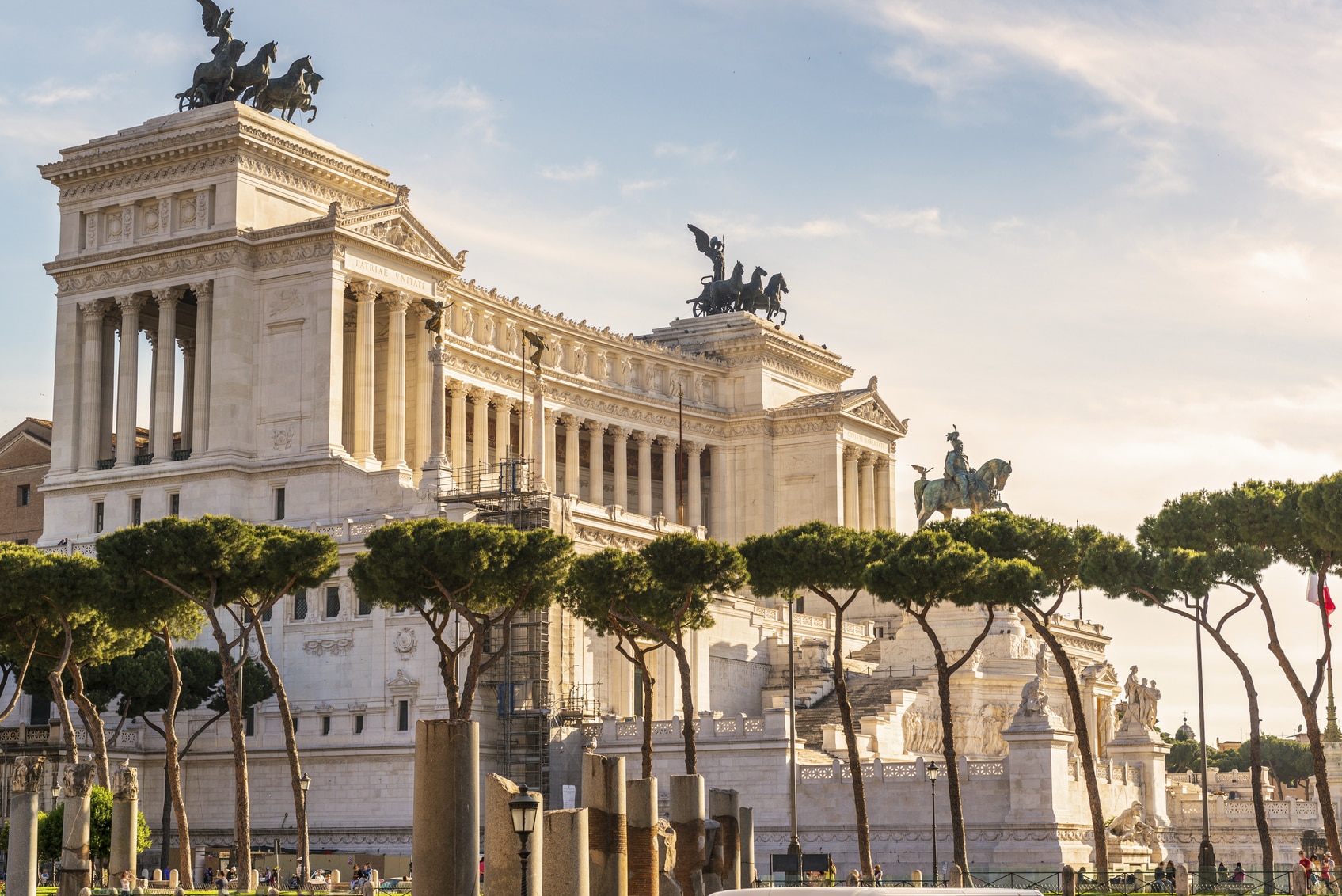
This monumental square marks one of the most important crossroads between ancient and modern Rome. Dominating the space is the Altar of the Fatherland—also known as the Vittoriano—a vast white marble monument dedicated to King Victor Emmanuel II, the first king of unified Italy. Completed in the early 20th century, it houses the Tomb of the Unknown Soldier and serves as a symbol of national identity.
The building’s grand staircases, Corinthian columns and bronze quadrigae make it one of the most striking architectural landmarks in the city. If you climb or take the elevator to the upper terraces, you’ll be rewarded with some of the finest panoramic views in Rome, stretching from the domes of the historic centre to the ruins along Via dei Fori Imperiali. It’s an exceptional spot for skyline photography and for appreciating how Rome’s many layers of history coexist in a single, breathtaking frame.
Pantheon: the best-preserved temple of ancient Rome
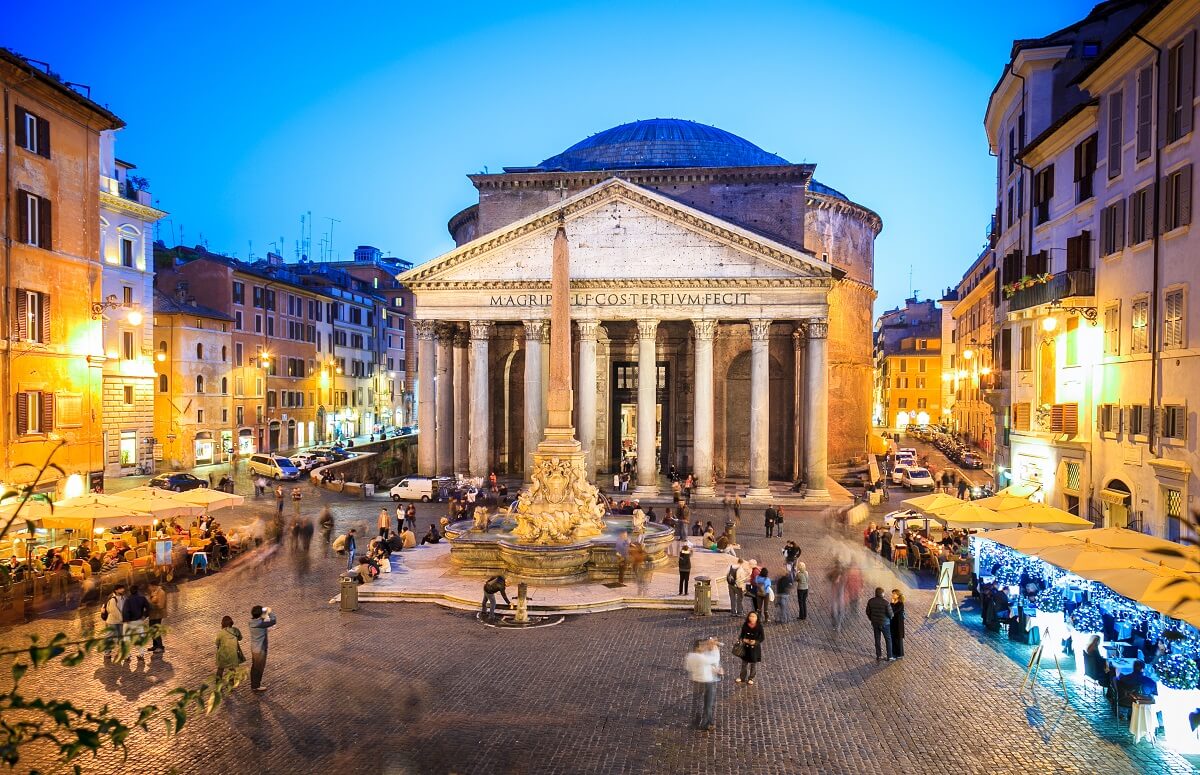
The Pantheon is widely regarded as the best-preserved monument of the Roman Empire—and stepping inside makes it easy to understand why. Originally built as a temple to all the gods and later transformed into a Christian basilica, it has survived nearly two millennia of history thanks to its exceptional engineering. Its vast dome, still the largest unreinforced concrete dome in the world, remains one of architecture’s greatest achievements.
At its centre, the famous oculus opens to the sky, allowing natural light—and occasionally rain—to fall directly into the space, creating a mesmerising play of shadows that shifts throughout the day. The perfect harmony of its proportions, the richness of its marble floors and columns, and the presence of Renaissance tombs—such as that of Raphael—give the Pantheon a solemn yet accessible elegance. It is a place where ancient mastery and everyday Roman life coexist, making it an unmissable highlight of any visit.
Trevi Fountain and the ritual of the coin
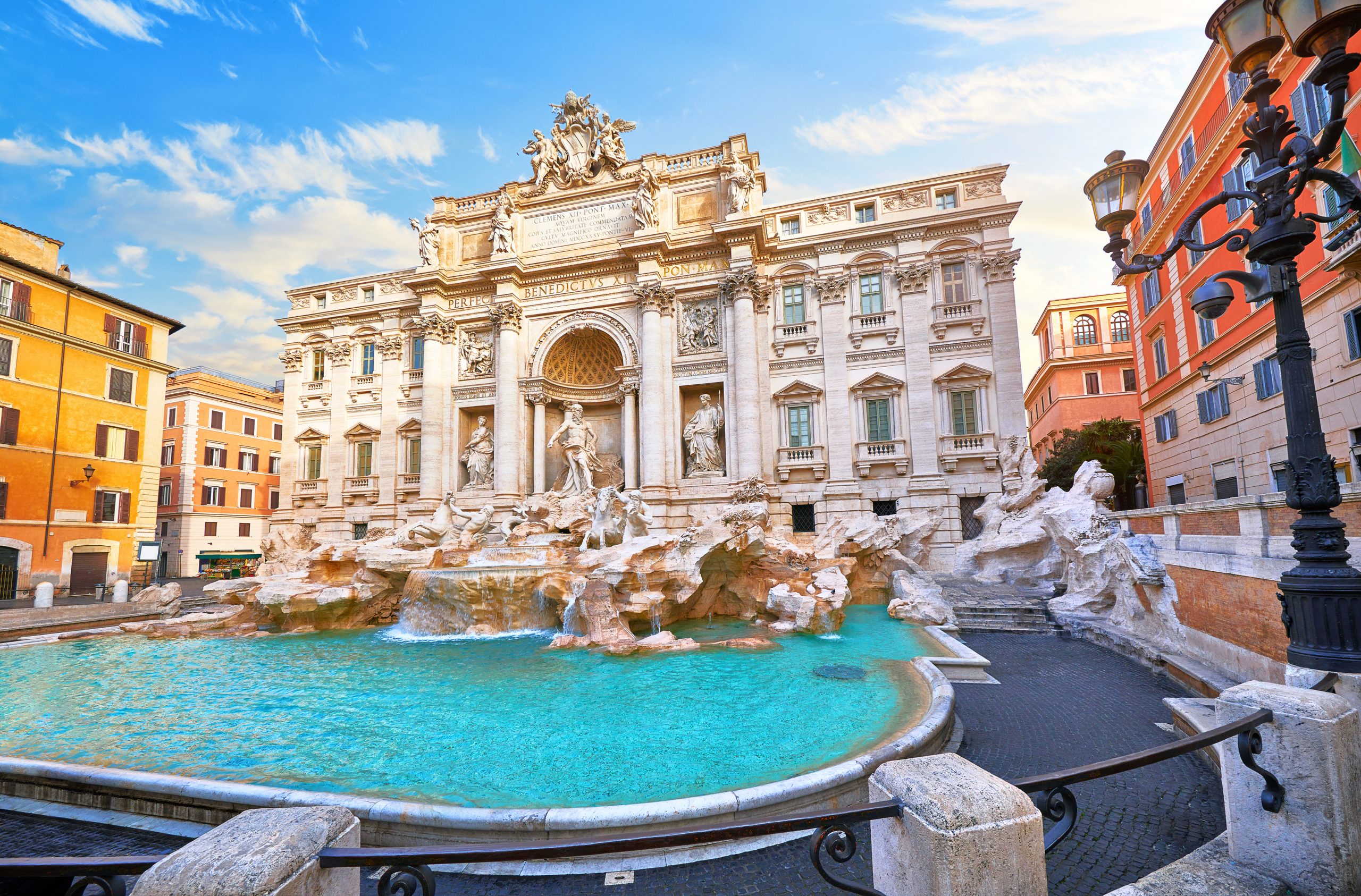
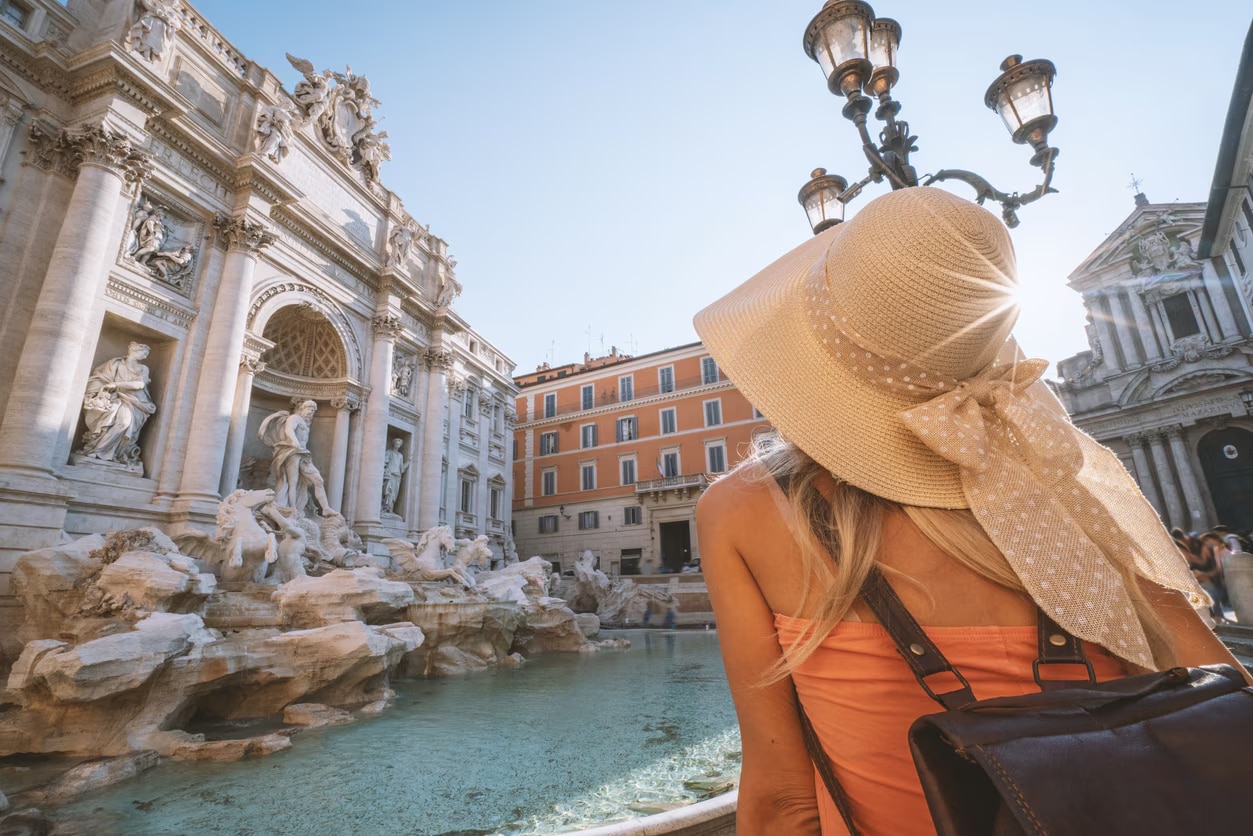
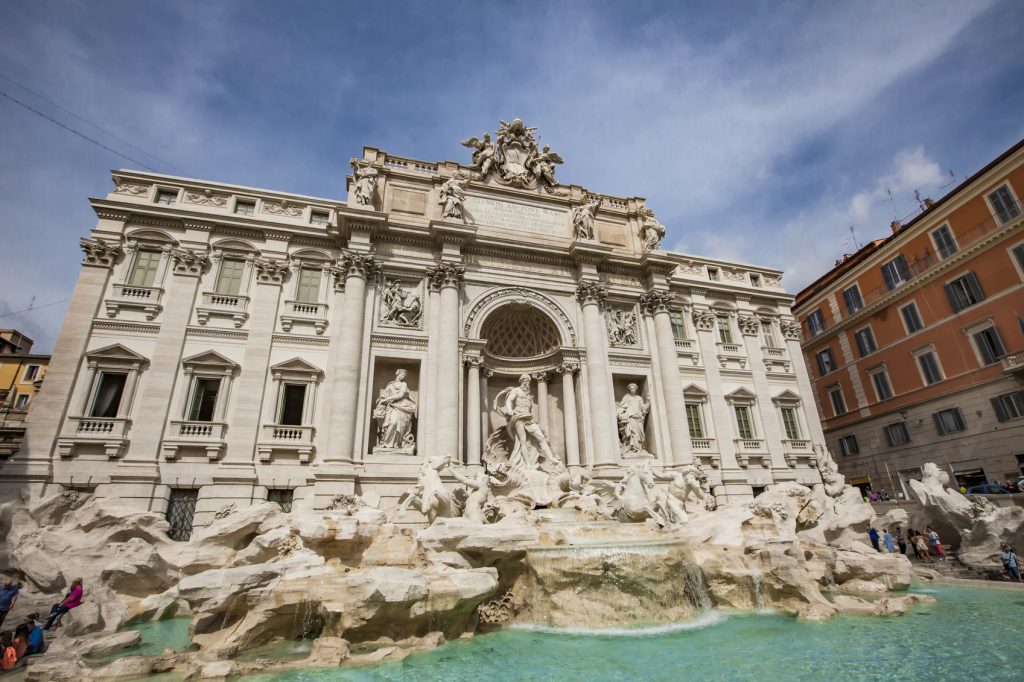
No visit to Rome is complete without experiencing the dramatic splendour of the Trevi Fountain, the city’s most iconic Baroque masterpiece. Designed by Nicola Salvi in the 18th century, the fountain depicts Oceanus emerging from a triumphal arch, surrounded by mythological figures and cascades of water that create a powerful theatrical effect. Its sound, its scale and its sculptural richness make it feel like an open-air stage set.
According to tradition, tossing a coin over your left shoulder with your right hand guarantees your return to Rome—a ritual embraced by travellers from every corner of the world. Beyond the superstition, the act has become a symbolic farewell and a promise to come back, adding a touch of emotion to your visit. The fountain is especially magical at night, when soft lighting enhances the marble details and transforms the entire square into one of the most atmospheric corners of the city.
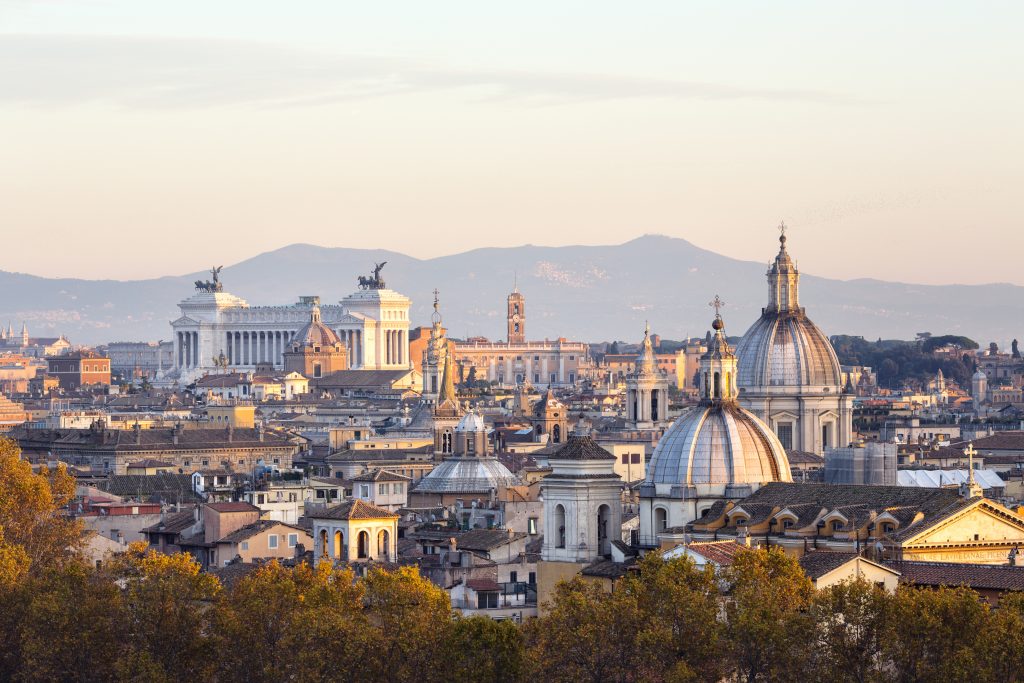
3 days in Rome: the ultimate itinerary
Maximize your Rome adventure in just 3 days with our essential guide. Explore iconic sights from the Colosseum to the Vatican, ensuring you experience the best of Italy’s eternal city.
Piazza di Spagna and the Spanish Steps
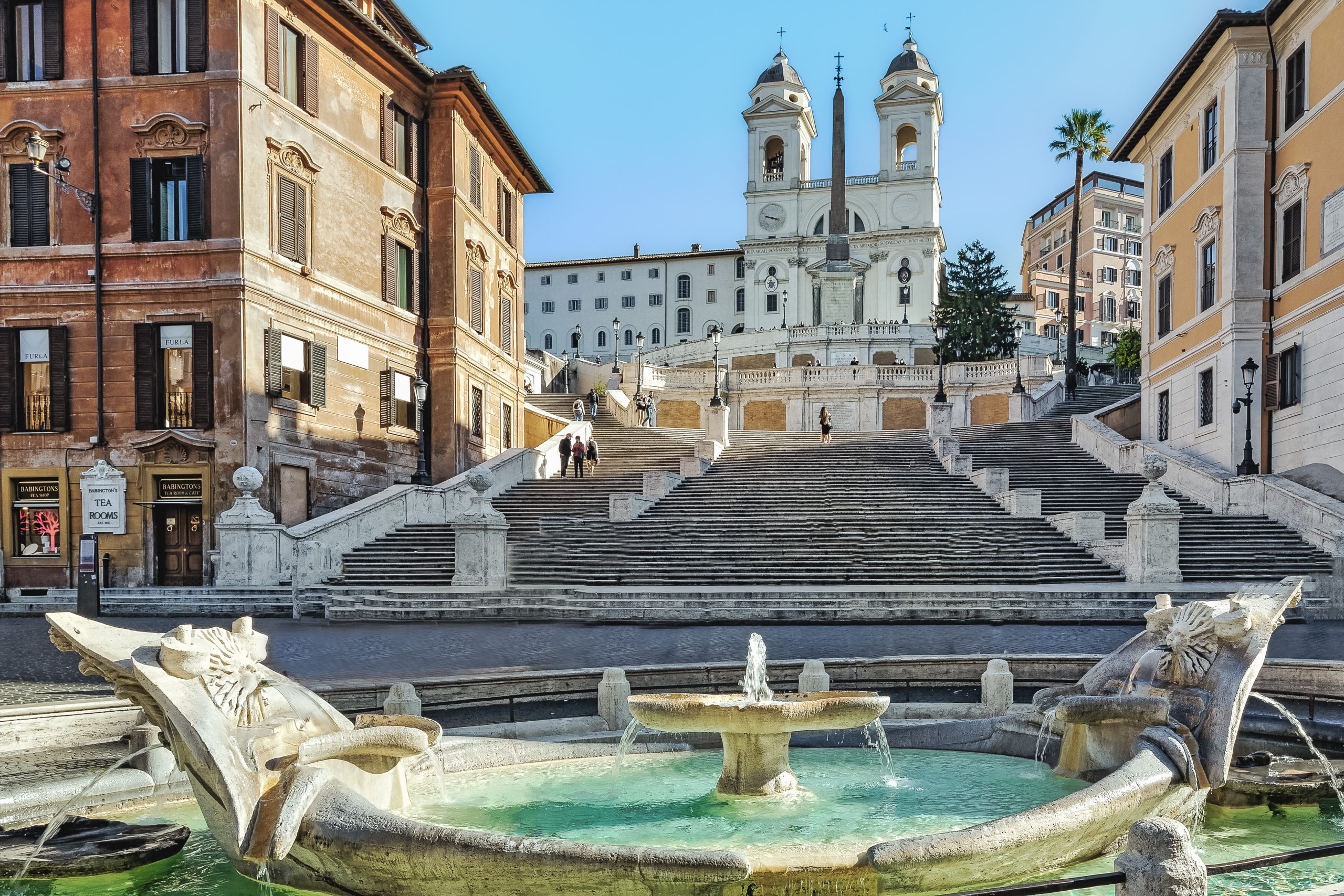
Elegant, vibrant and timeless, Piazza di Spagna is one of Rome’s most beloved meeting points. Dominated by the sweeping curve of the Spanish Steps, the square has long been associated with artists, poets and travellers who came here seeking inspiration. The 135-step staircase, completed in the 18th century, connects the square to the church of Trinità dei Monti, offering beautiful perspectives over Rome’s rooftops and the bustling streets below.
At the foot of the steps lies the Barcaccia Fountain, a charming Baroque creation by Pietro and Gian Lorenzo Bernini shaped like a half-sunken boat—an homage to the historic floods of the Tiber. Today, the area surrounding the square is filled with elegant boutiques, cafés and historic palaces, making it an ideal place for a refreshing gelato, a photo stop or a moment of rest before continuing your exploration of the city. Despite its popularity, Piazza di Spagna retains a special charm that captures the essence of Rome’s Dolce Vita.
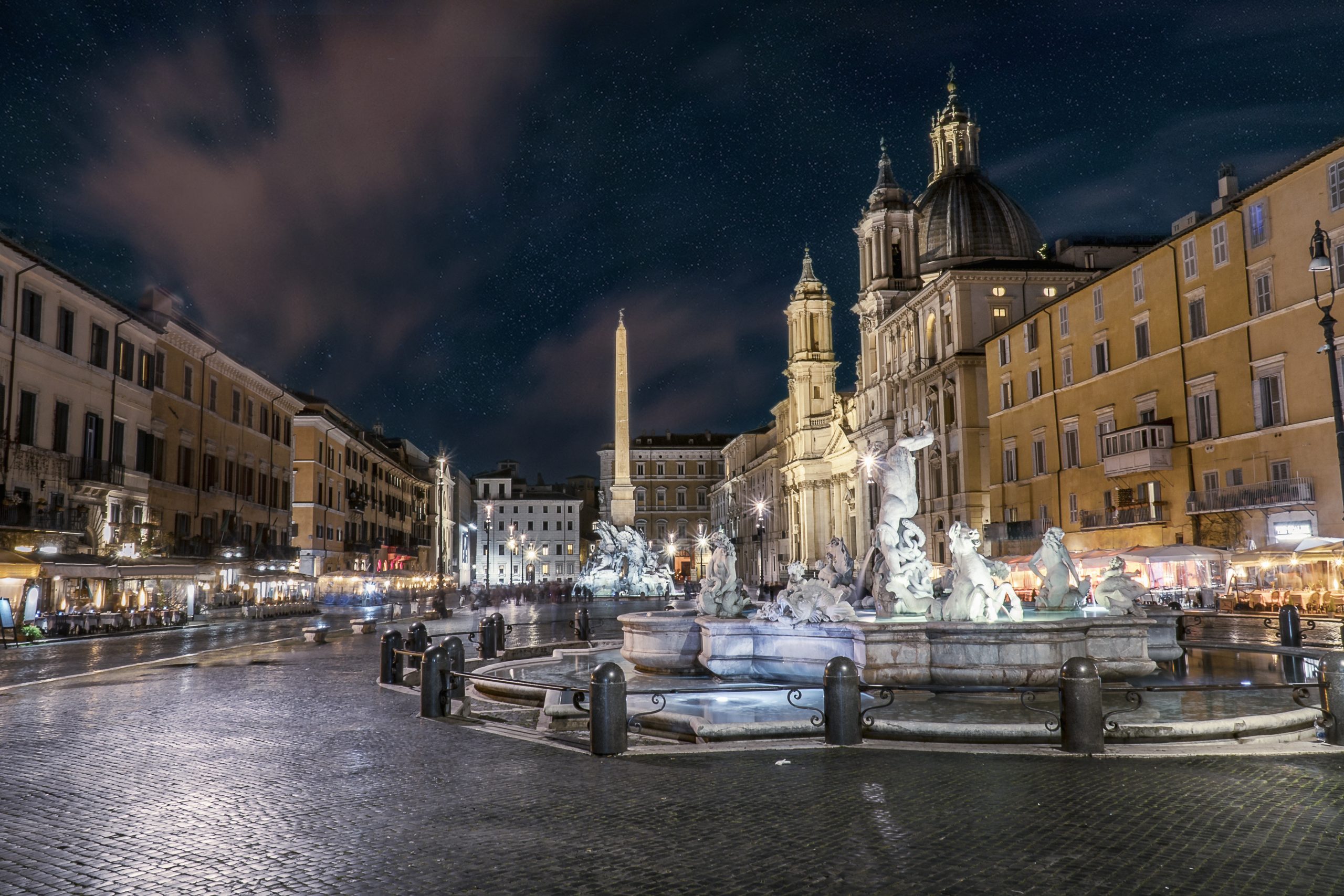
Piazza Navona is one of Rome’s most captivating squares, a masterpiece of Baroque urban design built on the elongated footprint of the ancient Stadium of Domitian. Its distinctive shape still mirrors the athletic arena that once hosted competitions and public events, creating a fascinating dialogue between Rome’s ancient past and its Baroque splendour.
At the centre stands Bernini’s Fountain of the Four Rivers, an extraordinary sculptural composition representing the great rivers of the continents known in the 17th century—the Nile, Danube, Ganges and Rio de la Plata—crowned by an obelisk that rises dramatically toward the sky. Two additional fountains, the Fontana del Moro and the Fontana del Nettuno, complete the square’s elegant symmetry. Surrounding cafés spill out onto the cobblestones, painters and street performers animate the space, and the façade of Sant’Agnese in Agone, designed by Borromini, adds a breathtaking architectural backdrop.
Lively from morning to night, Piazza Navona is the perfect place to experience Rome’s artistic energy, whether you stop for an espresso, browse local art or simply absorb the atmosphere of one of the city’s most theatrical settings.
Iconic places to see in Rome for first-time visitors
St. Peter’s Basilica and its vast square
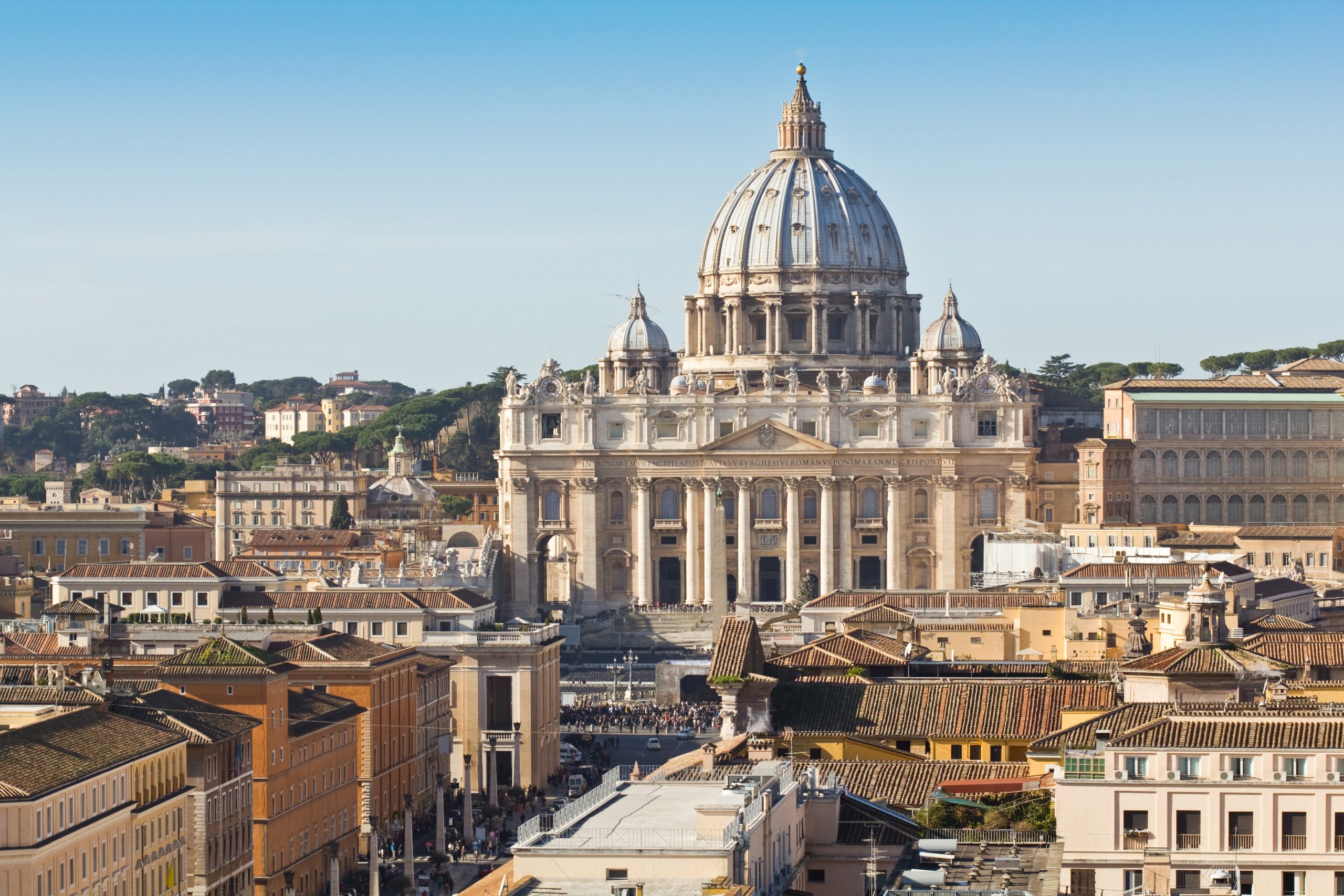
A masterpiece of architecture, spirituality and artistic ambition, St. Peter’s Square is one of the most awe-inspiring spaces in the world. Designed by Gian Lorenzo Bernini in the 17th century, its grand elliptical colonnades stretch out like open arms, welcoming travellers from every corner of the globe. The geometry is both symbolic and intentional: the square was conceived to embrace the faithful as they approached the heart of the Catholic world.
Rising at the far end of the piazza is the magnificent façade of St. Peter’s Basilica, one of the largest churches ever built and a triumph of Renaissance and Baroque artistry. Its interior contains masterpieces such as Michelangelo’s Pietà, Bernini’s soaring bronze baldachin and countless chapels adorned with marble, mosaics and centuries of devotion. Even from the outside, the dome—designed in part by Michelangelo—dominates Rome’s skyline and serves as one of its most recognisable symbols.
Whether you visit for its artistic treasures, its spiritual significance or simply to admire its overwhelming beauty, St. Peter’s Square offers an experience that feels both monumental and deeply moving.
Castel Sant’Angelo and the riverside walk
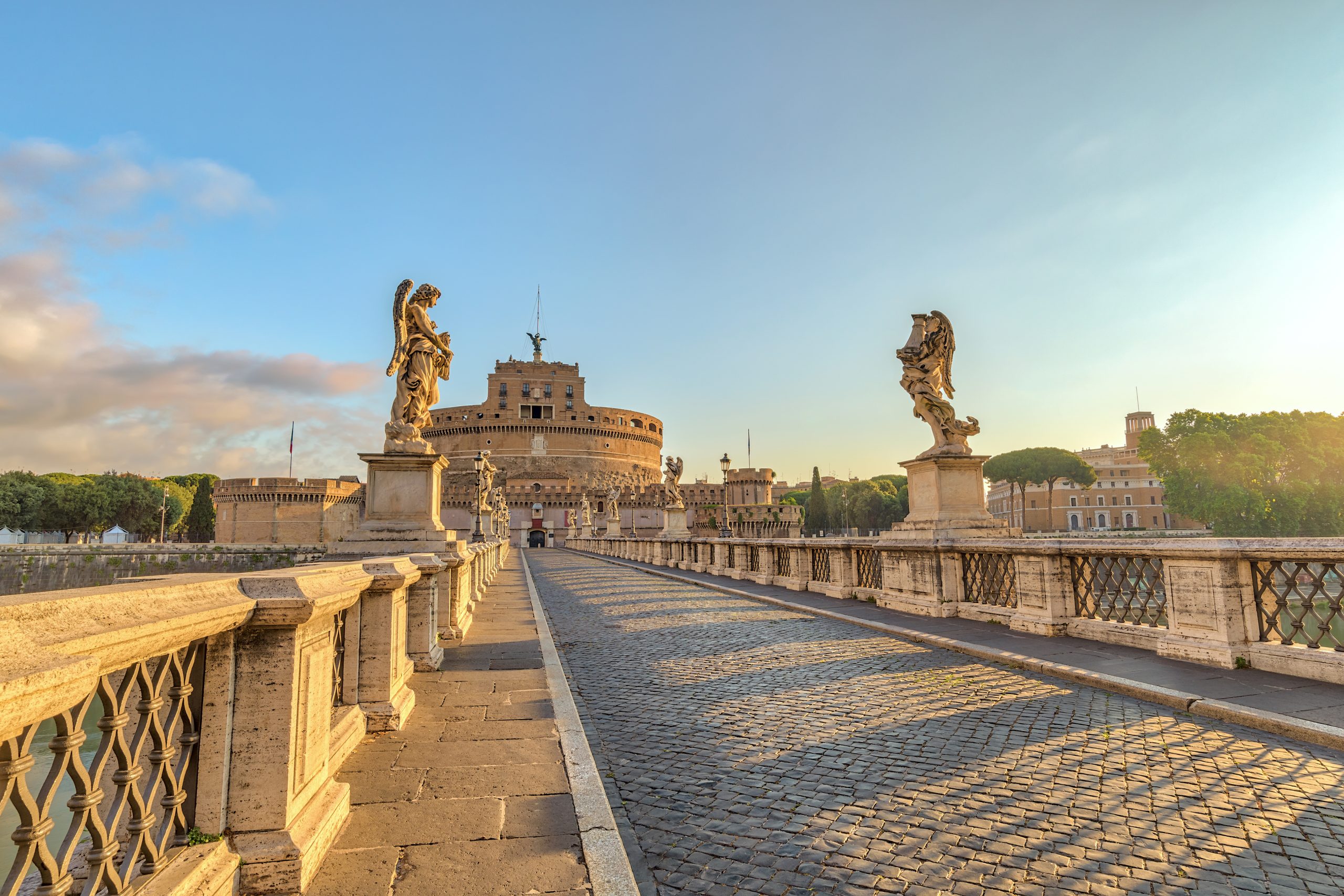
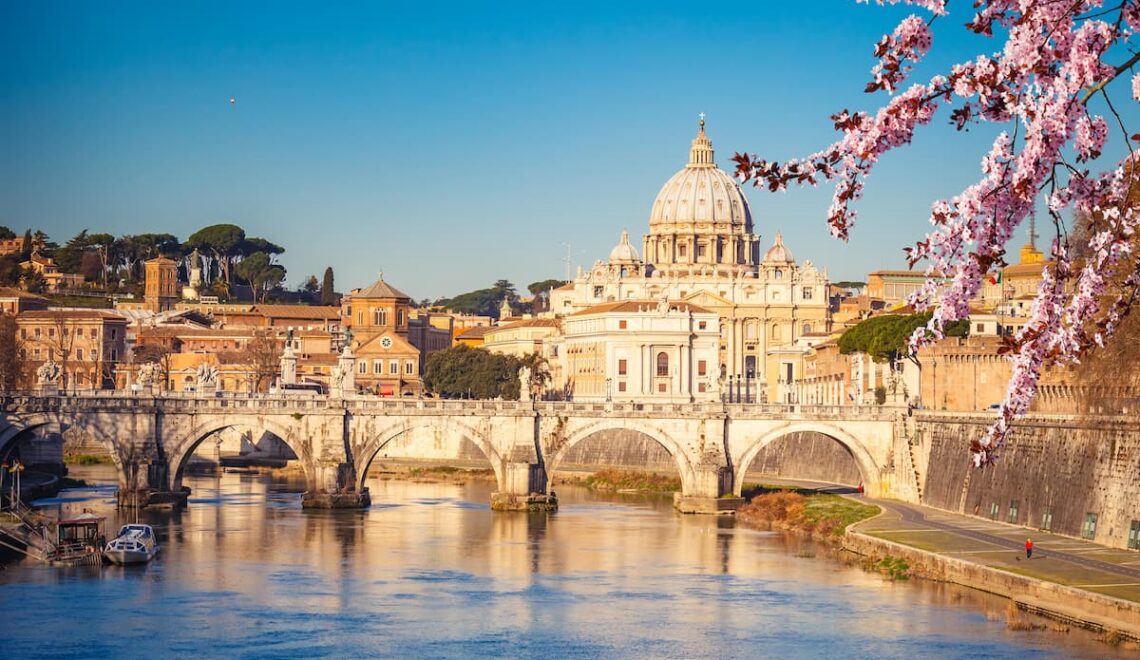
Originally commissioned by Emperor Hadrian as his monumental tomb in the 2nd century AD, Castel Sant’Angelo has undergone countless transformations over the centuries. From imperial mausoleum to military fortress, papal residence and even prison, it stands today as one of the most symbolic and multilayered landmarks in Rome. Its circular structure, connected to the Vatican by the elevated Passetto di Borgo, forms a striking silhouette along the river and embodies nearly two thousand years of Roman history.
The surrounding area is just as captivating. Crossing the elegant Ponte Sant’Angelo, adorned with Baroque angels sculpted by Bernini and his pupils, feels like stepping onto a theatrical stage where art and history blend seamlessly. From here, a leisurely stroll along the Tiber River offers peaceful views of domes, bridges and riverside paths—perfect for photography or a quiet break from the city’s lively streets. At sunset, when the monument glows with warm golden tones and the reflections shimmer on the water, Castel Sant’Angelo becomes one of the most atmospheric corners of Rome.
Where to go in Rome for great views
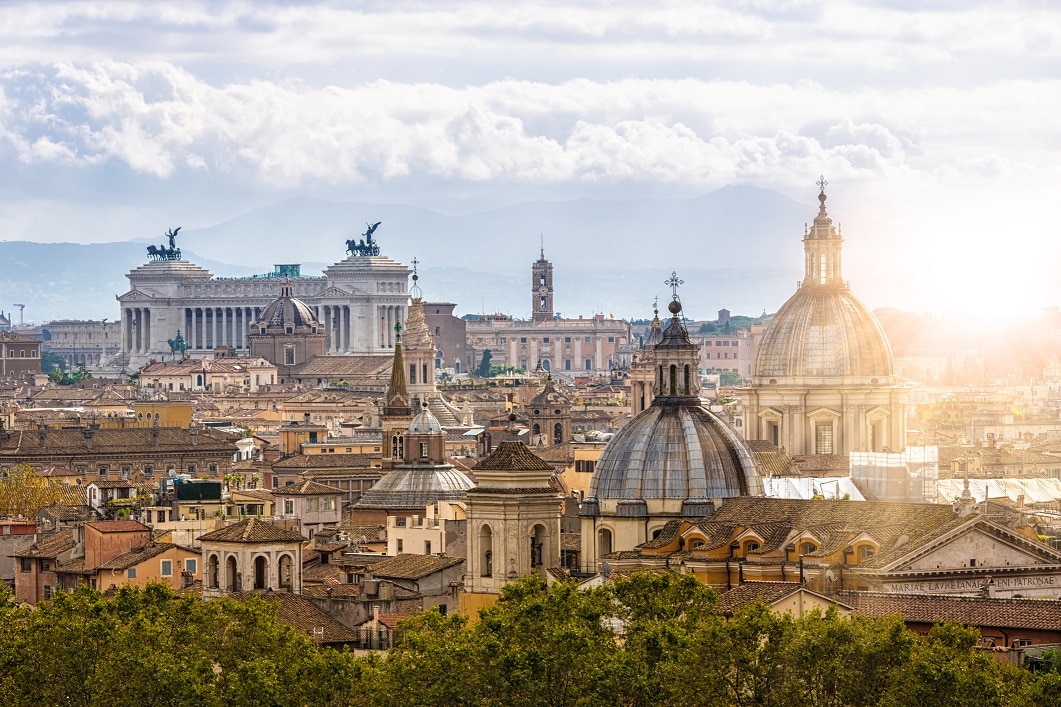
Pincio Terrace and Villa Borghese Gardens
Overlooking Piazza del Popolo, this terrace is one of the city’s favourite sunset spots, especially for its sweeping panorama of domes and bell towers.
The Orange Garden and the keyhole of the Knights of Malta
On the Aventine Hill, the Orange Garden offers serenity and enchanting views, while the famous keyhole frames St. Peter’s Dome in a perfect, unexpected composition.
How to reach Rome comfortably with Italo
Reaching the Eternal City is simple thanks to Italo’s high-speed trains, which connect Rome to major Italian destinations, such as Milan, Naples, Florence and Venice. Trains arrive directly at Roma Termini and Roma Tiburtina, both ideal starting points for your one-day itinerary. With fast travel times, comfortable onboard services and central arrival stations, Italo makes your Roman adventure smooth from the very first step.