Have you ever visited the Accademia Carrara? Or the Rota Botanical Garden? Join us as we explore Bergamo with a different kind of itinerary—one that starts in the lower city and gradually takes you all the way up to the highest point of town.
- 1 Bergamo, the city that rises vertically
- 2 Why visit Bergamo: between the Upper Town and the Lower Town
-
3
What to see in Bergamo
- 3.1 Piazza Vecchia and the heart of the Upper Town
- 3.2 Santa Maria Maggiore Basilica and the Colleoni Chapel
- 3.3 La Rocca and breathtaking views
- 3.4 Accademia Carrara and the GAMeC – Gallery of Modern and Contemporary Art
- 3.5 Lorenzo Rota Botanical Garden: a hidden corner of paradise
- 3.6 San Vigilio Funicular: the highest point of Bergamo Upper Town
- 4 What to do in Bergamo beyond the main attractions
- 5 What to eat in Bergamo
- 6 What to see around Bergamo
Bergamo, the city that rises vertically
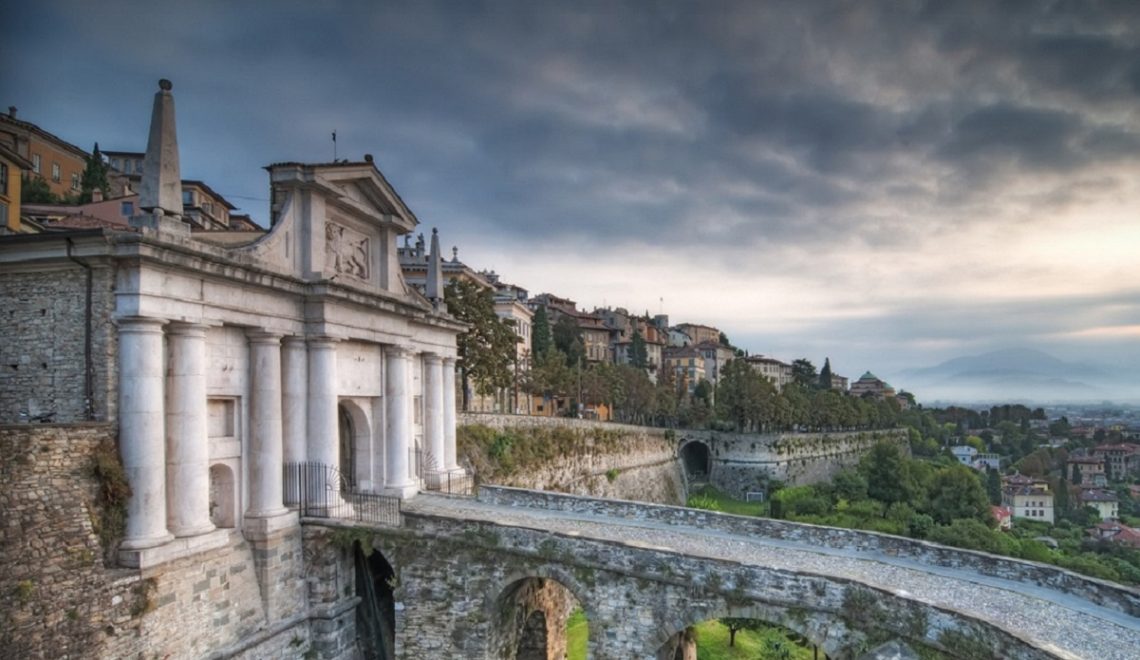
Visiting Bergamo is an experience that blends art, history and breathtaking views. Perched between the Orobie Alps and the Lombardy plain, the city stands out for its dual identity: Città Alta, enclosed within ancient Venetian walls, and Città Bassa, modern and vibrant. In this article, we’ll guide you through the city’s main highlights, its most authentic corners and a perfect itinerary, with tips on what to do, where to eat and how to get there comfortably by train with Italo.
Why visit Bergamo: between the Upper Town and the Lower Town
A journey through two complementary souls
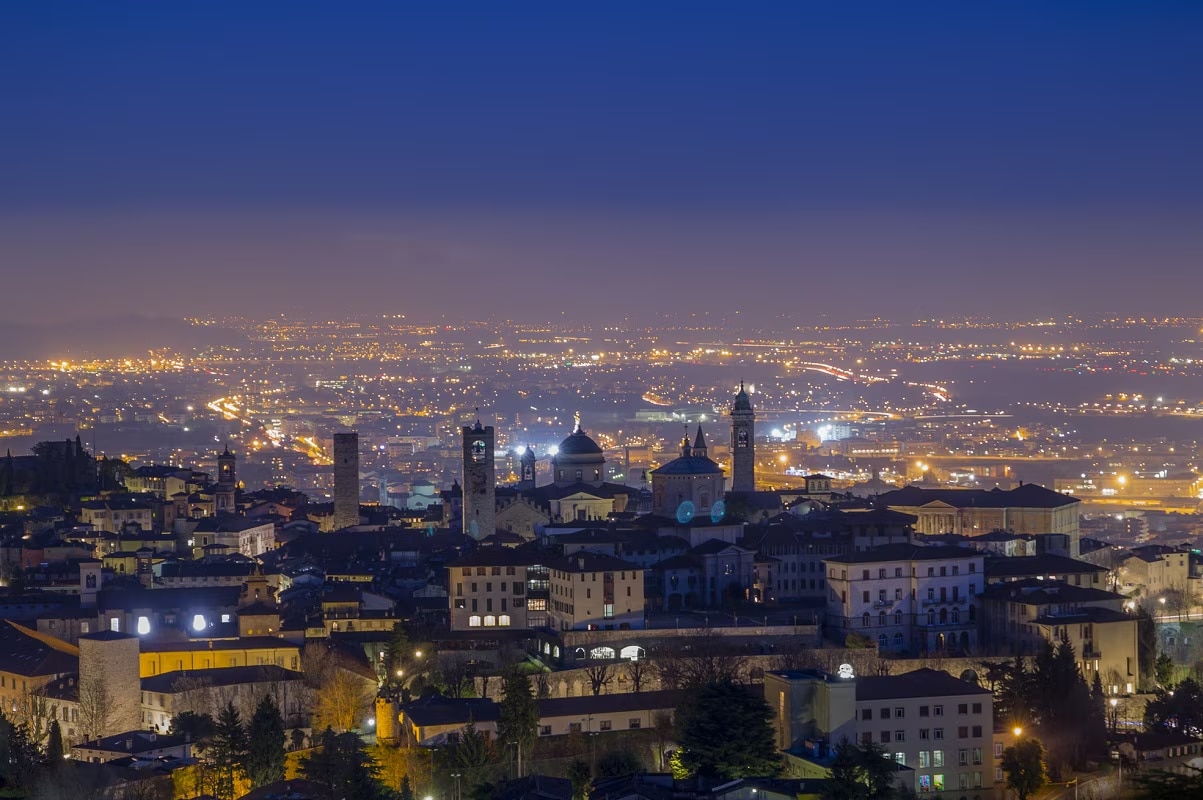
Bergamo is a city that develops “vertically”: the Lower Town is modern and dynamic, filled with shops, museums and cafés, while the Upper Town, perched on the hilltop, preserves an ancient and atmospheric historic core. The two areas are linked by the iconic funicular, a true city symbol that offers beautiful views during the ascent.
The unique atmosphere of a city suspended between history and modernity
Walking through Bergamo feels like living two eras in a single trip. The cobbled streets of the Upper Town tell centuries of history and Renaissance art, while the elegant avenues of the Lower Town reflect the city’s contemporary spirit. This dual identity is part of Bergamo’s charm—an elegant balance between past and present, culture and everyday life, making it a destination that feels rich, layered and deeply authentic.
What to see in Bergamo
Piazza Vecchia and the heart of the Upper Town
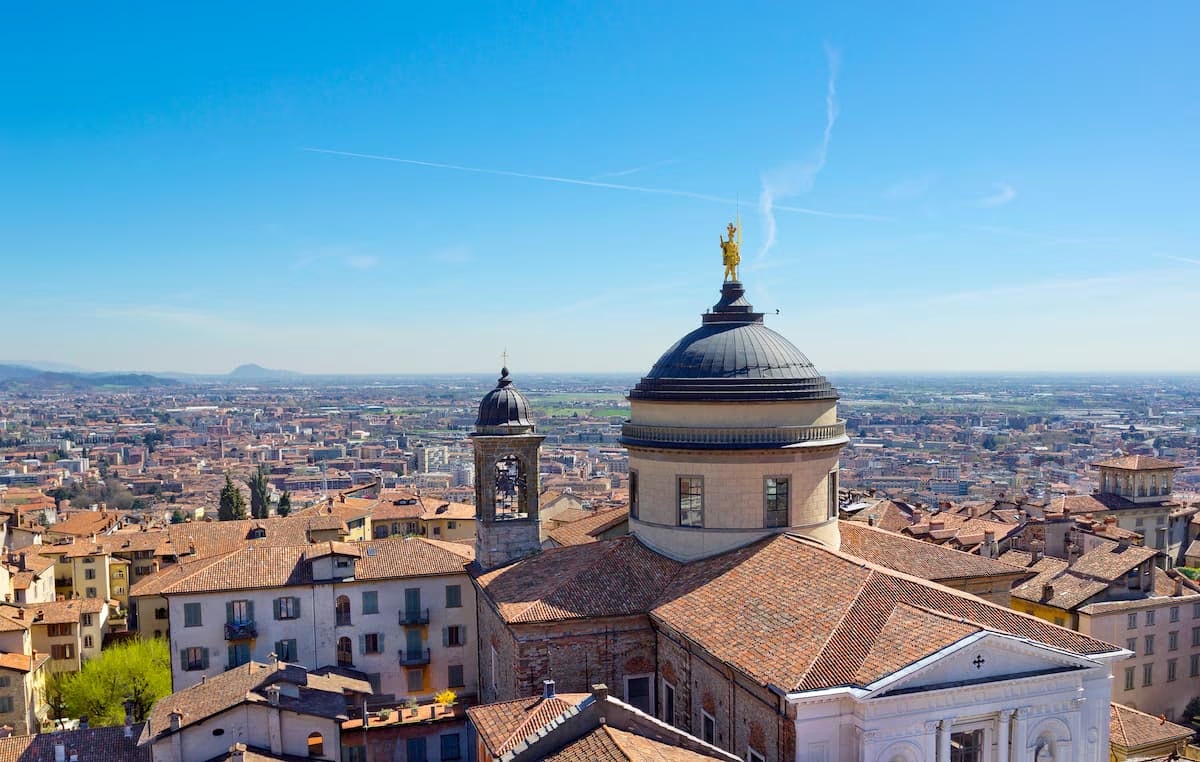
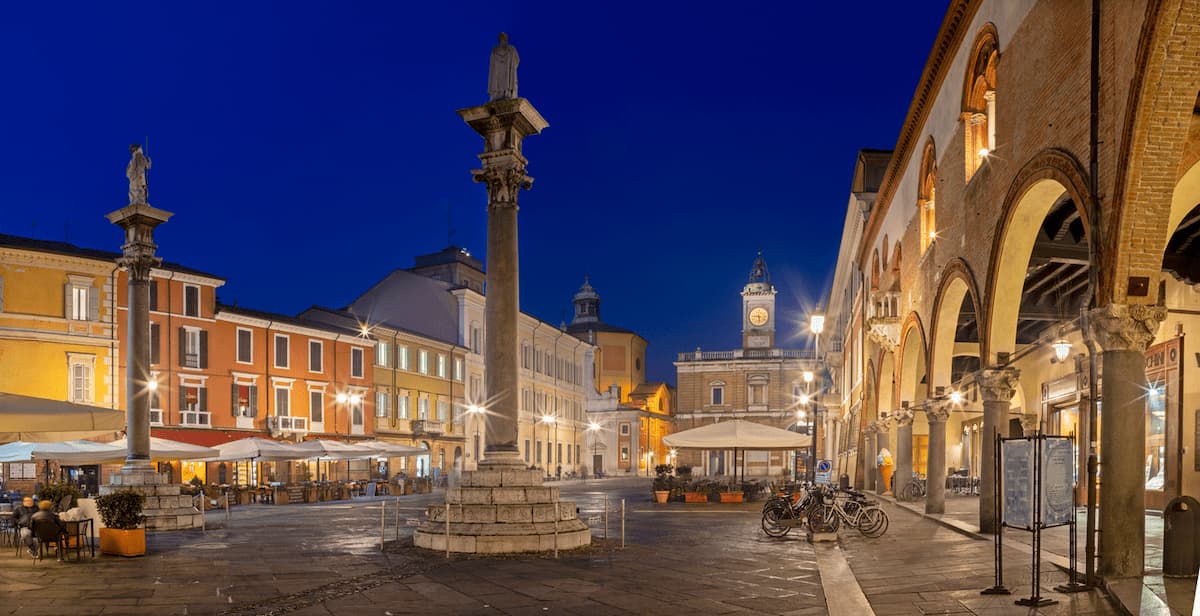
Piazza Vecchia is the city’s true living room, a place that captivates everyone who sets foot in it. Overlooking the square are the Palazzo della Ragione, the Civic Tower (Campanone) and the Angelo Mai Library, all safeguarding the essence of Bergamo’s medieval past. Every evening, the Campanone bell rings one hundred times, just as it did in Venetian times, when it marked the closing of the city gates—a ritual that still connects the present to centuries of history.
Santa Maria Maggiore Basilica and the Colleoni Chapel
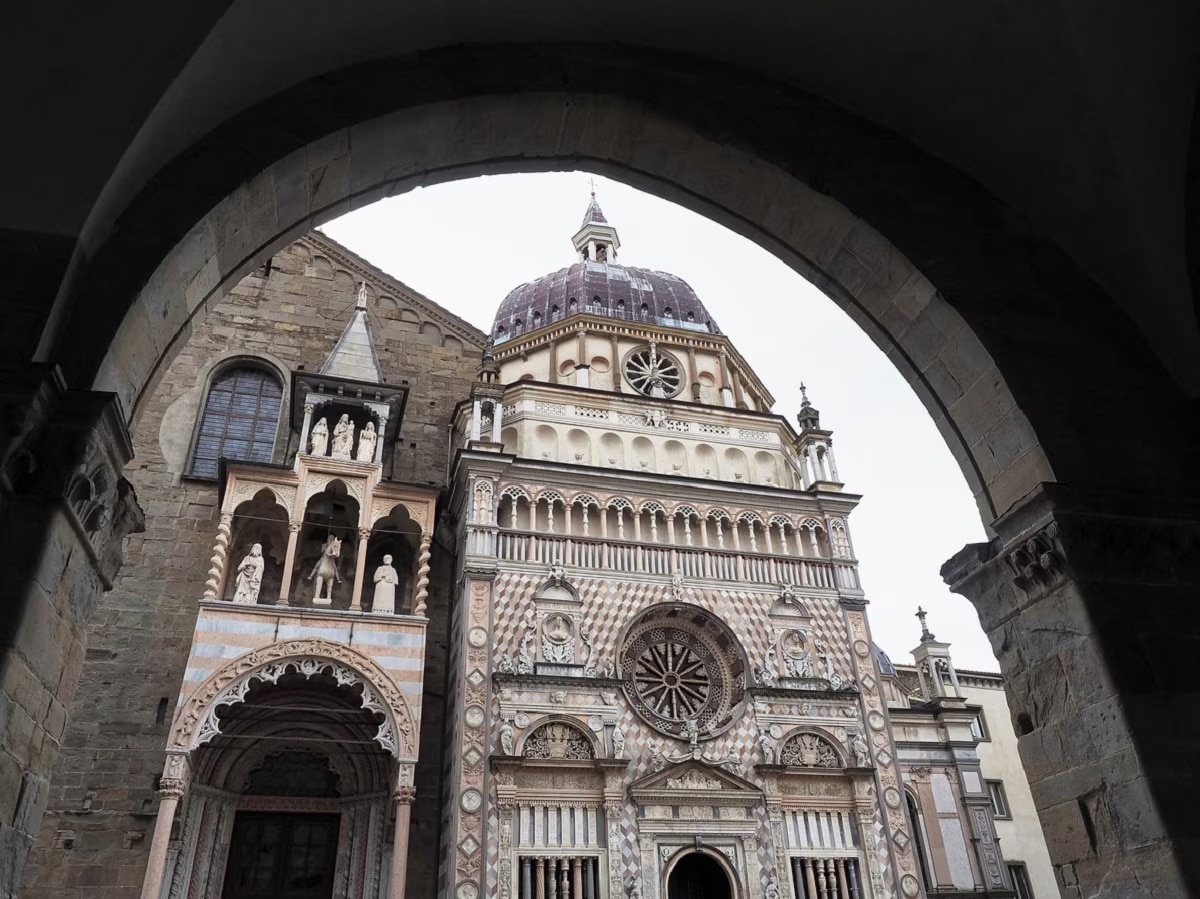
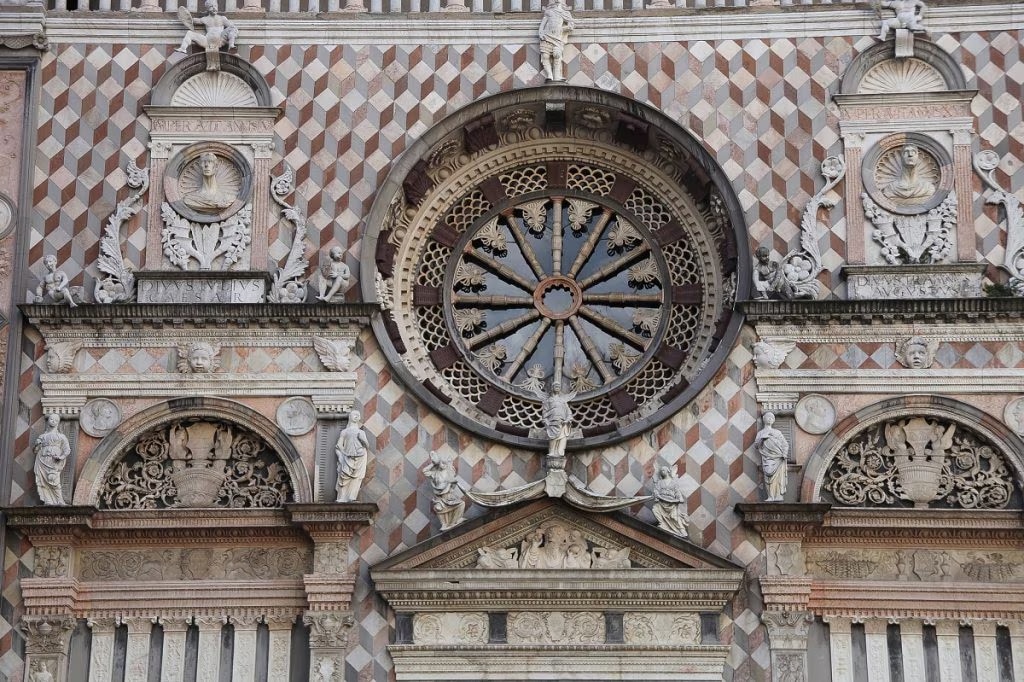
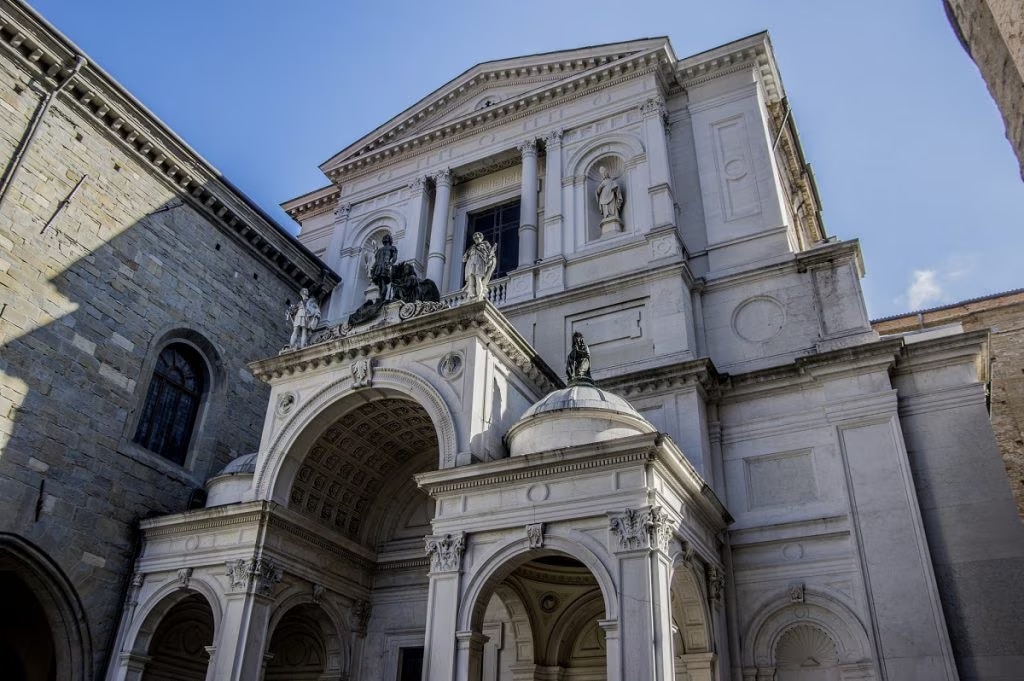
Just a short walk from Piazza Vecchia stand two artistic masterpieces: the Santa Maria Maggiore Basilica, with its richly decorated Baroque interiors filled with tapestries and gilded stuccoes, and the Colleoni Chapel, a Renaissance jewel built as a mausoleum for the condottiero Bartolomeo Colleoni. Their polychrome marble façades are considered among the most beautiful in Italy, making this area one of the most striking corners of Bergamo’s Upper Town.
La Rocca and breathtaking views
For an unforgettable panorama, head up to La Rocca di Bergamo, a 14th-century fortress surrounded by greenery. From here, the view opens over the city below, the Bergamo valleys and, on clear days, stretches all the way to Milan. Inside the fortress you’ll find the 19th-Century Museum, an ideal stop for those who want to delve deeper into the city’s more recent history.
Accademia Carrara and the GAMeC – Gallery of Modern and Contemporary Art
The Accademia Carrara is one of Italy’s most prestigious art galleries. Located along one of the main access roads to the city center, at the foot of Bergamo’s Upper Town, it’s easy to reach and perfectly placed within the city’s cultural landscape.
Founded in the 18th century by the patron Giacomo Carrara, the museum now houses an extraordinary collection of over 1,800 paintings, 3,000 drawings and 8,000 prints by masters such as Botticelli, Raphael, Mantegna, Pisanello, Titian, Canaletto and Tiepolo. It’s a true journey through Italian art history, from the Renaissance to the 19th century, set in an elegant and welcoming space.
Alongside its permanent collection, the Accademia regularly hosts temporary exhibitions, guided tours and interactive workshops, making it an engaging experience for visitors of all ages.
Just across from the Accademia Carrara stands the GAMeC – Gallery of Modern and Contemporary Art, a dynamic venue showcasing exhibitions by Italian and international artists. The dialogue between the two museums creates a compelling cultural route where tradition meets modernity, offering visitors a well-rounded and stimulating artistic experience at the heart of Bergamo.
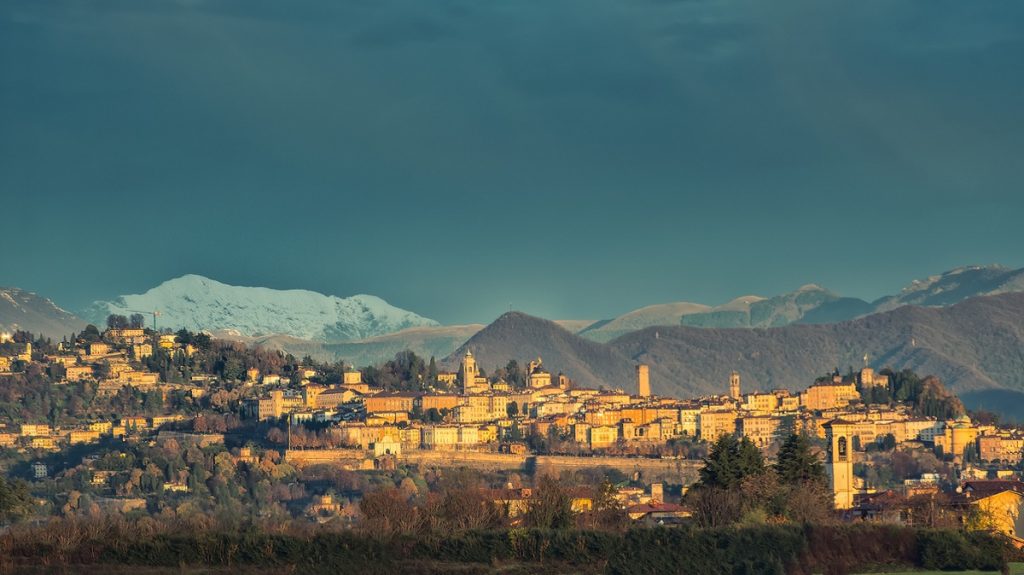
A day in Bergamo: What to see and do
Nestled in the Orobic Alps, Bergamo, a city praised by the famous architect Le Corbusier, is an enchanting blend of medieval charm and Renaissance elegance. Its compact historic centre, Città Alta, is a masterpiece of urban planning and testifies to centuries of history.
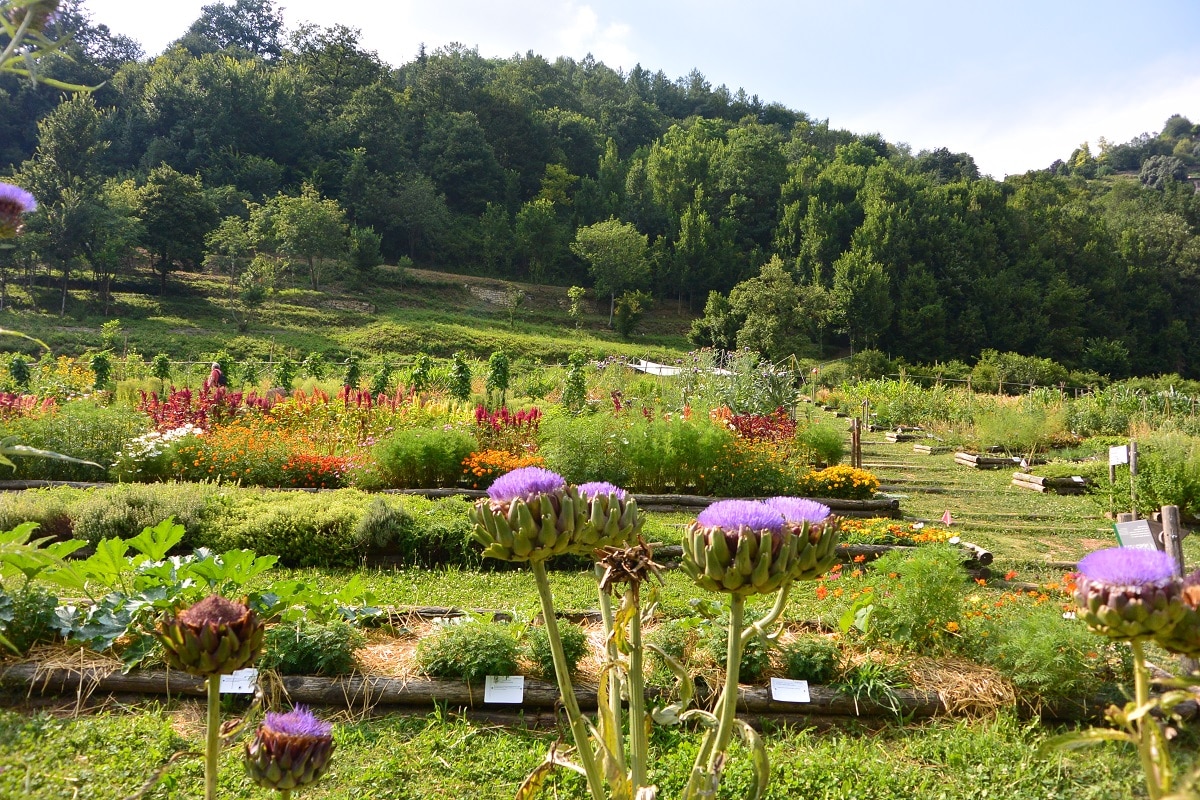
We make our way up to the Upper Town to visit the Lorenzo Rota Botanical Garden, a small urban Eden that offers a moment of peace and beauty away from the city’s rhythm.
Although it covers just 2,400 square meters, the garden hosts a surprising variety of plant species. Trees, shrubs and flowers from all over the world grow luxuriantly on panoramic terraces, creating a rich and carefully curated natural setting.
From here, you can enjoy sweeping views over the city and the surrounding mountains, with the Venetian Walls blending seamlessly into the landscape. In spring, blooming flowers transform the garden into a vibrant palette of colors and intoxicating scents.
Strolling along the garden paths means reconnecting with nature: the rustle of leaves, birdsong and a gentle breeze brushing your face turn this place into a small refuge suspended in time.
💡 Free entry, open from March to October (morning 10:00–12:00, afternoon 2:00–5:00/7:00 pm depending on the season).
San Vigilio Funicular: the highest point of Bergamo Upper Town
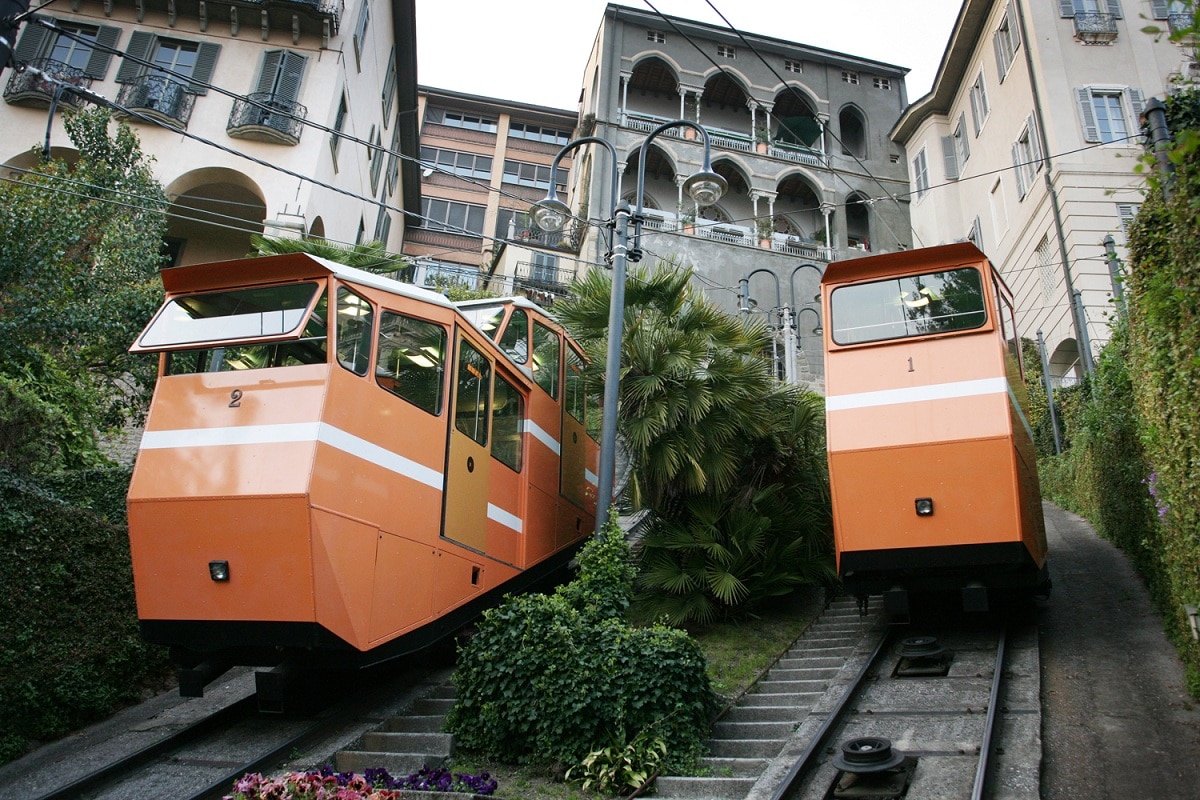
Have you ever seen Bergamo Upper Town… from above? With the San Vigilio Funicular, you can. The final stop on this itinerary takes you even higher, all the way to the summit of the hill overlooking the city.
Opened in 1912, the funicular connects Largo Porta Sant’Alessandro with San Vigilio Castle, crossing a truly scenic stretch of the city. During the ride, the carriages offer spectacular views over the rooftops of Bergamo, its medieval towers and the Lombardy plain stretching out below.
Once at the top, an unforgettable panorama awaits. You can explore the walking paths of the Colli di Bergamo Park, a protected area covering more than 4,700 hectares, or head up to the castle’s bastions to enjoy one of the most beautiful viewpoints in Lombardy. It’s the perfect way to end your visit, taking in Bergamo from above and fully appreciating its unique vertical charm.
What to do in Bergamo beyond the main attractions
Food and wine experiences and local dishes to try

Bergamo is also synonymous with great food. Among the must-try dishes are casoncelli alla bergamasca—stuffed pasta served with butter, sage and pancetta—and polenta taragna, perfect during the colder months. Those with a sweet tooth shouldn’t miss polenta e osei, a small cake made with sponge cake and marzipan, one of the city’s most iconic desserts.
Local events and curiosities
Throughout the year, the city hosts unmissable events such as the Donizetti Opera Festival, dedicated to Bergamo’s most famous composer, and the Walk along the Venetian Walls, a springtime event that combines sport with spectacular views. Among the many curiosities, did you know that Gaetano Donizetti was born right here in 1797?
Unusual and lesser-known places to discover
Beyond the main sights, Bergamo hides quieter, fascinating corners. The Astino Monastery, surrounded by hills and vineyards, now hosts cultural events and exhibitions, while the Borgo di Pignolo, with its historic workshops and Renaissance palaces, is perfect for those who love wandering away from the busiest tourist routes.
Traveling with children? In that case, a visit to Le Cornelle Wildlife Park is a must. And if you happen to be in Bergamo around Saint Lucy’s Day, the traditional carousel and Christmas markets offer a magical atmosphere and truly unique experiences.
What to eat in Bergamo
A day in Bergamo wouldn’t be complete without tasting its most celebrated dishes. Bergamasco cuisine is authentic, hearty and deeply connected to the land.
You can’t miss casoncelli alla bergamasca, ravioli filled with meat and dressed with butter, sage and pancetta, or the famous polenta taragna, made with cornmeal and buckwheat flour and served with melted cheese. Among desserts, polenta e osei stands out as a symbol of the city—a sweet reinterpretation of polenta, decorated with small chocolate birds.
Enjoying lunch or dinner in one of the traditional trattorias of the Upper Town is the best way to experience Bergamo through its flavors, adding a delicious final note to your visit.
What to see around Bergamo
Medieval villages and the landscapes of the Bergamo valleys
Just outside Bergamo, you’ll find authentic gems such as Clusone, home to the famous Astronomical Clock, and Lovere, beautifully set on the shores of Lake Iseo. The Bergamo valleys, with their pastures, forests and mountain trails, are ideal for hiking, outdoor activities and days spent immersed in nature, far from the city’s rhythm.
San Pellegrino Thermal Baths and the views of the Orobie Alps
Only about 30 minutes from the city centre, the San Pellegrino Thermal Baths offer a true oasis of relaxation, with panoramic pools and elegant Liberty-style interiors set among the peaks of the Orobie Pre-Alps. It’s the perfect way to end your trip, combining wellness with breathtaking mountain scenery.