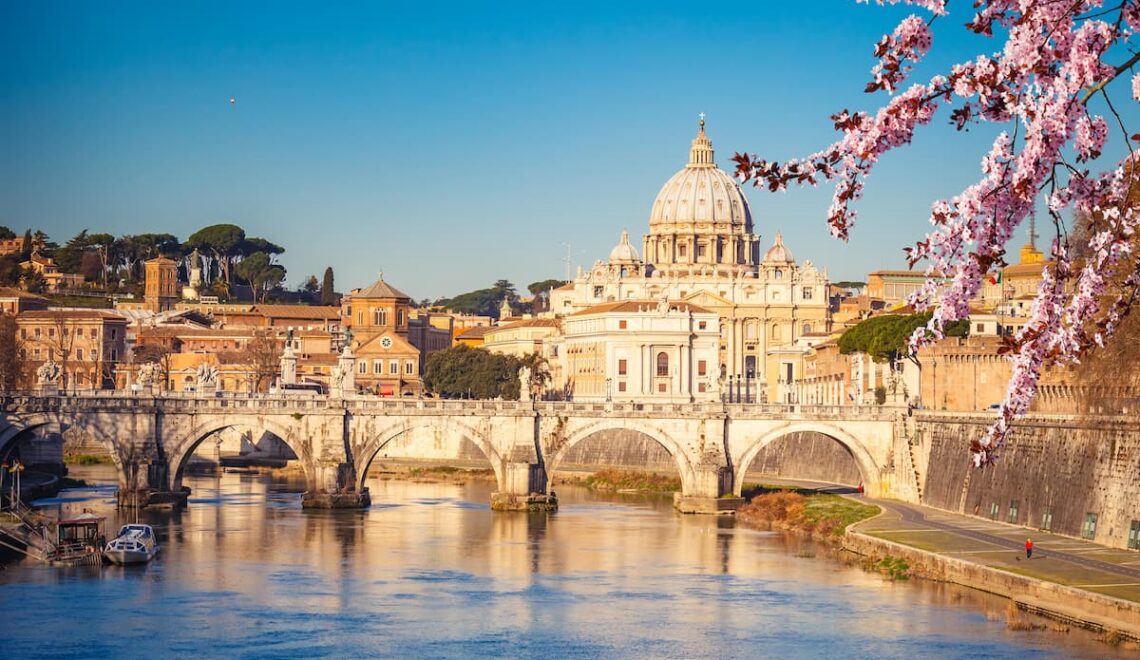
There’s something magical about Rome — a city that manages to blend ancient ruins, Renaissance art, and the vibrant rhythm of modern life. If you only have 2 days in Rome, don’t worry: with a smart plan, you can experience the city’s most iconic landmarks and even enjoy a few hidden gems. This Rome 2-day itinerary will help you make the most of your visit, from the Colosseum to the Vatican, combining history, culture, and local flavor.
Why visit Rome in 2 days
Rome is more than a city — it’s an open-air museum. Every street, piazza, and building tells the story of empires, artists, and visionaries. Even with limited time, two days in Rome allow you to experience the essence of the Eternal City.
A city where every corner tells a story
From the grandeur of the Colosseum to the quiet charm of cobblestoned alleys in Trastevere, Rome’s contrasts are what make it unforgettable. You’ll walk in the footsteps of emperors, discover masterpieces by Michelangelo and Bernini, and taste the genuine flavors of Roman cuisine — all within just a couple of days.
How many days do you need to visit Rome?
Ideally, you could spend a week exploring every church, museum, and neighborhood. But if time is short, 48 hours in Rome are enough to cover its greatest treasures — as long as you plan efficiently.
Is two days enough to experience the Eternal City?
Absolutely. The key lies in prioritizing. Focus on Rome’s highlights — the Colosseum, the Vatican, the Trevi Fountain, and the Pantheon — while leaving space for a coffee in Piazza Navona or a sunset stroll by the Tiber. Two days will give you a satisfying blend of history, culture, and “la dolce vita.”
The perfect 2-day Rome itinerary
How to make the most of your 48 hours in Rome
Start early each day, wear comfortable shoes, and keep your camera ready. This itinerary combines the must-see landmarks with authentic Roman experiences, so you can explore the city at its best pace — walking, pausing, and enjoying every sight.
Day 1 – Ancient Rome and timeless icons
Your first day will be all about ancient glory and unforgettable sights. Start early — the morning light over the ruins is spectacular.
| Time | Activity | Area |
| Day 1 Morning | Colosseum, Roman Forum, Palatine Hill | Ancient Rome |
| Day 1 Afternoon | Piazza Venezia, Trevi Fountain, Spanish Steps | Historic Center |
| Day 1 Evening | Dinner and walk in Trastevere | Trastevere |
Colosseum and Roman Forum
Begin your adventure at the Colosseum, Rome’s most emblematic monument and one of the New Seven Wonders of the World. This ancient amphitheater, completed in 80 AD under Emperor Titus, could hold more than 50,000 spectators who gathered to watch gladiator fights, wild animal hunts, and grand public spectacles. As you walk through its vast corridors and stands, you can almost hear the echoes of the crowd and the clang of swords that once filled the air.
Take a moment to admire the intricate network of underground tunnels — the hypogeum — where animals and fighters awaited their turn in the arena. From the upper levels, the view across the ancient heart of Rome is breathtaking, stretching over to the Arch of Constantine and the Palatine Hill.
Just a few steps away lies the Roman Forum, the true center of daily life in ancient Rome. Once home to markets, basilicas, and political debates, it served as the beating heart of the Empire. Stroll among the ruins of the Temple of Saturn, the Arch of Septimius Severus, and the Basilica of Maxentius, and imagine senators and orators discussing the fate of the ancient world. Every column and marble fragment here tells a story of ambition, power, and faith — making the Forum not just a site to visit, but a journey back through time.
Palatine Hill and Piazza Venezia
After exploring the Forum, make your way up the Palatine Hill, the legendary birthplace of Rome. According to ancient myth, it was here that Romulus founded the city in 753 BC after defeating his twin brother Remus. Over the centuries, the hill became the exclusive residence of emperors and aristocrats — a symbol of prestige and power. As you wander among the ruins of imperial palaces, gardens, and frescoed halls, it’s easy to imagine the grandeur of ancient life. Don’t miss the Domus Augustana, once home to Emperor Augustus himself, and the Stadium of Domitian, which once hosted private games and ceremonies.
From the top, you’ll be rewarded with one of the most stunning panoramic views in Rome — a sweeping vista that stretches from the Colosseum to the domes of the modern city. It’s the perfect spot to pause, breathe in the Roman breeze, and admire how the layers of history blend seamlessly together.
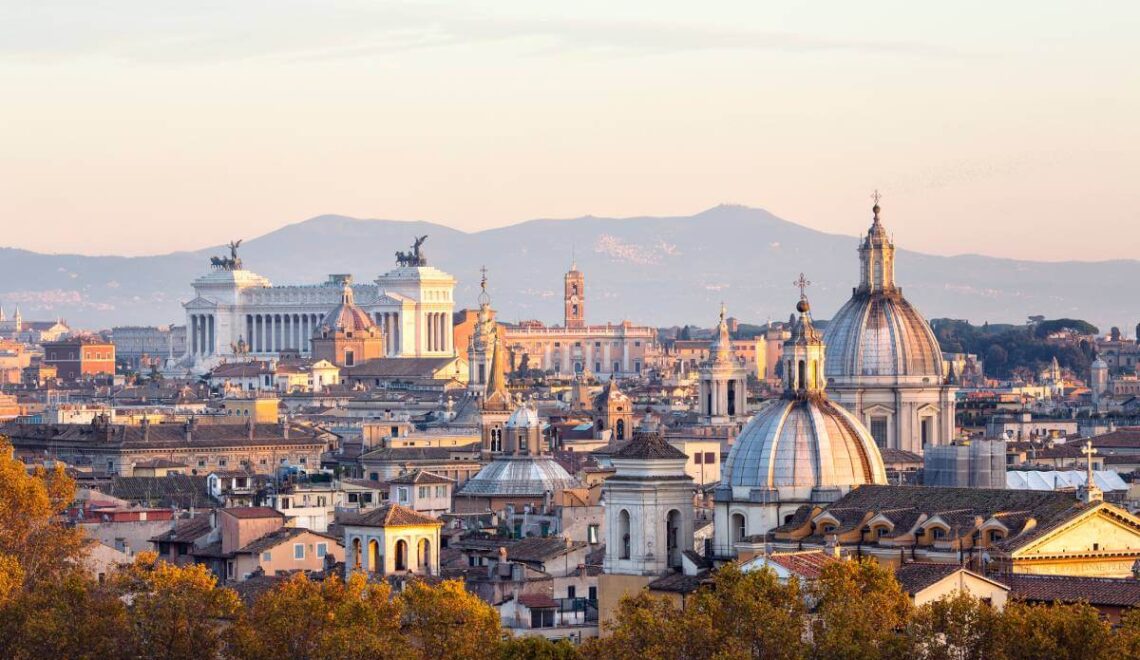
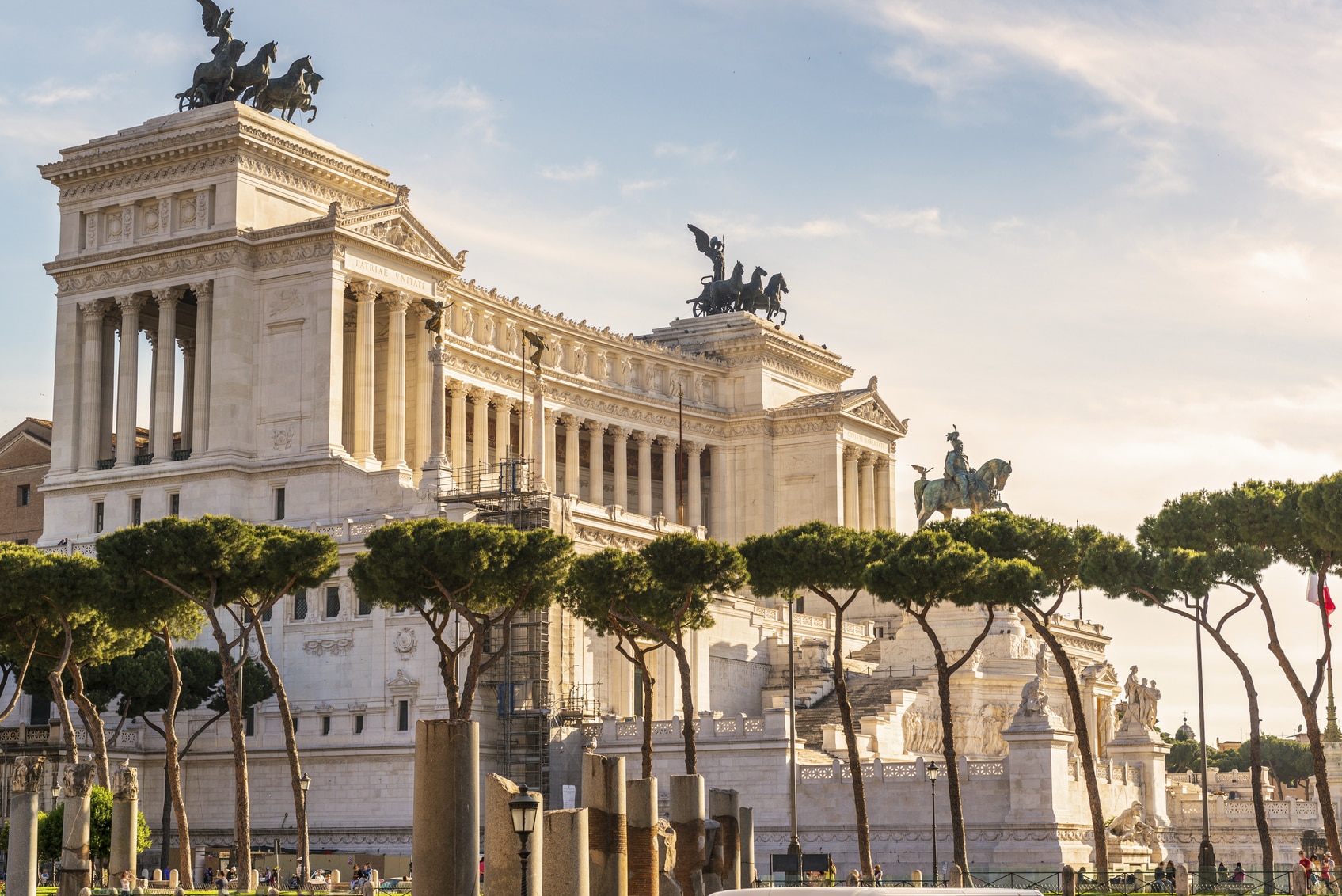
Continue your walk down toward Piazza Venezia, the beating heart of modern Rome. At its center stands the monumental Altare della Patria — also known as the Vittoriano — built in honor of King Victor Emmanuel II, the first ruler of a unified Italy. Its gleaming white marble façade and imposing staircases make it one of the most recognizable landmarks in the city. Inside, you can visit the Tomb of the Unknown Soldier, an enduring symbol of national pride.
For a truly unforgettable perspective, take the glass elevator to the rooftop terrace. From here, you’ll enjoy a breathtaking 360° view over Via dei Fori Imperiali, the Colosseum, and the rolling hills beyond — a moment that captures both the majesty of ancient Rome and the energy of the city today.
Trevi Fountain and the Spanish Steps
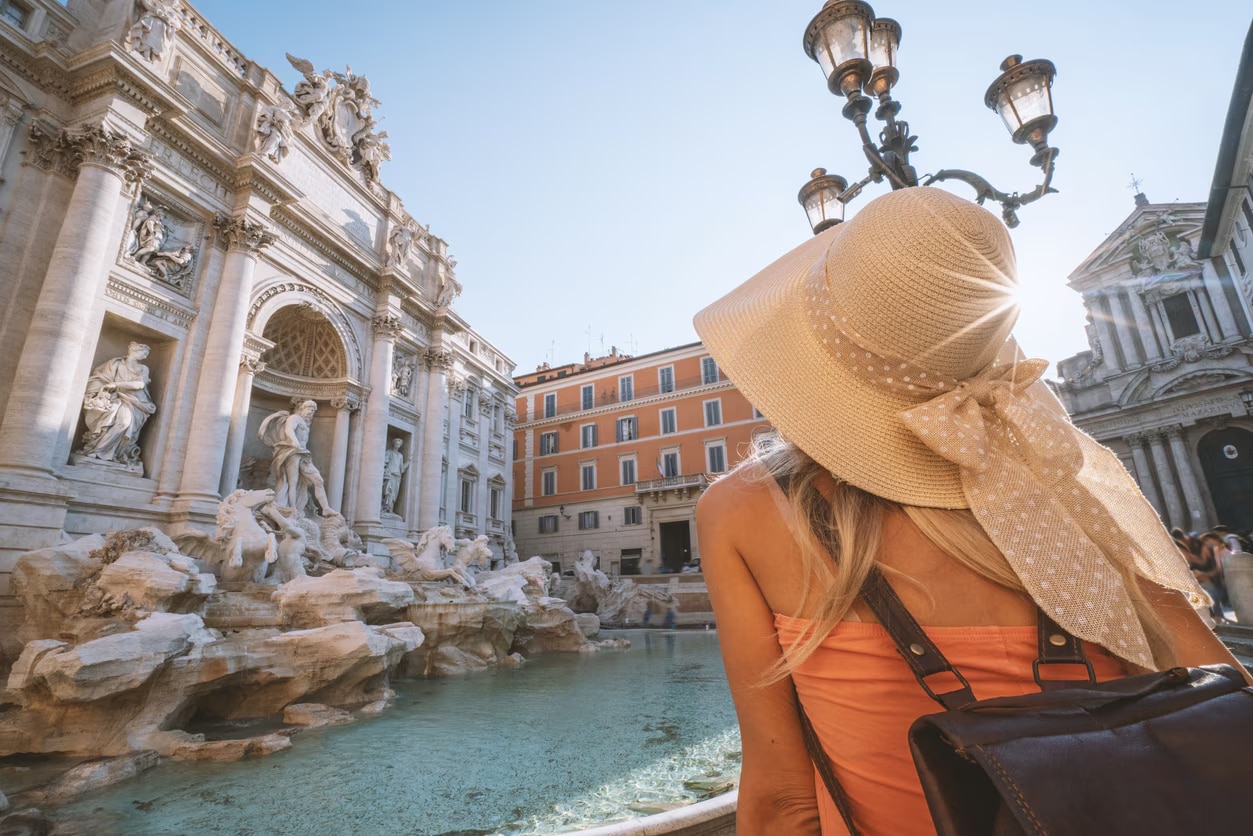
Next, make your way to the Trevi Fountain, one of the most celebrated landmarks in the world and undoubtedly the most photographed spot in Rome. Hidden among the narrow streets of the historic center, it suddenly appears in all its grandeur — a breathtaking masterpiece of Baroque art designed by Nicola Salvi in the 18th century. The fountain depicts Oceanus, the god of the sea, surrounded by tritons and sea horses that seem to burst from the marble cliffs as if alive.
Legend has it that tossing a coin over your left shoulder into the fountain ensures your return to Rome — two coins promise love, and three, marriage. Every day, nearly 3,000 euros in coins are collected and donated to charity, a testament to how many travelers fall in love with this city. Take a few minutes to simply stand there and listen to the water’s rhythm echoing through the square — it’s the heartbeat of the Eternal City.
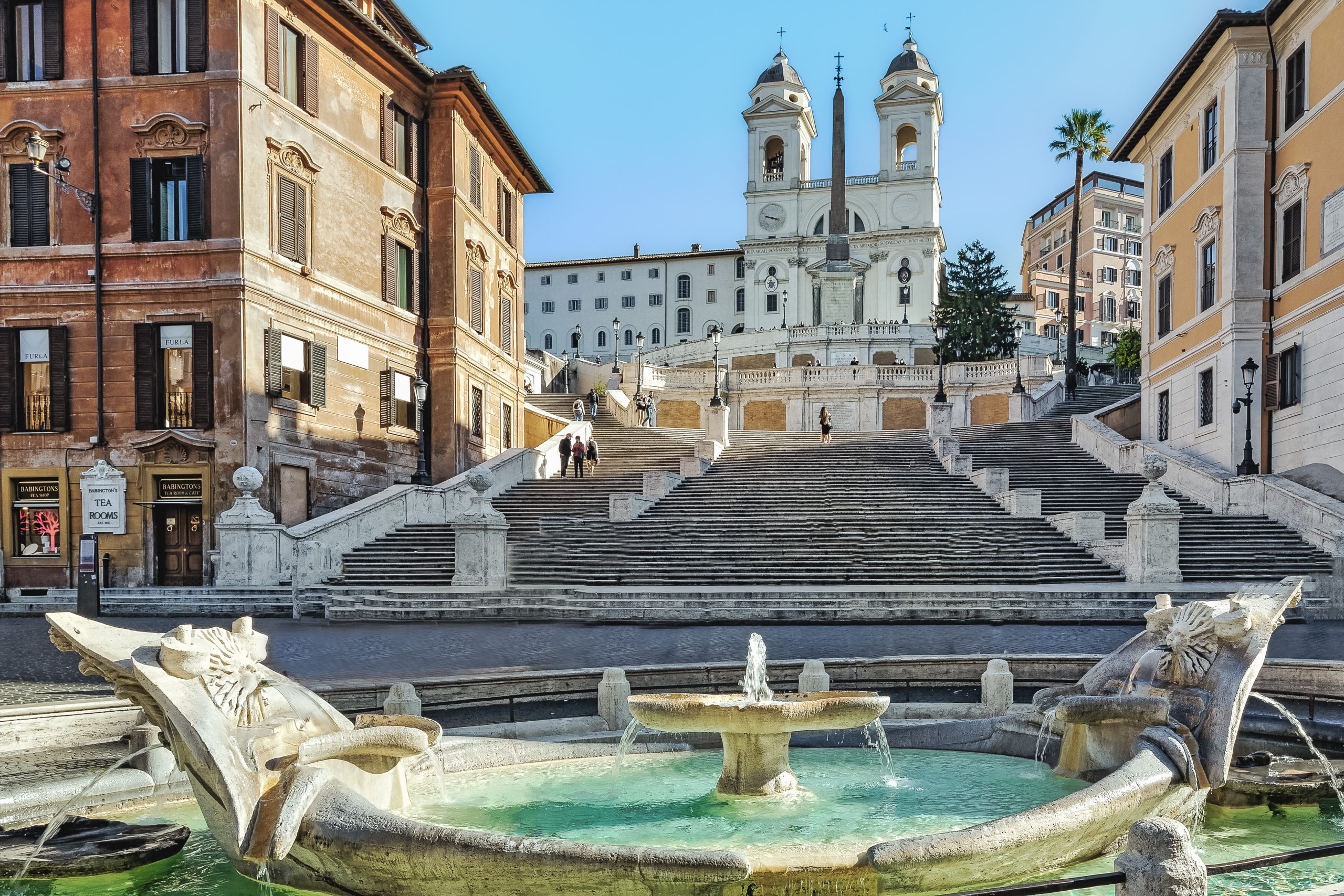
From the Trevi Fountain, continue your stroll toward Piazza di Spagna, home to the Spanish Steps, another of Rome’s most iconic sights. Completed in the 18th century, this elegant staircase of 135 steps links the square below to the Trinità dei Monti Church above. It’s a place where Romans and travelers alike gather to rest, chat, and admire the beauty of their surroundings.
At the foot of the steps, you’ll find the Fontana della Barcaccia, sculpted by Pietro Bernini and his son Gian Lorenzo Bernini, depicting a half-sunken boat — a poetic reminder of the Tiber’s floods. Take a seat on one of the steps, enjoy a gelato or espresso, and watch the world go by: fashion lovers posing for photos, artists sketching, and locals greeting friends. It’s a timeless Roman scene — lively, spontaneous, and effortlessly beautiful.
Evening in Trastevere
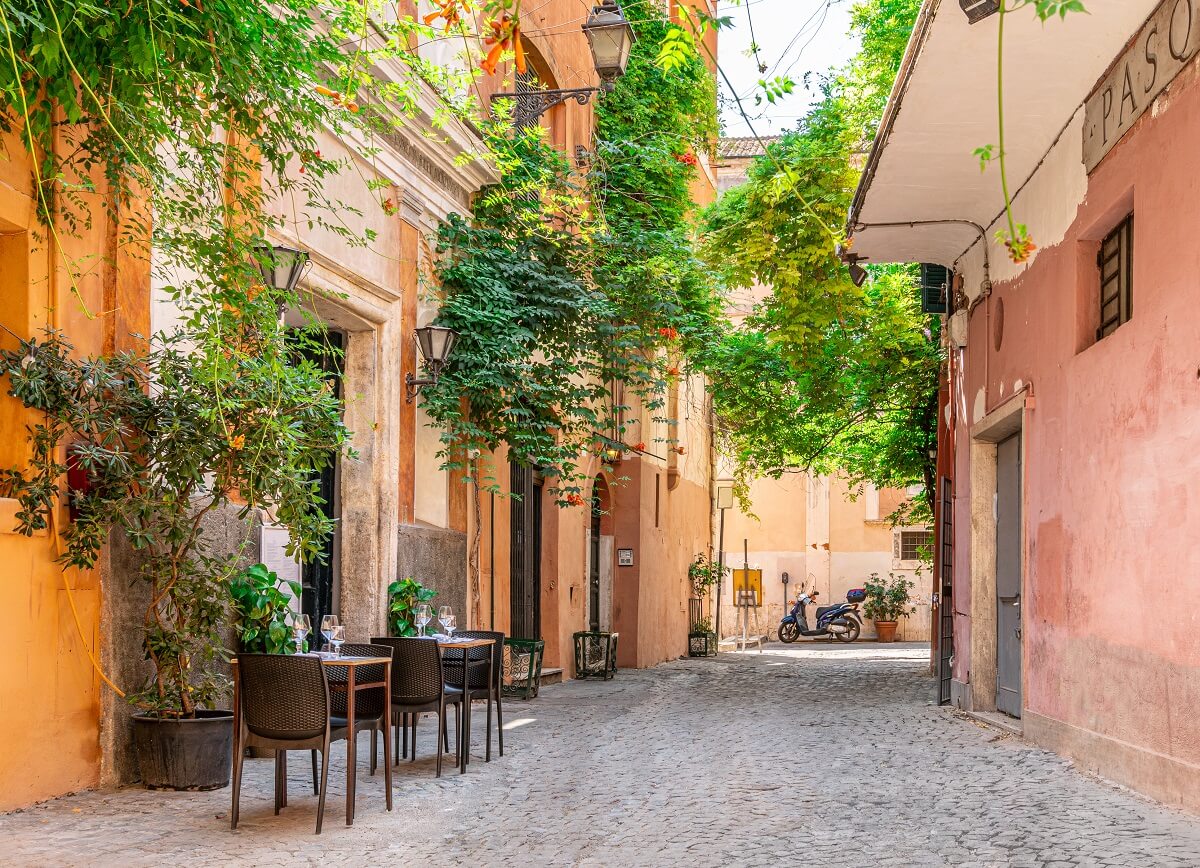
As the sun sets, cross the Tiber River to Trastevere, one of Rome’s most charming neighborhoods. Its narrow streets, colorful buildings, and local trattorias make it perfect for dinner. Order a plate of cacio e pepe or amatriciana, and finish with a glass of Italian wine under twinkling lights.
Day 2 – Art, faith, and panoramic views
Your second day explores the artistic and spiritual heart of Rome, from the treasures of the Vatican to sweeping views over the city.
| Time | Activity | Area |
| Day 2 Morning | St. Peter’s Basilica, Vatican Museums | Vatican City |
| Day 2 Afternoon | Castel Sant’Angelo, Piazza Navona, Pantheon | Centro Storico |
| Day 2 Evening | Aperitivo at Gianicolo Hill | Monteverde |
Vatican City: St. Peter’s Basilica and the Vatican Museums
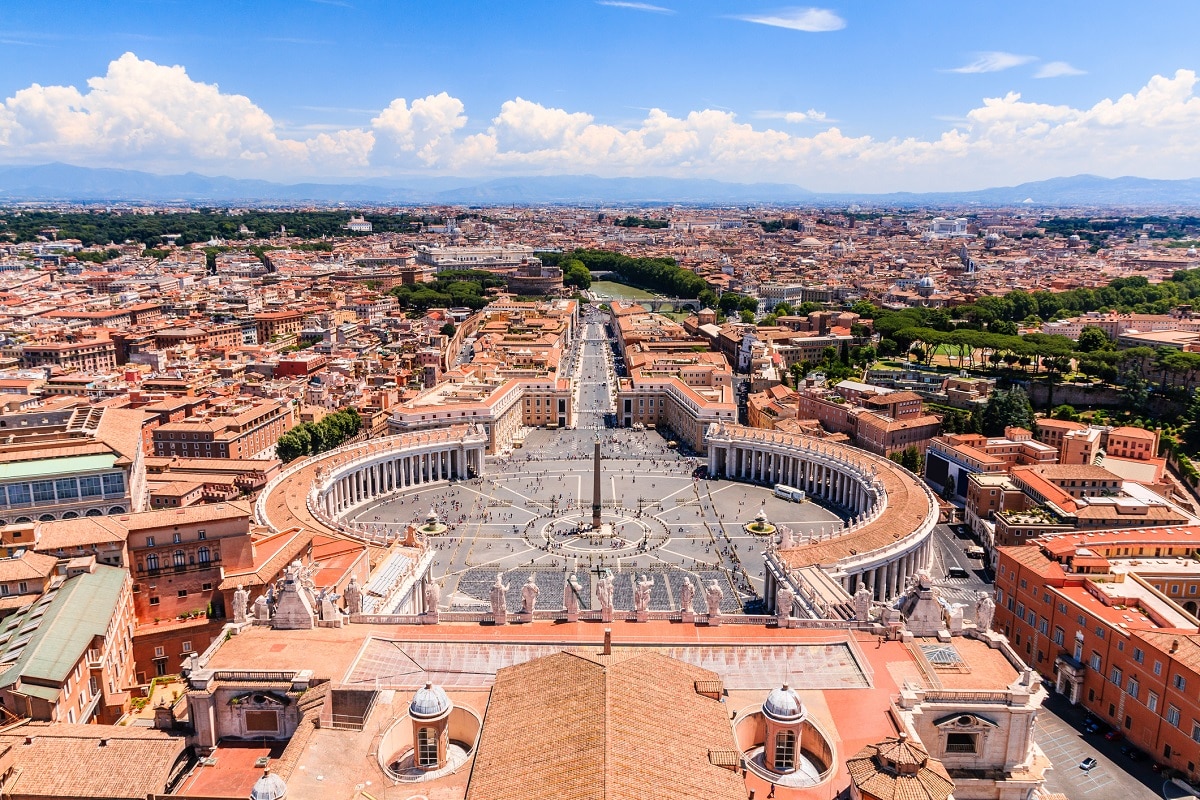
Begin your second day in Vatican City, the world’s smallest state and the spiritual heart of Catholicism. The Vatican Museums are a true treasure trove, displaying masterpieces collected by popes over centuries — from classical sculptures to Raphael’s frescoes. The highlight, of course, is the Sistine Chapel, where Michelangelo’s painted ceiling and The Last Judgment leave every visitor speechless.
Just steps away stands St. Peter’s Basilica, an architectural masterpiece by Bernini and Bramante. Inside, admire Michelangelo’s Pietà and the immense bronze canopy over the papal altar. If you’re feeling energetic, climb to the top of the dome — the view from above St. Peter’s Square and across Rome’s skyline is simply unforgettable.
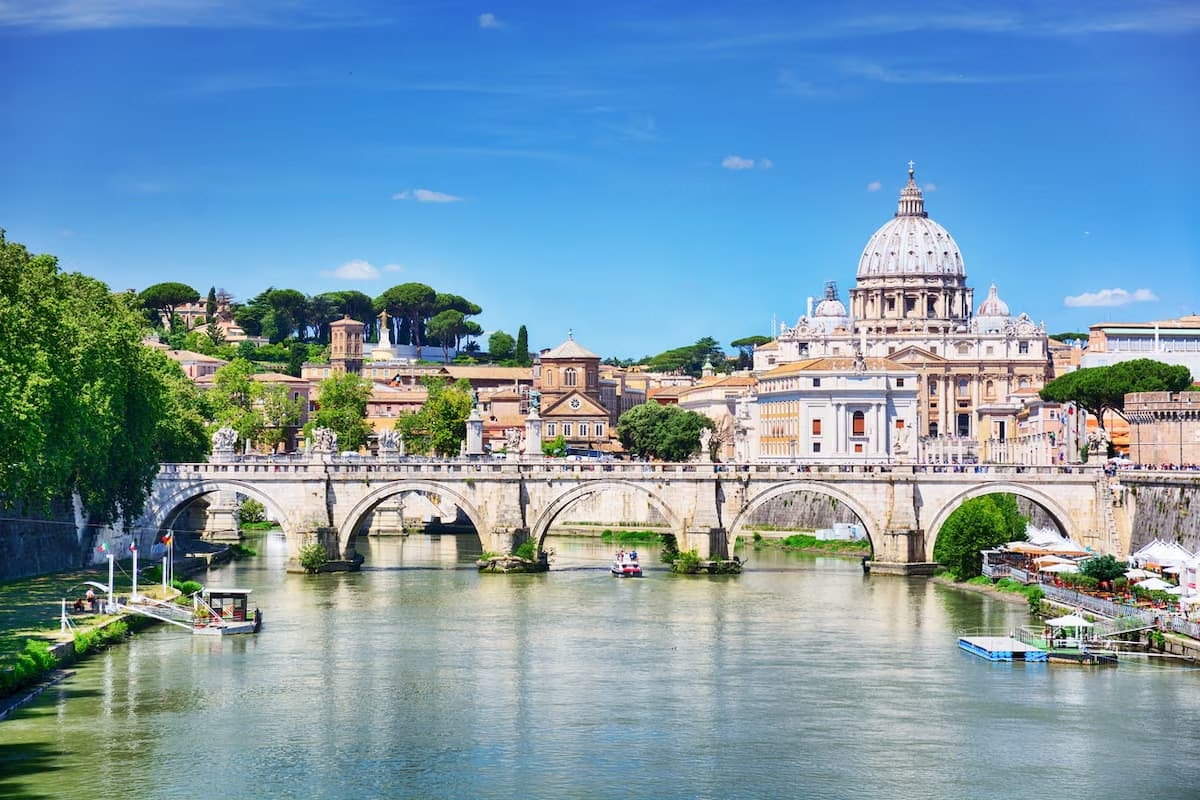
Just a short walk from the Vatican, you’ll reach Castel Sant’Angelo, an imposing cylindrical fortress that perfectly captures Rome’s layered history. Originally built as Emperor Hadrian’s mausoleum in the 2nd century AD, it later served as a papal refuge, a prison, and today a fascinating museum. Climb its spiral ramps to discover ancient chambers and terraces offering one of the best panoramic views of the Tiber River and the Vatican dome rising in the distance.
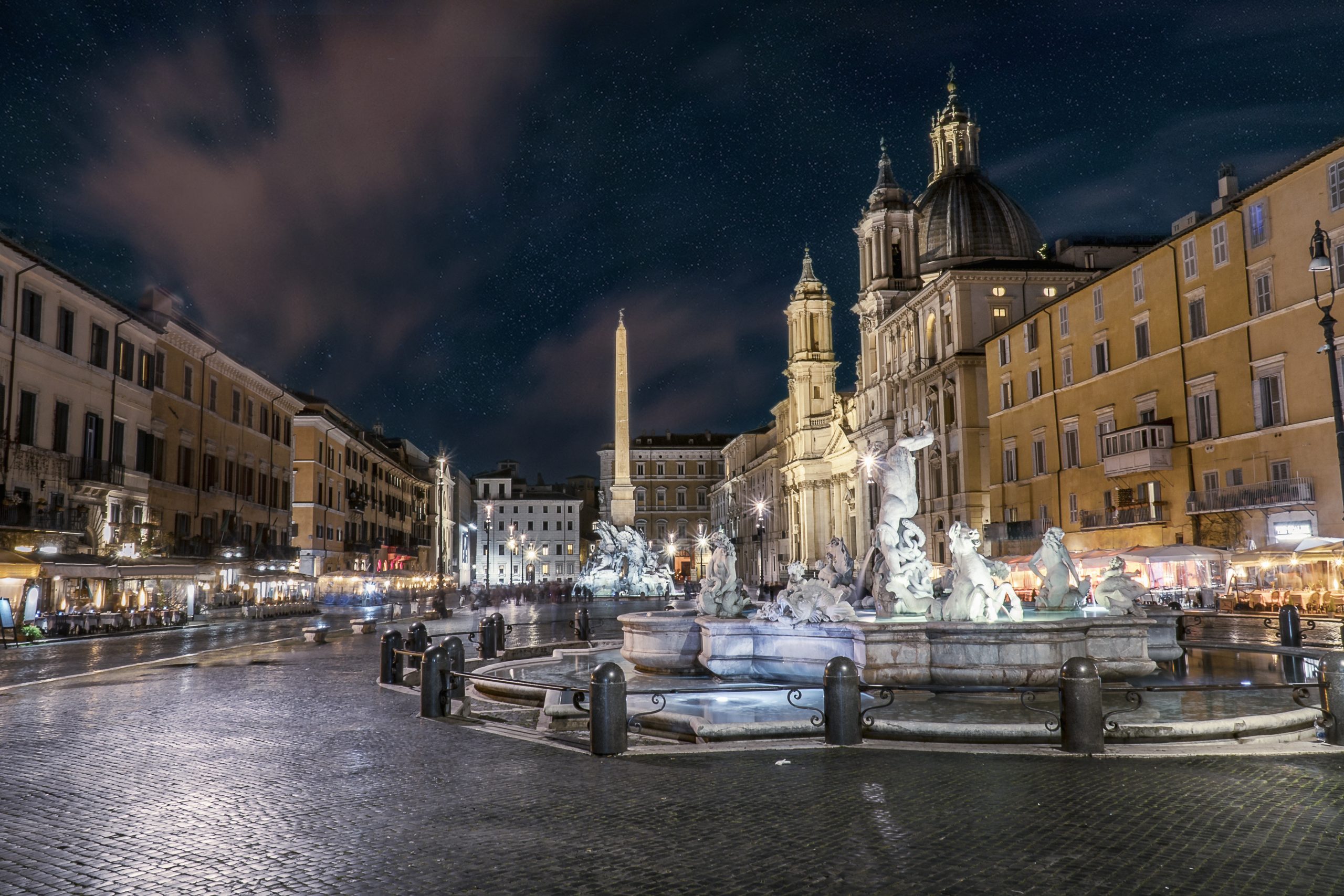
From there, follow the cobblestoned streets into the heart of the city to reach Piazza Navona, one of Rome’s most enchanting squares. Once the site of an ancient Roman stadium, it’s now a lively showcase of Baroque elegance. At its center, admire Bernini’s Fountain of the Four Rivers, surrounded by elegant palaces, cafés, and street artists. Whether you stop for a cappuccino or simply soak in the atmosphere, Piazza Navona captures the timeless charm and spirit of everyday Roman life.
Pantheon and Campo de’ Fiori
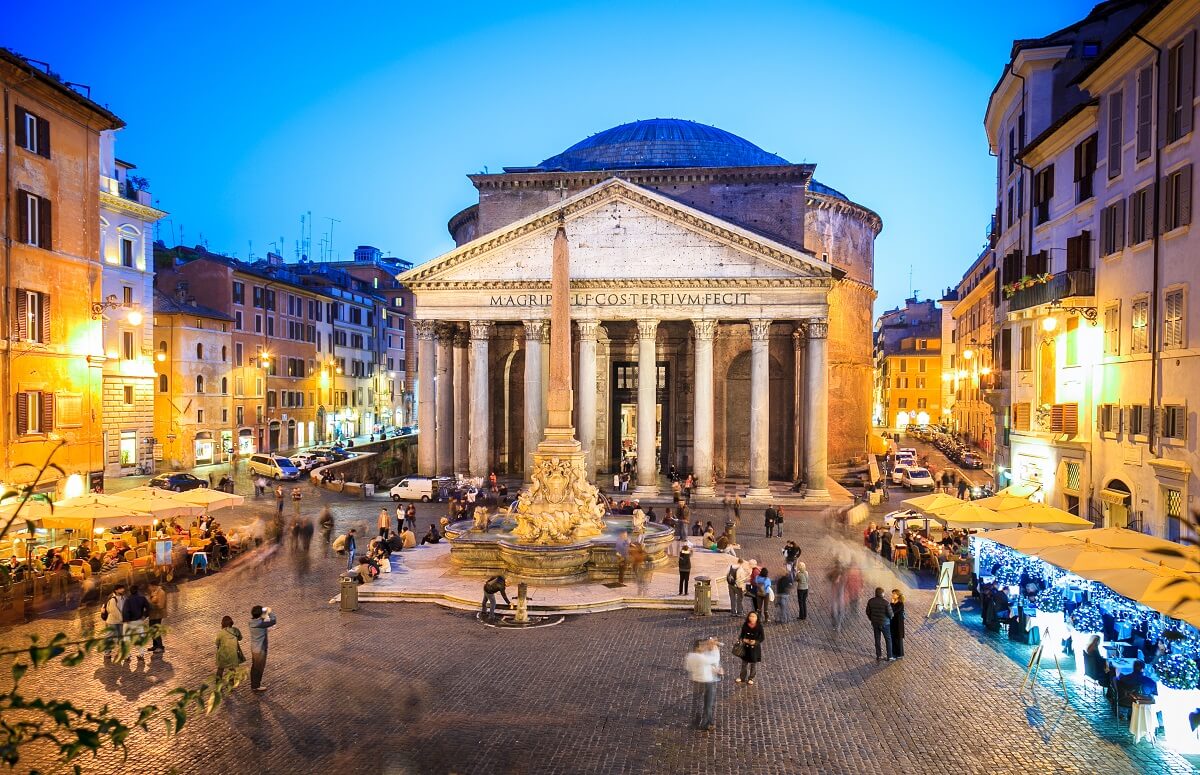
Next, make your way to the Pantheon, one of the most extraordinary and best-preserved monuments of ancient Rome. Originally built as a temple to all gods and later transformed into a Christian church, it remains an architectural marvel nearly 2,000 years later. Its vast concrete dome, still the largest of its kind, and the central oculus that lets sunlight pour through, create a play of light that changes with every hour of the day. Step inside to admire the marble floors, the tomb of Raphael, and the serene grandeur that has inspired architects for centuries.
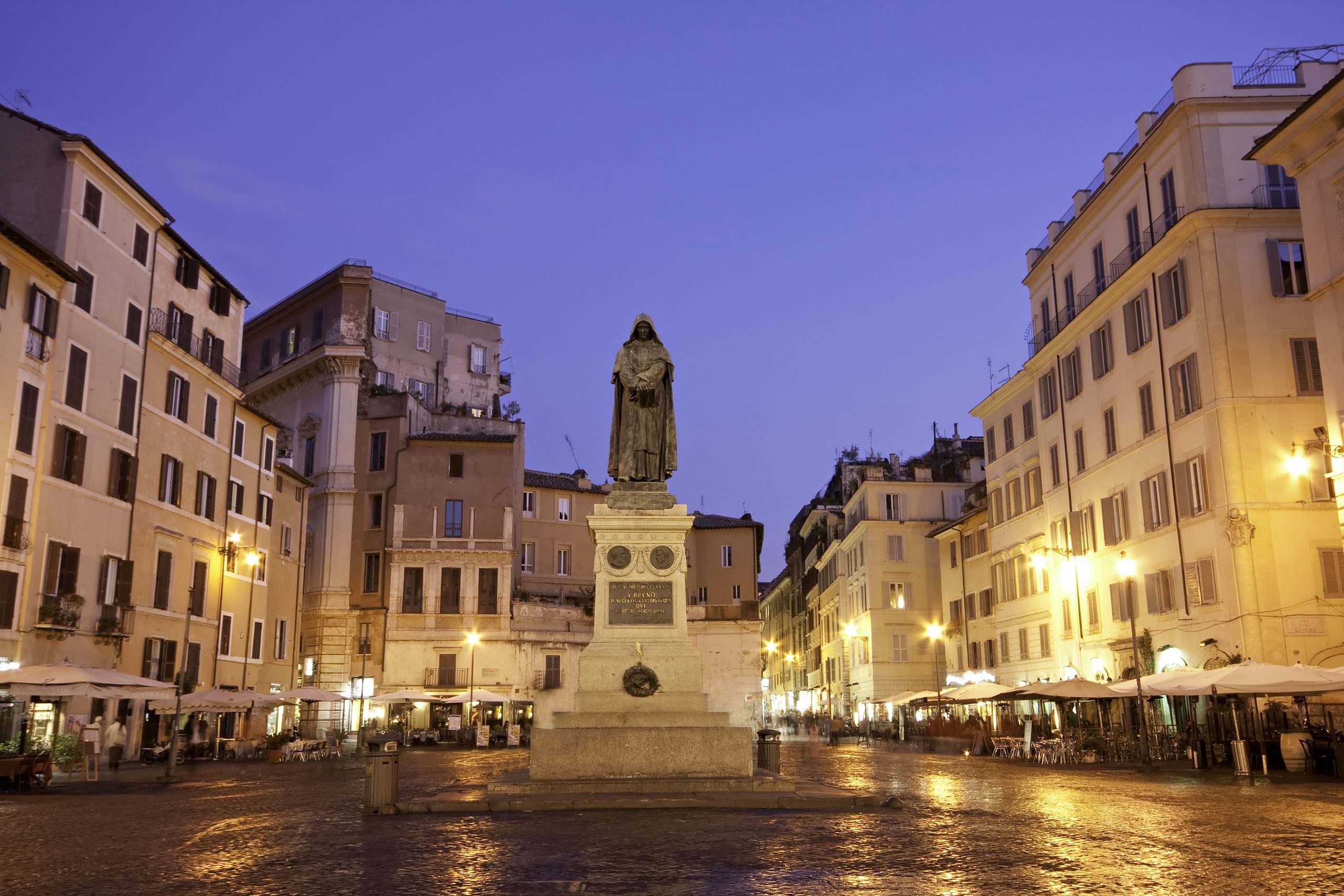
A short walk away lies Campo de’ Fiori, a square that perfectly captures the rhythm of Roman life. In the morning, it buzzes with a colorful market of flowers, fruit, and spices, where locals shop and chat under the watchful eye of the statue of Giordano Bruno, who was executed here in 1600. As evening falls, the square transforms into a lively gathering place filled with cafés and wine bars — the ideal spot to enjoy an aperitivo and toast to your Roman adventure.
Sunset at Gianicolo Hill
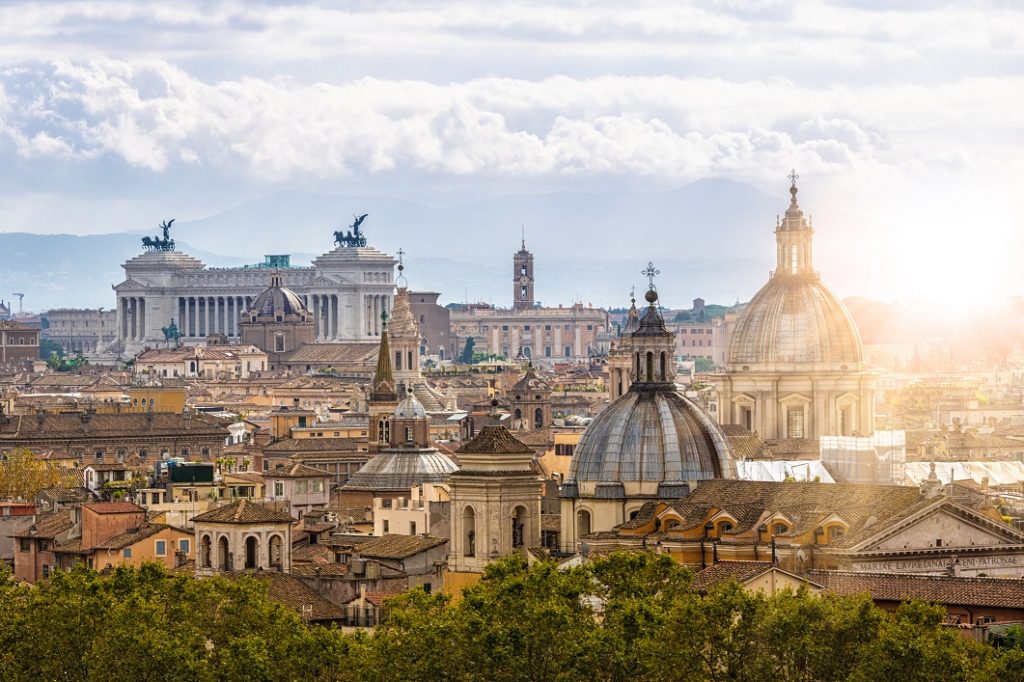
Conclude your Roman adventure with a tranquil walk up Gianicolo Hill, a peaceful haven just above the vibrant district of Trastevere. Often overlooked by visitors, it offers one of the most breathtaking panoramic views in the city — a sweeping vista of domes, rooftops, and the timeless skyline that glows in the evening light.
As you reach the terrace near the Monument to Giuseppe Garibaldi, pause to take in the gentle sounds of the city below: church bells ringing, distant chatter, and the soft hum of life along the Tiber. Each evening at sunset, the sky turns golden and pink, casting a magical glow over landmarks like St. Peter’s Basilica and the Altare della Patria. It’s a serene and poetic finale to your two days in Rome — the perfect place to whisper “arrivederci” to the Eternal City, knowing that its beauty will draw you back again someday.
Where to eat in Rome during your 2-day stay
Traditional trattorias and local favorites
Rome’s culinary scene is an essential part of its charm. For lunch or dinner, try Armando al Pantheon, famous for its authentic pasta dishes, or Da Enzo al 29 in Trastevere for true Roman hospitality. Street food fans shouldn’t miss supplì (crispy rice balls) or pizza al taglio — slices of freshly baked pizza sold by weight.
And of course, no Roman experience is complete without gelato. Giolitti and Frigidarium are among the most beloved gelaterias in the city.

Best carbonara in Rome: the top 10 restaurants for locals
Discover where to find the best pasta carbonara in Rome with our expert guide. From classic trattorias to modern eateries, taste the authentic flavors of this Roman delicacy in the heart of Italy.
How to get around Rome efficiently
Metro, bus, and walking tips for travelers
Rome’s charm is best appreciated on foot, but to save time, combine walking with public transport. The metro lines A and B connect most major attractions, while ATAC buses reach areas not served by the subway. If you prefer a scenic route, take a stroll along the Lungotevere or rent an electric scooter for short distances. Plan ahead — traffic can be intense, especially during rush hours.
Things to Do Near Rome’s Termini Station
Rome’s Termini Station is not just a transportation hub; it’s also a great starting point for exploring some of the city’s hidden gems and attractions. Here are several things you can do near Rome’s Termini Station.
To Rome with Italo
Reaching Rome couldn’t be easier. Italo’s high-speed trains connect the capital to major Italian cities like Florence, Milan, Naples, and Venice, with frequent departures throughout the day. You’ll arrive directly at Roma Termini or Roma Tiburtina, both conveniently close to the city center. From there, start exploring immediately — the Colosseum is just a few metro stops away.
Choosing Italo means comfort, speed, and sustainability, letting you begin your Roman adventure the smart way.