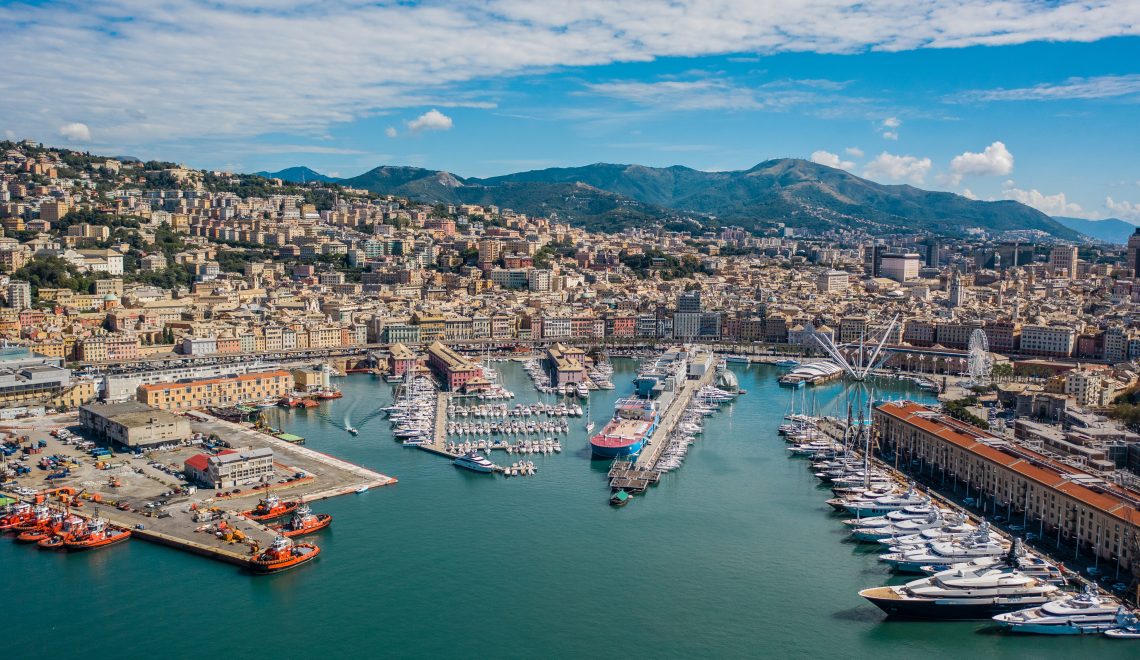
Genoa is a city that reveals itself gradually, unfolding step by step between the sea, medieval alleyways, grand noble palaces and striking vertical views. Understanding what to see in Genoa means stepping into a complex and fascinating world, where the legacy of the great Maritime Republic lives alongside an authentic, unpolished everyday life. In this article, we’ll take you through the main places to visit in Genoa, mixing iconic landmarks with lesser-known spots, curiosities and practical tips to help you experience the city with the right mindset.
What to see in Genoa: the main highlights for a first trip
Visiting Genoa for the first time is like leafing through an ancient book, where each page tells the story of a different era. The city centre is compact yet layered, making it easy to reach many points of interest on foot.
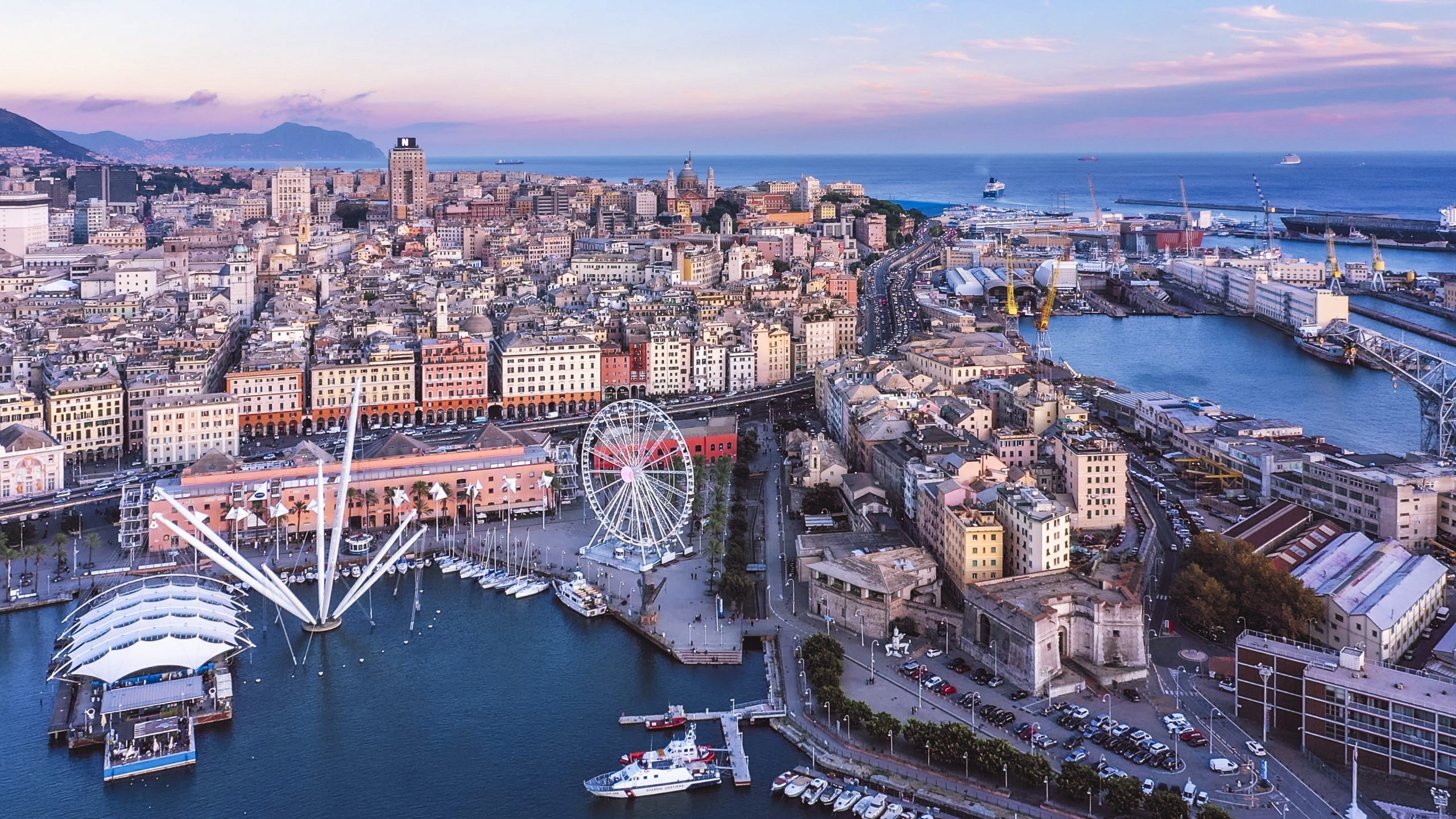
The Old Port and the Genoa Aquarium
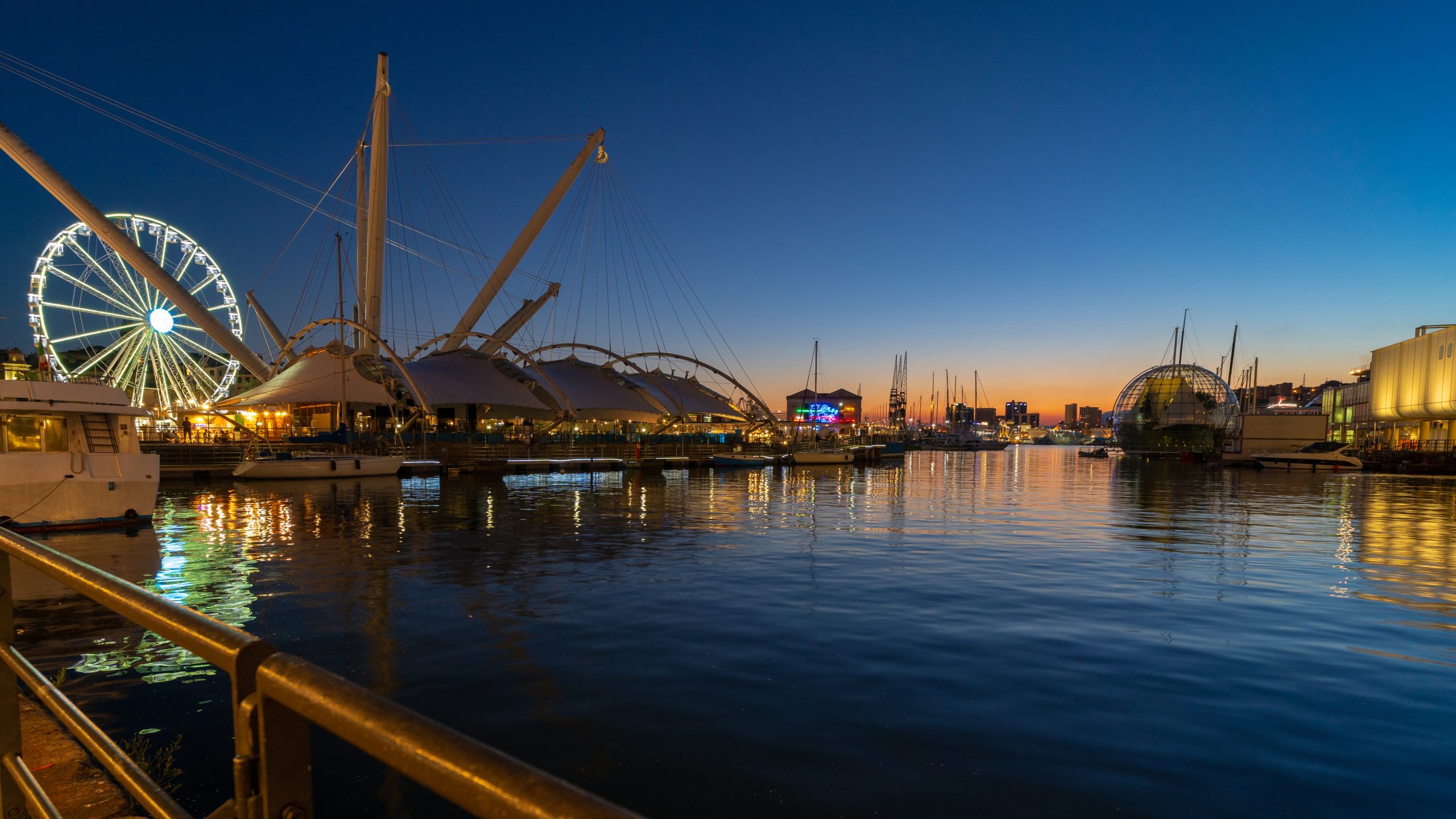
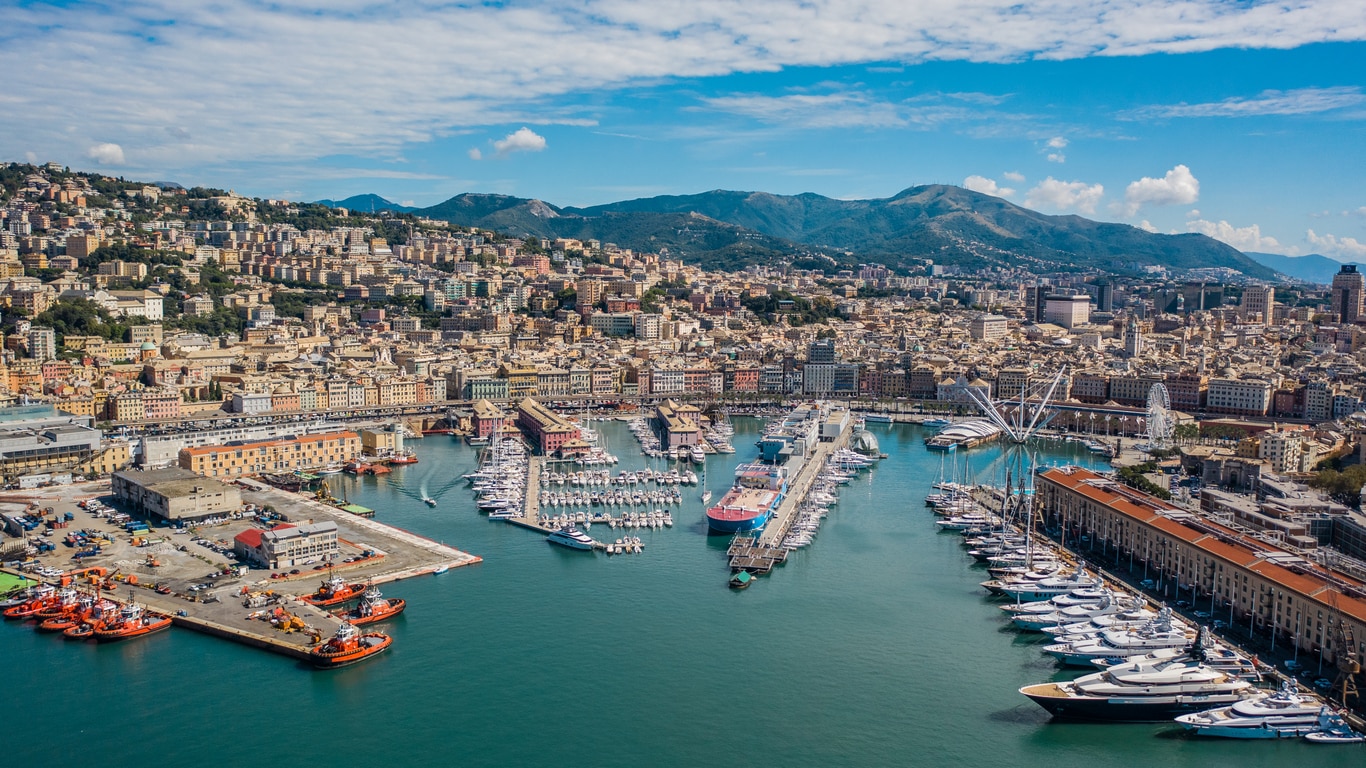
The Old Port is the natural starting point for getting to know Genoa and its deep, inseparable bond with the sea. The redevelopment designed by Renzo Piano has given the city back an open, airy and vibrant waterfront, where water becomes an integral part of the urban experience. Between piers, walkways and squares overlooking the harbour, museums, green spaces, cafés and leisure areas come together, creating a well-balanced mix of culture and everyday life.
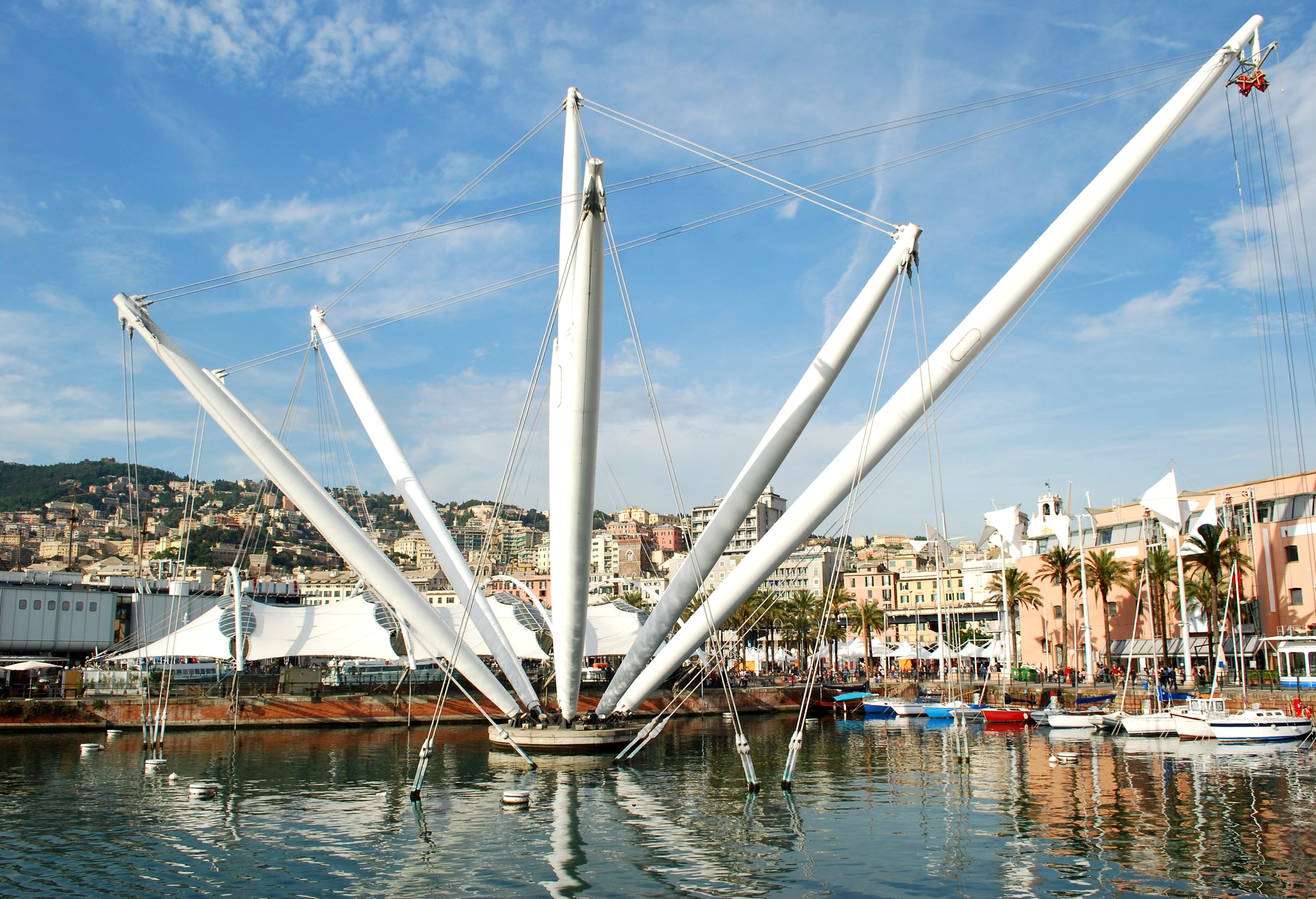
This is where the Genoa Aquarium is located, one of the largest and most visited in Europe, offering an engaging journey through the marine world and highlighting the role Genoa has played over the centuries as a great seafaring city. Even without stepping inside, the Old Port deserves time and attention: strolling along the piers, watching the boats, breathing in the salty sea air and seeing the city reflected on the water is a simple yet authentic way to immediately capture Genoa’s port soul and begin your journey with your eyes turned toward the sea.
The historic centre and the caruggi
Genoa’s historic centre is one of the largest and most intricate in Europe and is undoubtedly one of the most fascinating and identity-defining things to see in the city. It’s a dense web of streets, arches, hidden squares and sudden open spaces that tell centuries of maritime, popular and religious history. The caruggi, with their narrow and often shadowy alleyways, can feel disorienting at first—but that very feeling is what makes them so authentic.
As you wander through these streets, surprises are constant: a historic shop that has survived for generations, a small church tucked between buildings, the scent of fresh bread drifting from a nearby bakery, an old focaccia shop drawing you in with its warm oven. The historic centre isn’t meant to be rushed or followed by rigid itineraries: this isn’t a place you “visit” in the traditional sense, but one you explore with curiosity and care. Letting instinct guide you, taking a wrong turn, retracing your steps—these are all part of the experience, and often the best way to grasp Genoa’s truest, most everyday soul.
Link a: https://blog.italotreno.com/en/travel-ideas/what-to-see-in-genoa-in-3-days/
Piazza De Ferrari and Via XX Settembre
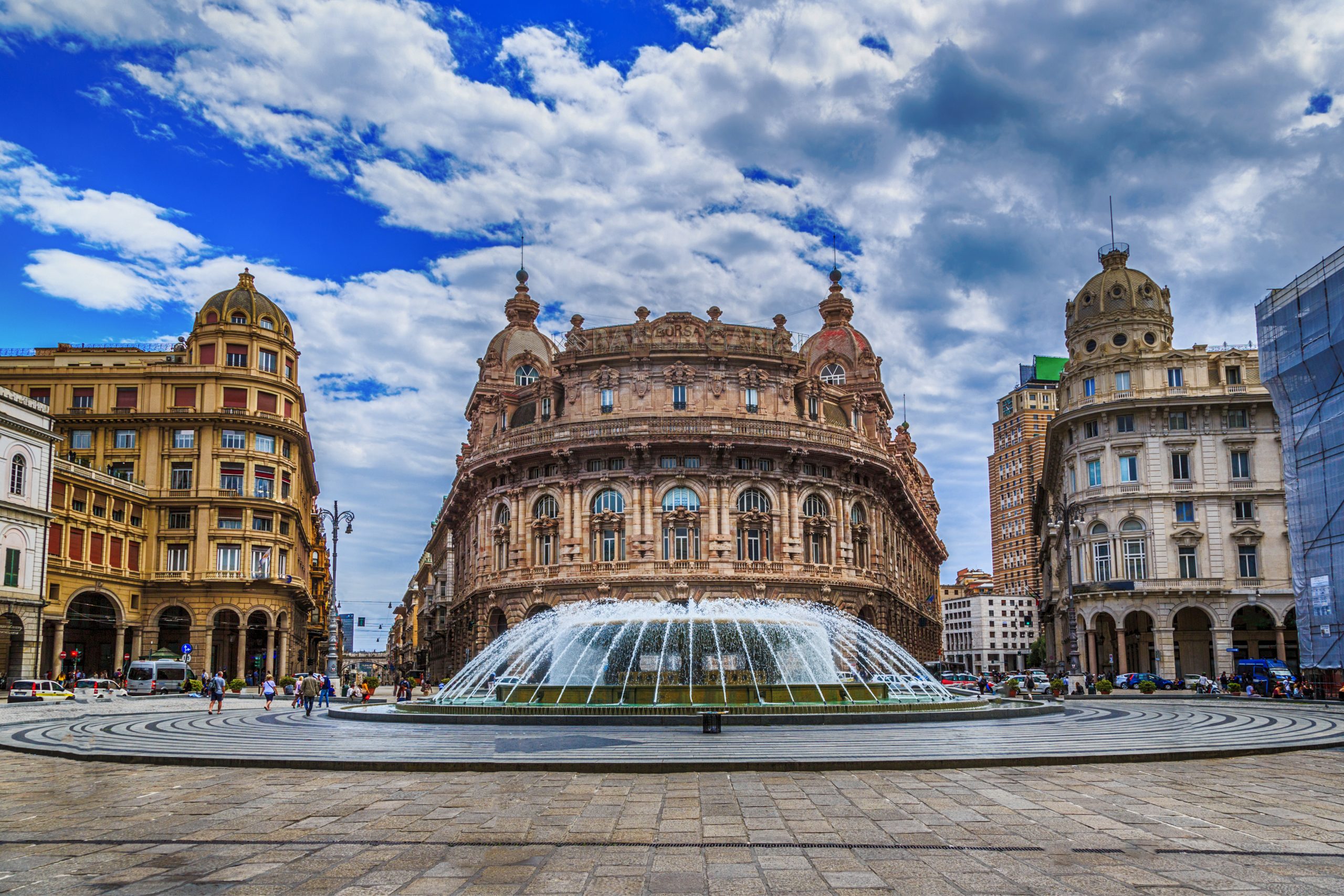
The modern heart of the city and, at the same time, one of its most powerful symbols, Piazza De Ferrari is a key crossroads for understanding Genoa’s urban evolution. This is where the dense fabric of the historic centre opens up into a more ordered, monumental city shaped by the late 19th century and major economic transformations. The iconic central fountain, with its constant movement, serves as a natural landmark—a place to pause, observe and find your bearings.
Overlooking the square are buildings that reflect Genoa’s more institutional and formal face, such as the Doge’s Palace and the grand financial and administrative architectures that speak of a city that was, for centuries, an economic and political powerhouse. From here begins Via XX Settembre, an elegant, arcaded shopping street where Liberty-style architecture meets everyday life, historic stores and major international brands. Walking along it means stepping into bourgeois, rational and dynamic Genoa, perfectly completing the transition from the medieval maze of the caruggi to a more modern, forward-looking city.
The Cathedral of San Lorenzo
Among the must-see sights in Genoa, the Cathedral of San Lorenzo is an essential stop, capable of telling centuries of the city’s history at a single glance. Its unmistakable black-and-white striped façade immediately catches the eye, standing out within the urban landscape as a powerful visual and symbolic landmark.
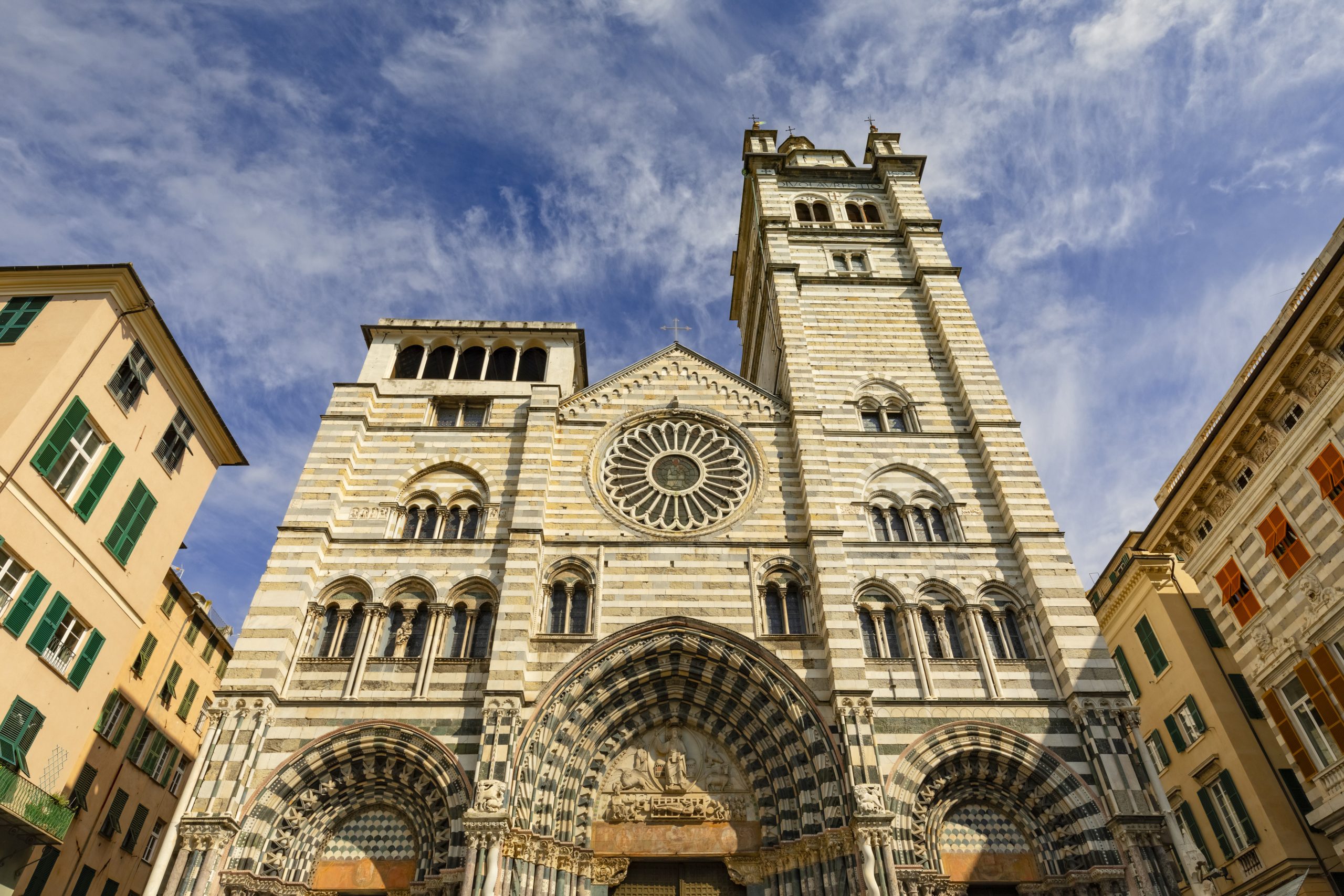
Stepping inside, the atmosphere shifts. The interior—both spacious and intimate at the same time—preserves works of art, chapels, relics and architectural details that reflect the cathedral’s central role in Genoa’s religious and civic life. It’s one of those places where the city’s rhythm seems to slow down naturally, offering a moment of silence and reflection right in the heart of the historic centre. Pausing for a few minutes, even just to watch the light filter through the naves, helps you connect with a deeper, more intimate side of the city.
The Rolli Palaces and Strada Nuova
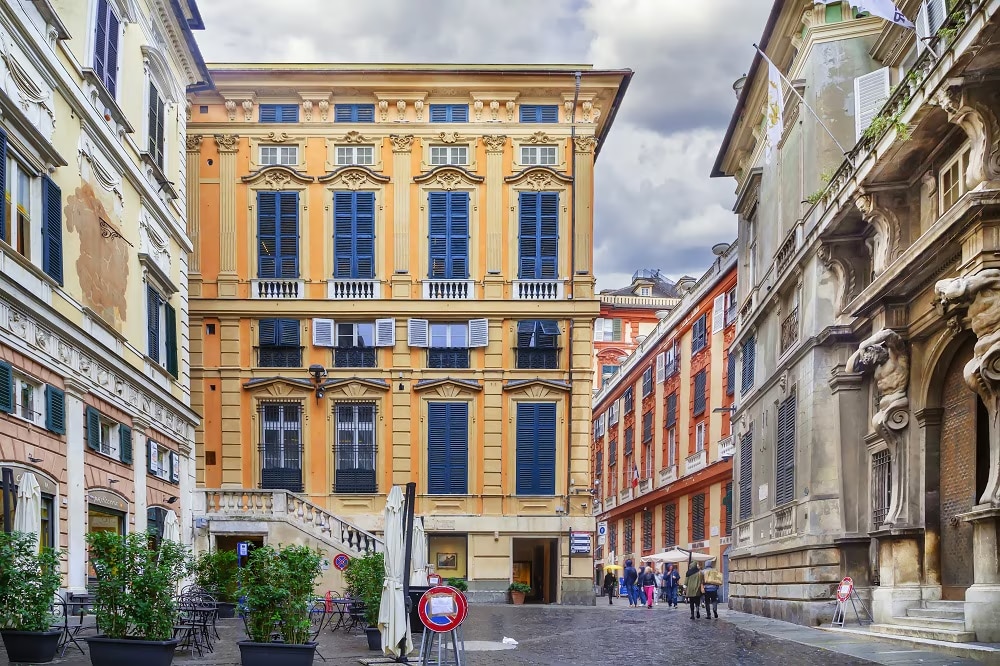
Via Garibaldi, once known as Strada Nuova, is one of the city’s most striking streets and home to the famous Rolli Palaces, extraordinary noble residences now listed as a UNESCO World Heritage Site. This elegant urban axis was created in the 16th century as a showcase of Genoese power—a street designed to impress, where the most influential families of the Republic built monumental palaces intended to host ambassadors, princes and distinguished guests.
Simply walking along the street already reveals the architectural grandeur and cultural ambition of Genoa at its height, through imposing façades, perfectly balanced perspectives and refined details. Stepping inside one of the palace-museums, however, takes the experience even further: spectacular frescoes, richly decorated halls, grand staircases and inner courtyards tell the story of a cosmopolitan city, cultured and deeply connected to its international role. It’s an essential stop for understanding why Genoa was, for centuries, one of the Mediterranean’s leading economic and cultural capitals.
Genoa between sea and views: what to see outdoors
Genoa is a vertical city, suspended between hills and the sea. This unique layout makes it perfect for those who love panoramic views and open-air walks, offering a constant dialogue between nature, urban landscapes and the Mediterranean.
Boccadasse, the seaside village
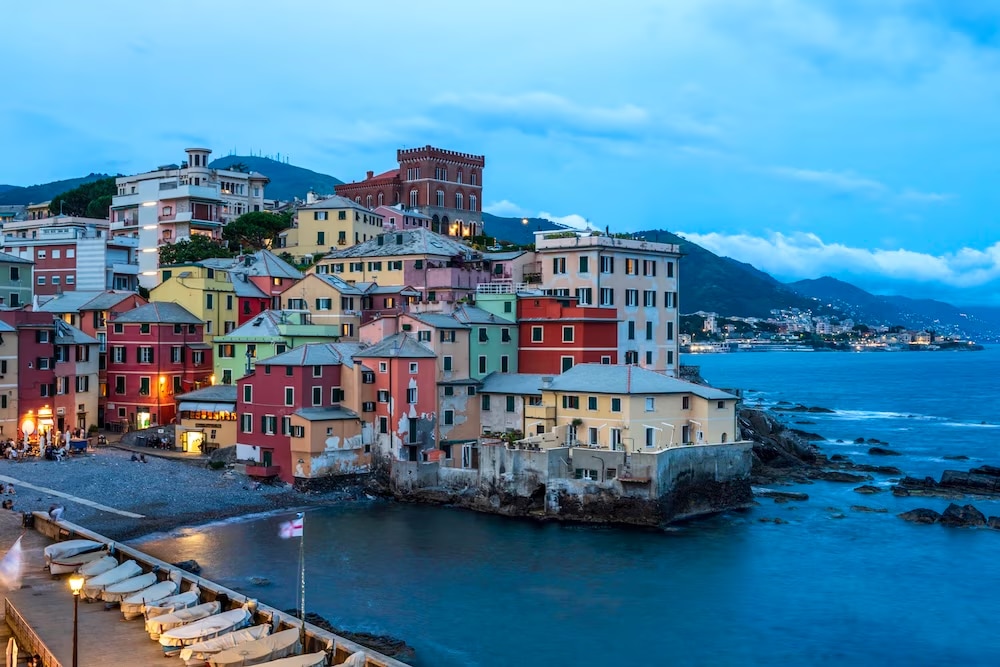
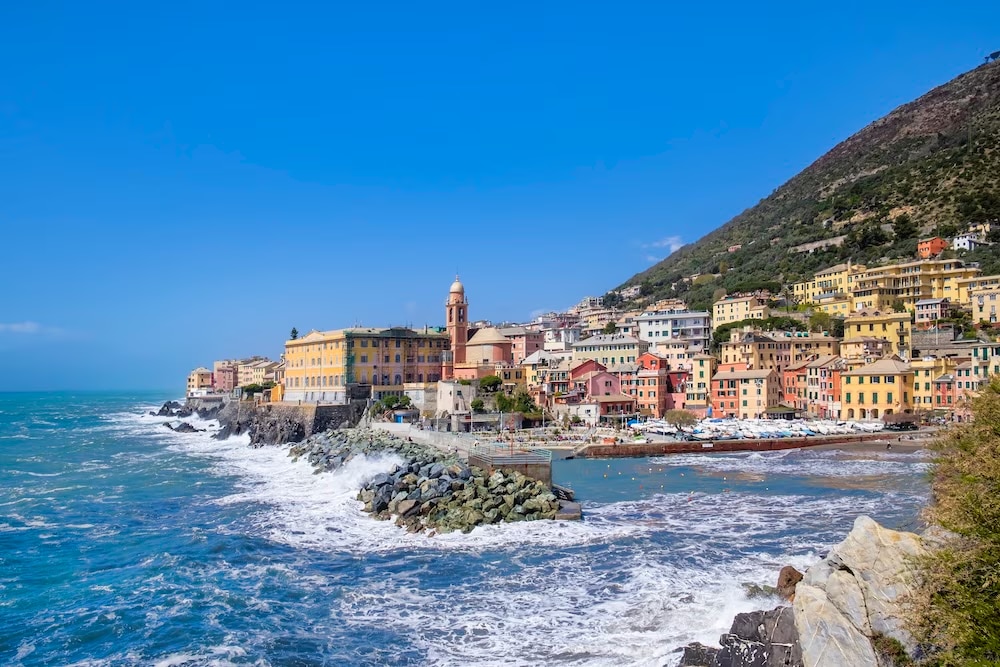
Boccadasse is without a doubt one of the most photographed and recognizable places to visit in Genoa. Yet, despite its popularity, it has managed to preserve an authentic, deeply maritime soul. This small fishing village, nestled between the city centre and the sea, seems to move at a different pace from the rest of the city.
Pastel-colored houses face one another like a natural amphitheatre, small boats rest on the shore according to ancient traditions, and the narrow alleyways gently open onto a small pebble beach. Everything here invites you to slow down, leaving room for contemplation and simplicity. Boccadasse is the perfect place for a break, far from traffic and urban noise—especially at sunset, when the sea reflects golden light and becomes the true star of the scene, offering one of the most evocative moments in all of Genoa.
Corso Italia and the seafront promenade
Those looking for things to do outdoors in Genoa will find Corso Italia to be one of the city’s most pleasant and representative walks. This long promenade overlooking the sea connects different urban beaches and beach clubs, offering open views of the horizon that contrast beautifully with the verticality and density of the historic centre.
Corso Italia is ideal for walking without haste, jogging, cycling or simply sitting and watching the sea, letting yourself be accompanied by the sound of the waves. Here, Genoa reveals a different side of itself: more relaxed, bright and unmistakably Mediterranean. It’s the perfect spot to enjoy a sunny afternoon, a seaside lunch or an evening stroll, discovering a city that opens up and shows a lighter, more laid-back dimension.
Spianata Castelletto and the city viewpoint
Among Genoa’s most breathtaking panoramas, the view from Spianata Castelletto stands out as an absolute must. From this terrace, the city unfolds in all its complexity: rooftops packed tightly together, the historic centre spreading toward the port, and the sea closing the horizon.
Reaching the viewpoint is already part of the experience, thanks to the historic elevators that climb the hillside and connect the lower city with higher ground. Once at the top, the reward is immediate: one of the most iconic views of Genoa, perfect for understanding its vertical nature and capturing the essence of a city that rises between land and sea.
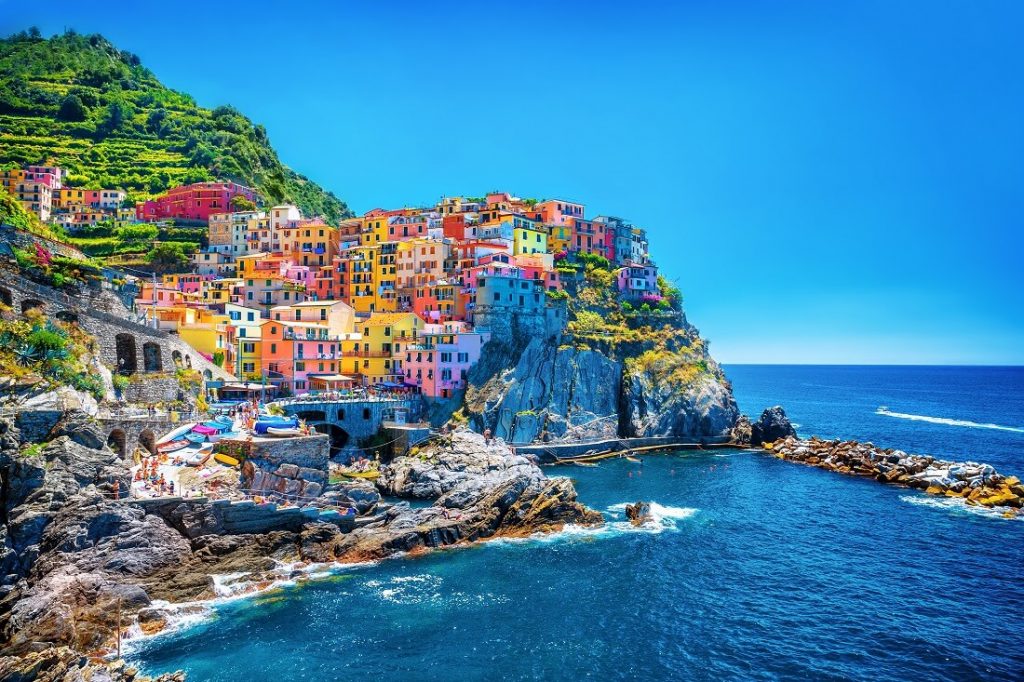
Exploring Cinque Terre: A Guide to Italy’s Stunning Coastal Gem
Exploring Cinque Terre offers an unforgettable adventure into the heart of Italy’s maritime landscape, where the azure waters, rugged cliffs, and lush vineyards create a backdrop of unparalleled beauty.
What to do in Genoa beyond the classic attractions
Once you’ve explored the city’s iconic sights, Genoa continues to offer less obvious but equally meaningful experiences, perfect for those who want to go deeper and discover a different side of the city.
Riding the funiculars and historic elevators
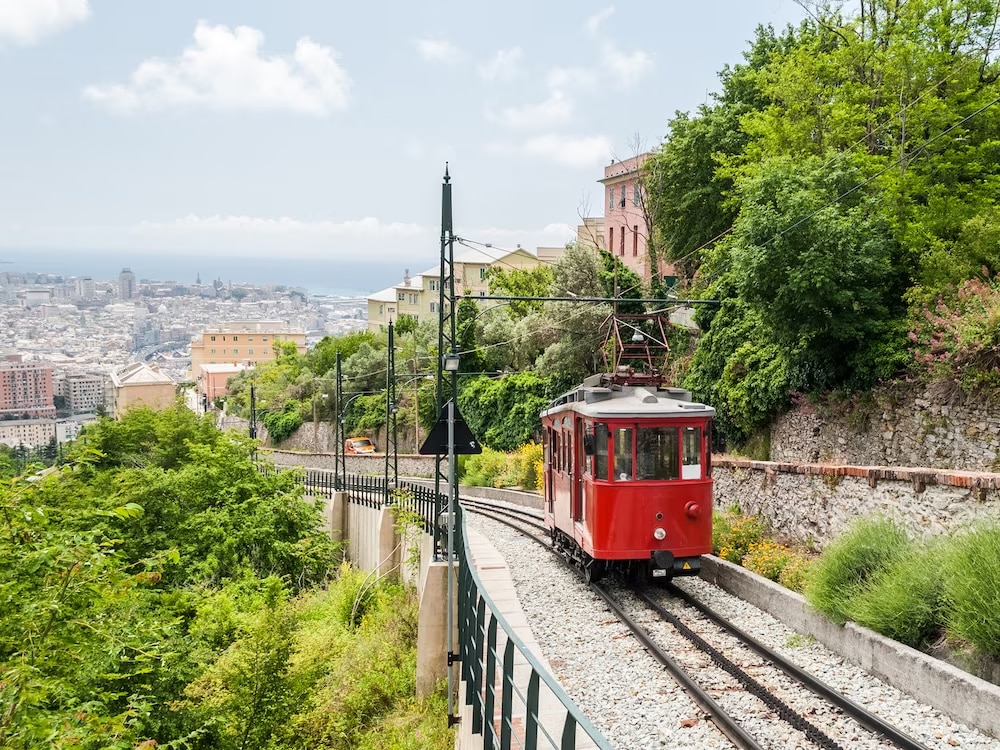
Genoa is a city built vertically, suspended between the sea and the hills, and this is precisely why it’s famous for its unique system of vertical transport within the urban landscape. Riding a funicular or one of the historic elevators isn’t just a practical way to overcome steep climbs—it becomes a true journey within the city, and often an unexpected one.
As you ascend, sudden glimpses open up between palaces, rooftops, narrow alleys and fragments of the sea that change perspective meter by meter. These transport systems tell another side of Genoa’s story: the ingenious ways the city has adapted to its complex geography over time. Using them isn’t just about convenience—it’s a way to better understand Genoa’s structure and how it has learned to coexist with its own vertical nature.
Visiting lesser-known museums
Beyond the major museums, Genoa is home to many smaller, surprising cultural spaces: collections dedicated to the sea, music and industrial history. They’re ideal for travelers who want to dig deeper and discover a more intimate, less narrated Genoa. Here are some of the city’s lesser-known museums worth exploring:
- Galata Museo del Mare – Alberto D’Albertis Collection: A great choice thanks to its ethnographic collections and panoramic views, telling the story of Genoa through voyages, exploration and global connections.
- Museum of Sant’Agostino: Perfect for understanding medieval Genoa. Less crowded and highly atmospheric, with sculptures and architecture in dialogue with the historic centre.
- Wolfsoniana: An original option focused on decorative arts and 20th-century propaganda, ideal for adding cultural depth and a “different” perspective to your visit.
- Giacomo Doria Natural History Museum: Historic, surprising and still relatively unknown, it broadens the view toward a scientific and educational Genoa, perfect for curious travelers with wide-ranging interests.
What to eat in Genoa: traditional Genoese dishes
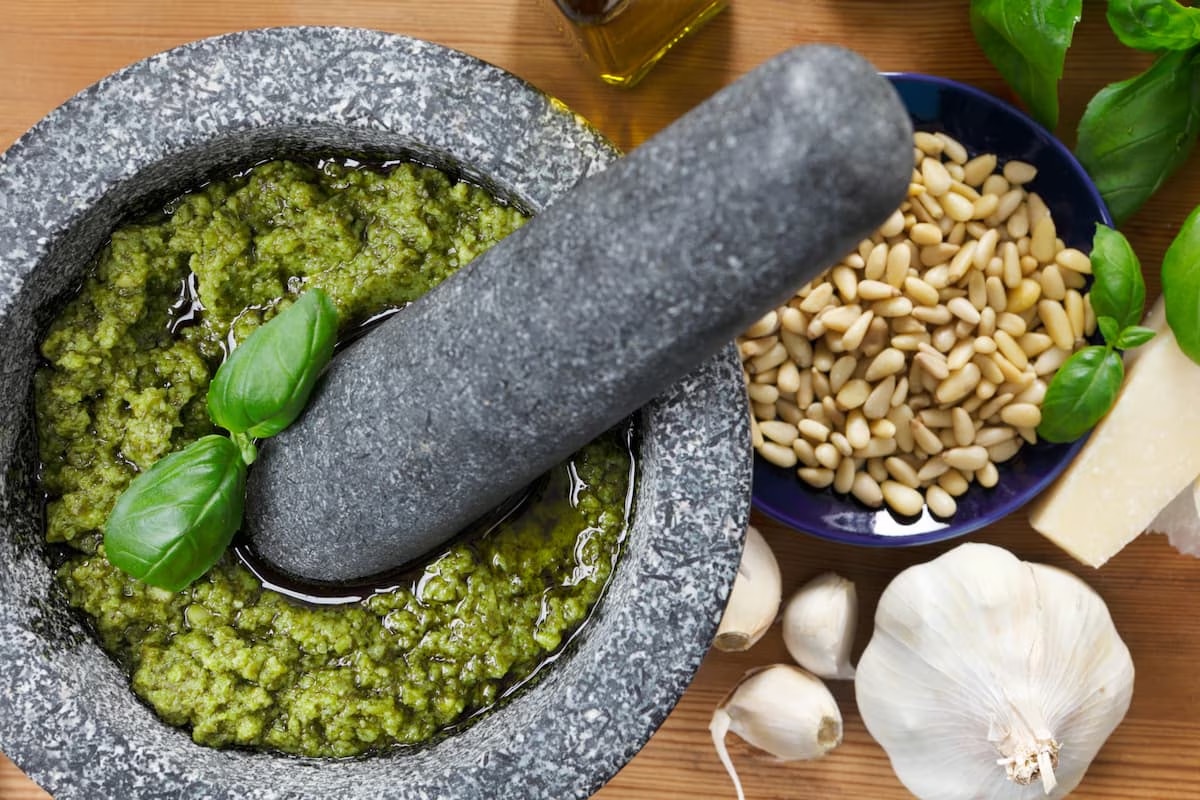
Eating in Genoa means understanding the land, its simplicity and its deep connection to high-quality, carefully chosen ingredients. Genoese cuisine is rooted in tradition and everyday life, shaped by the sea, the hills and a culture that values balance and authenticity.
Here are 10 traditional dishes you shouldn’t miss in Genoa:
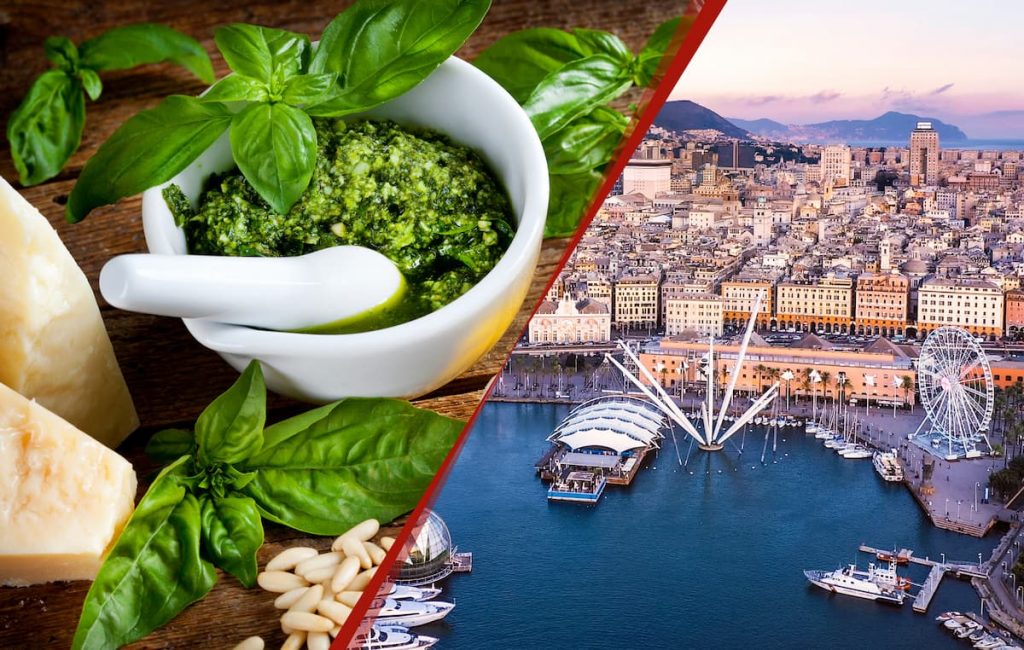
- Pesto alla genovese The undisputed symbol of Genoese cuisine: PDO basil, pine nuts, garlic, Parmigiano Reggiano, Pecorino and extra-virgin olive oil. Traditionally served with trofie or trenette.
- Genoese focaccia Soft on the inside, lightly crisp on the outside and rich in flavour. Enjoyed at any hour of the day, it’s a true local institution.
- Focaccia di Recco with cheese Thin, crisp and filled with fresh, melting cheese. A much-loved variation that originated just outside Genoa but is deeply connected to the city.
- Farinata di ceci A thin, golden savoury pancake made from chickpea flour, water and olive oil. Simple ingredients, unforgettable taste.
- Trofie al pesto The traditional pasta shape for pesto, often served with potatoes and green beans, in true Ligurian style.
- Pansoti with walnut sauce Stuffed pasta filled with wild herbs, dressed with a delicate sauce made from walnuts, bread and milk.
- Cima alla genovese A historic, rich dish: veal breast stuffed with eggs, vegetables, cheese and herbs, slow-cooked to perfection.
- Anchovies stuffed Ligurian-style Anchovies filled with breadcrumbs, herbs, garlic and cheese, then baked or fried. A classic of Ligurian seaside cooking.
- Pasqualina pie A savoury pie made with beet greens, ricotta and eggs, enclosed in ultra-thin layers of pastry. Traditionally associated with spring but enjoyed year-round.
- Genoese pandolce A festive dessert enriched with raisins, pine nuts and candied fruit, symbolising Genoa’s long-standing family traditions.
What to eat in Genoa: the best food specialities of the city
Discover the rich flavors of Genoa, Italy (Genova in Italian) with this comprehensive guide to the city’s most famous foods, from sacripantina cake to focaccia.
What to see around Genoa
Genoa is also an excellent starting point for exploring the Italian Riviera and eastern Liguria, with a variety of destinations that offer sea views, nature and picturesque seaside towns just a short distance from the city.
Nervi and its parks
The district of Nervi is one of Genoa’s most beloved areas for those seeking green spaces and sea views. Here, the city slows down and grows quieter, giving way to historic parks overlooking the water, carefully maintained and perfect for a relaxing walk or a break immersed in nature.
The symbol of Nervi is the Anita Garibaldi Promenade, a panoramic seaside path suspended above the water and considered one of the most beautiful coastal walks in Liguria. Walking along the promenade means following the coastline, listening to the sound of the waves and enjoying ever-changing views of the horizon. Nervi is the ideal destination for those who, after exploring what to see in Genoa, want to enjoy a moment of relaxation by the sea without straying too far from the city—yet experiencing a completely different atmosphere.
Camogli and the Golfo Paradiso
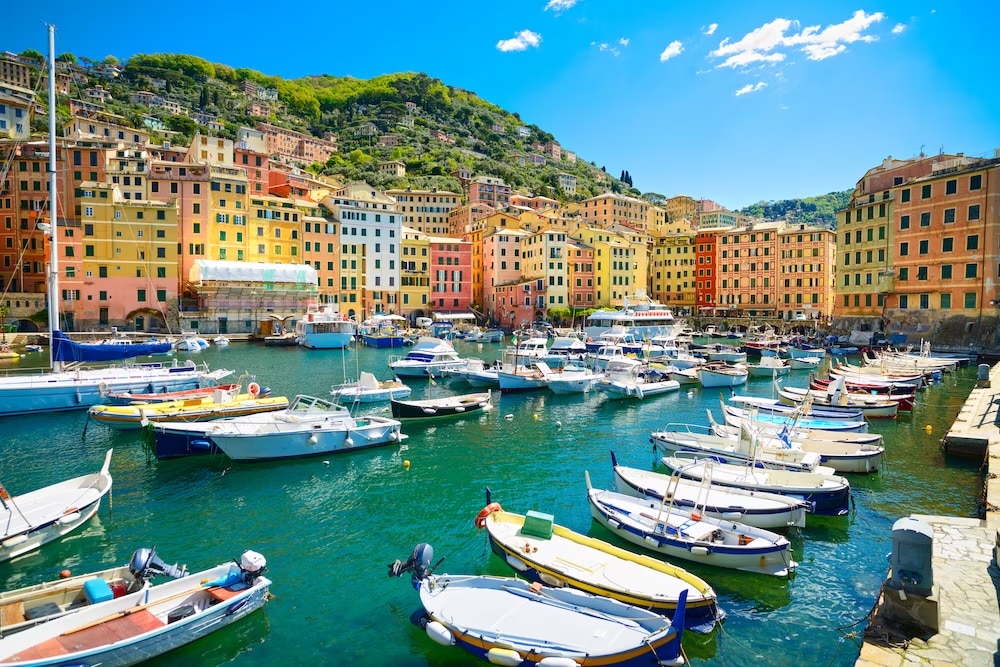
Camogli is one of Liguria’s most charming villages, instantly captivating visitors with its picturesque harbour and tall, colourful houses that seem to rise directly from the sea. Its charm lies in the perfect balance between postcard beauty and a deeply authentic maritime identity: here, life still follows the rhythm of the sea, marked by fishing traditions, small shops and streets that always feel lived in.
Just beyond Camogli stretches the Golfo Paradiso, a stretch of coastline that is quieter and more intimate than more famous destinations, ideal for those who love scenic walks and trails winding between sea and hills, coves and lesser-known beaches. It’s a perfect area to slow down, walk in nature and enjoy unspoiled landscapes. Visiting Camogli and the Golfo Paradiso means discovering an authentic, laid-back Liguria—one that perfectly complements the urban experience of Genoa with the beauty of its inland coast.
Portofino and Santa Margherita Ligure
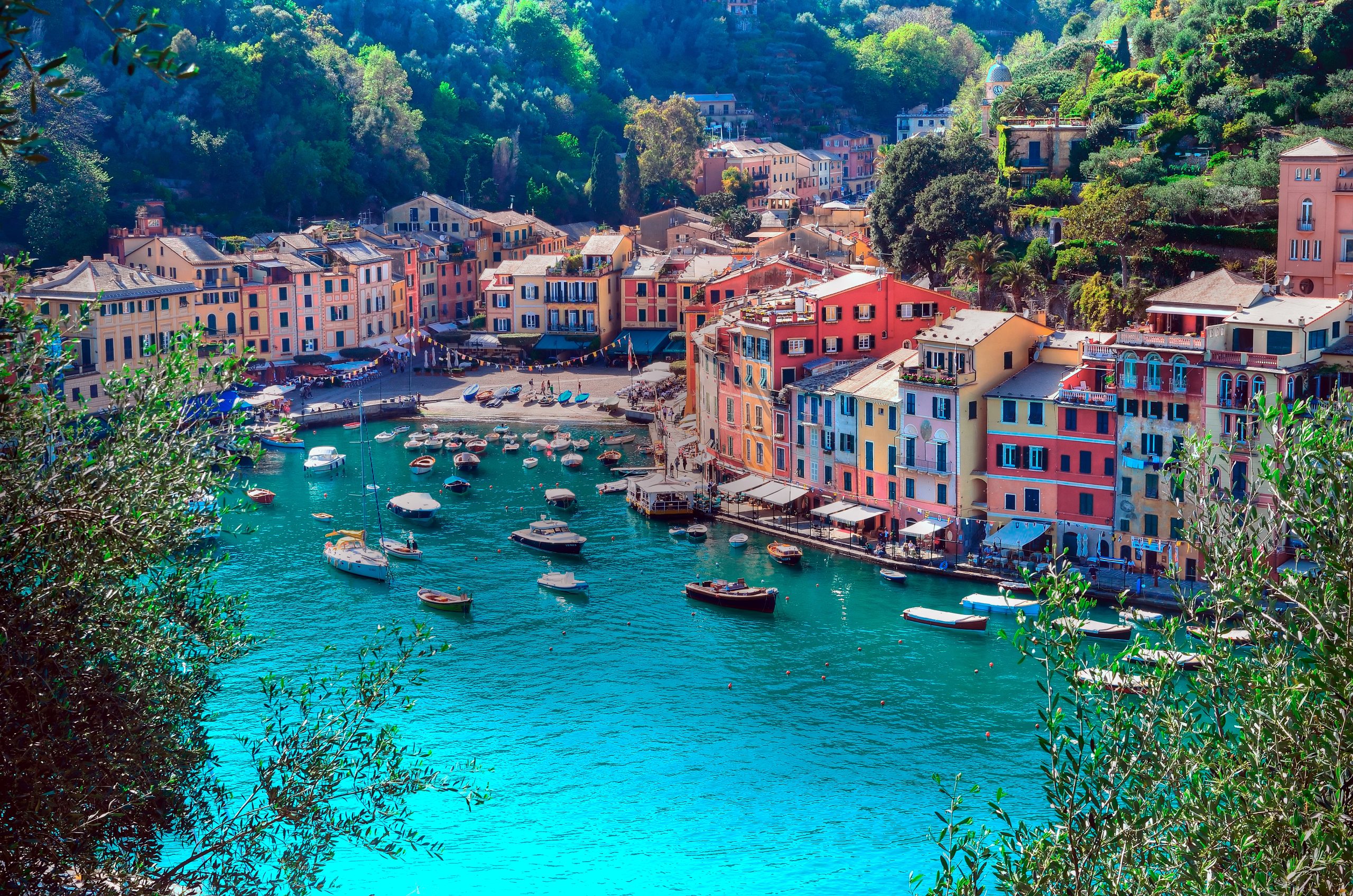
Portofino and Santa Margherita Ligure need little introduction. These two iconic destinations of the Italian Riviera perfectly represent a day trip from Genoa, offering a different atmosphere from the city centre—brighter, more open and entirely focused on the landscape.
Portofino enchants with its small, intimate harbour, pastel-colored houses reflected in the water and scenic paths climbing between the sea and nature. Santa Margherita Ligure, larger and more lively, combines a long seafront promenade, historic villas and gardens with a pleasant, elegant seaside feel, ideal for a relaxed walk or a break by the sea. Together, they tell another side of Liguria: refined yet relaxed, iconic yet authentic. They are the perfect conclusion for anyone who, after discovering what to see in Genoa, wants to widen their horizons and be won over by the timeless charm of the Riviera.
Visiting Genoa with Italo: plan your trip
Arriving in Genoa by train means reaching the very heart of the city comfortably and stress-free, ready to start exploring right away. Italo connects Genoa with major Italian cities such as Milan, Venice, Florence, Naples and Rome, making it easy to plan a weekend getaway or a longer holiday. Once you arrive, many of the city’s must-see sights are easily reachable on foot or by public transport, making your trip both practical and sustainable.
Genoa is a city that rewards those who take their time. Walk slowly, observe, listen and let yourself be surprised. With Italo, the journey begins smoothly—and Genoa will take care of the rest.