Padua is a city that surprises anyone who visits it, capable of bringing together, in a harmonious way, sacred places, lively squares, picturesque corners and a cultural heritage that spans centuries of history. In this article, you will find a complete itinerary on what to see in Padua, from its most famous attractions to more unusual places not to be missed, along with many useful tips to help you plan your visit in the best possible way. You will also discover why this city in the Veneto region is perfect to reach comfortably by train, which connects Padua quickly and conveniently with the main Italian cities.
- 1 Why visit Padua: history, art and authentic atmosphere
-
2
What to see in Padua: the main attractions
- 2.1 The Basilica of Saint Anthony
- 2.2 Prato della Valle
- 2.3 The Scrovegni Chapel and Giotto’s frescoes
- 2.4 Palazzo della Ragione and the central squares
- 2.5 The University of Padua and Palazzo del Bo
- 2.6 The Botanical Garden, a UNESCO World Heritage Site
- 2.7 Caffè Pedrocchi, a city symbol
- 2.8 The Cathedral and the Baptistery
- 3 Unusual things to see in Padua
- 4 What to see in Padua with children
- 5 How to get to Padua with Italo Treno
Why visit Padua: history, art and authentic atmosphere
Padua is not just one of the oldest and most prestigious university cities in Europe: it is a place that fascinates visitors with its elegant rhythm, the liveliness of its neighborhoods and the impressive wealth of treasures preserved in a compact historic center that is easy to explore on foot. Its squares, among the most beautiful in Italy, its medieval and Renaissance buildings, its monumental basilicas and its green spaces make it an ideal destination for a cultural trip or simply for a one-day getaway.
What to see in Padua: the main attractions
Padua is full of iconic places that tell more than 2,000 years of history. Here are the places to visit in Padua to experience the city at its best.
The Basilica of Saint Anthony
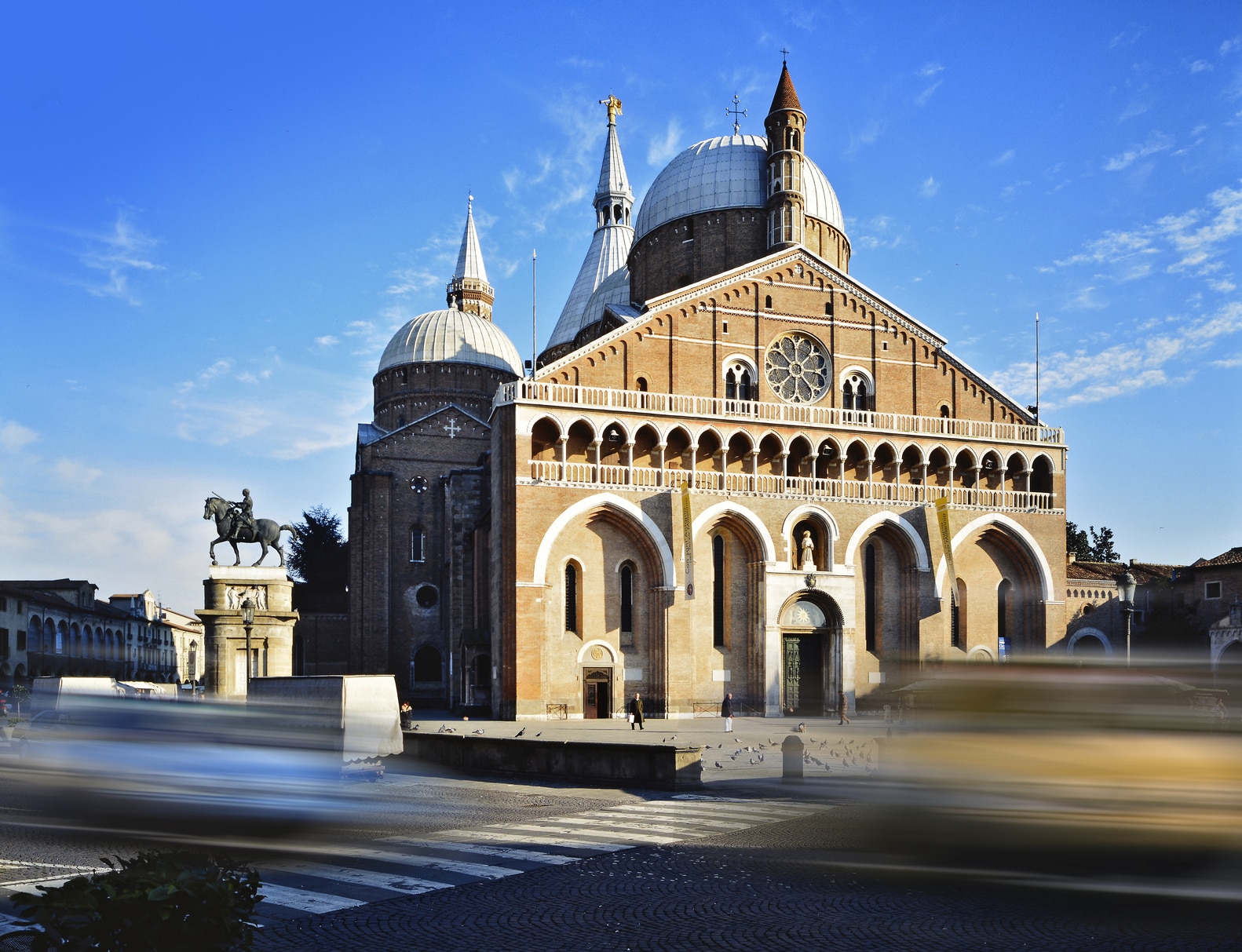
Among the most iconic places to visit in Padua, the Basilica of Saint Anthony undoubtedly holds a special place. It is not only a religious sanctuary, but also a true treasure chest of art that attracts millions of visitors from all over the world every year. Its architecture, a striking combination of Romanesque, Gothic and Byzantine elements, tells centuries of history and bears witness to how Padua was once a crossroads of culture and great importance.
As you approach the basilica, the first thing that catches your eye is its “onion-shaped domes”, which recall the great medieval churches of the Christian East and create an unmistakable profile in the city skyline. Once across the threshold, the interior space immediately surrounds visitors in an almost suspended silence, broken only by footsteps echoing through the nave, chapels and ancient cloisters.
Inside, the basilica preserves masterpieces of extraordinary artistic value, from Donatello’s sculptures, created for the high altar, to the frescoes decorating the side chapels. Among them, the most famous is the Chapel of the Ark, where the saint’s relics are kept. The richness of the marble, the delicacy of the bas-reliefs and the expressive power of the sculpted figures create an atmosphere capable of moving deeply even those without a particular religious sensitivity.
Visiting the Basilica of Saint Anthony means taking a journey through time, but also experiencing a genuine moment of reflection: an experience that brings together spirituality, art and history in a harmonious way, leaving visitors with a sense of peace and wonder that stays with them long after they leave.
Prato della Valle
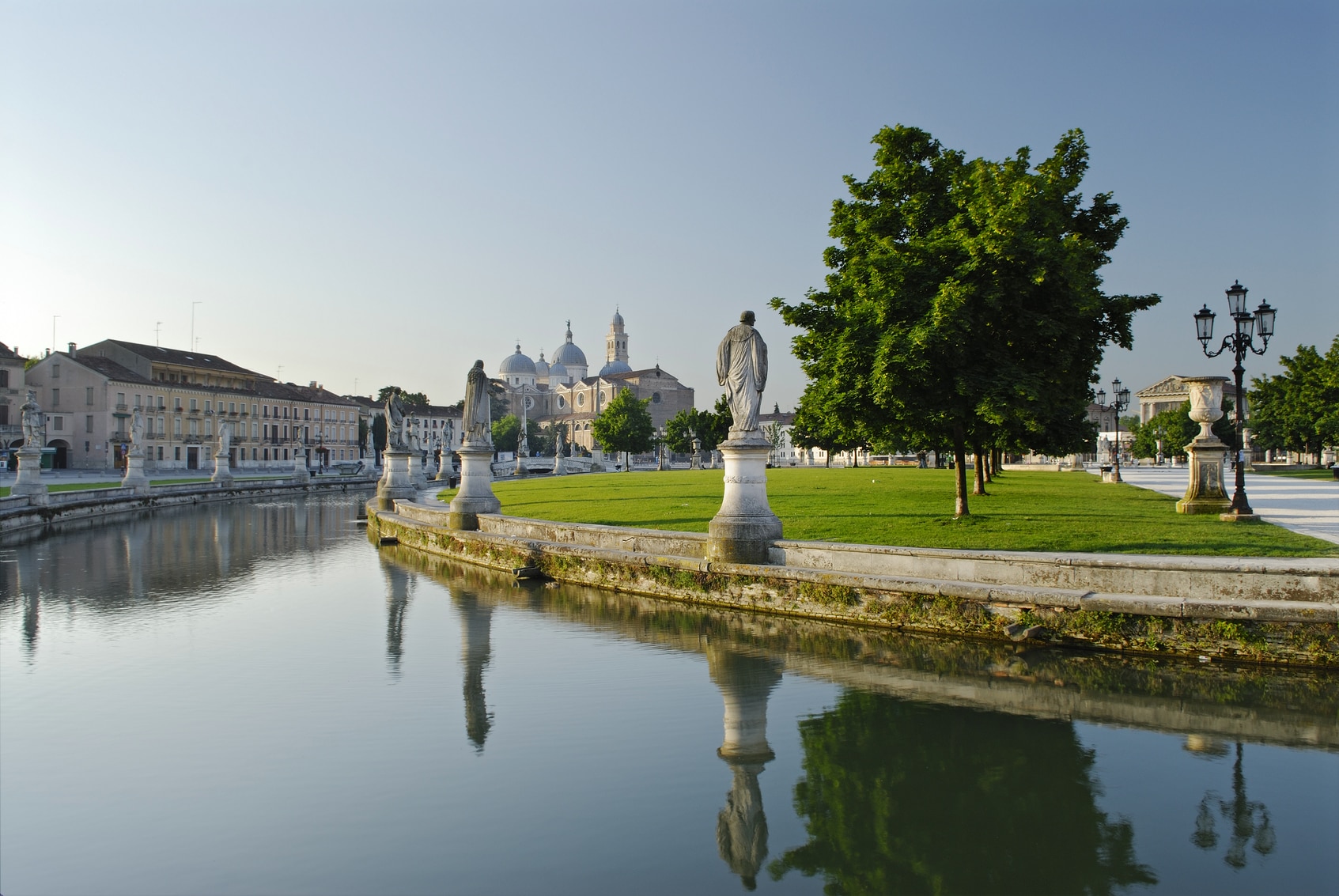
Visiting Padua without stopping at Prato della Valle would truly mean missing out. With its more than 88,000 square metres, this monumental square is not only one of the largest in Europe, but also a true urban stage, where history, everyday life and an atmosphere that changes from hour to hour are woven together.
At the heart of the square lies the Isola Memmia, an elegant green ellipse surrounded by a canal and framed by a double ring of statues depicting prominent figures from Padua’s history and the Veneto region. Walking along the small bridges that connect the island to the rest of the square, you find yourself immersed in an almost theatrical setting: the reflections of the statues on the water, cyclists gliding by, families relaxing on the grass, and groups of students chatting in the sun.
Prato della Valle is a place that changes its character depending on the time of day you visit. In the morning, it hosts traditional markets filled with the scents of spices, fresh bread and flowers; in the afternoon, it becomes an ideal open space for a stroll under the trees; in the evening, soft lights make the whole square even more evocative. It is the perfect place to observe daily life, take photographs and let yourself be surprised by its almost meditative dimension, despite its imposing scale.
A short walk from the square lies the district of the Basilica of Saint Giustina, one of the largest churches in the Christian world. Its simple façade, imposing domes and the silence preserved within its cloisters create a fascinating contrast with the movement of Prato della Valle. Walking between these two areas allows visitors to grasp the true essence of Padua: a harmonious balance between historical grandeur, spirituality and everyday life.
The Scrovegni Chapel and Giotto’s frescoes
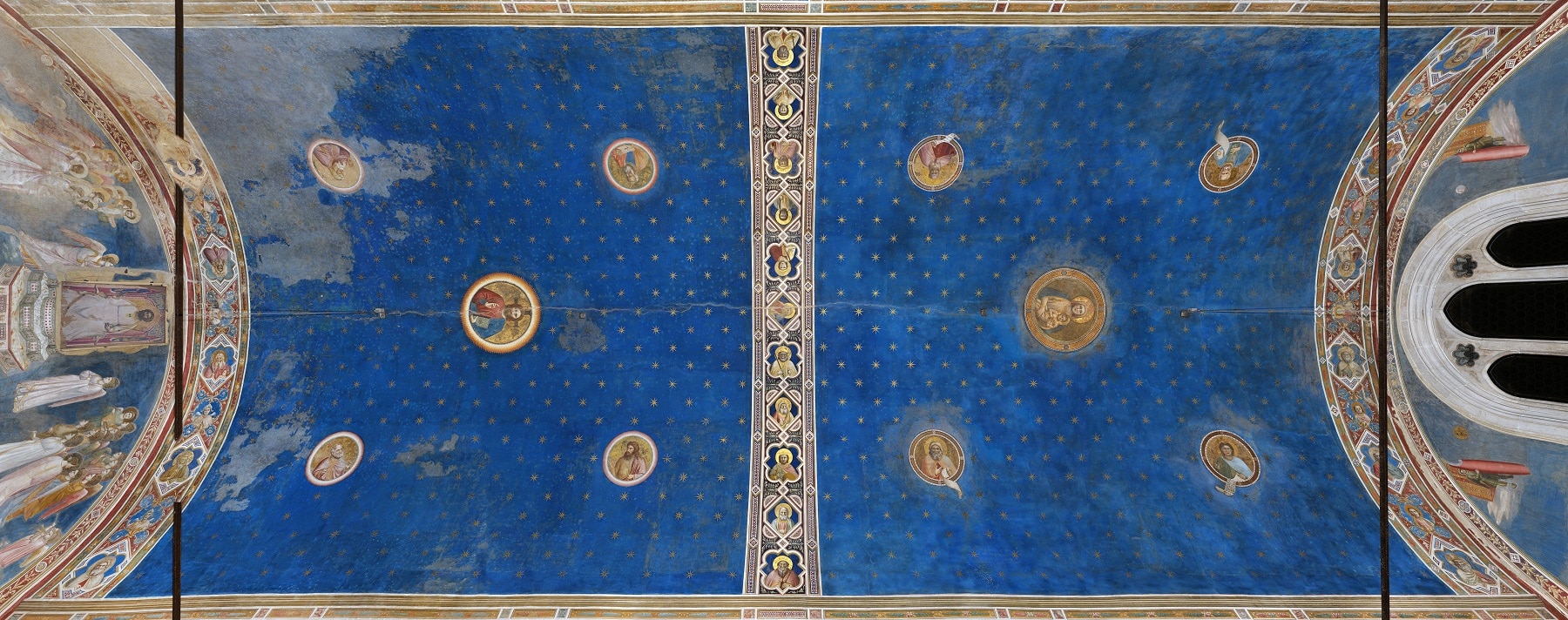
If there is one place capable of expressing on its own the revolutionary power of Italian art, it is undoubtedly the Scrovegni Chapel. Set within the area of the Giardini dell’Arena, this small 14th-century architectural jewel houses one of the most important pictorial cycles in the entire history of Western art. Giotto worked on it between 1303 and 1305, creating a visual narrative that still leaves scholars, enthusiasts and visitors from all over the world speechless.
Entering the chapel feels like taking a leap of seven centuries, yet at the same time it brings the surprising sensation of standing before an incredibly modern work of art. The intense colours, the brilliance of the blues and yellows, the delicacy of the faces, the depth of the gestures: every scene, from the Stories of Joachim and Anne to the great Last Judgement, seems vibrant and alive. With these works, Giotto revolutionised the way people represented the human being and its emotions, introducing a more natural perspective, attention to the psychology of the characters and a narrative ability that anticipated the great Renaissance season.
The result is a masterpiece that is not simply admired: it is experienced. Your gaze moves from one panel to another, searching for details, recognising emotions, and being surprised by how a work over seven centuries old can still appear so current. And when your eyes rise toward the starry vault, you feel a sense of intimacy and wonder impossible to describe.
To preserve this fragile heritage, access is regulated and advance booking is mandatory. Before entering, visitors wait a few minutes in a climate-controlled chamber that helps stabilise humidity and protect the frescoes. It is a small but necessary pause, one that helps make the visit even more special, as if it were preparing you for such a precious encounter.
And when you finally step inside, you realise that every expectation has been richly rewarded. The Scrovegni Chapel is not just one of Padua’s main attractions: it is an artistic experience that stays in the heart and is worth the journey on its own.
Palazzo della Ragione and the central squares
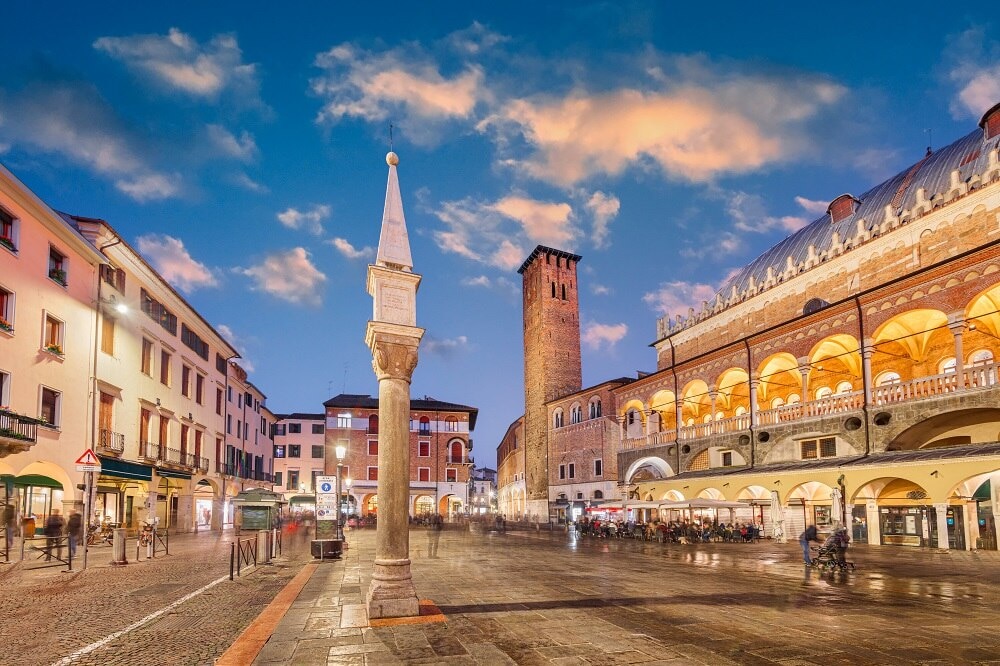
The Palazzo della Ragione, with its elegant grandeur, is one of Padua’s most recognisable symbols. When you stand before its large elevated structure, supported by a double row of porticoes, it feels as though you are stepping into a place suspended in time. Built in the 13th century as the seat of the city courts, today it preserves an architectural and artistic heritage unlike any other, capable of telling centuries of history in a single glance.
Its true jewel is the Salone, one of the largest halls in Europe covered by a single roof, entirely decorated with a fresco cycle that brings together astrology, medieval symbols, trades, virtues and scenes from everyday life. Walking beneath its lofty wooden vault, with its overturned ship-hull shape, means immersing yourself in a space that envelops and astonishes. Every fresco seems to engage visitors, inviting them to discover details, hidden meanings and age-old stories.
Outside, the palace overlooks two of the liveliest squares in the city: Piazza delle Erbe and Piazza della Frutta, long the commercial heart of Padua. Every morning, these squares turn into an animated open-air market, where stalls of fruit and vegetables, flowers, perfumes and local specialities sell among voices, colours and aromas that fill every corner. It is one of those places where you truly grasp the city’s authentic soul, made up of deeply rooted habits and everyday rhythms passed down through generations.
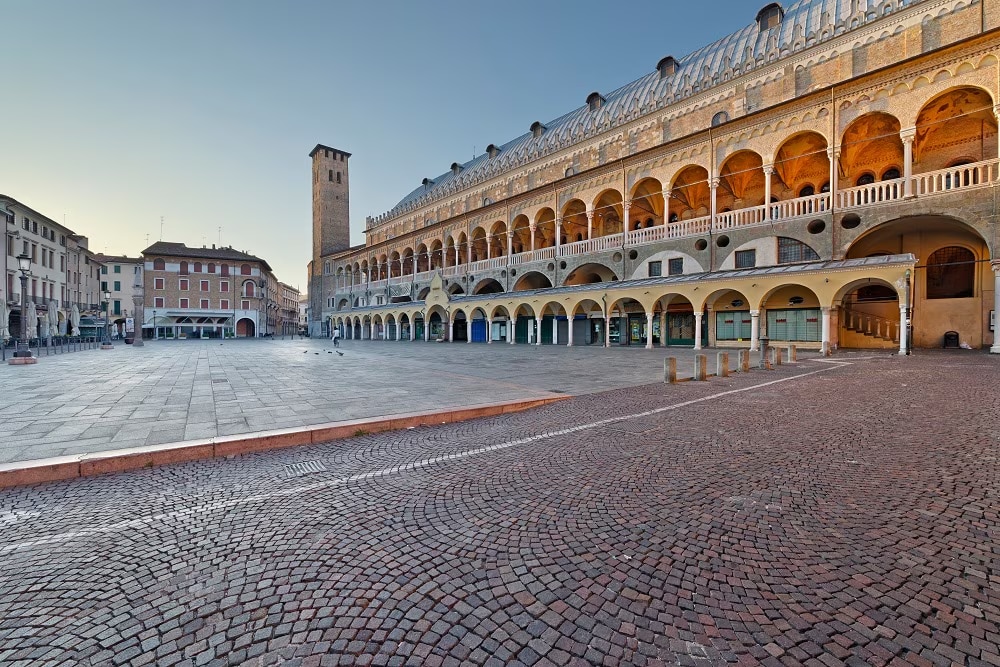
The porticoes surrounding the squares, with their historic shops and traditional cafés, invite visitors to slow down and let themselves be carried along by the city’s most vibrant side: an urban space in which every architectural detail and every everyday scene becomes something worth noticing. When the market closes and the squares begin to empty, the atmosphere shifts once again: tables open onto the streets, the lights of the shop windows create reflections on the paving stones, and the Palazzo della Ragione becomes an imposing theatrical backdrop embracing the evening.
Visiting these squares means discovering Padua in its most urban and convivial form: a place where history, commerce and daily life have coexisted for centuries, turning every step into a sensorial experience.
The University of Padua and Palazzo del Bo
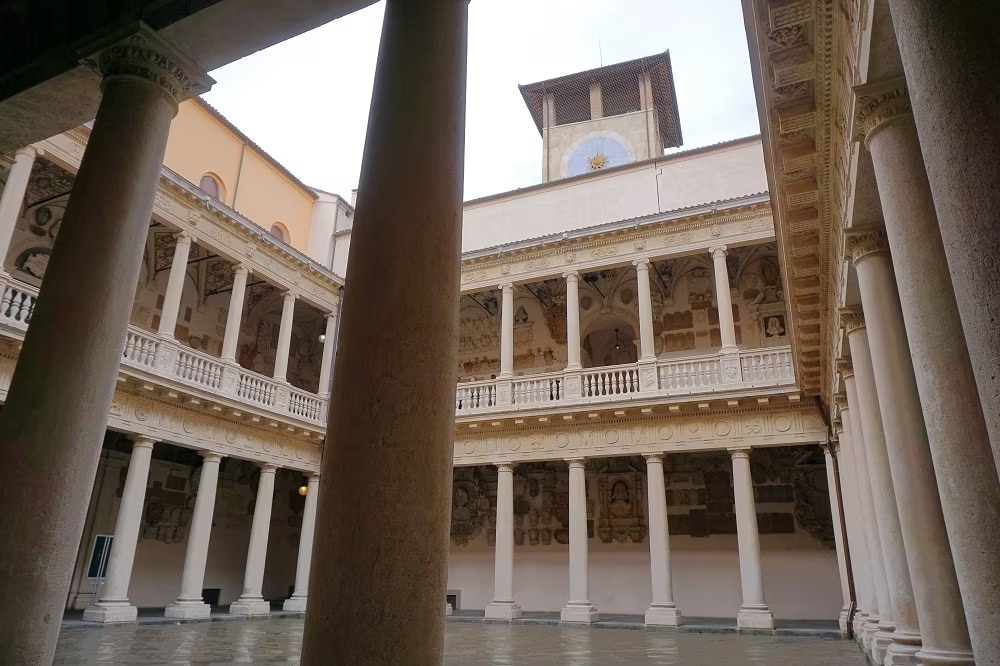
Visiting Padua also means stepping into one of the oldest academic traditions in Europe. Founded in 1222, the University of Padua is an institution that has shaped the history of science, medicine and Western thought. Even today, walking through its spaces gives the impression of entering a vibrant fabric of study, discovery and ideas that have crossed the centuries.
The symbolic heart is Palazzo del Bo, the historic seat for which Padua is linked to the authority of the city’s university tradition. Entering its courtyards is like opening the door to a place suspended between reason and symbolic beauty: here the present and the past meet. The loggias, inner courtyards, monumental staircases and historic lecture halls are all part of a journey that tells the story of the lives, figures and teachings that changed the course of knowledge.
It was here that Galileo Galilei taught for 18 years, helping to revolutionise the way people thought about the laws of nature. Walking through these corridors today, observing the coats of arms of the ancient “student nations” painted on the walls, is like imagining university life in the full splendour of the Renaissance and breathing in the cultural legacy of the city.
Among the wonders of Palazzo del Bo is the Anatomical Theatre, the oldest in Europe still preserved in its original form. Built in 1594, it is an architectural jewel designed to allow students of medicine to attend dissections: a wooden elliptical structure, with tiered levels overlapping one another, recalling a small scientific arena. Entering it almost takes your breath away: it still seems possible to sense the attentive silence of the students and the emotion of the discoveries once made here.
Palazzo del Bo is not just a building to visit: it is a place of memory and future, a symbol of a city that has always believed in the value of knowledge. Walking through its interior means taking a journey into the history of scientific thought, but also understanding why Padua is still today a city deeply connected to research and innovation.
The Botanical Garden, a UNESCO World Heritage Site
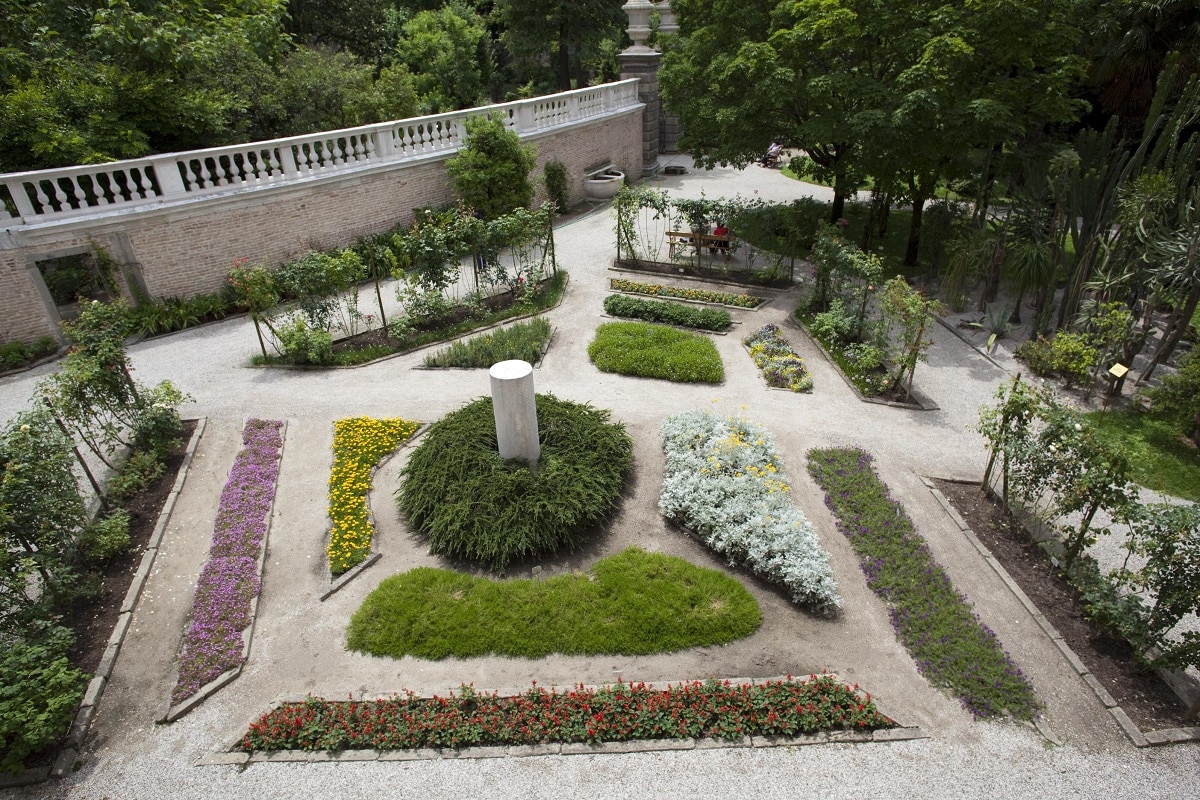
Among the most evocative places to visit in Padua, the Botanical Garden holds a special place, not only for its natural beauty, but also for its historical and scientific value. Founded in 1545, it is the oldest university botanical garden in the world still in its original location: a primacy that alone tells the central role Padua played in European science. Here, for centuries, scholars have cultivated and catalogued plants from every corner of the Earth, helping to establish botany as a discipline.
Today, the Botanical Garden is recognised as a UNESCO World Heritage Site, and walking through it means understanding a place where the history of science and the beauty of nature come together. Its original layout, with the famous “hortus cinctus”, is still perfectly legible: a geometric garden enclosed by walls, designed to protect rare plants and at the same time make observation and research easier. Around it stretches a richly layered park, where exotic species, monumental trees and themed areas coexist, each designed to tell the extraordinary variety of the plant world.
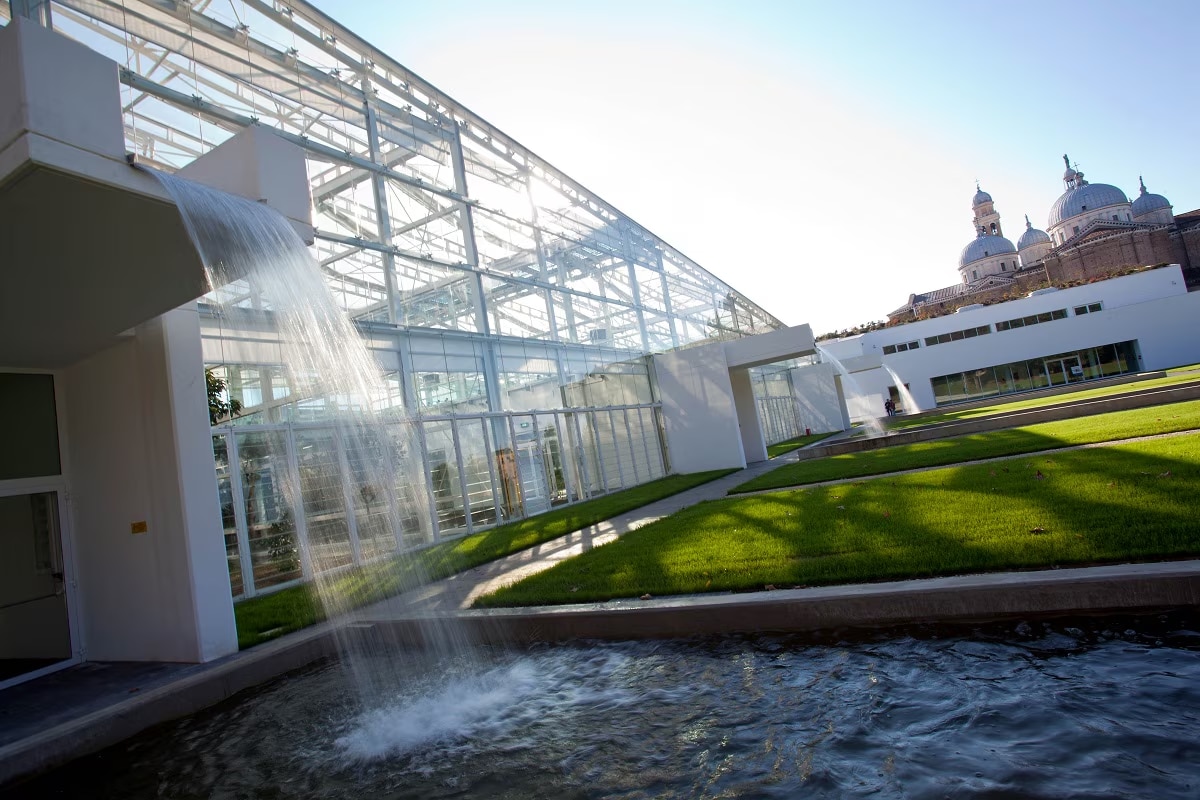
Among the most fascinating stops is undoubtedly the Garden of Biodiversity, a modern greenhouse made up of several environments that range from tropical plants to the more humid ones of more arid climates. Walking inside it is an immersive experience: the climate changes, the scents become more intense, the foliage takes on unexpected shapes and the educational route helps visitors understand how fragile and precious life’s network on Earth truly is.
Not just trees and flowers, but also the famous Goethe palm, which inspired the writer in formulating his theory of plant metamorphosis. In every season, the Botanical Garden reveals different surprises: unexpected blooms, intense colours and shaded corners perfect for a contemplative pause.
Caffè Pedrocchi, a city symbol
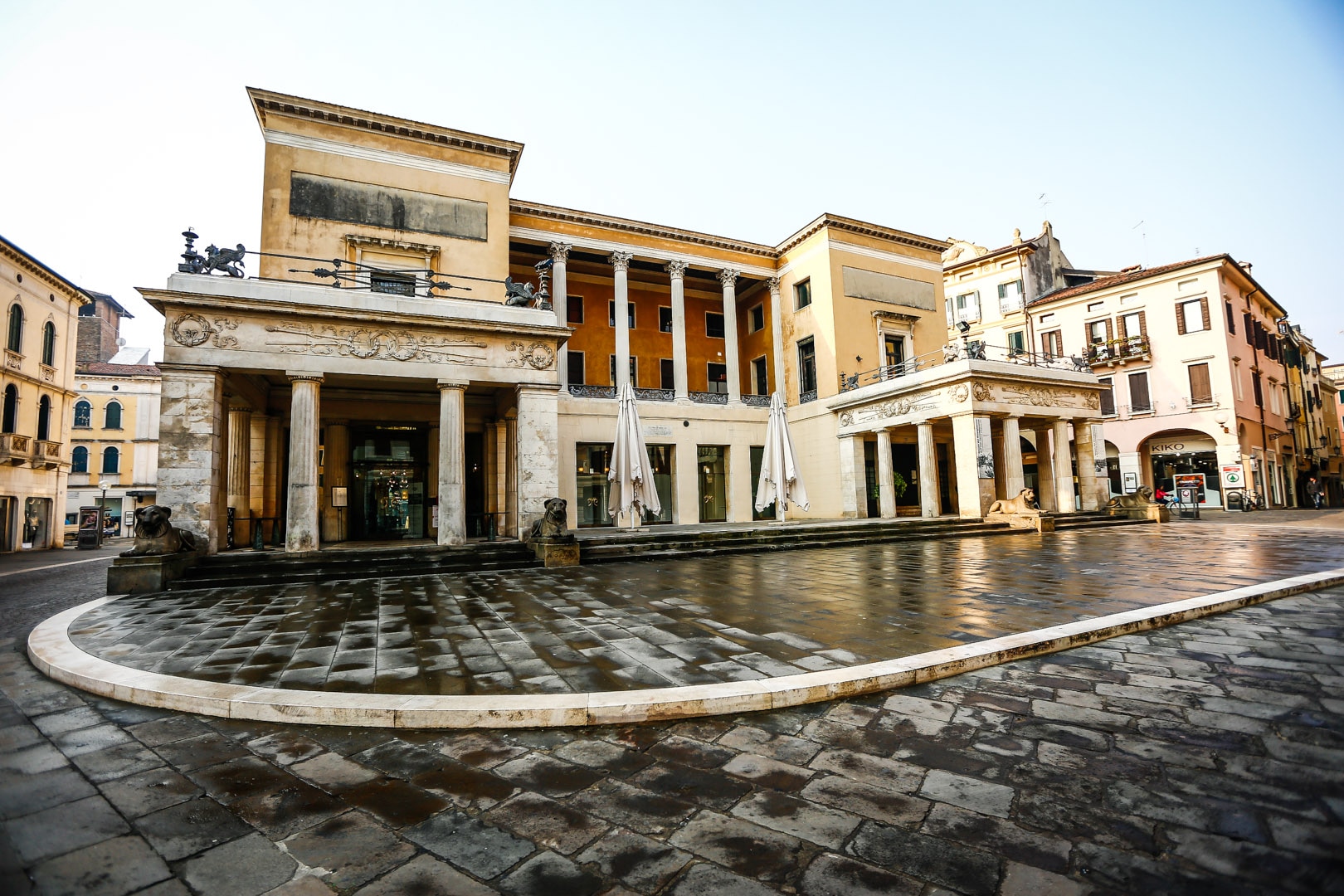
Known as the “café without doors”, Caffè Pedrocchi is one of Padua’s most fascinating historic venues. Frequented by students, intellectuals, artists and travellers since the 19th century, it is a place that tells the story of the city’s civic and cultural life. A must-see stop is the Pedrocchino, a coffee-based drink with mint and cream.
The Cathedral and the Baptistery
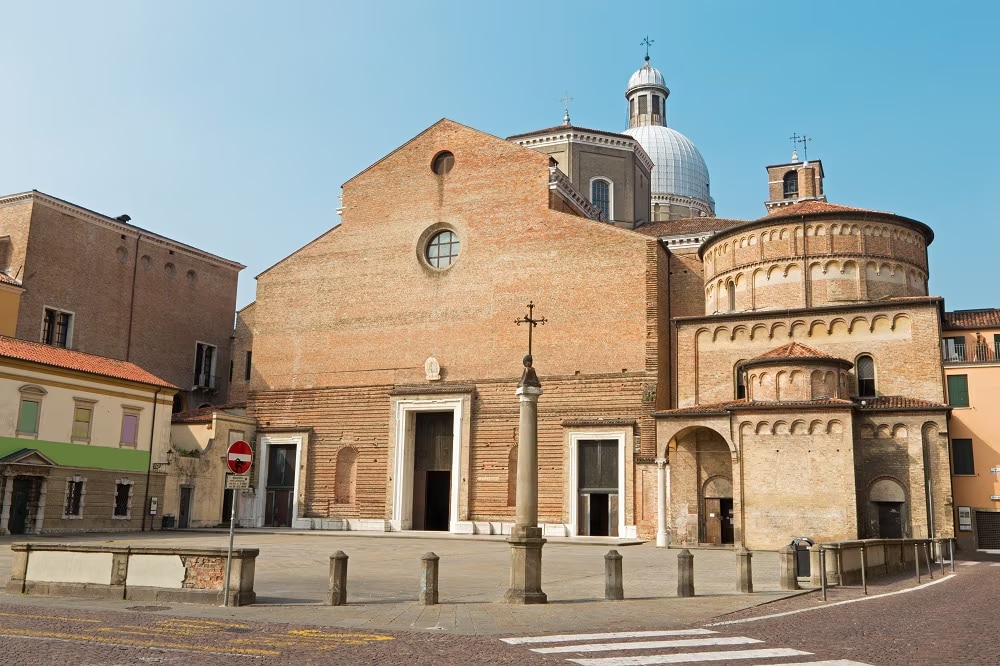
In the heart of Padua’s historic centre stands the Cathedral of Padua, a cathedral that, despite its architectural sobriety, holds centuries of history and a deeply rooted spirituality. Dedicated to Saint Mary of the Assumption, the cathedral has gone through many transformations over time: its current structure dates back to the Renaissance, yet beneath its foundations lie even older traces that tell the story of the city’s evolution and its religious community.
All the same, it is the Baptistery that leaves visitors truly speechless. Externally modest and understated, once you step inside it feels as though you are entering a world of light and colour: a place where painting becomes narrative, prayer and wonder. Here, Giusto de’ Menabuoi created one of the most extraordinary fresco cycles in the history of Italian art.
The dome, dominated by the great image of Christ Pantocrator, seems suspended in a star-filled sky, while around it biblical scenes, angelic figures and symbolic details follow one another, inviting visitors to observe, discover and interpret. The walls tell their story in a fluid and enveloping way, transforming the Baptistery into a true painted book, where every image is part of a broader visual narrative.
The impression is that of standing before a place capable of conveying an intense emotional response: vivid colours, the coherence of the narrative and the balance of the whole make this cycle one of the most important in 14th-century Europe. You do not need to be an art expert to be moved here: simply lift your gaze and let yourself be guided by wonder.
Unusual things to see in Padua
Padua is not only about famous monuments: it is also a city full of fascinating details and lesser-known places.
La Specola and the ancient astronomical observatory
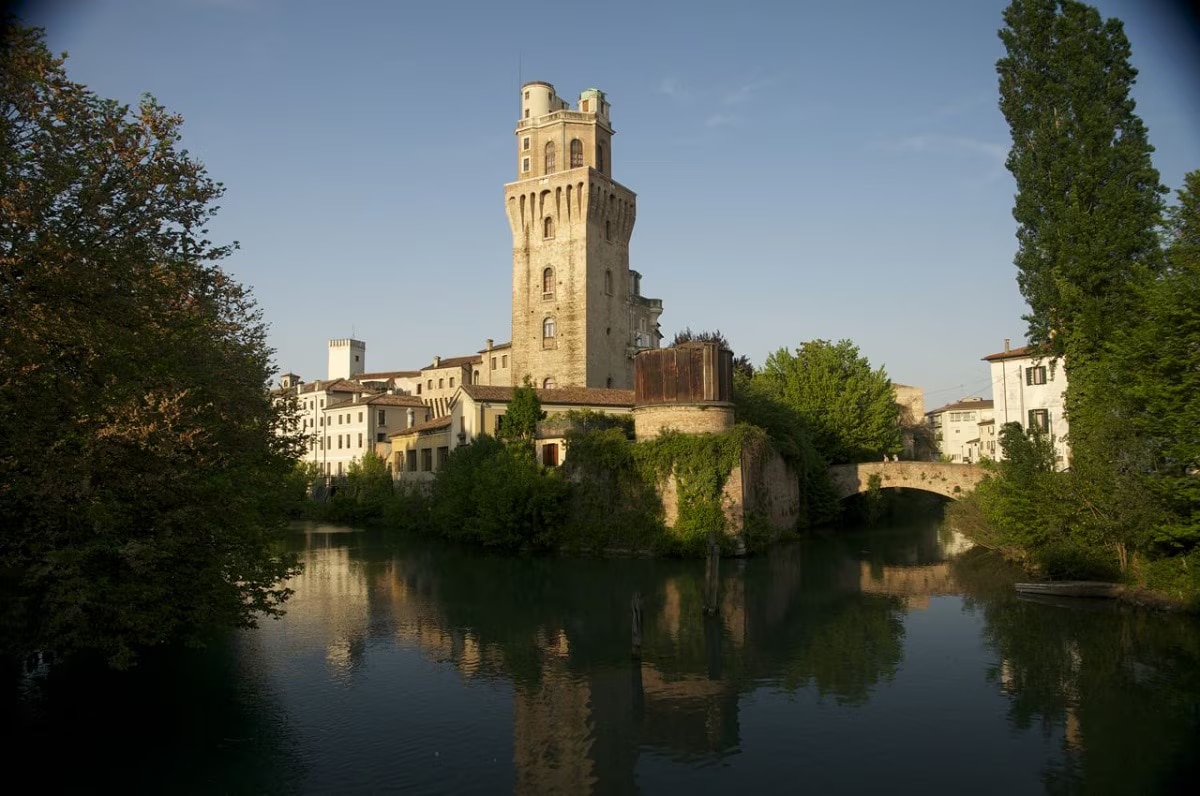
Among the lesser-known yet most fascinating places in Padua stands La Specola, a monument towered over by the reflections of the river and the profiles of the city. At first glance, it may look like an old military bastion, but for centuries it was actually one of the leading astronomical observatories in Europe, a point of reference for scholars seeking to understand the movement of the stars and planets long before the modern age.
The tower, part of the ancient Carrara castle, was transformed into an observatory in the 18th century and equipped with instruments that, for the time, represented the forefront of science. Here astronomers studied the sky with tools used to trace observations, oriented north and south in order to obtain a complete view of the celestial vault. Registers, maps and the objects now preserved in the La Specola Museum tell a fascinating chapter in Padua’s history: a city that not only looked ahead, but literally looked beyond the Earth.
Visiting this ancient observatory means coming into contact with a past in which scientific curiosity was already a driving force of progress. The interior rooms preserve an elegant and quiet atmosphere, enriched by models, historic telescopes and exhibition panels explaining the observatory’s role in the birth of modern astronomy.
And then there is the panoramic terrace, one of the most delightful surprises of the visit. Climbing all the way to the top means changing perspective on the city: the rooflines, church domes, winding lines of the canals and the more distant silhouettes of the arcades all come together in a view that is hard to forget. It is a place for anyone who loves to observe the city from above, but also for those who want to discover Padua from a more contemplative angle, far from the main tourist flows.
La Specola is also this: elegant, surprising, almost discreet. A corner of Padua where time seems to slow down, allowing visitors to listen to history, observe the sky and discover a lesser-known yet truly precious part of the city’s scientific identity.
Historic squares and city markets
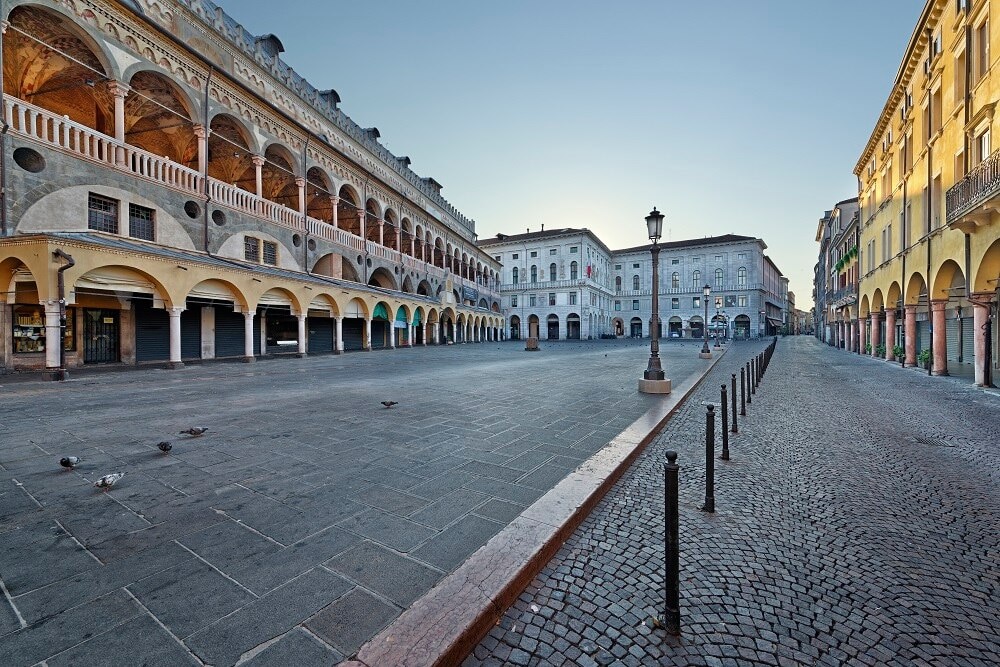
Padua is a city that lives outdoors. Its squares, animated every day by markets and colours, reflect a tradition rooted in the Middle Ages. Walking through Piazza delle Erbe, Piazza della Frutta and Piazza dei Signori means discovering typical products, aromas, perfumes, faces and everyday habits. In the evening, these same squares turn into meeting places, perfect for an aperitivo or an open-air dinner.
Unusual places and lesser-known corners
Among the unusual things to see in Padua, there are also mysterious and less-trodden corners: old medieval streets, silent cloisters of churches, hidden gardens. One of the most suggestive places is the Oratory of San Michele, with its 14th-century frescoes and evocative side streets, while the former Macello, now transformed into a cultural space, is an interesting stop for those who want to discover the city’s more creative and contemporary side.
What to see in Padua with children
Padua is a welcoming city for families too, able to combine culture and fun.
Interactive museums and green spaces for families
Children will love the Museum of the History of Medicine (MUSME), an interactive experience that tells the story of the evolution of science through experiments and digital tools. Prato della Valle, with its wide green spaces, is perfect for running and playing, while the Botanical Garden offers educational routes and themed greenhouses that spark curiosity about plants. Even a simple walk along the Piovego, in the Giardini dell’Arena or the small gardens near the Basilica of Saint Anthony can become a peaceful and enjoyable experience for the whole family.
How to get to Padua with Italo Treno
Reaching Padua is not only simple, but also extremely convenient thanks to Italo high-speed trains.
Fast and practical connections from the main Italian cities
Italo connects Padua with cities such as Milan, Bologna, Florence, Rome and Naples through a comfortable rail journey, reducing travel times and making the visit perfect even for a day trip. The station is located close to the historic centre, allowing you to start your itinerary immediately, without the need for extra transfers or complicated connections. Just get off the train and, within minutes, you can already be immersed in the city’s elegant and lively atmosphere.