Elegant, lively and welcoming, Bologna is a city that instantly captivates you with its perfect blend of art, history and excellent food. Strolling beneath its porticoes, you’ll feel the charm of a medieval city rich in culture, home to one of the world’s oldest universities and full of authentic, atmospheric corners. This guide takes you through the best things to see in Bologna—from iconic landmarks to lesser-known gems—along with a few curiosities that will make your visit even more special.
Where Bologna is located and why visit it
The city of towers and porticoes
Located in the heart of Emilia-Romagna, Bologna is a strategic city perfectly connected to Italy’s main destinations. It is known as “la dotta, la grassa e la rossa”:
- la dotta, “the learned one”, for its ancient university, the oldest in the Western world
- la grassa, “the fat one”, for its renowned gastronomic traditions
- la rossa, “the red one”, for the warm tones of its rooftops and brick buildings across the historic centre
Its porticoes, declared a UNESCO World Heritage Site, stretch for over 60 kilometres, making Bologna truly unique. Walking beneath these arcades—lined with artisan workshops, cafés and bookstores—feels like stepping back in time.
The main attractions in Bologna
Piazza Maggiore and the Basilica of San Petronio
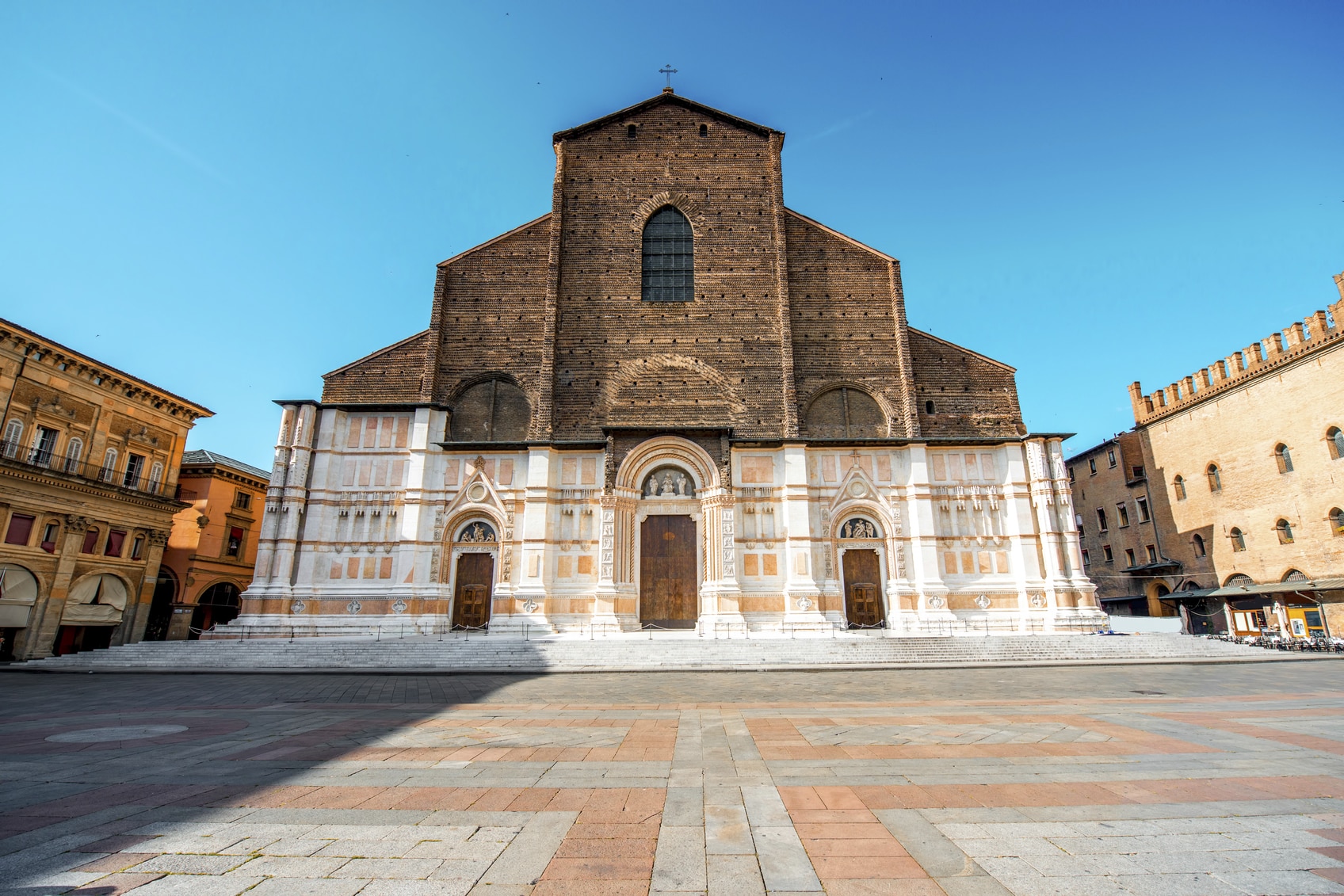
Piazza Maggiore is Bologna’s beating heart. Surrounded by its most important historic buildings—Palazzo d’Accursio, Palazzo del Podestà, Palazzo dei Notai and Palazzo dei Banchi—it has been the political and religious centre of the city for centuries.
Despite its monumental architecture, the square remains a vibrant place, hosting festivals, concerts and cultural events that keep its spirit alive.
Towering over the square is the Basilica of San Petronio, one of the largest churches in Europe. Its striking unfinished façade—half marble, half brick—is among the city’s most recognisable features. Inside, you’ll find 22 chapels adorned with frescoes and artworks, including the famous Last Judgement by Giovanni da Modena.
One of the basilica’s most fascinating treasures is the solar meridian designed by Gian Domenico Cassini in 1655. At 66 metres long, it is one of the longest in the world and still works perfectly.
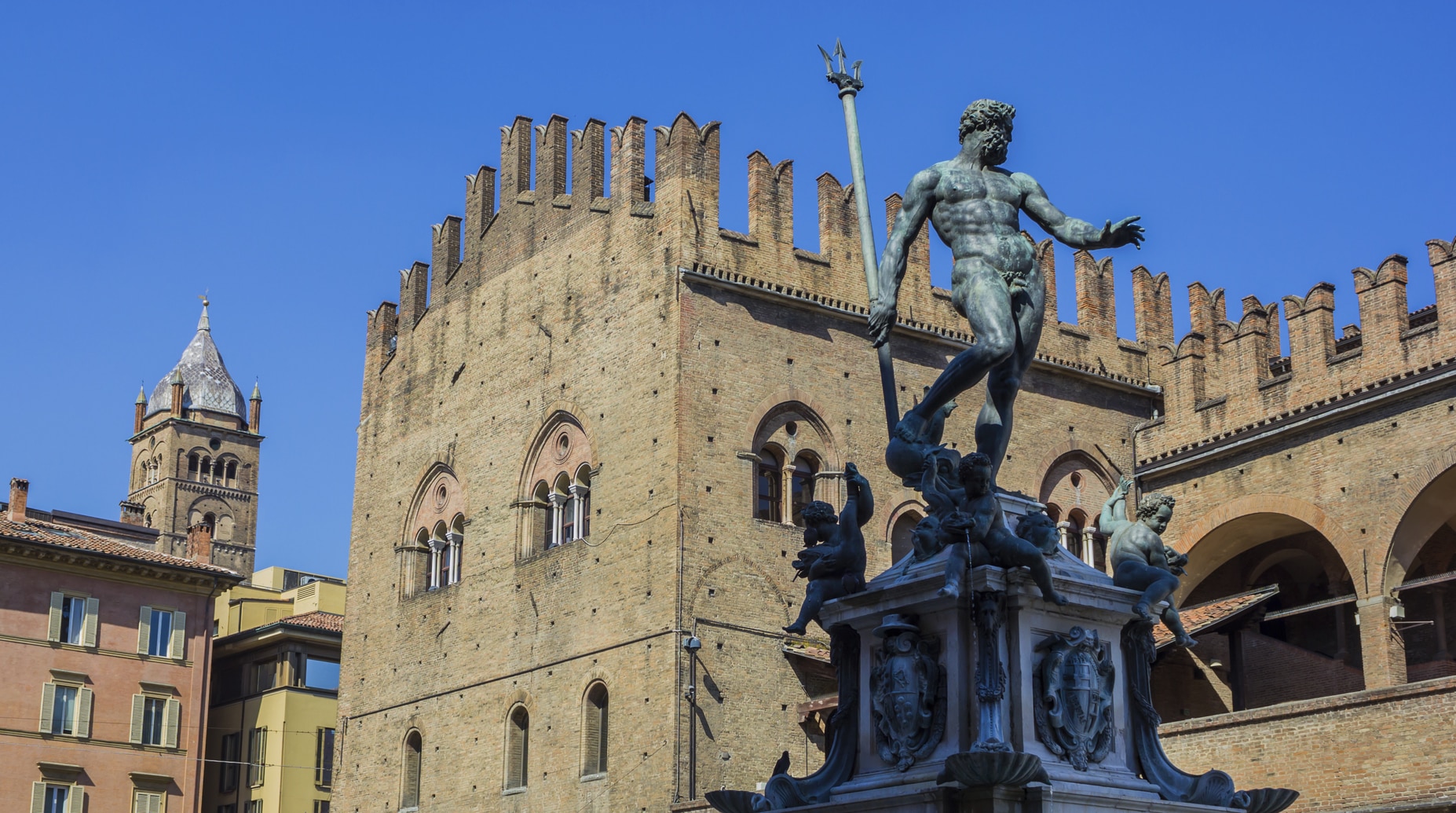
Nearby stands another city symbol: the Fountain of Neptune, a Renaissance masterpiece by Giambologna celebrating the power of water and Bologna’s connection to Italian humanism.
The Two Towers: Bologna’s unmistakable landmark
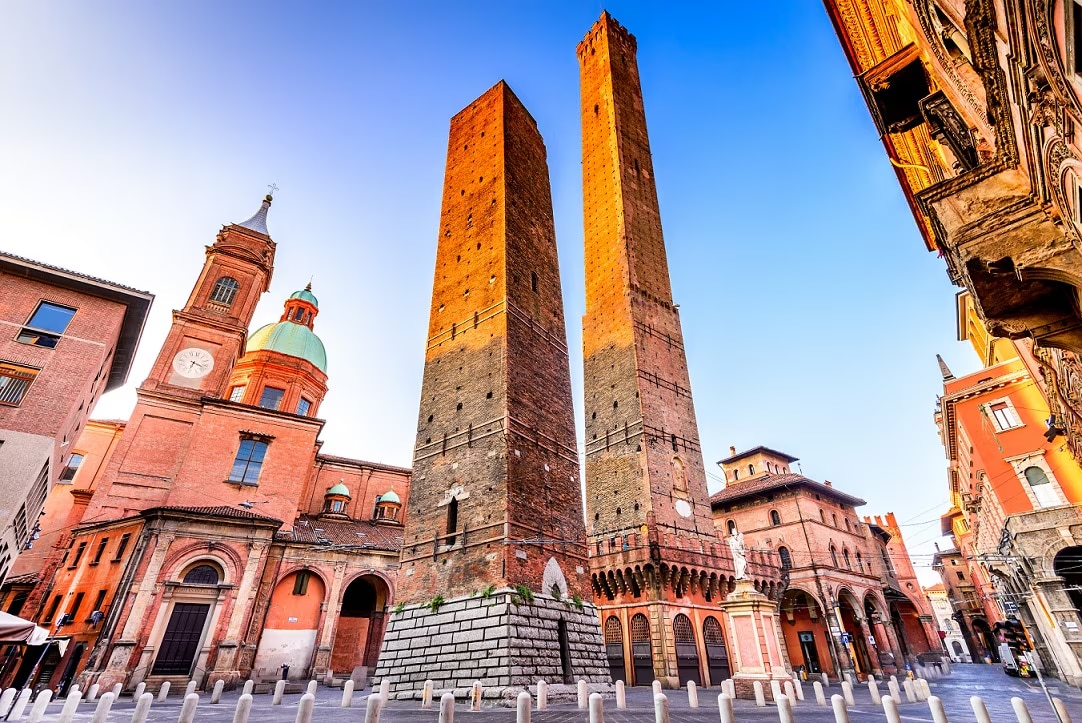
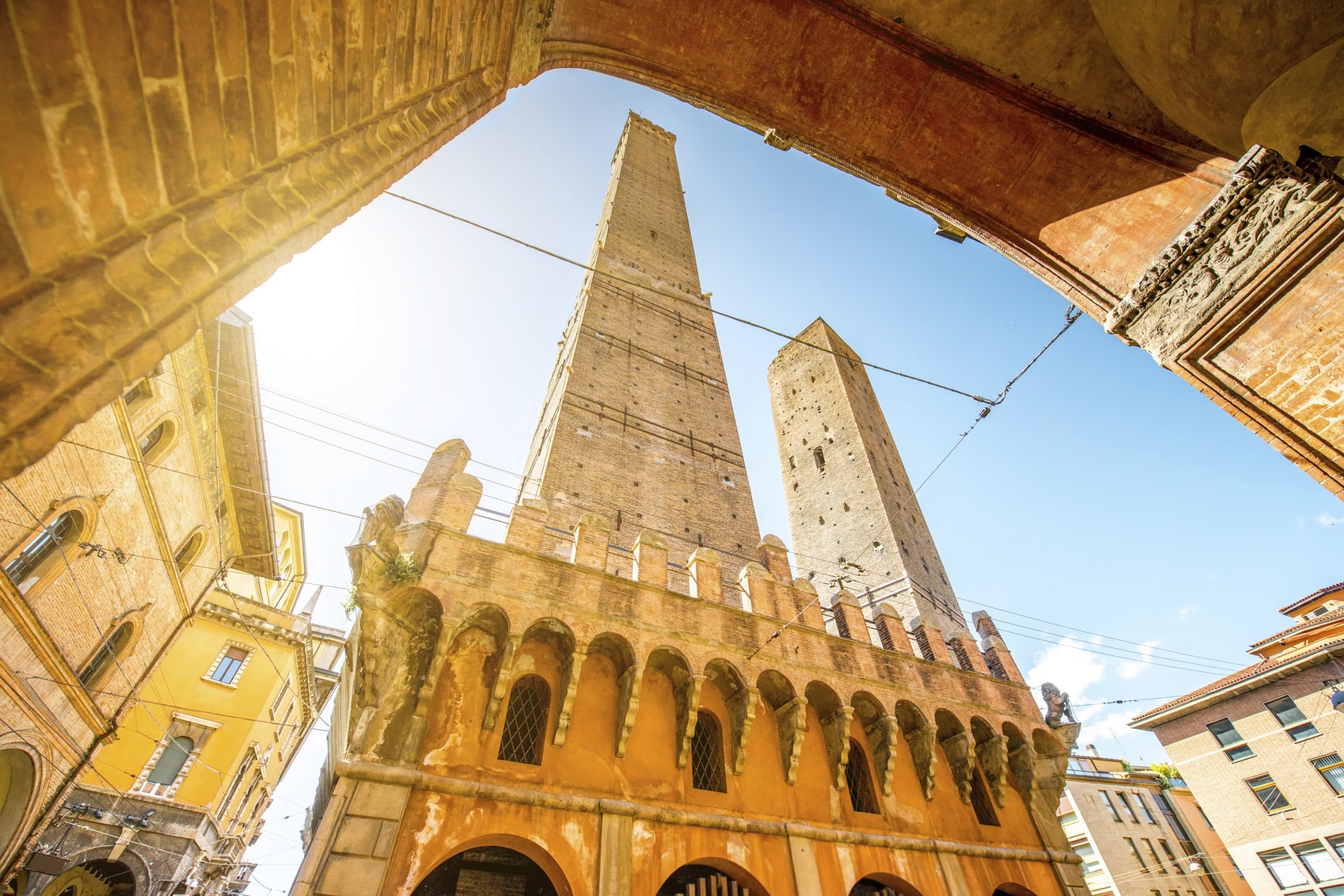
Among the most iconic things to see, the Two Towers—Asinelli and Garisenda—are the ultimate symbol of the city. Built between the 12th and 13th centuries, they represented the power of noble families who commissioned them. Originally, over one hundred towers marked Bologna’s skyline, though only about twenty remain today.
The Asinelli Tower, standing 97 metres tall, offers breathtaking views over the historic centre and surrounding hills. Climbing its 498 wooden steps is a challenge, but the panorama is worth every effort.
Next to it is the shorter, leaning Garisenda Tower, whose dramatic tilt—mentioned by Dante in the Divine Comedy—makes it one of Bologna’s most intriguing sights.
Local tradition says students avoid climbing the Asinelli before graduating… just to be safe.
The University of Bologna and the Archiginnasio
Founded in 1088, the University of Bologna is the oldest in the Western world and one of the city’s cultural cornerstones. For centuries it has attracted scholars, writers and scientists, shaping Bologna’s identity as a vibrant academic centre.
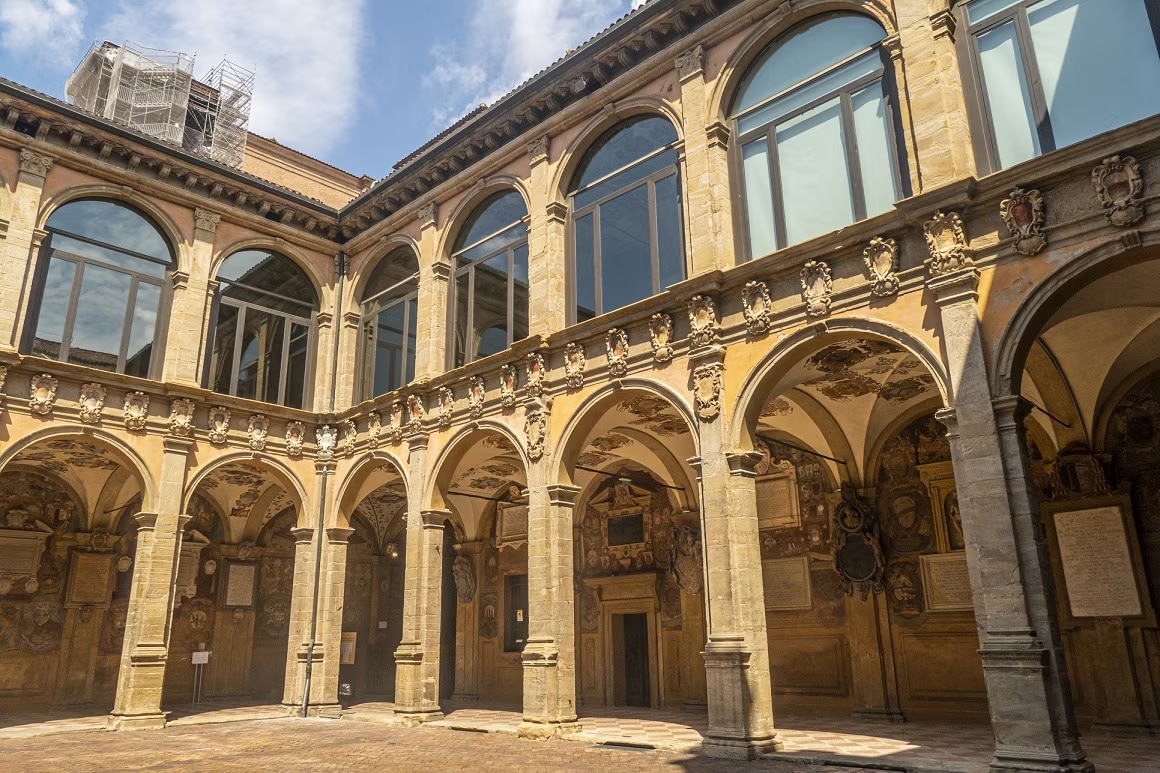
The historic heart of the university is the Archiginnasio, a 16th-century building created to bring all the city’s schools under one roof. Today it houses the Archiginnasio Library, one of Italy’s most important collections with over 850,000 volumes and manuscripts.
The highlight is the extraordinary Anatomical Theatre (1637), entirely carved in limewood. Here anatomy lessons once took place, with dissections performed on a central marble table. The room is decorated with statues of flayed figures (gli Spellati) and a majestic professor’s chair supported by two wooden Atlases—a unique Baroque masterpiece.
Visiting the Archiginnasio means diving into centuries of knowledge and understanding why Bologna’s academic tradition remains so influential.
The Quadrilatero and the UNESCO porticoes
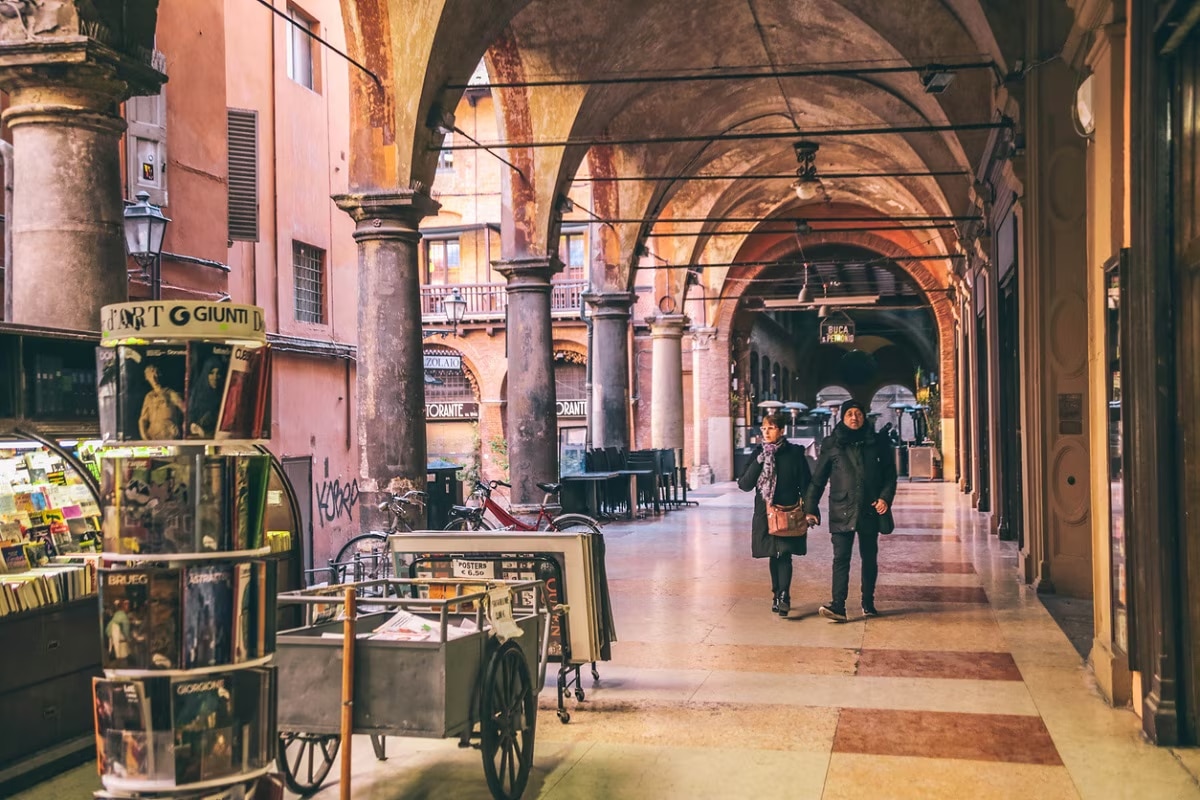
Just steps from Piazza Maggiore lies the Quadrilatero, one of Bologna’s most authentic districts. Its medieval network of narrow streets—Via Drapperie, Via Pescherie Vecchie and Via Clavature—is filled with historic shops, delicatessens, wine bars and small osterias where the city’s culinary soul thrives.
As you wander through its alleys, the aroma of fresh tortellini, cured meats and warm bread drifts from shop windows. Covered markets add to the sensory experience, creating an irresistible mix of tradition and flavour.
What makes this area—and Bologna as a whole—truly unique is the presence of its UNESCO-listed porticoes, more than 62 kilometres of arcades that embody the city’s identity. Originally created to expand medieval living spaces, they now offer beauty, shelter and continuity for pedestrians in every season.
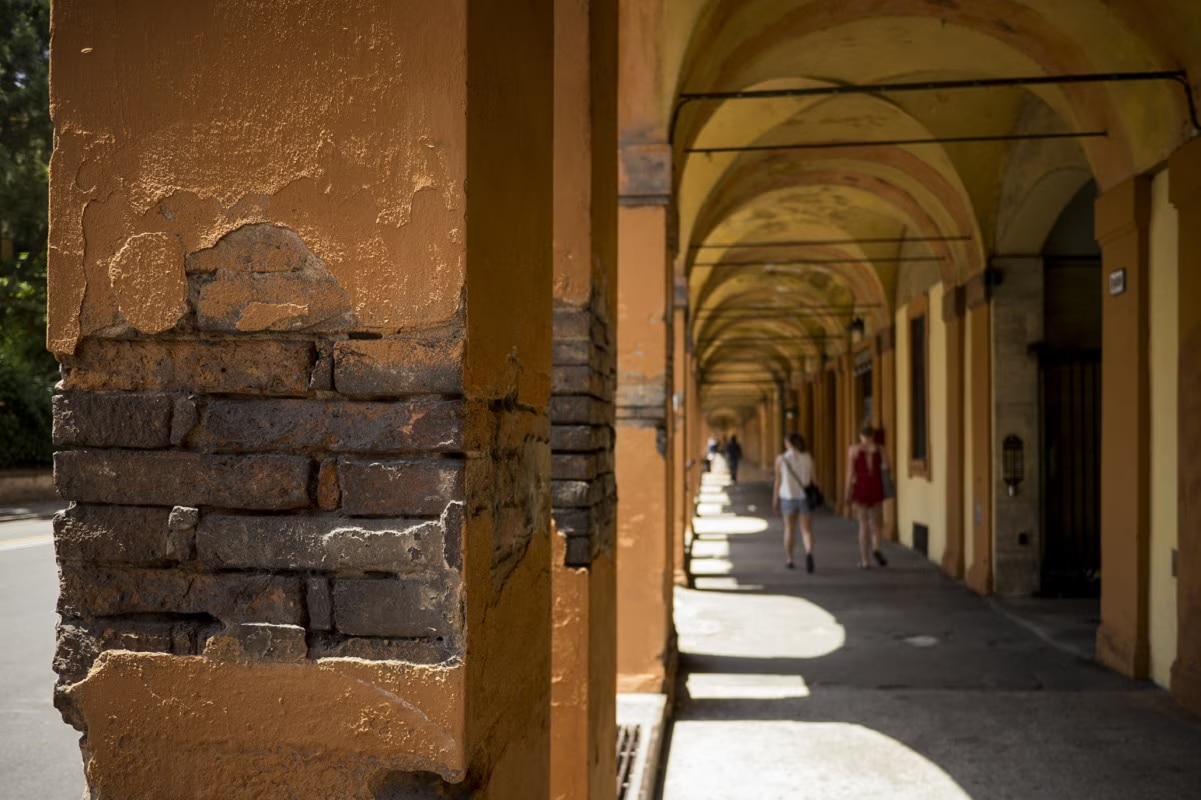
Famous examples include:
- the lively porticoes of Via Zamboni, shaped by student life,
- the elegant arcades of Strada Maggiore, lined with Renaissance palaces,
- and, above all, the Portico of San Luca, the world’s longest, with 666 arcades stretching nearly four kilometres up to the sanctuary on the hills.
The Sanctuary of San Luca and the Bolognese Hills
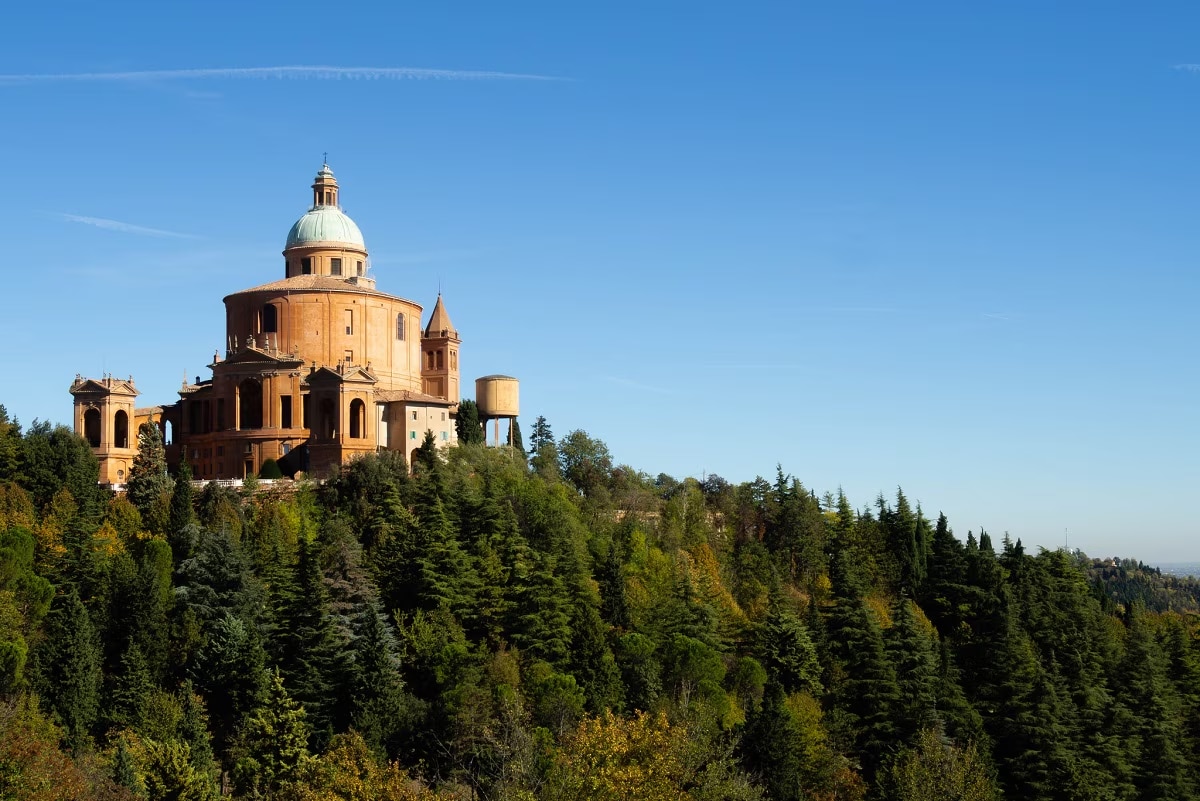
One of Bologna’s most iconic images is the Sanctuary of the Madonna di San Luca, perched atop the Colle della Guardia at about 300 metres above the city. Visible from far across the plain, it has been a beloved spiritual symbol for centuries.
The sanctuary is reached by walking the famous Portico di San Luca, a covered arcade of 666 arches stretching from Porta Saragozza to the hilltop—the longest portico in the world. Walking it is a unique experience: quiet, atmospheric and full of scenic glimpses.
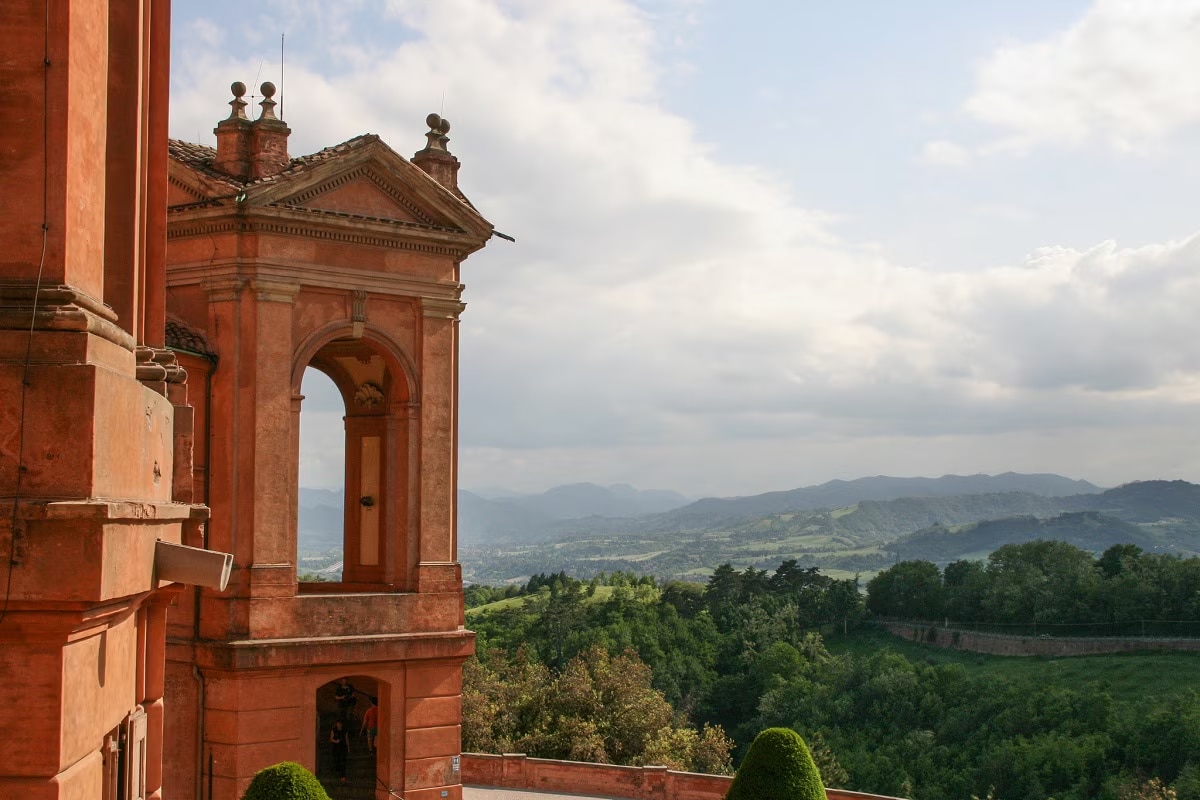
Inside, the sanctuary houses a precious Byzantine icon of the Madonna and Child, venerated since the 13th century. Every May, the icon is carried in procession down to the city in a centuries-old tradition.
From the panoramic terrace, the view opens over gentle green hills dotted with vineyards, villas and small villages—a perfect escape for anyone wishing to slow down and enjoy nature, perhaps with a stop in one of the many agriturismi or traditional eateries.
What to do in Bologna
Stroll under the porticoes and taste traditional cuisine
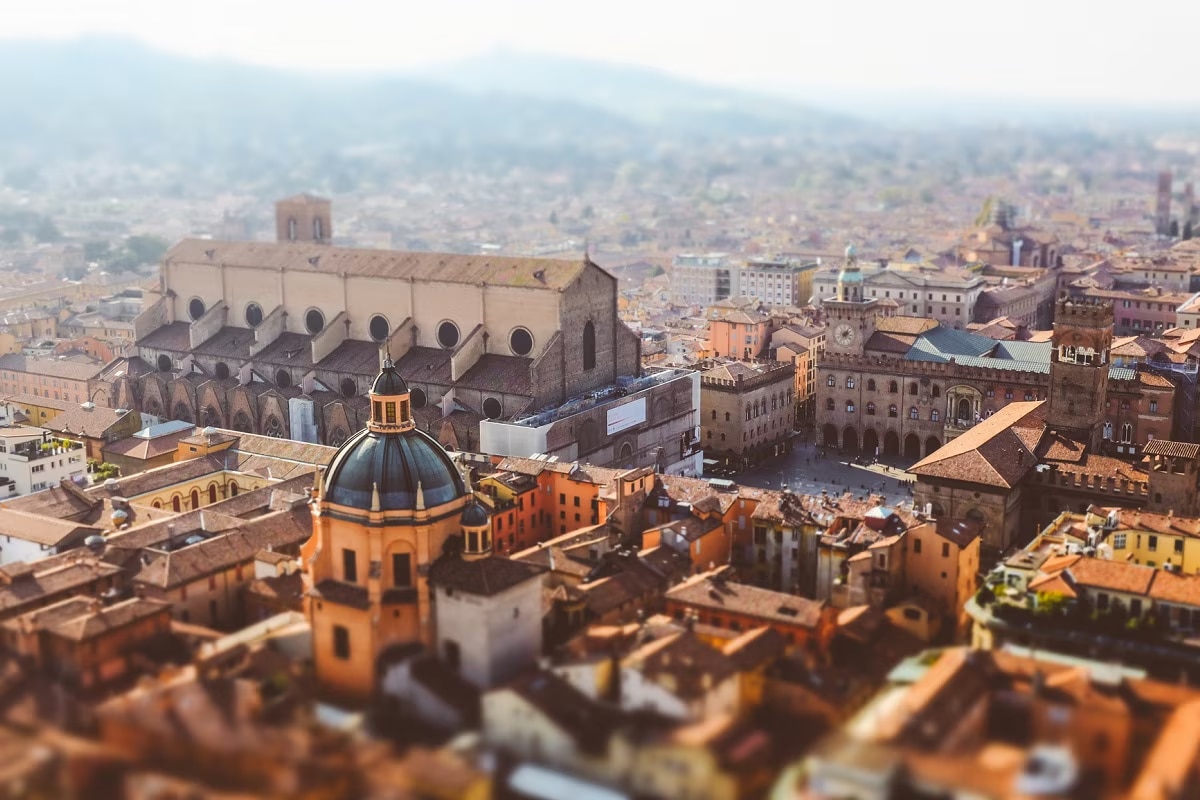
One of the most enjoyable things to do is simply wandering under Bologna’s porticoes, discovering hidden squares, winding alleys and unexpected viewpoints.
Stop in a traditional osteria to try tortellini in broth, tagliatelle al ragù, or lasagne alla bolognese, paired with a glass of Sangiovese or Pignoletto—the flavours that define local cuisine.
Museums to visit and curiosities to discover
Art lovers will enjoy the Civic Archaeological Museum, home to one of Italy’s richest Etruscan and Roman collections, and the National Art Gallery, which preserves masterpieces by Giotto, Raphael and the Carracci family.
Don’t miss one of Bologna’s most delightful curiosities: the little window on Via Piella, framing a view of the Moline Canal—Bologna’s very own tiny, hidden “Venice”.
Unmissable experiences: markets, artisanal shops and street food
To experience Bologna like a true local, visit the Mercato delle Erbe or the Mercato di Mezzo, where you can sample regional specialties in a lively, convivial setting.
And if you’re into street food, try crescentine with cold cuts and cheeses, or warm tigelle fresh from the oven.
What to see around Bologna

If you have more time, the surroundings of Bologna offer wonderful excursions.
Just a few kilometres away is Dozza, one of Italy’s most beautiful villages, famous for the colourful murals adorning its houses.
Food lovers shouldn’t miss FICO Eataly World, the large theme park dedicated to Italian food culture, with workshops and sensory experiences celebrating Made in Italy excellence.
Finally, a trip through the Bolognese hills is perfect for relaxing among vineyards, panoramic viewpoints and charming agriturismi
How to reach Bologna with Italo Treno
Thanks to Italo’s high-speed network, reaching Bologna is both quick and effortless from many Italian cities.
From Milan, the journey takes around one hour, from Florence just 35 minutes, and from Rome only two hours to bring you right into the heart of Emilia.
Bologna Centrale station sits just a short walk from the historic centre, making it the perfect starting point for exploring the city’s squares, towers and iconic porticoes.
Discover Bologna with Italo: a journey into the heart of Emilia
Bologna welcomes you with warmth and wins you over with its authenticity. It’s a place where history blends with everyday life, where every portico tells a story and every dish evokes emotion.
Whether you’re spending just a day or an entire weekend, the city will surprise you with its contrasts, its energy and its timeless beauty.