Venice is one of those cities that seem almost unreal — a place where every corner hides a story, every canal reflects centuries of art and culture, and every bridge whispers the echo of past travelers. Visiting the City of Canals is a journey back in time, a chance to walk through living history while experiencing a beauty that never fades. From St. Mark’s Square to the hidden alleys of Dorsoduro, Venice reveals itself in layers: majestic, mysterious, and endlessly fascinating.
Why visit Venice: the city of canals and timeless charm
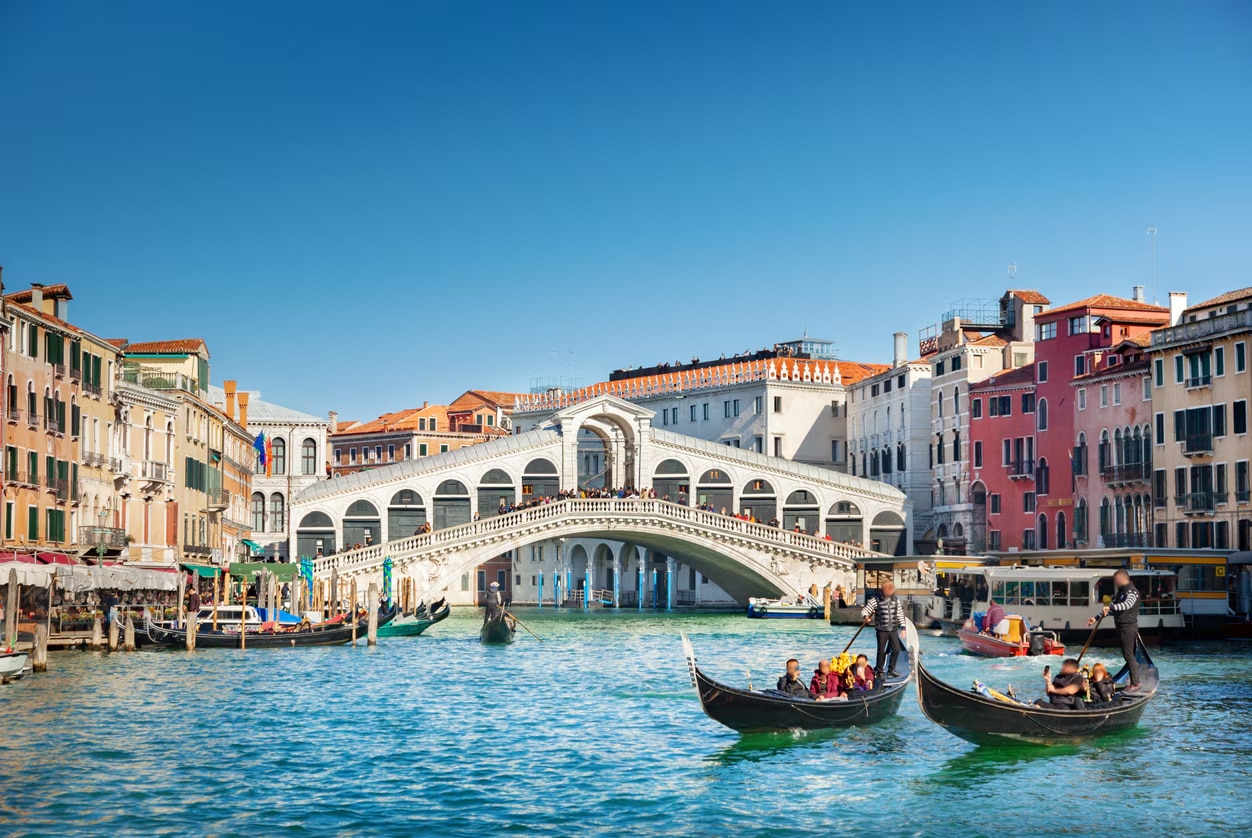
Venice is not just a city — it’s an experience suspended between water and sky. Built on more than 100 small islands connected by bridges and crossed by canals, it’s one of the world’s most unique urban landscapes. Its magic lies in contrasts: monumental palaces rising from quiet lagoons, centuries-old art coexisting with everyday Venetian life. Whether you come for the art, the romance, or the history, Venice is a destination that captures the heart of every traveler.
Walking through its narrow streets, or calli, you’ll sense how the city remains timeless. The absence of cars enhances the peace — here, you move at a slower rhythm, guided by the sound of water lapping against gondolas.
Top things to do in Venice
St. Mark’s Square and Basilica – the heart of the city
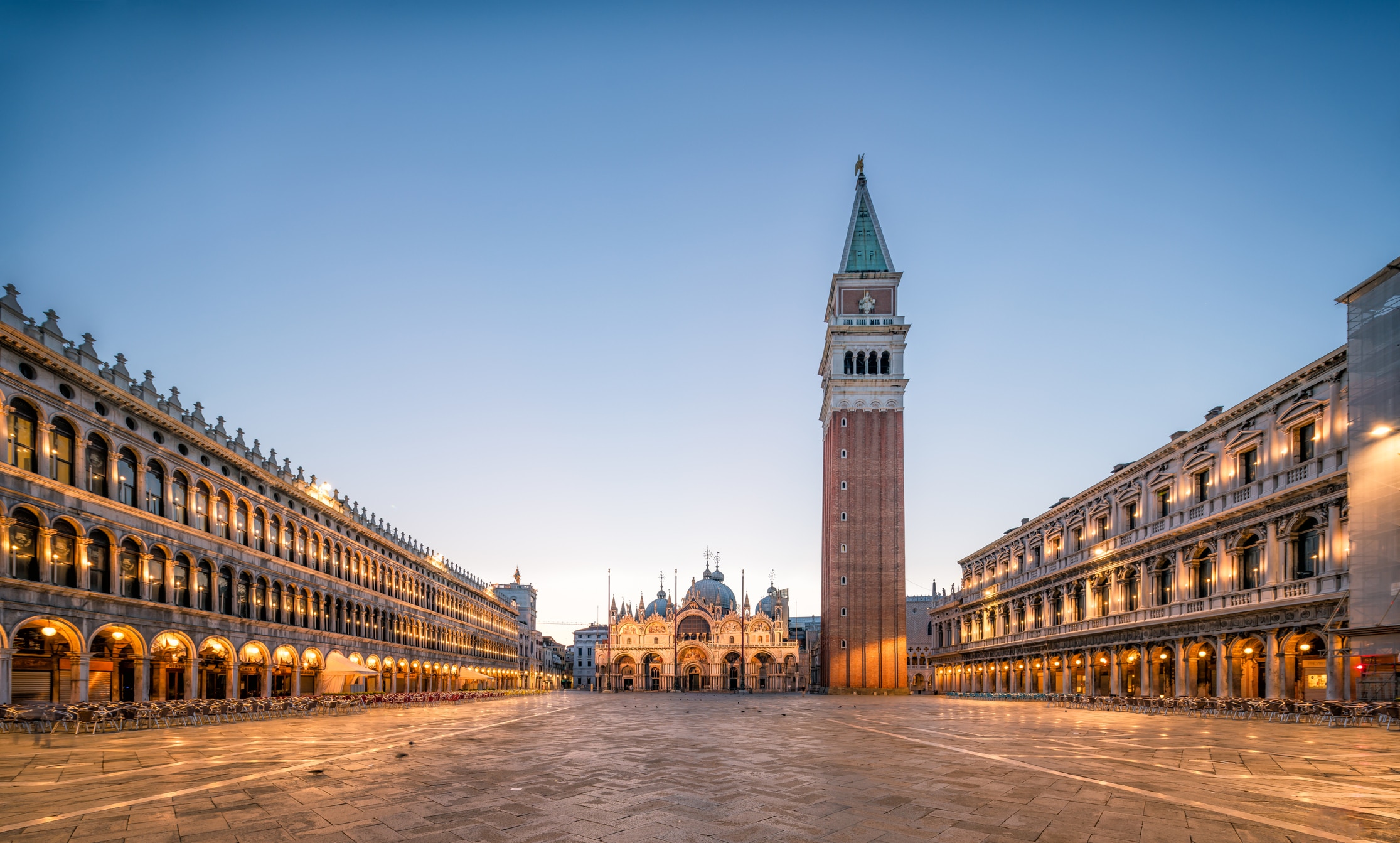
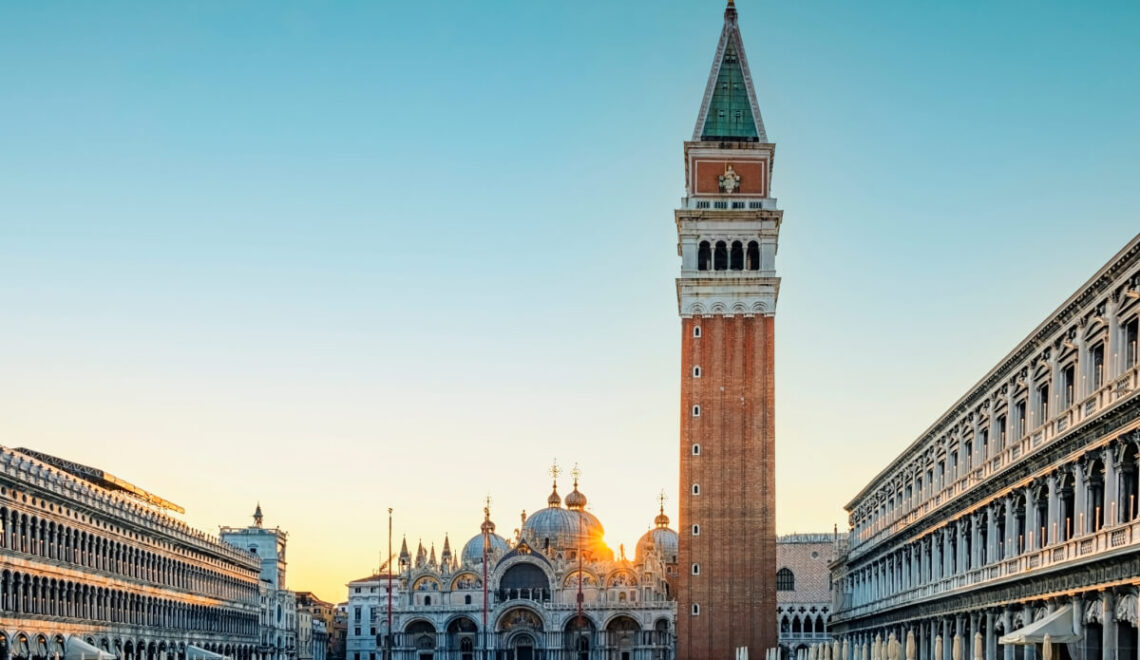
No visit to Venice is complete without standing in St. Mark’s Square (Piazza San Marco), the beating heart of the city and a true open-air stage where centuries of history unfold. Surrounded by elegant arcades, the Procuratie buildings, and famous cafés like Caffè Florian — one of the oldest in Europe — this square has witnessed the most important moments of the Venetian Republic. It’s a place where art, power, and beauty come together in perfect harmony.
At its center rises St. Mark’s Basilica, the city’s most iconic monument. Its golden mosaics shimmer in the soft light, depicting stories from the Bible and the triumphs of Venice as a maritime power. The mix of Byzantine, Gothic, and Renaissance influences reflects the city’s cosmopolitan spirit. Just beside the basilica stands the Campanile, the tall bell tower affectionately called El Paron de Casa (“the master of the house”). Climb to the top for a breathtaking view of the lagoon, the Grand Canal, and the maze of terracotta rooftops — one of the most unforgettable panoramas in all of Italy.
The Doge’s Palace – a masterpiece of Gothic architecture
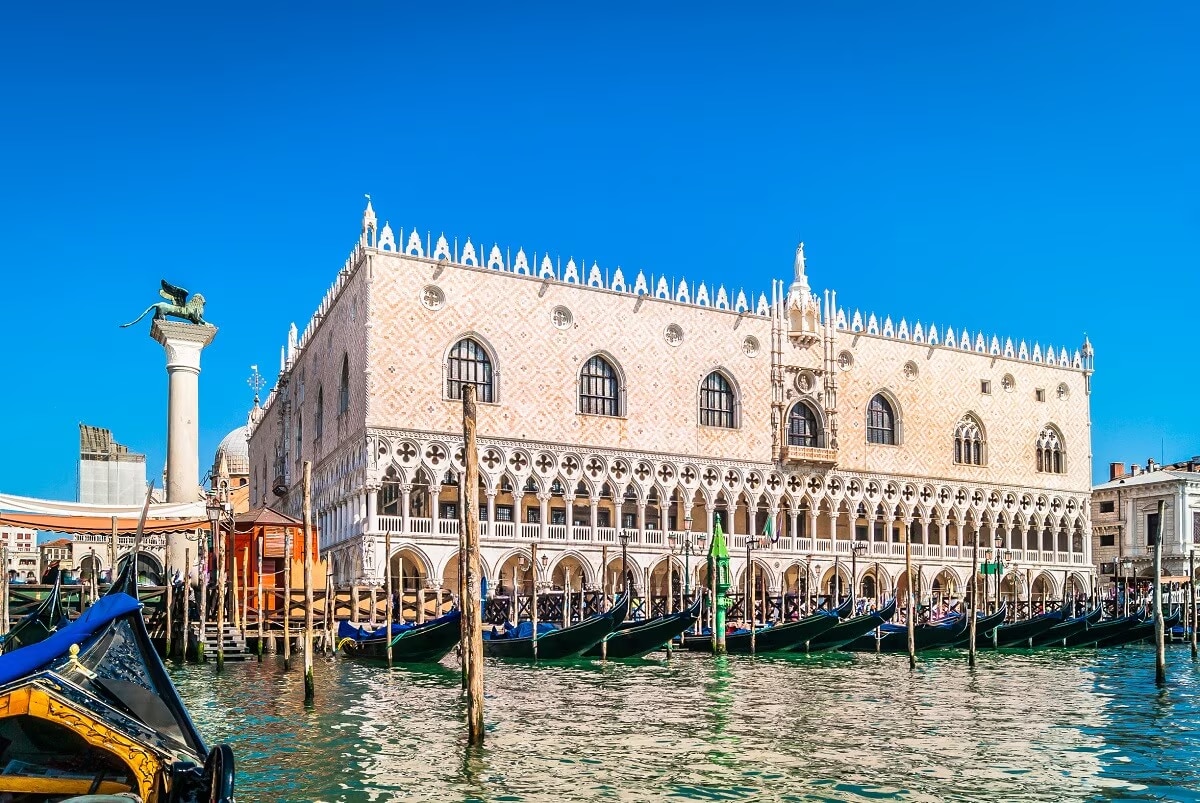
Next to the Basilica stands the Doge’s Palace (Palazzo Ducale), one of Venice’s most majestic and recognizable landmarks. This splendid palace once served as the residence of the Doge, the supreme authority of the Venetian Republic, and as the seat of government, court, and prison — all under one roof. Its pink Verona marble façade and lace-like arches perfectly embody the grace of Venetian Gothic architecture, blending elegance with political power.
Step inside and you’ll find vast halls adorned with magnificent frescoes and paintings by masters such as Tintoretto, Veronese, and Tiepolo, depicting scenes of glory, justice, and divine order. The Sala del Maggior Consiglio, where the Great Council once gathered, is particularly impressive — one of the largest rooms in Europe without internal supports, entirely covered in golden light and art.
Crossing the enclosed Bridge of Sighs, which connects the palace to the old prisons, evokes both fascination and melancholy: legend has it that prisoners sighed as they caught their last glimpse of the lagoon before being locked away. Visiting the Doge’s Palace means stepping into the very heart of Venice’s history — a journey through art, politics, and the power that shaped one of the most extraordinary republics the world has ever known.
The Rialto Bridge and Grand Canal – where Venice comes alive
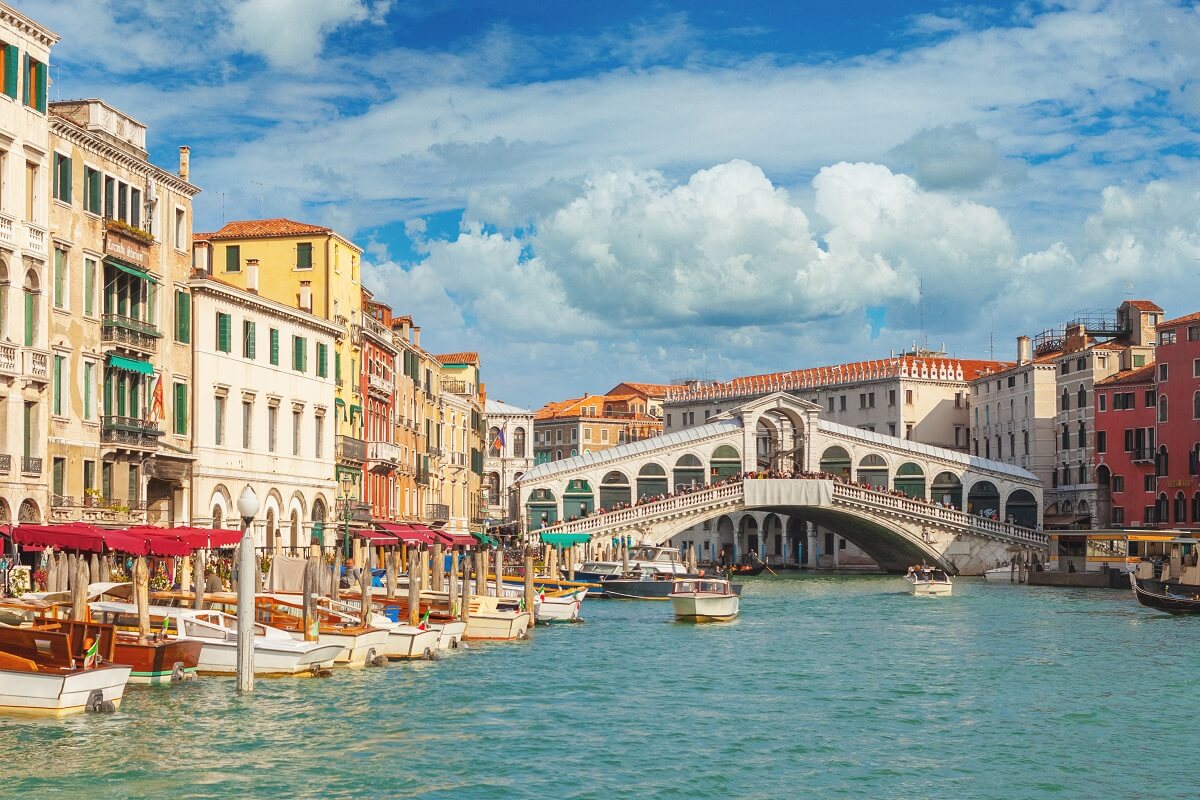
The Grand Canal is Venice’s main artery — a sinuous waterway that divides the city in two, lined with elegant Renaissance and Gothic palaces that seem to rise directly from the water. Once a bustling trade route for merchants arriving from across the world, today it remains the most spectacular way to admire the city’s timeless beauty.
At its heart stands the Rialto Bridge, the oldest and most iconic of the four bridges that cross the Grand Canal. Built in the late 16th century, its graceful stone arch and covered walkway lined with small shops make it one of Venice’s most photographed landmarks. From its central span, you can take in an unforgettable view of gondolas gliding below and boats loaded with goods — a living scene that captures the essence of Venetian life.
Just steps away lies the Rialto Market, a vibrant explosion of colors, scents, and sounds. Here, Venetians shop for fresh fish, fruit, and vegetables, just as they have for centuries. Visiting in the early morning is the best way to feel the city’s pulse — merchants calling out their offers, locals chatting over coffee, and the aroma of the lagoon blending with that of freshly baked bread. This is where Venice truly comes alive, revealing its authentic, everyday rhythm beyond the postcard views.
Bridge of Sighs – between history and legend
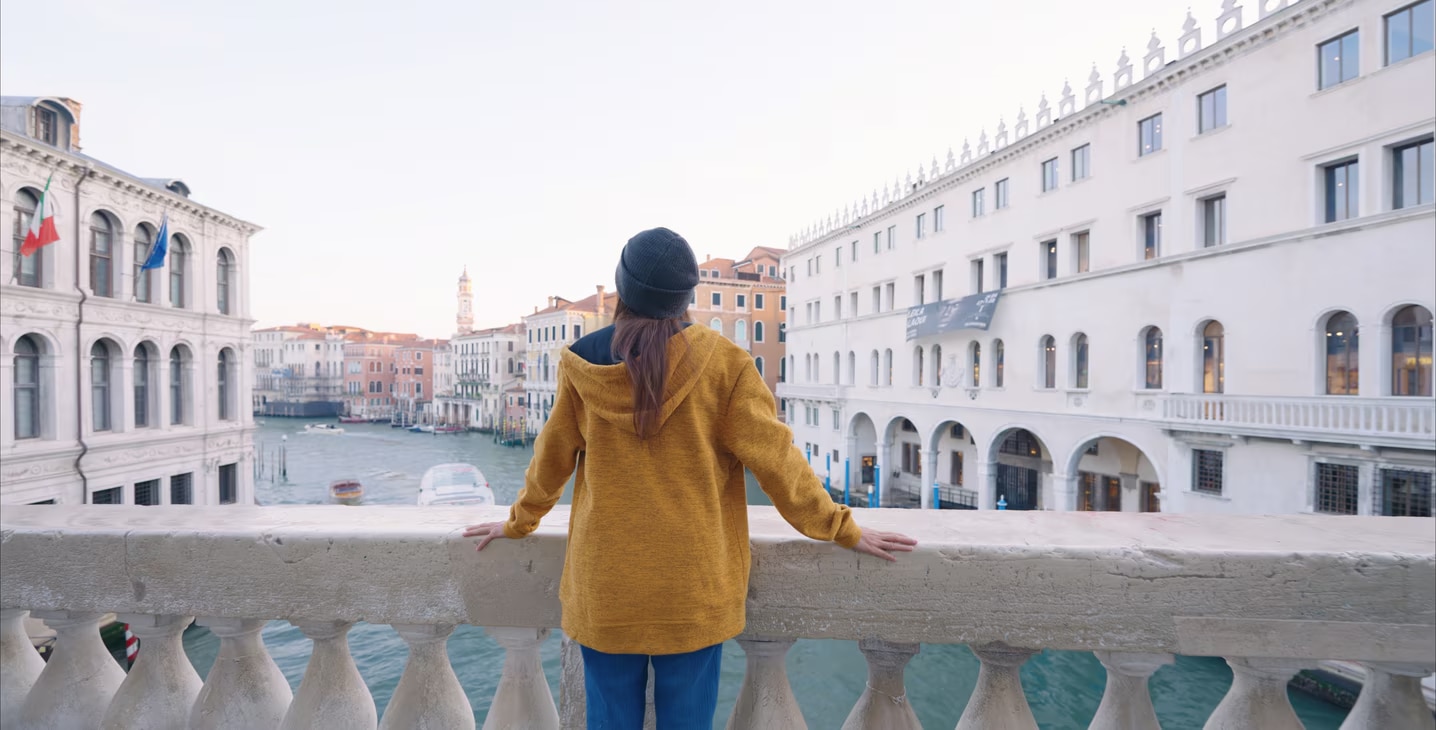
Few places in Venice capture the city’s mystery and romance like the Bridge of Sighs (Ponte dei Sospiri). This small yet evocative white limestone bridge connects the Doge’s Palace to the old prisons across the canal. Built in 1600 by architect Antonio Contino, its enclosed structure and intricate stonework make it one of the finest examples of Venetian baroque architecture.
According to legend, the bridge’s name comes from the sighs of prisoners who, as they crossed it, took one last look at the lagoon through its small stone windows before being led to their cells. The idea of that fleeting glimpse of freedom — the shimmer of water, the sound of gondolas below — has made the Bridge of Sighs a symbol of lost liberty and unfulfilled love.
Today, it remains one of the most photographed spots in Venice, admired for both its delicate beauty and the stories it holds. The best views are from the Ponte della Paglia, just outside the Doge’s Palace, or from a gondola gliding quietly beneath, where you can imagine the echo of those ancient sighs blending with the gentle sound of the water.
Santa Maria della Salute – baroque beauty on the lagoon
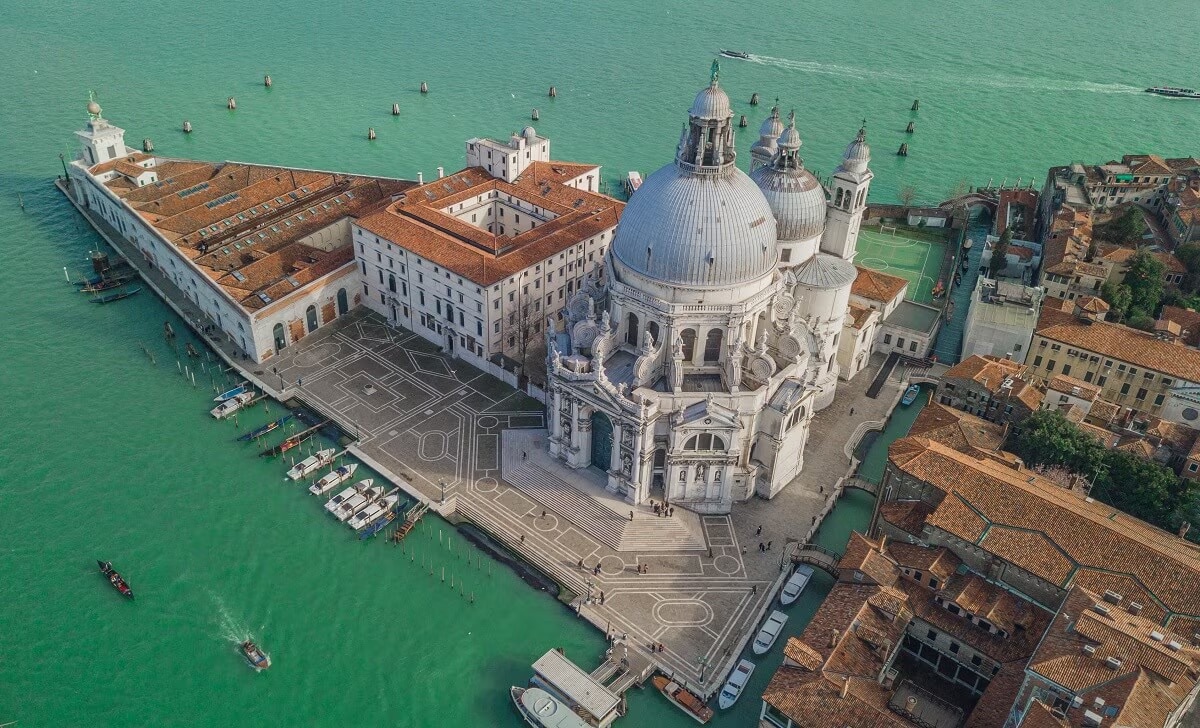
Gracefully standing at the entrance to the Grand Canal, the Basilica di Santa Maria della Salute is one of the most striking silhouettes on the Venetian skyline. Its gleaming white domes seem to float above the lagoon, welcoming visitors arriving from the sea — a vision of serenity and devotion. Built in the 17th century by architect Baldassare Longhena, the church was commissioned as a votive offering to the Virgin Mary after a terrible plague that claimed tens of thousands of lives.
The result is a masterpiece of Baroque architecture, blending grandeur with harmony. Its massive octagonal structure, crowned by twin domes and adorned with elegant statues, embodies Venice’s resilience and faith. Step inside and you’ll be met with a luminous interior where light dances across marble floors, highlighting masterpieces by Titian and Tintoretto that adorn the altars and ceilings.
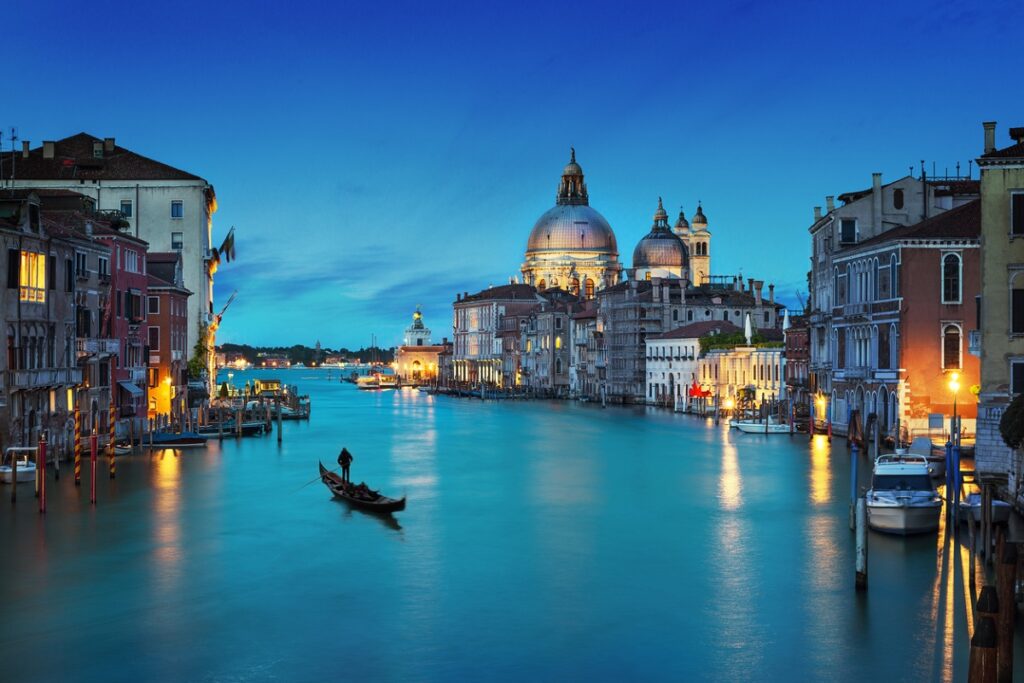
Outside, the basilica’s location at the Punta della Dogana offers one of the city’s most poetic views — where the Grand Canal meets the Giudecca Canal. Visit at sunset, when the façade glows golden and its reflection shimmers on the water: a moment of pure Venetian magic that perfectly captures the city’s soul.
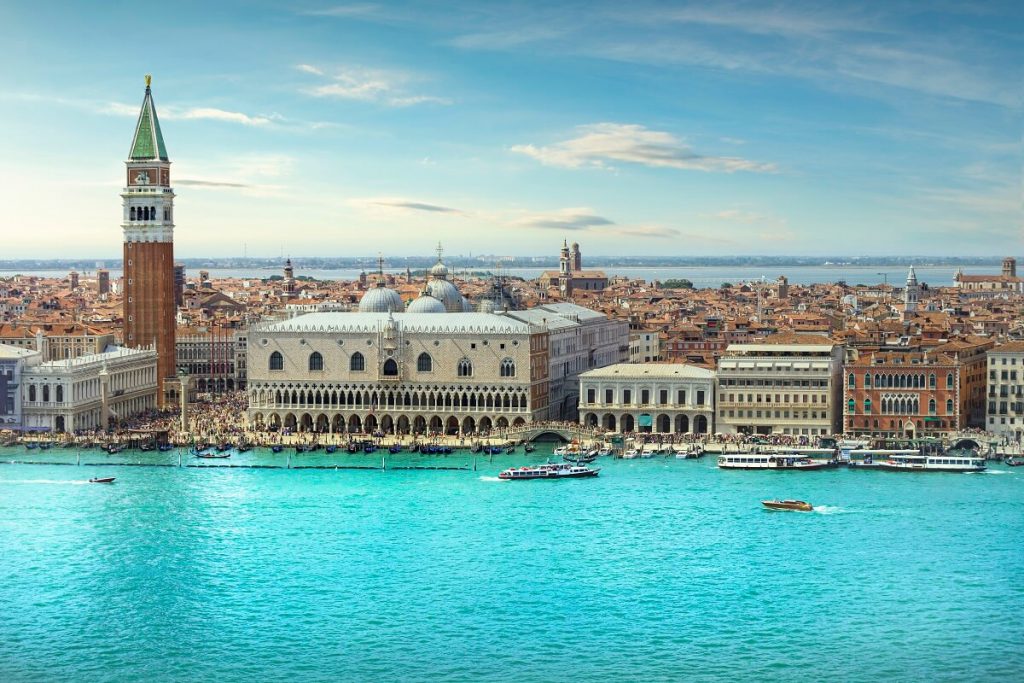
Venice Two-day trip: 14 unique things to do
Creating a two-day itinerary for Venice will allow you to experience the essence of this unique city, from its historical landmarks to its beautiful canals. Here’s a suggested itinerary to make the most out of your two days.
Dorsoduro – art, quiet canals, and local charm
For a taste of the real Venice, wander through Dorsoduro, a district filled with art galleries, artisan workshops, and peaceful canals. Here you’ll find the Peggy Guggenheim Collection, one of Europe’s top modern art museums, as well as Campo Santa Margherita, a lively square popular with locals.
Cannaregio – Jewish Ghetto and Venetian daily life
One of the oldest and most authentic districts, Cannaregio is home to the Venetian Ghetto, established in 1516 — the first of its kind in Europe. Its history is deeply moving, and today it remains a vibrant neighborhood full of small synagogues, bakeries, and art shops. It’s also where you’ll find some of the best osterie to taste traditional Venetian dishes.
Burano and Murano – colorful islands of craft and tradition
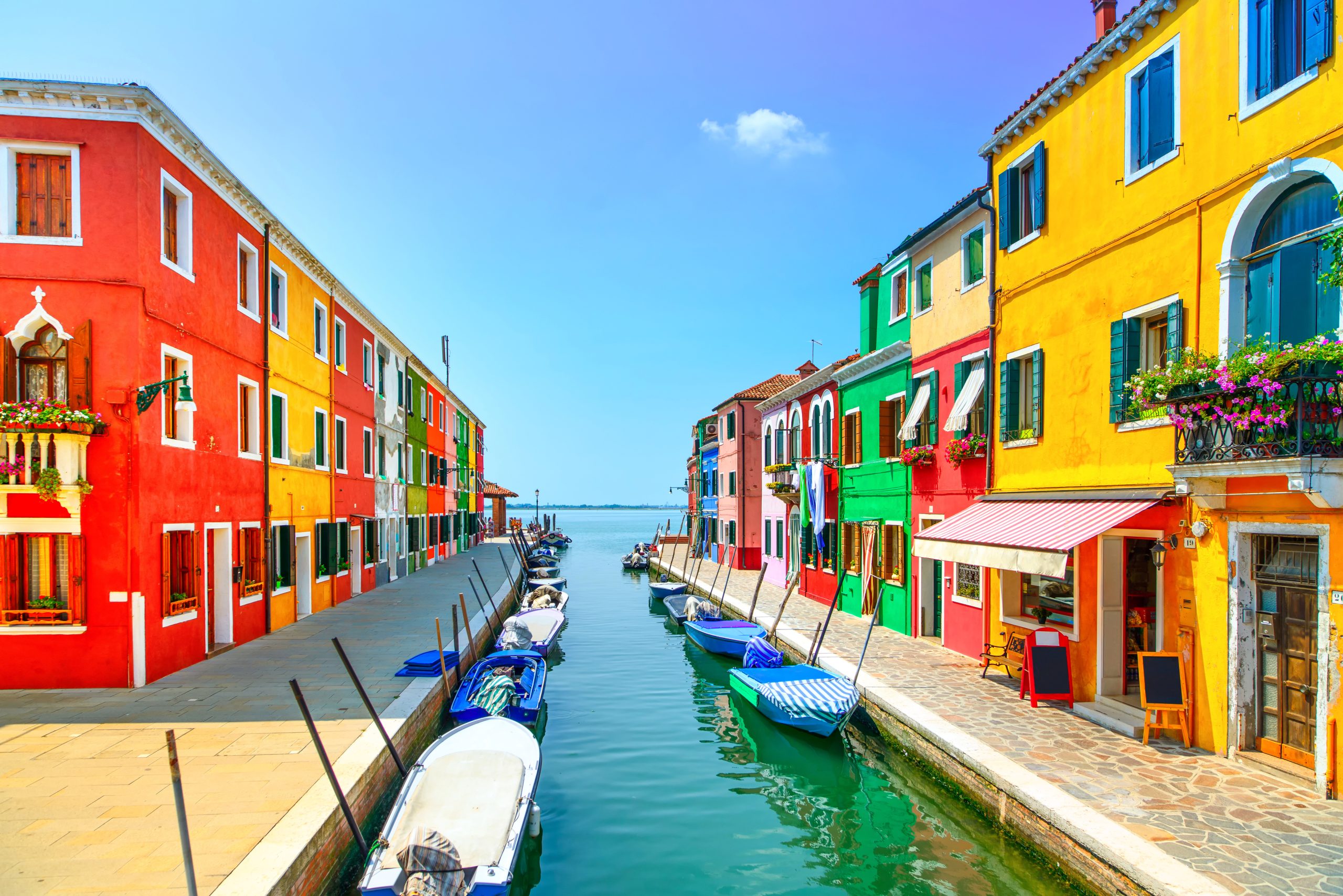
Take a short vaporetto ride to Murano, famous for its glassmaking workshops, where artisans shape glowing glass into masterpieces. Continue to Burano, known for its brightly painted houses and lacework tradition. Walking along its rainbow-colored streets feels like stepping into a painting — one of the most photogenic spots near Venice.
Venice experiences not to miss
Take a gondola ride or a vaporetto along the Grand Canal
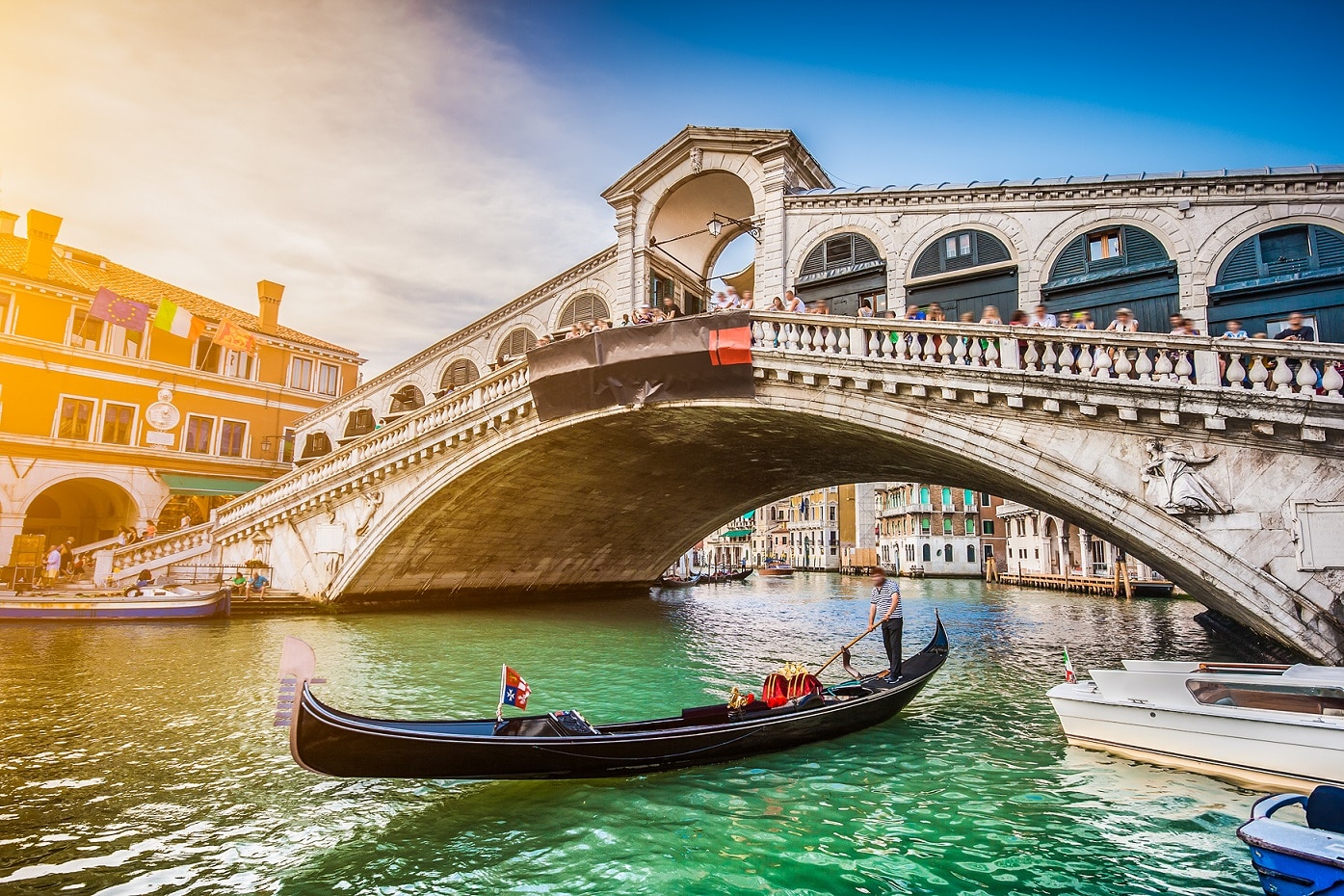
A gondola ride may be Venice’s most iconic activity — gliding along narrow canals under stone bridges is an unforgettable experience. For a more affordable option, hop on vaporetto line 1, which follows the Grand Canal and offers spectacular views for the price of a regular ticket.
Enjoy cicchetti and a glass of wine in a Venetian bacaro
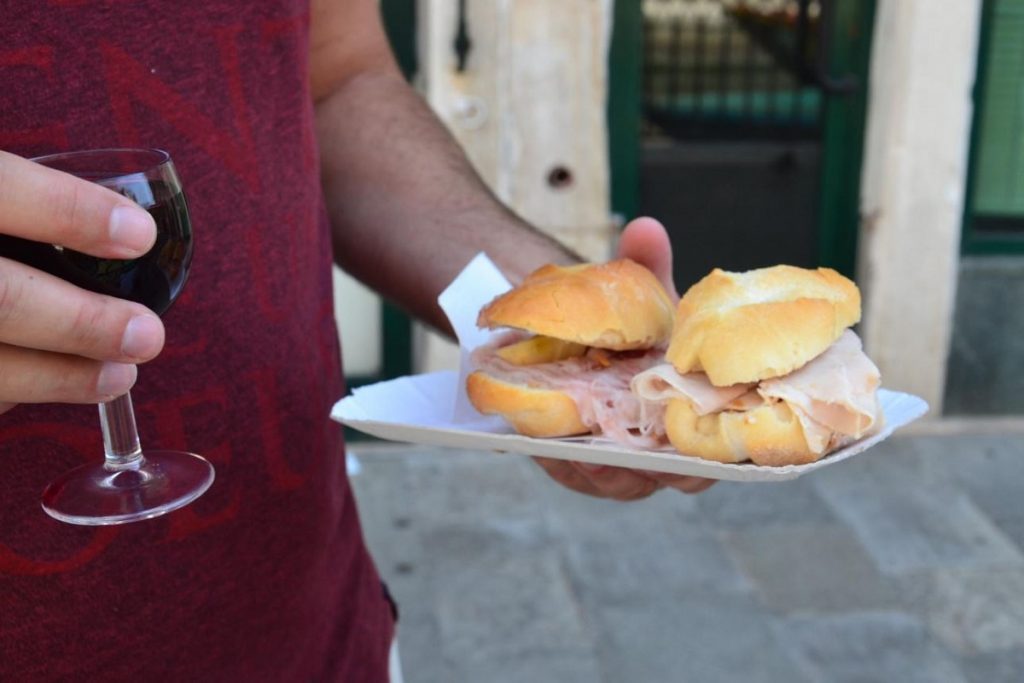
To experience Venice like a local, stop in a bacaro, a traditional wine bar, and order cicchetti — small plates similar to Spanish tapas. Pair them with a glass of ombra (Venetian slang for wine) and enjoy the informal, lively atmosphere.
Where to eat in Venice on a budget
Venice, known for its enchanting canals and historic charm, is often associated with high costs, especially when it comes to dining and exploring the city. However, if you’re smart with your choices, you can enjoy this iconic destination without breaking the bank.
Watch the sunset from the Accademia Bridge
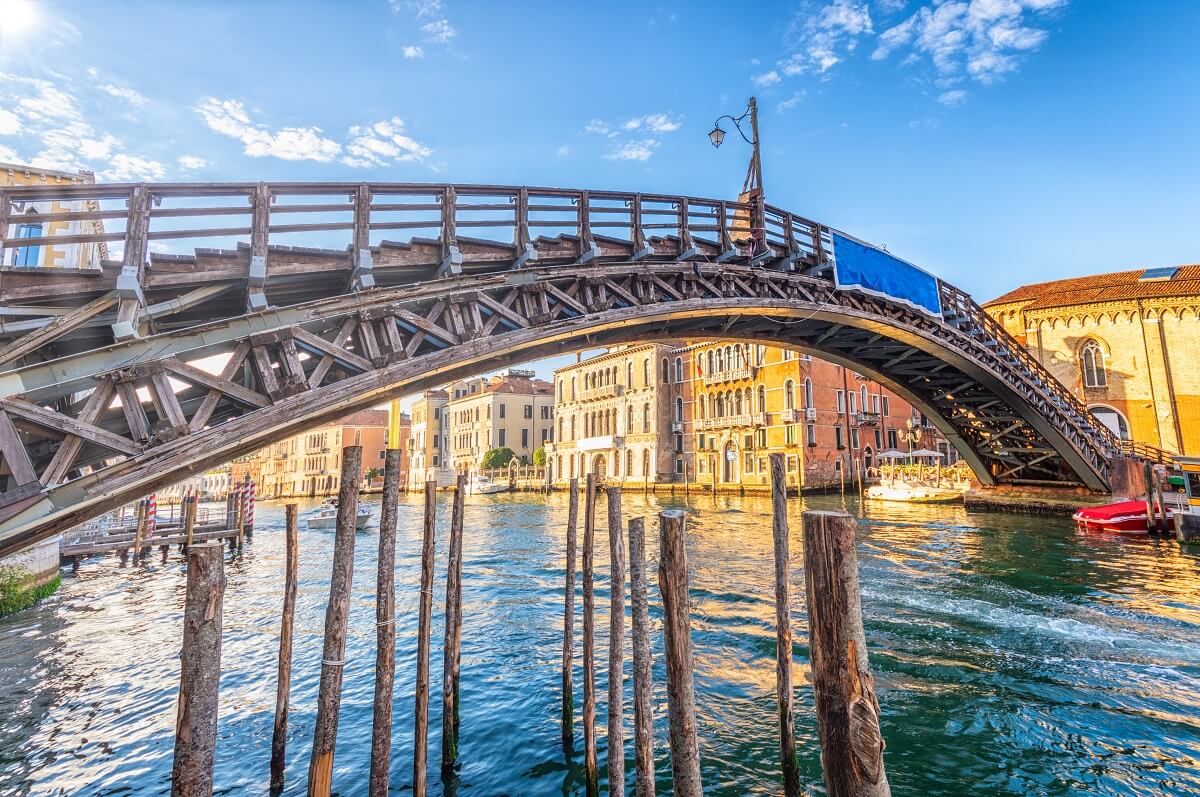
For one of the most romantic views in Venice, head to the Accademia Bridge at sunset. As the light fades, the domes of Santa Maria della Salute and the reflections on the Grand Canal create an unforgettable scene — the perfect way to end your day in Venice.
Things to do in Venice for free
Venice is filled with free things to do that let you experience the city’s rich culture, history, and beauty without spending much. From iconic landmarks to hidden gems, these activities show that you don’t need a big budget to enjoy the magic of Venice.
How to get to Venice by train
Reaching Venice by train is the most comfortable and scenic option. Italo high-speed trains connect Venice with Italy’s main cities — including Rome, Milan, Florence, Bologna, and Naples — with frequent departures every day. You’ll arrive directly at Venezia Santa Lucia Station, right on the Grand Canal. Step outside the station, and you’ll immediately be surrounded by water, boats, and the unmistakable charm of Venice.
To Venice with Italo
Traveling to Venice with Italo means comfort, speed, and sustainability. Choose from multiple daily connections and enjoy onboard services that make your journey as pleasant as the destination itself. Whether it’s a weekend getaway or part of a longer Italian itinerary, arriving by train lets you step right into the heart of the city — no cars, no stress, just the magic of Venice waiting to welcome you.