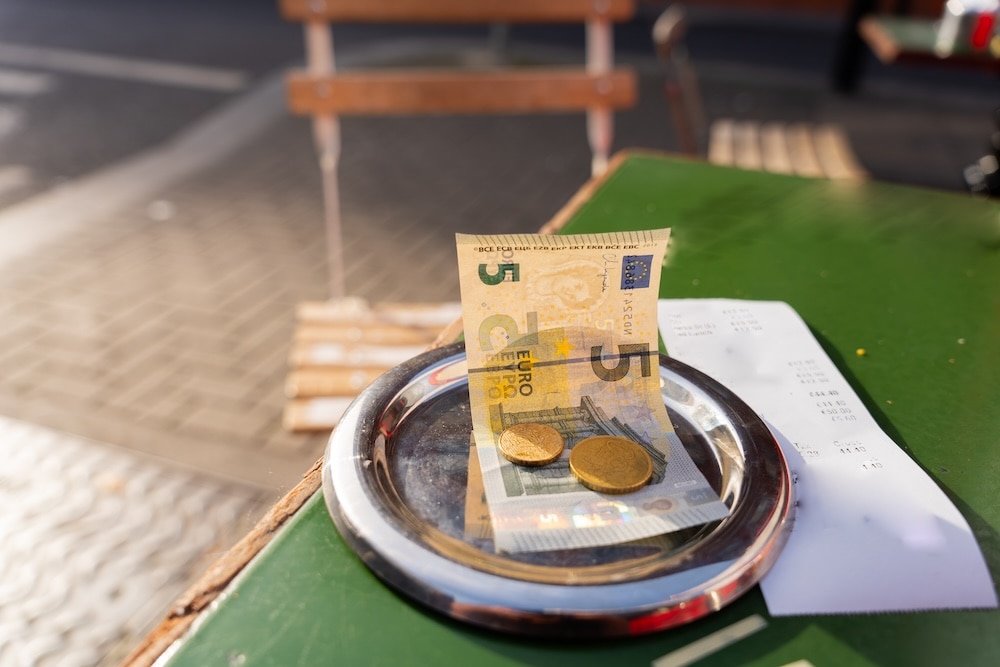
If you are planning a trip across Italy, one of the small but surprisingly important questions you may find yourself asking is this: should you tip, and if so, when? The answer is more nuanced than many travellers expect. In Italy, tipping exists, but it is generally not built into everyday service culture in the same way it is in countries such as the United States. In many situations, a tip is seen as a kind gesture rather than a social obligation. Understanding the difference between optional gratuities, service charges, and coperto can help you avoid awkward moments and move through restaurants, cafés, hotels and taxis with more confidence.
- 1 Understanding tipping culture in Italy before you travel
- 2 Tipping in restaurants in Italy
- 3 Tipping in cafés, bars and takeaway spots
- 4 Tipping taxis and private drivers in Italy
- 5 Tipping hotel staff and other travel services
- 6 Tipping tour guides in Italy
- 7 Tipping in Rome, Milan, Florence and other popular cities
- 8 Everyday situations travellers often ask about
- 9 A simple tipping guide for travelling around Italy
Understanding tipping culture in Italy before you travel
Is tipping common in Italy?
Tipping is not uncommon, but it is also not central to the culture. Many Italians leave nothing extra in everyday situations, while others round up or leave a small amount if the service has been especially pleasant. That is why travellers often receive mixed advice: both “you can tip” and “you do not need to tip” are true, depending on the context. The safest way to think about it is this: in Italy, a tip is usually a thank-you, not a requirement.
Why service often feels different from other countries
Part of the uncertainty comes from the style of service itself. In Italy, hospitality is often less performative and less hurried than in more tip-driven cultures. A waiter may be attentive without constantly checking in. A café server may be brisk but not unfriendly. In many places, staff are not working within a culture where their income depends heavily on gratuities, so the interaction can feel more relaxed, more understated and sometimes more direct. Once you understand that difference, the whole experience becomes easier to read.
The difference between a tip, service charge and coperto
This is the distinction that helps most. A tip is optional. A service charge or servizio is an amount that may be added by the venue. A coperto is a cover charge, typically applied when you sit down in a restaurant and linked to the table setting and seated service. It should not be confused with a gratuity. Travellers often assume that anything added to the bill must be “the tip,” but that is not how it works in Italy. Knowing this immediately makes restaurant bills much easier to understand.
Tipping in restaurants in Italy
Do you tip in Italy for lunch or dinner?
For both lunch and dinner, the honest answer is: only if you want to. In many restaurants, especially traditional ones, diners simply pay and leave. In others, especially in tourist-heavy areas or more polished dining rooms, leaving something small for very good service is welcomed. What you generally do not need to do is treat tipping as a fixed percentage that must always be calculated. That approach often feels imported rather than local.
How much to leave in casual restaurants, trattorias and pizzerias
In casual places, the most natural gesture is usually modest. Many people round up the bill, leave some coins, or add a euro or two per person if the meal and service were particularly enjoyable. The tone matters as much as the amount: in Italy, tipping tends to be quiet and proportionate, not theatrical. A simple, understated gesture often feels more in step with local habits than leaving a large amount by default.
Fine dining and when a larger tip may feel appropriate
At a refined restaurant, expectations may shift slightly, especially in places accustomed to international guests. Even there, however, a large tip is rarely assumed. If the service was polished, thoughtful and memorable, some diners choose to leave more than they would in a trattoria, but it is still best understood as a personal choice. In other words, the standard is not “fine dining equals compulsory tipping,” but rather “excellent service may justify a more generous thank-you.”
Italy restaurant tipping and the role of coperto
One of the most common travel mistakes is treating coperto as if it were a service tip and then feeling unsure whether another tip must follow. In reality, coperto is a separate charge. That means a bill can already include extra costs without creating any obligation to add more. If you see coperto or servizio on the menu or bill, you can interpret the final amount with much more confidence. And if the service was good but not extraordinary, many diners are perfectly comfortable leaving it there.

Best places to visit in Italy: top cities and must-see attractions
Italy is one of those destinations that travelers dream of for a lifetime. With its blend of ancient history, breathtaking landscapes, artistic treasures, and culinary delights, it offers something for every kind of explorer.
Tipping in cafés, bars and takeaway spots

Should you tip for coffee at the counter?
Usually, no. If you order an espresso at the bar, drink it standing up and move on, tipping is not expected. You may leave the small change if you feel like it, but there is no real social pressure to do so. This is one of those everyday situations where overthinking the gesture is often more complicated than the custom itself.
What to do when table service is included
The picture changes slightly if you sit down, especially in central squares, busy tourist areas or elegant cafés where table service costs more. In those cases, the higher price or an added charge is often already covering the seated experience. If that is clear on the bill, leaving more is optional. If someone has been especially kind, attentive or accommodating, then a small extra amount can still be a nice touch.
Small gestures that are appreciated
Across cafés and bars, the most Italian-looking solution is often the simplest one: round up, leave the coins, or add a little extra only when it feels deserved. The custom is less about rule-following and more about reading the situation naturally.
Tipping taxis and private drivers in Italy

Do you tip taxi drivers in Rome and other cities?
In ordinary city taxi rides, tipping is generally not expected. This is true in Rome, Milan, Florence and other major destinations. That said, some passengers round up the fare, especially if the driver was helpful with luggage, handled a complicated route well or made the ride noticeably easier. But the important point remains the same: a taxi tip in Italy is usually optional, not routine.
How much to tip a driver in Italy
With taxis, rounding up is usually enough. With private drivers or pre-arranged transfers, travellers are sometimes a little more generous, particularly if the service feels personalised and attentive. The distinction is practical rather than ceremonial: the more tailored the service, the more natural an added thank-you may feel.
When rounding up the fare is enough
Most of the time, rounding up is the cleanest solution because it suits the local style. It avoids awkwardness, keeps the gesture proportional and acknowledges good service without turning the moment into a formal calculation.
Tipping hotel staff and other travel services

Doormen, porters and housekeeping
Hotels are one of the few settings where tipping feels slightly more familiar to many international visitors. If a porter carries heavy bags, housekeeping takes special care during a longer stay, or staff go out of their way to make things smoother, a small tip can be appreciated. Even here, though, there is no sense that every interaction automatically deserves extra money.
Concierge service and special assistance
A concierge who answers a quick question does not usually call for a tip. A concierge who secures a hard reservation, helps solve a travel problem or offers meaningful assistance beyond the basics may be another matter. In Italy, as in many places, the more tailored and valuable the help, the more reasonable a tip feels.
Airport transfers and luggage help
Transfers work in a similar way. For a straightforward service, many people leave nothing. For substantial help, especially with luggage, timing or logistics, a small amount can be a courteous way to acknowledge the effort. Again, the principle is not obligation but proportionality.

Italy in 5 days: itinerary to explore the highlights of the country
Planning to visit Italy in 5 days might sound like a challenge, but with the right itinerary and fast connections, you can truly enjoy a taste of the country’s incredible diversity.
Tipping tour guides in Italy
Do you tip tour guides in Italy?

Yes, this is one of the contexts in which tipping may be more common, particularly when the guide clearly shapes the quality of the experience. A knowledgeable, engaging guide who brings a city, museum or historic site to life often receives tips more frequently than workers in other everyday service roles.
Group tours versus private tours
On a group tour, the tip is often smaller and more symbolic. On a private tour, where the service is more personal and the attention more direct, travellers are often more inclined to leave something extra. The logic is intuitive: the more individual the experience, the more natural a gratuity may feel.
How much to tip based on the experience
There is no single number that fits every situation. A short, competent tour and a deeply memorable one are not the same thing. In Italy, this is really the pattern across all tipping: the quality of the experience matters more than a fixed formula.
Tipping in Rome, Milan, Florence and other popular cities
Tipping in Rome: what travellers usually do
Rome can sometimes give the impression that tipping is more expected simply because international visitors are everywhere. In reality, the core custom remains unchanged: most tips are discretionary, often small, and usually linked to genuinely good service rather than habit.
Tipping in Milan: business-like but still flexible
Milan may feel a little more polished and international, particularly in business hotels, stylish restaurants and more formal venues. Even so, the same principle applies. People may tip, but there is no reason to treat every service interaction as if it required an automatic extra percentage.
Florence and other art cities: when tips are welcome
In Florence and other art cities, tourism can slightly soften local habits, especially around guided tours, hospitality and central restaurants. But “welcome” does not mean “expected.” Travellers usually navigate these places best when they keep the gesture light and sincere.
Everyday situations travellers often ask about
Do you tip for delivery or short services?
For deliveries or quick practical help, tipping is not compulsory. Some people may leave a little extra if someone has been particularly helpful or if the situation was inconvenient or demanding, but again, modesty is the norm.
What happens if you pay by card
One practical detail is worth remembering: tips in Italy are often easier to leave in cash. Many places do not structure card payments around adding gratuities afterward, so having a few coins or small notes can make things simpler when you do want to leave something.

Discover Italy by Train on Your Autumn Half-Term
As the crisp autumn air begins to settle over Italy, painting the landscape in vibrant hues of red, orange, and gold, there’s no better way to experience this magical season than on a train journey.
A simple tipping guide for travelling around Italy
When not tipping is perfectly acceptable
It is perfectly normal not to tip for a quick coffee at the counter, a routine taxi ride, or an ordinary meal where the bill already includes extra charges. In many situations, no one will interpret that as impolite.
When a small tip is a nice gesture
A small tip works best when it reflects something specific: a waiter who made the meal smoother, a porter who helped substantially, a guide who transformed a visit, or a driver who went beyond the basics. In Italy, the best gratuities are usually the ones that feel earned rather than automatic.
The easiest rule to remember before your trip
The easiest rule is this: tip in Italy when the experience feels meaningfully better, not because you feel pressured to follow a formula. Once you approach it that way, everything becomes more intuitive.
And if your itinerary includes more than one destination, the journey itself becomes part of the pleasure. Moving from Rome to Florence, from Milan to Bologna, or on to Naples is far easier when travel feels smooth and central rather than fragmented. With Italo, you can explore Italy’s major cities comfortably and build a trip that flows naturally from one stop to the next, giving you more time to enjoy the restaurants, cafés, museums and neighbourhoods that make each destination memorable.