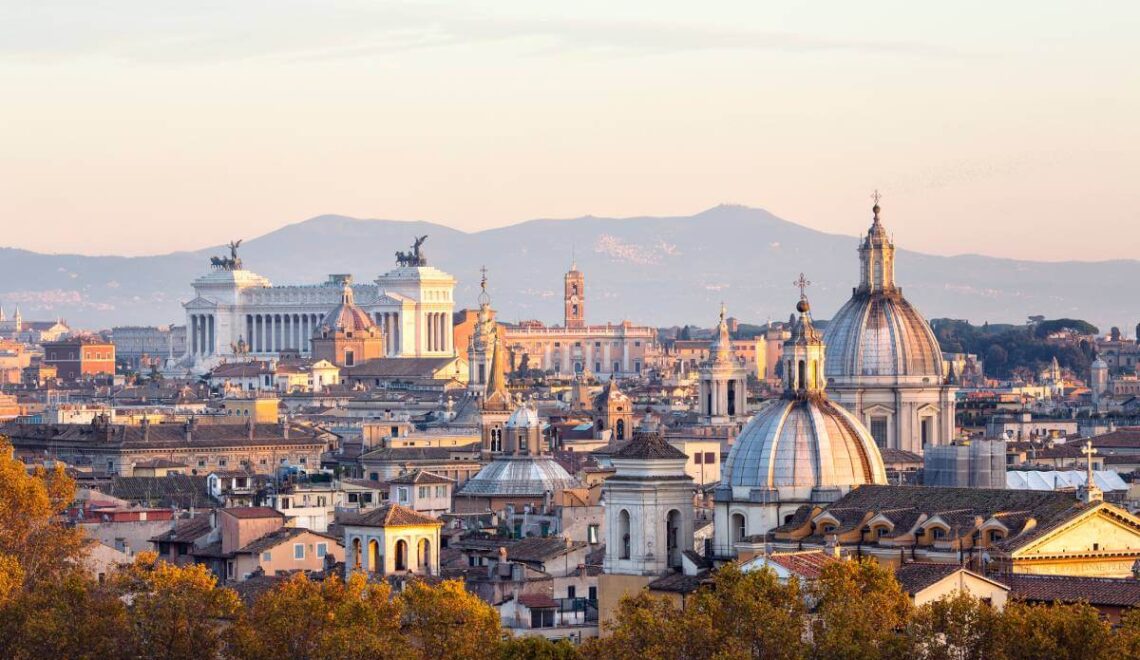
Rome deserves more than a rushed visit. Within four days, you can explore its most iconic sights, from the Colosseum and Vatican City to Trevi Fountain and Trastevere, while still leaving time to enjoy its neighbourhoods, views and slower rhythms. This itinerary helps you discover the many sides of the Eternal City without turning your trip into a race.
[swptoc]
Is 4 days enough to explore Rome?
Four days will not reveal every corner of Rome – few trips ever could – but they are enough to build a surprisingly complete picture of the city. You can devote proper time to its major archaeological sites, spend a morning among the artistic treasures of Vatican City, wander through some of its best-known squares and still have space in the itinerary for neighbourhoods such as Trastevere, Prati and the Jewish Ghetto.
The key is not trying to cross the city several times in the same day. Rome is much easier to enjoy when nearby attractions are grouped together. With this approach, a 4-day itinerary in Rome lets you cover the essentials without turning every day into a checklist.
You will also have more opportunities simply to look around. In Rome, some of the most memorable moments happen between the famous landmarks: stepping into a quiet church, stopping for coffee at the counter, discovering a fountain at the end of a narrow street or watching the city turn golden towards sunset.
4 days in Rome: itinerary overview
Rome in 4 days itinerary overview
| Day | Location & Focus | Activities |
| Day 1 | Ancient Rome and the historic centre | Start at Roma Termini, visit the Colosseum and Roman Forum, then continue to Piazza Venezia, the Pantheon and Piazza Navona. |
| Day 2 | Trevi Fountain, Spanish Steps and Villa Borghese | See the Trevi Fountain and Spanish Steps, continue to Piazza del Popolo, then relax in Villa Borghese and at the Pincian Terrace. |
| Day 3 | Vatican City, Castel Sant’Angelo and Prati | Visit St. Peter’s Basilica, the Vatican Museums and Sistine Chapel, then walk to Castel Sant’Angelo and spend the evening in Prati. |
| Day 4 | Trastevere, Jewish Ghetto and Aventine Hill | Explore Trastevere and the Jewish Ghetto, then head to the Orange Garden, Aventine Keyhole and Circus Maximus. |
Day 1 – Ancient Rome and the city’s iconic landmarks
Your first day is devoted to the Rome most visitors have imagined long before arriving: imperial ruins, monumental squares and some of the most recognisable architecture in Italy.
Roma Termini: the starting point of your Rome itinerary
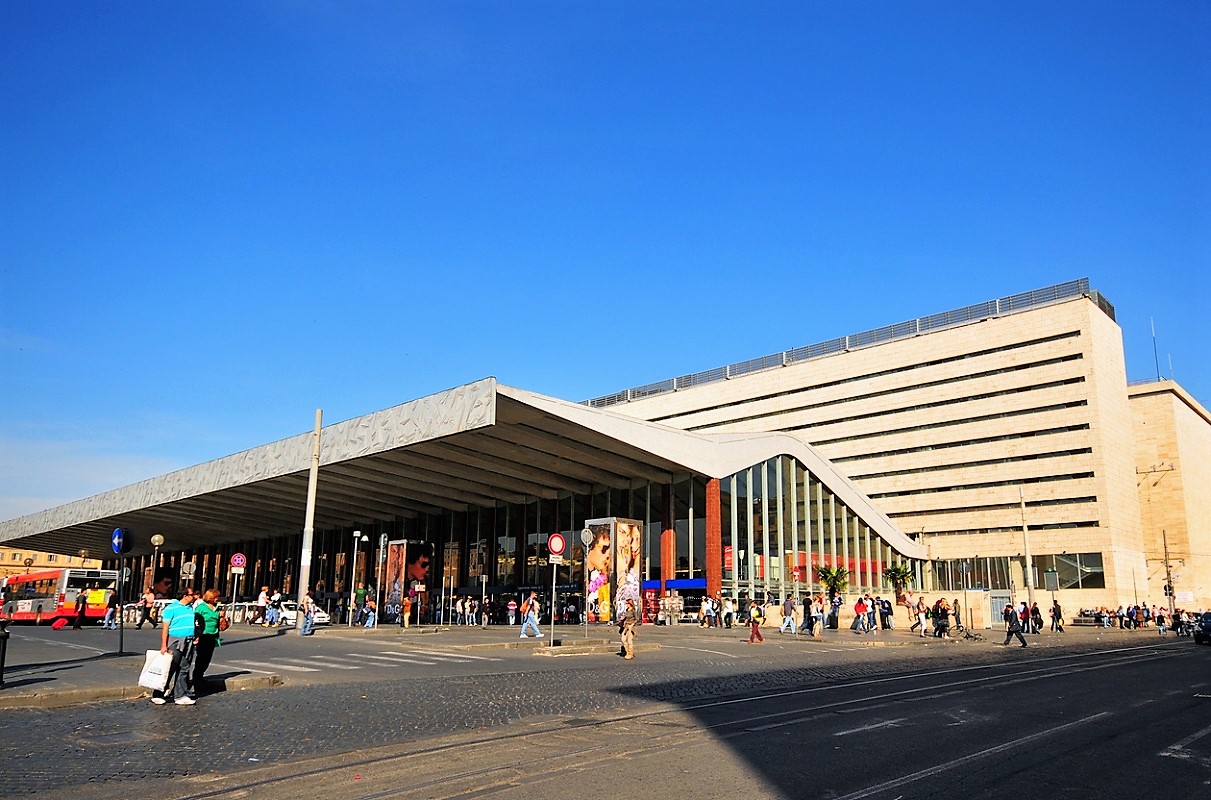
Start your journey from Roma Termini, one of the main arrival points for travellers reaching the capital by train. From here, the historic centre unfolds progressively before you, making the station a practical starting point for a first day of exploration.
Rather than heading straight underground, walking towards the archaeological heart of the city allows you to begin absorbing Rome’s scale and atmosphere. On the way, you can pass through the lively streets around Monti before the Colosseum suddenly appears between the buildings.
Rome Airports: How to Get to and from the City Center
Traveling to and from Rome’s airports, Fiumicino and Ciampino, is seamless with various convenient options. The train from Rome to the airport, including the popular Leonardo Express, offers speed and comfort. Discover efficient train services to the city center.
The Colosseum and Roman Forum
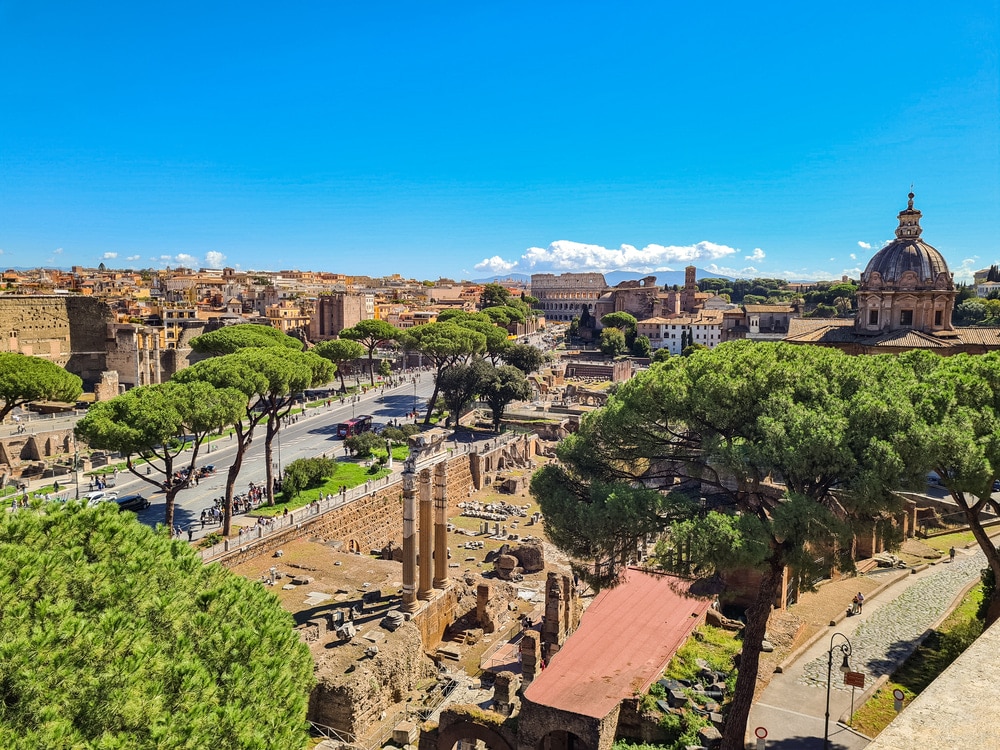
Few places offer a more dramatic introduction to Rome than the Colosseum. Built almost two thousand years ago, the amphitheatre remains one of the most powerful reminders of the scale and ambition of ancient Rome.
Give yourself time to explore rather than simply walking around its exterior. From here, continue into the Roman Forum and Palatine Hill, where temples, arches, basilicas and fragments of imperial buildings stretch through what was once the political and ceremonial centre of the Roman world.
Piazza Venezia and the Capitoline Hill
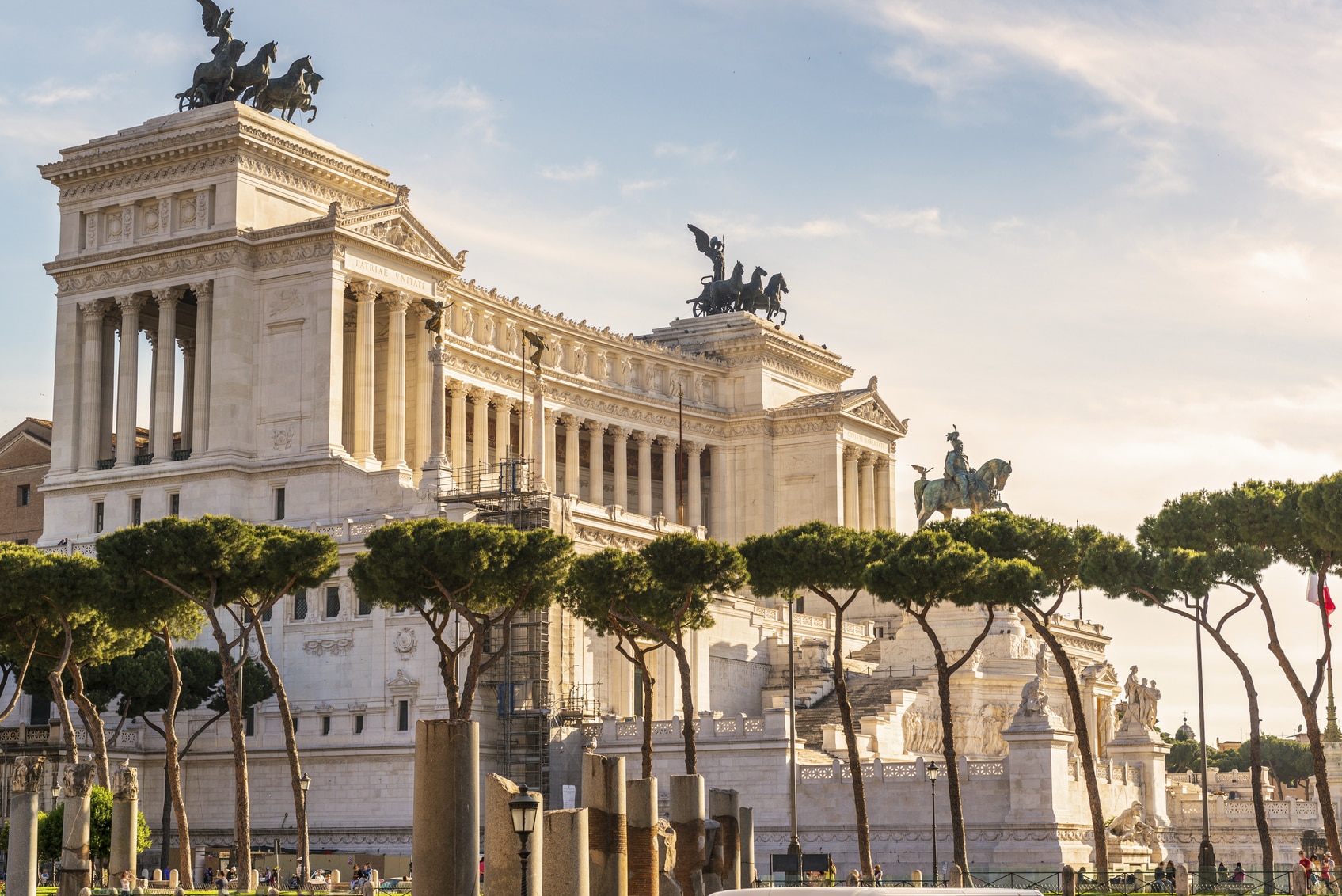
Leaving the archaeological area along Via dei Fori Imperiali brings you naturally towards Piazza Venezia. From here, climb towards the Capitoline Hill, redesigned by Michelangelo and still one of Rome’s most monumental urban spaces.
Before continuing, look for one of the viewpoints over the Roman Forum. Seeing the ruins from above helps put the vast archaeological area into perspective, especially after walking through it at ground level.
The Pantheon and Piazza Navona
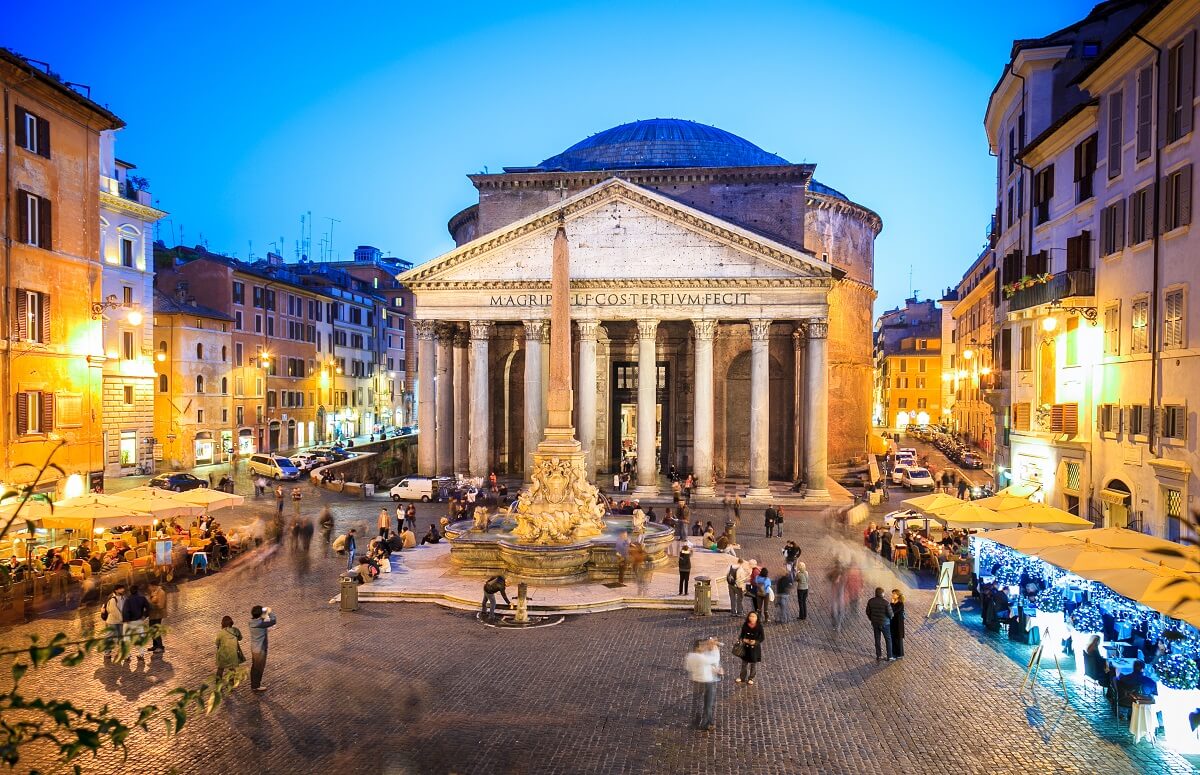
Spend the late afternoon wandering deeper into the historic centre. The Pantheon, with its immense dome and central oculus, has survived almost two millennia and remains one of the city’s most extraordinary buildings.
From Piazza della Rotonda, it is only a short walk through narrow streets to Piazza Navona. Built over the ancient Stadium of Domitian, the square is now one of the great showcases of Baroque Rome, dominated by Bernini’s Fountain of the Four Rivers. Stay here into the early evening, when the pace begins to slow and the façades take on warmer tones.
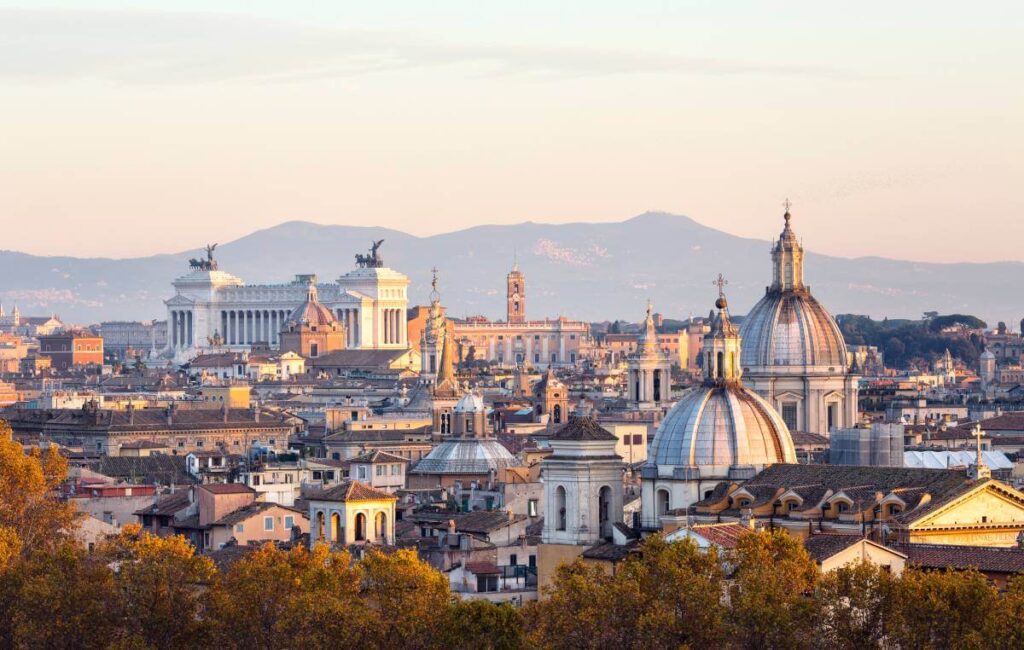
Rome’s station-museums: when the metro becomes a journey through history
Rome is redefining urban transit by turning Line C into an underground museum network. At stations like San Giovanni, Porta Metronia, and Colosseo–Fori Imperiali, waiting time becomes an immersive cultural experience, seamlessly blending daily commutes with the city’s layered history.
Day 2 – From the Trevi Fountain to Villa Borghese
Your second day takes you through a very different Rome: monumental fountains, elegant shopping streets, sweeping staircases and one of the city’s largest parks.
Trevi Fountain
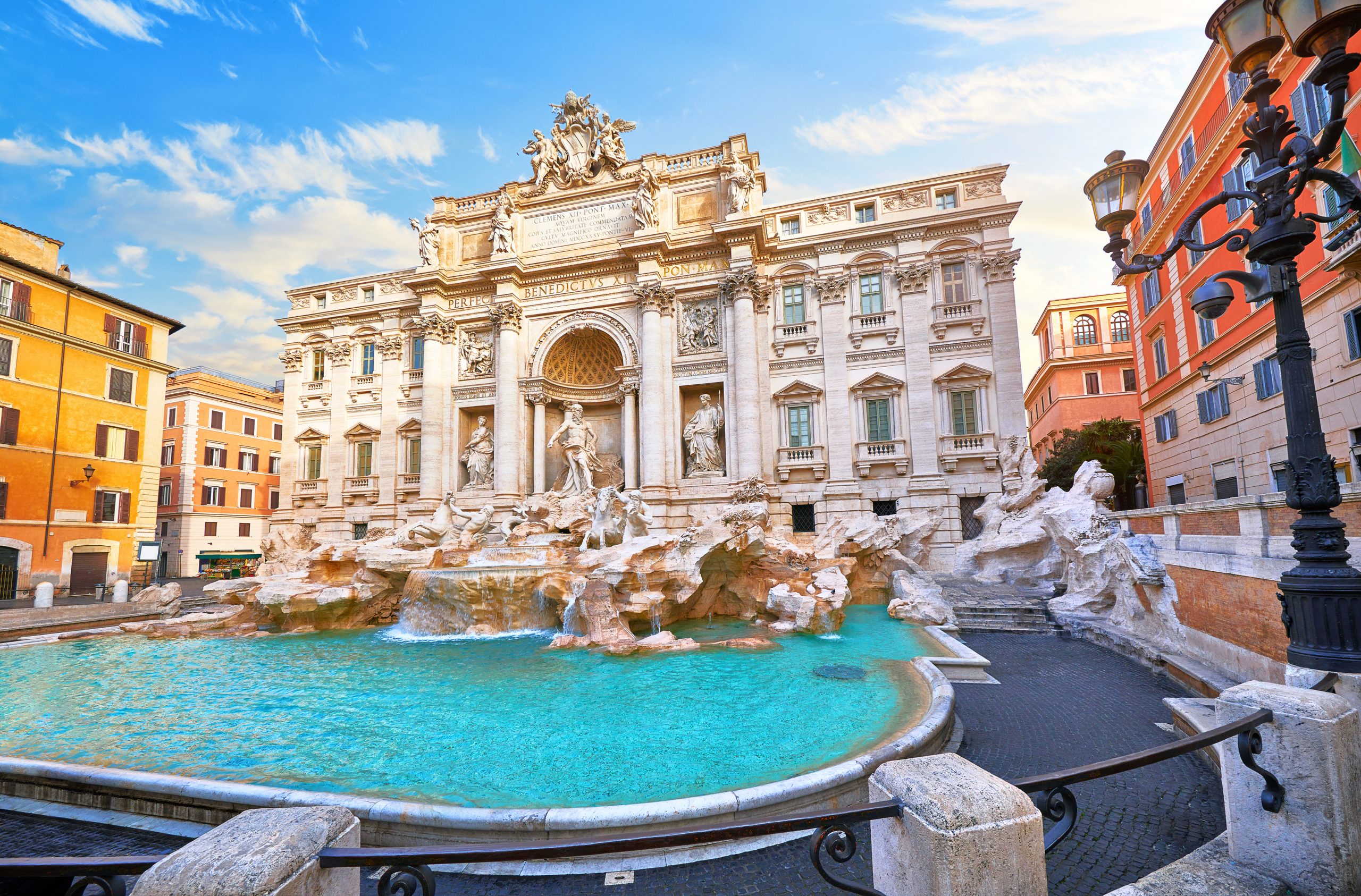
Begin early at the Trevi Fountain, before the surrounding streets become busier. Nicola Salvi’s spectacular Baroque composition turns the façade of Palazzo Poli into a theatrical backdrop of rock, water and sculpture.
Tradition says that throwing a coin into the fountain ensures a return to Rome, fortune, the fulfillment of a wish, and a new love. Whether you follow the ritual or not, arriving early gives you more time to notice the architectural details before continuing towards Piazza di Spagna.
Piazza di Spagna and the Spanish Steps
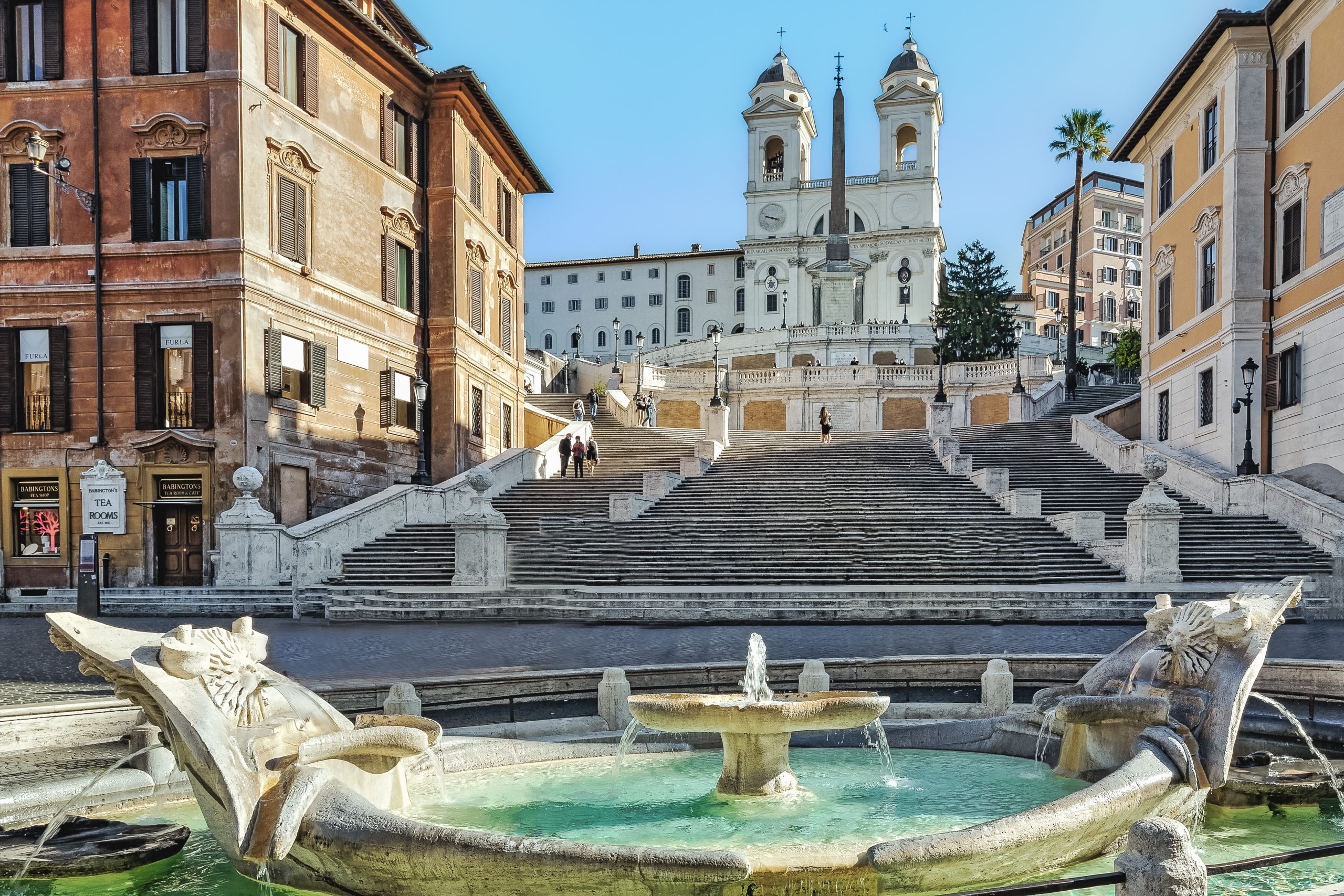
The Spanish Steps rise elegantly from Piazza di Spagna towards the church of Trinità dei Monti. Climb to the upper terrace for a different view over the rooftops and streets of central Rome.
This part of the city is perfect for slowing down. Instead of rushing to the next monument, wander around Via del Babuino, Via Margutta and the streets connecting the square with Piazza del Popolo.
Piazza del Popolo
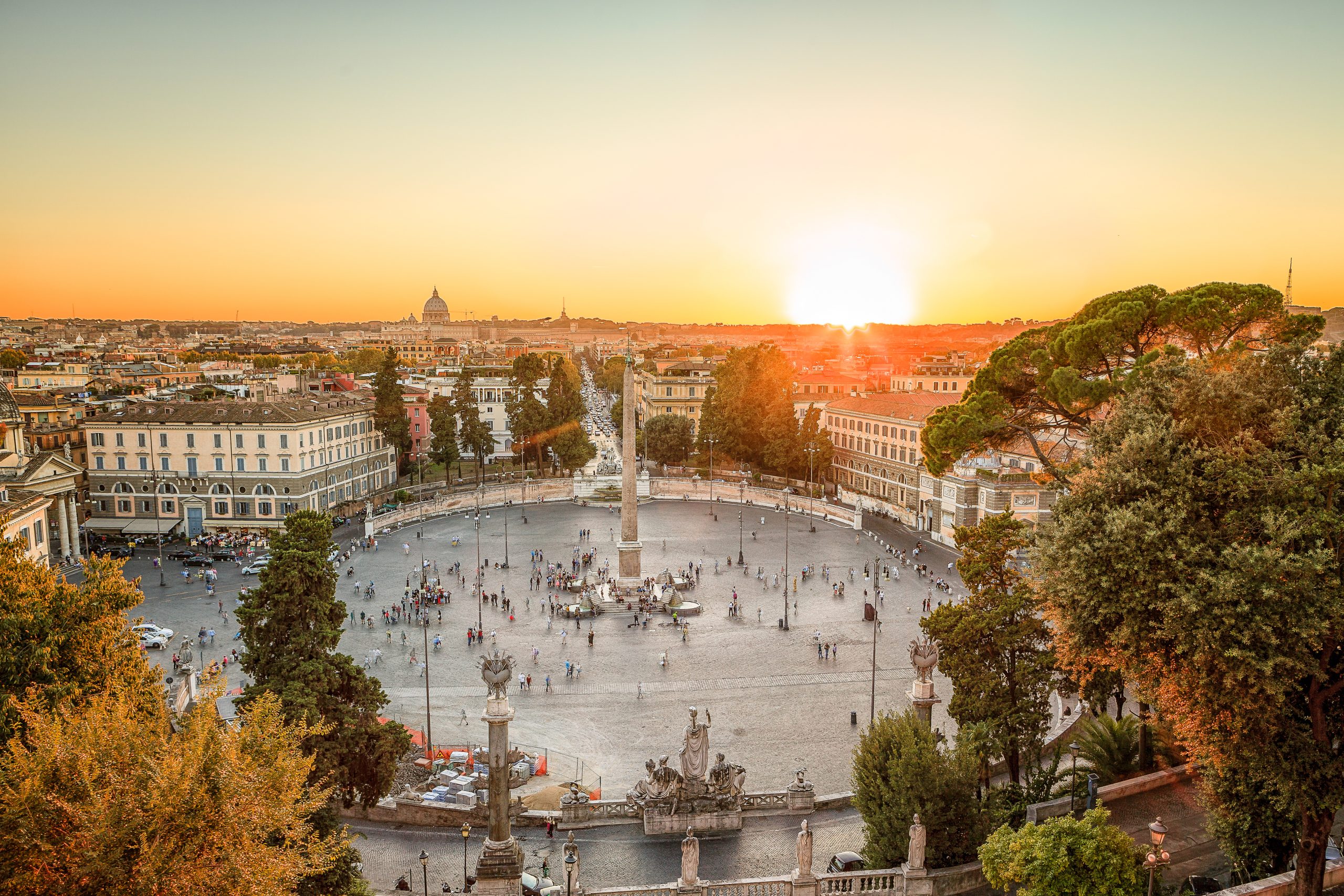
Eventually you will reach Piazza del Popolo, a monumental gateway to Rome’s historic centre. Its churches, fountains and central Egyptian obelisk make it one of the capital’s most impressive open spaces.
From the square, climb towards the Pincian Hill. The reward is one of the classic views across Rome, particularly beautiful towards late afternoon.
Villa Borghese and the Pincian Terrace
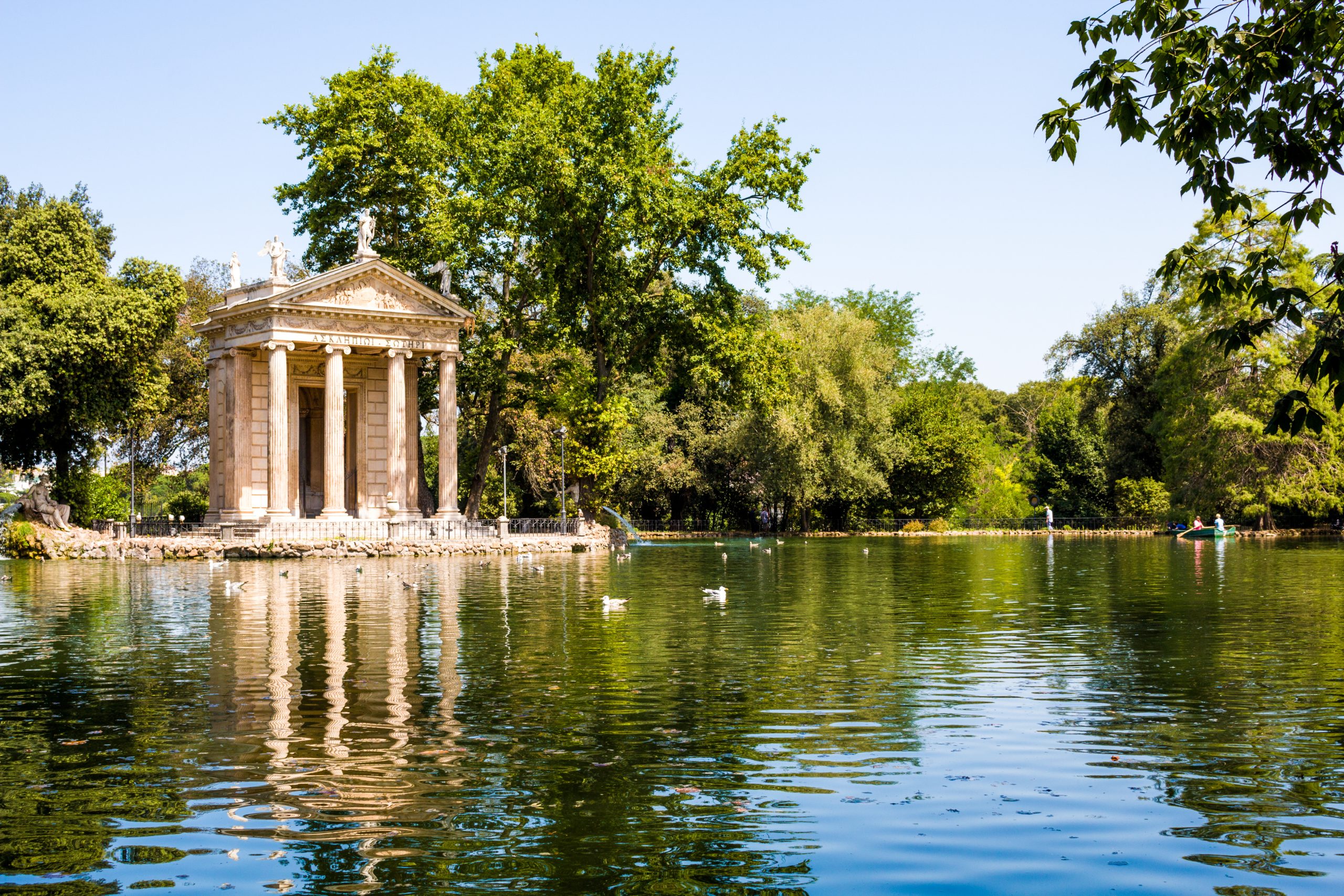
Continue into Villa Borghese, a welcome change of pace after two days among stone streets and monuments. Its gardens, tree-lined avenues, fountains and museums create a surprisingly peaceful pocket in the centre of the capital.
The Pincian Terrace is an ideal place to end the day. As the light begins to fade, the view extends from Piazza del Popolo towards the domes and rooftops of Rome.

Best trips from Rome: travel ideas to discover more of Italy
Whether you’re exploring ancient ruins, enjoying lakeside serenity, or indulging in culinary delights, the areas around Rome offer diverse experiences that can be enjoyed in a single day. These trips not only complement the Roman experience but also enrich your Italian adventure with minimal travel and maximum enjoyment.
Day 3 – Vatican City, Prati and Castel Sant’Angelo
Day three crosses the Tiber and concentrates on Vatican City and the elegant streets surrounding it.
St. Peter’s Square and St. Peter’s Basilica
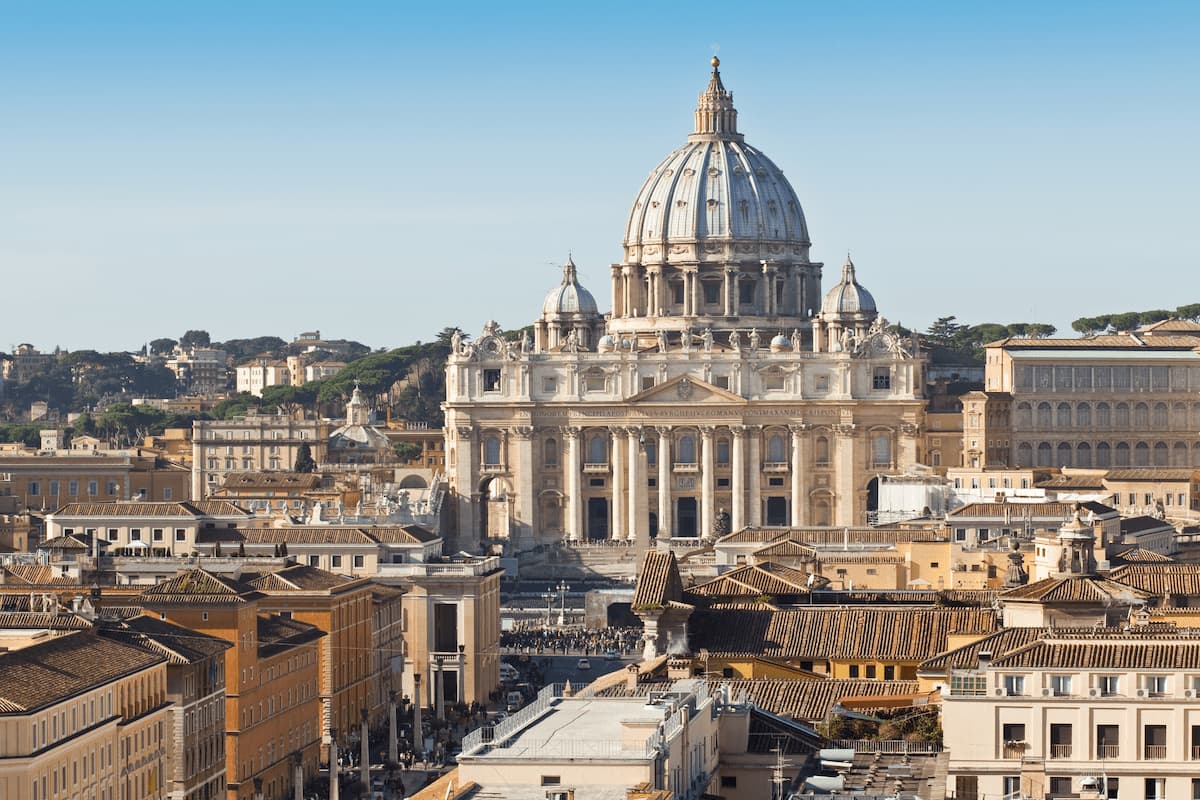
Begin in St. Peter’s Square, framed by Bernini’s monumental colonnades. Enter St. Peter’s Basilica to appreciate both its extraordinary scale and its artistic masterpieces, including Michelangelo’s Pietà.
Inside, the basilica is striking for its immense scale, soaring nave and richly decorated interiors, where marble, mosaics and monumental sculptures create an overwhelming sense of grandeur.
The Vatican Museums and the Sistine Chapel
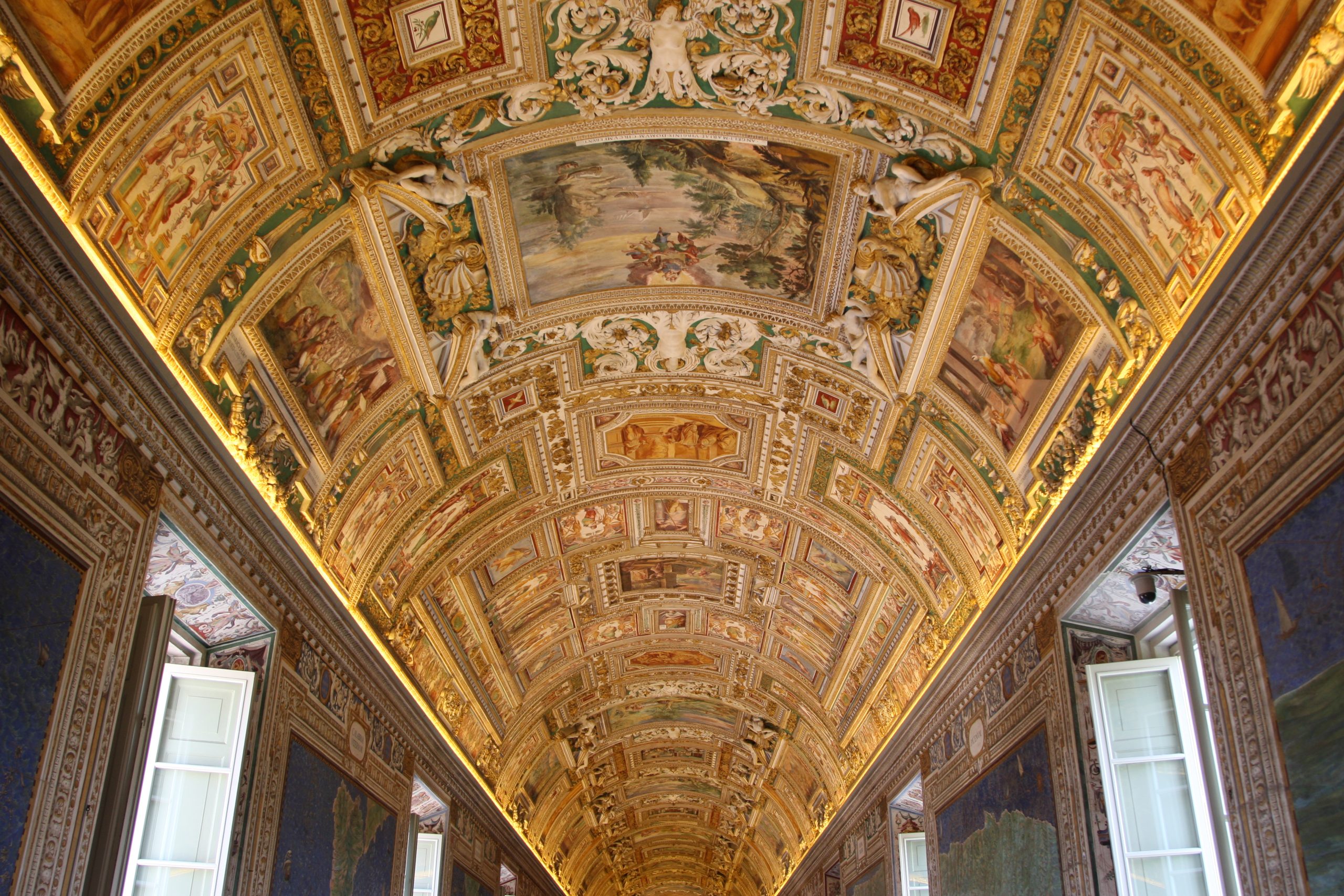
The Vatican Museums deserve several hours. Their collections unfold through galleries filled with ancient sculpture, Renaissance frescoes, tapestries, maps and works accumulated over centuries.
The route eventually leads to the Sistine Chapel, where Michelangelo’s ceiling and Last Judgment provide one of the most anticipated moments of a visit to Rome. For the Museums, booking in advance is particularly useful when building a full-day itinerary around the Vatican.
Castel Sant’Angelo
After leaving Vatican City, walk towards the Tiber and Castel Sant’Angelo. Originally built as the mausoleum of Emperor Hadrian, the structure later became a fortress and papal refuge.
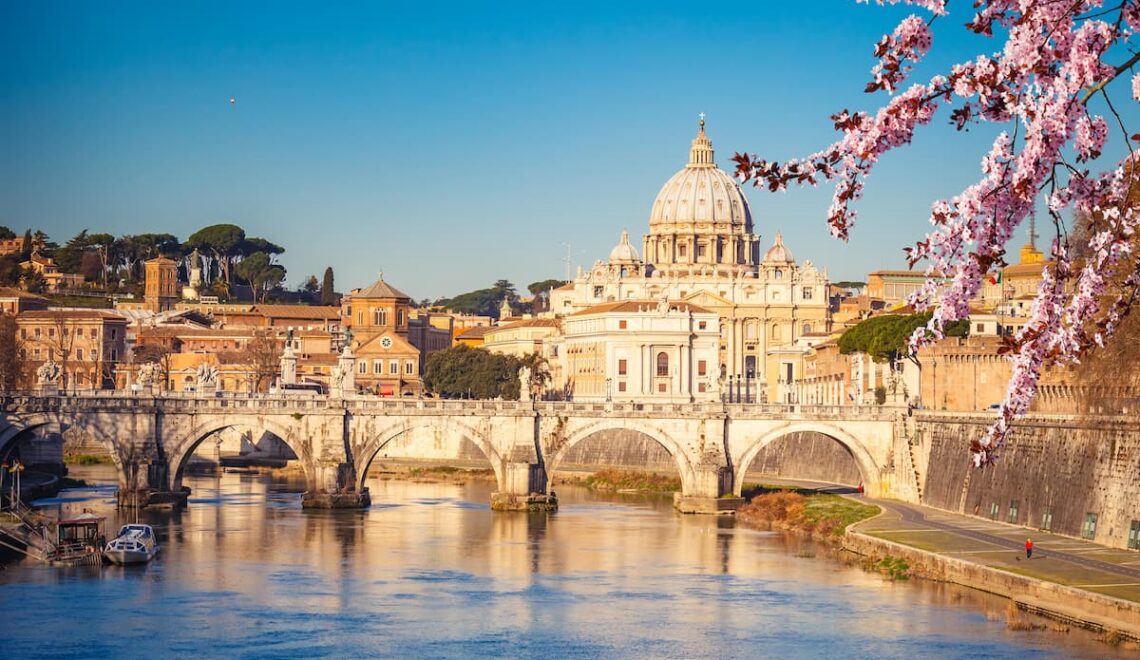
Even if you decide not to visit the interior, the approach across Ponte Sant’Angelo is worth the walk. From here, the river, statues and fortress create one of the most distinctive urban views in Rome.
An evening in Prati
Instead of immediately returning to the historic centre, spend the evening in Prati. Its broad avenues and elegant residential streets offer a different atmosphere from the medieval lanes across the river.
It is a good place to slow the itinerary down with an aperitivo or dinner after a museum-heavy day. With three days already behind you, you can finally enjoy the feeling of knowing the city a little rather than simply moving through it.
Day 4 – Trastevere, the Jewish Ghetto and the Aventine Hill
Your final day brings together some of Rome’s most atmospheric neighbourhoods and quieter viewpoints.
Trastevere and Santa Maria in Trastevere
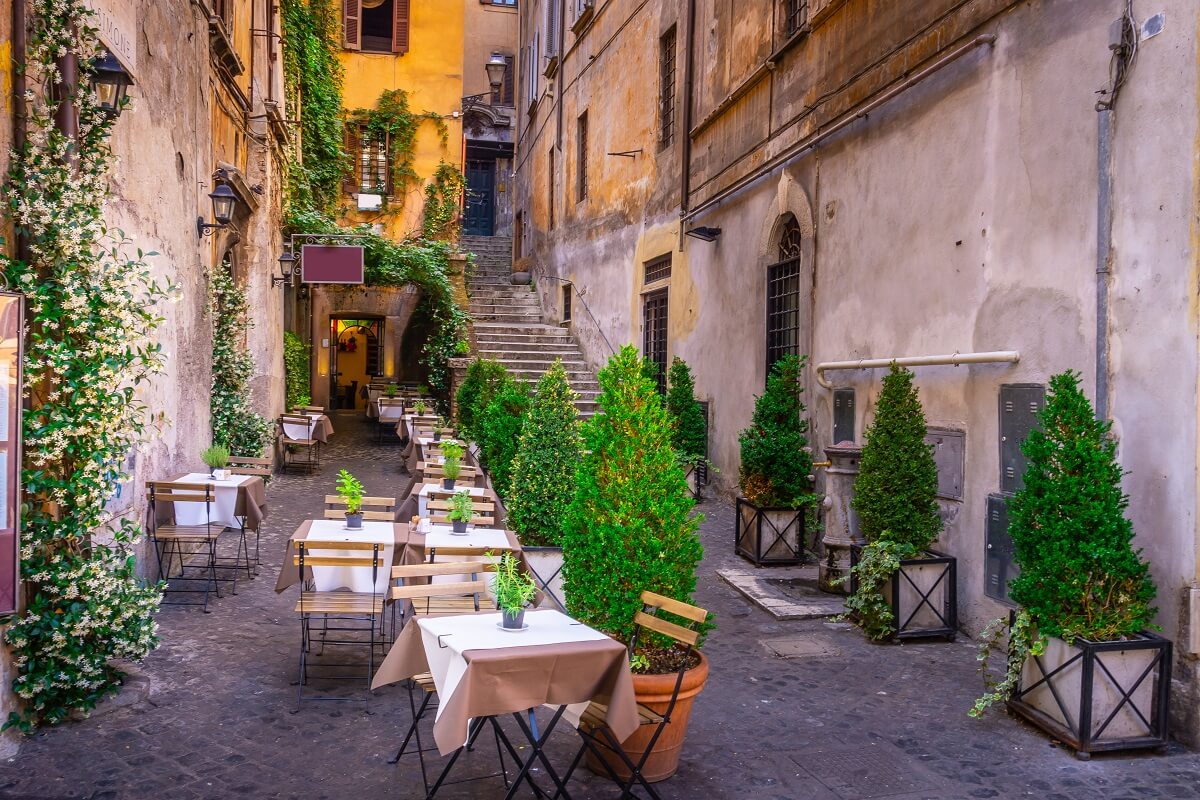
Start in Trastevere, preferably before its streets become busy later in the day. Explore its narrow lanes, ochre façades and small piazzas before reaching Piazza di Santa Maria in Trastevere.
The basilica standing on the square is one of the neighbourhood’s landmarks, while the surrounding streets invite aimless wandering. This is one part of Rome where taking the wrong turn is often more enjoyable than following a precise route.
The Jewish Ghetto and the Theatre of Marcellus
Cross the Tiber and continue towards the Jewish Ghetto, one of Rome’s most historically layered districts. Here archaeological remains, Renaissance buildings and traces of the city’s Jewish heritage coexist within a compact area.
Nearby stands the Theatre of Marcellus, whose great arches immediately recall the Colosseum on a smaller scale. The route through this part of the city also takes you close to the Portico d’Ottavia and the Tiber Island.
The Orange Garden and the Aventine Keyhole
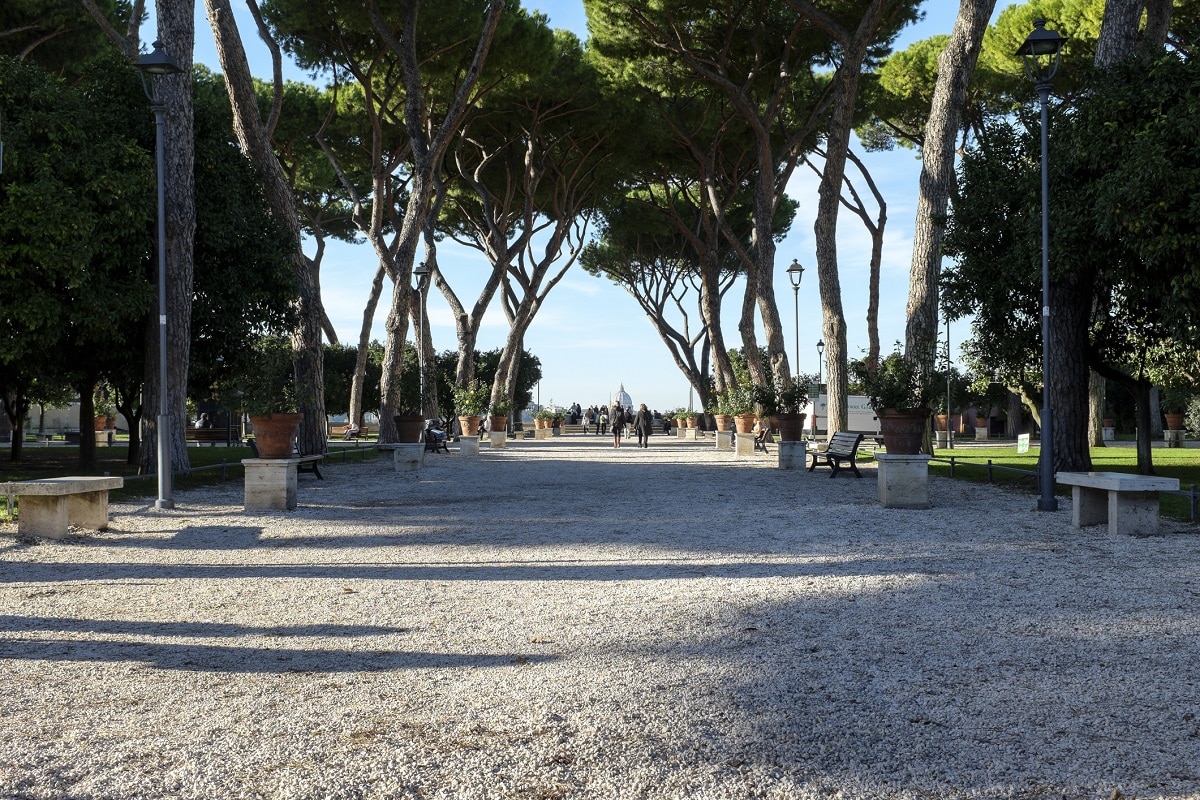
Continue south towards the Aventine Hill. The Orange Garden, or Giardino degli Aranci, offers a beautiful panorama across Rome and is particularly atmospheric in the late afternoon.
A short walk away is another much-loved Roman curiosity: the Aventine Keyhole, through which the dome of St. Peter’s appears perfectly framed in the distance.
Neither stop requires hours. That is precisely why they work so well on the fourth day, when the itinerary can afford to become less about major monuments and more about viewpoints and small discoveries.
Circus Maximus
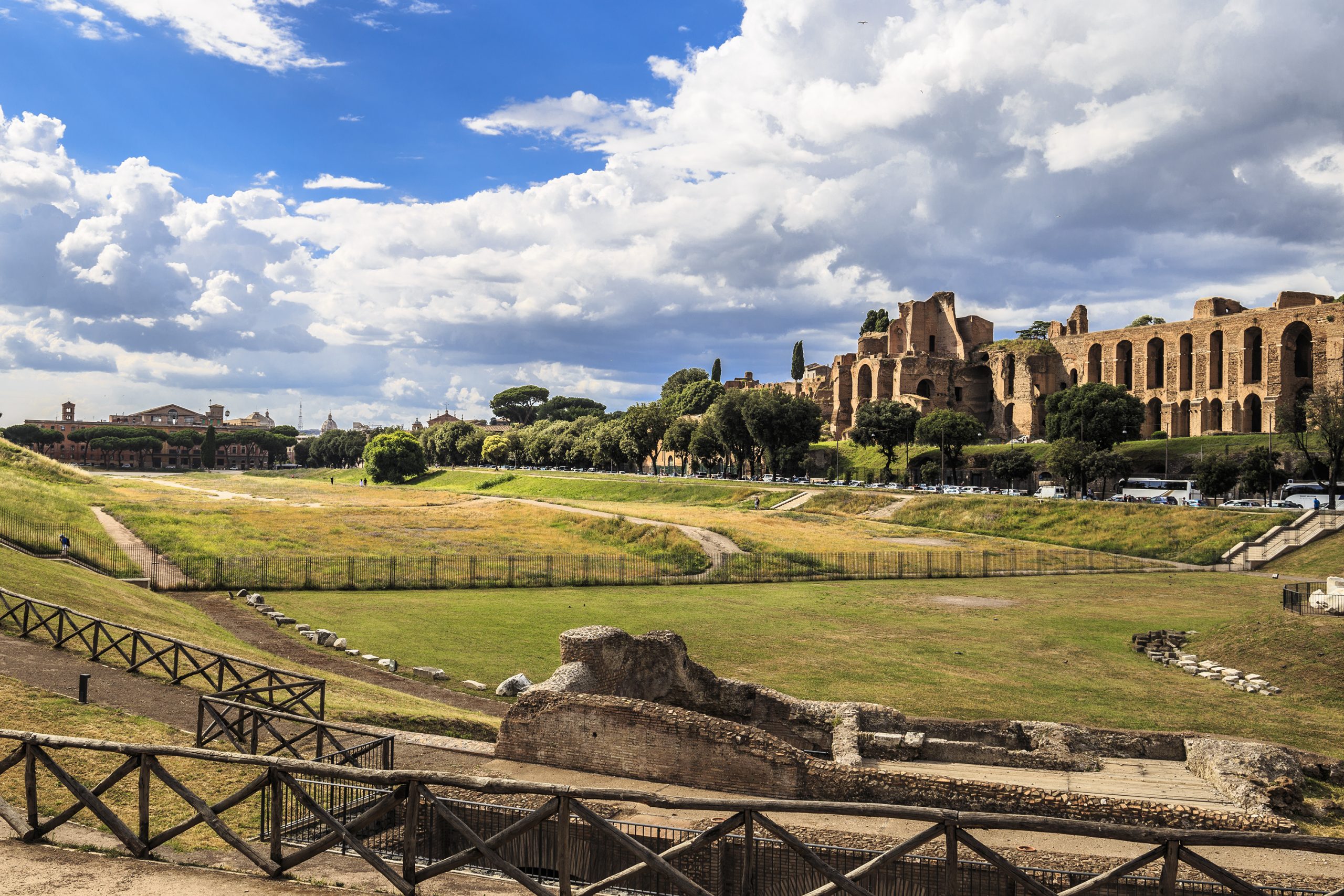
Finish your four days in Rome at the Circus Maximus, set in the valley between the Aventine and Palatine Hills. In antiquity, this vast space was used primarily for chariot racing and was one of the largest entertainment venues in the Roman world.
From here, the Palatine rises above you and the Colosseum is not far away, bringing the itinerary almost full circle to where your exploration of Ancient Rome began.
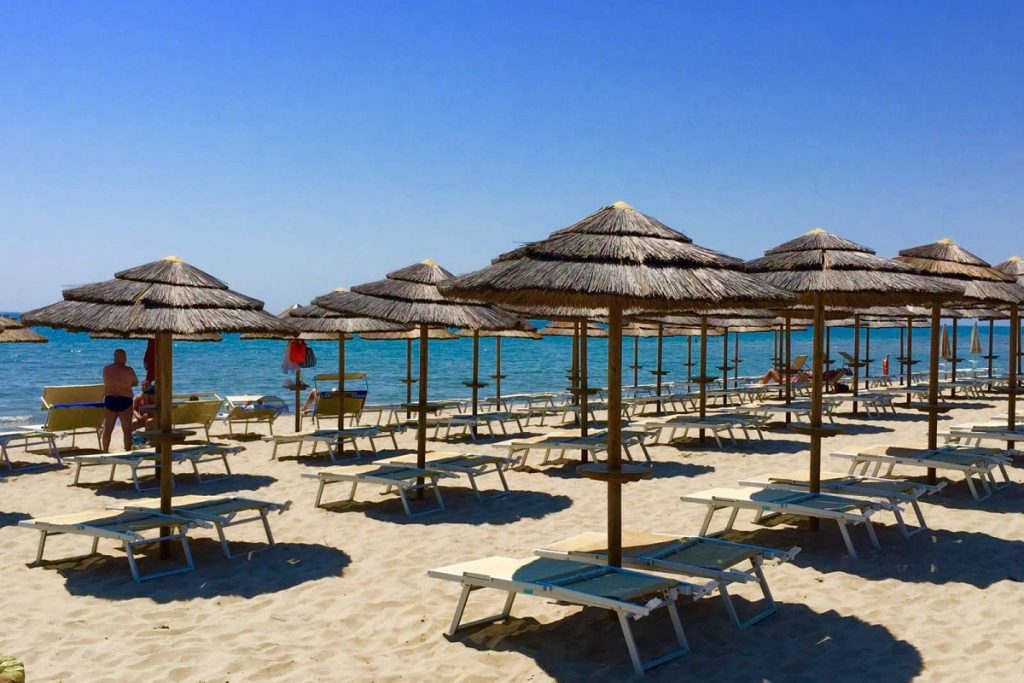
Best Beach Day Trips from Rome
Rome’s proximity to the coast means you can enjoy a variety of beach experiences, all within a day’s travel. Whether you’re looking for luxury beach clubs, quiet nature escapes, or historical seaside towns, the beaches near Rome offer something for every type of traveler.
What to eat during 4 days in Rome
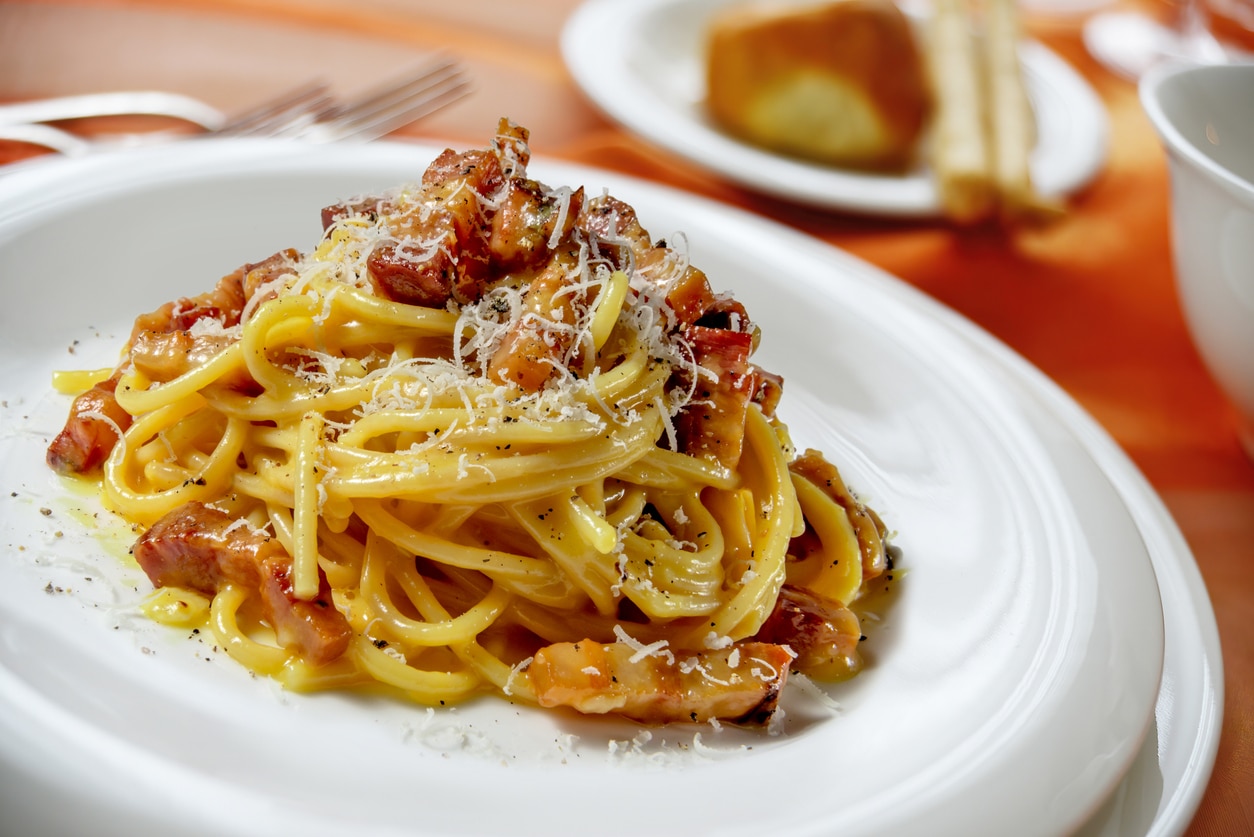
Four days also give you enough time to work your way through Roman cuisine without attempting everything at a single meal.
Start with the city’s great pasta classics: carbonara, amatriciana, cacio e pepe and gricia. Each relies on relatively few ingredients, but their distinctive combinations have become inseparable from Roman food culture.
For something quicker, try supplì, the fried rice snack traditionally filled with tomato, rice and melting mozzarella. Seasonal vegetables also play an important role in local cooking: artichokes appear as carciofi alla romana or, in Roman Jewish cuisine, crisp carciofi alla giudia.
Leave room for something sweet. A maritozzo filled with whipped cream makes a particularly Roman breakfast or afternoon treat, while a scoop of gelato is an easy companion for an evening walk through the historic centre.
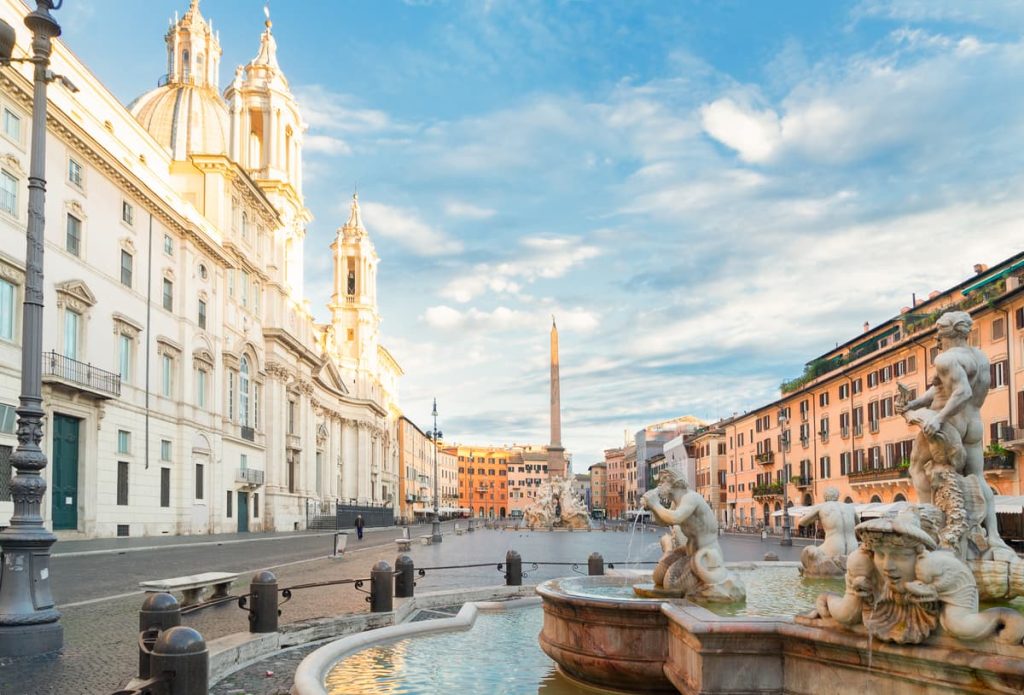
5 Restaurants for dining al fresco in Rome among monuments and iconic symbols of the city
The 5 best restaurants with outdoor seating in Rome: Aroma, Osteria dell’Ingegno, Armando al Pantheon, Alfredo alla Scrofa, and Spiazzo.
Tips for visiting Rome in 4 days
A four-day stay gives you enough time to see Rome’s highlights without overloading each day. A little planning helps you move around more easily and enjoy the city at a more natural pace.
- Plan the main attractions in advance, especially those that require timed entry, while keeping the rest of the day flexible.
- Wear comfortable shoes, as Rome is best explored on foot and many streets are paved with cobblestones.
- In warmer months, explore outdoors in the morning or late afternoon, saving museums and lunch for the hottest hours.
- Dress appropriately for churches and religious sites, and check opening times before your visit in case of events, celebrations or temporary closures.
- Leave some free time in your itinerary to enjoy a piazza, revisit a neighbourhood you liked or simply follow a street that catches your attention.
How to get to Rome with Italo
Reaching the capital by high-speed train makes it easy to place the city centre at the heart of your trip from the moment you arrive. Italo connects Rome with major Italian cities including Milan, Florence, Bologna, Naples, Turin, Venice and Verona, with services arriving at Roma Termini and Roma Tiburtina.
For this itinerary, Roma Termini is a particularly convenient starting point: once you leave the station, you are already close to the central neighbourhoods and can begin exploring Rome without adding another long journey to your first day.
Four days later, you may leave with the feeling that there is still far more to see. In Rome, that is not a sign that the itinerary failed. It is usually the best reason to come back.