Pisa is often associated with one unforgettable image: the Leaning Tower rising with elegant improbability from the green lawn of Piazza dei Miracoli. Yet the city offers much more than its most famous monument. Compact, walkable and rich in atmosphere, Pisa is a place where medieval splendour, university life, riverside views and Tuscan flavours come together naturally. From Piazza Vittorio Emanuele to the Lungarni, from the lively streets around Corso Italia to the monumental beauty of the cathedral complex, Pisa is ideal for travellers who want a cultural city break that feels easy, scenic and full of discoveries.
Why Pisa is more than its leaning tower
A city shaped by art, science and river views
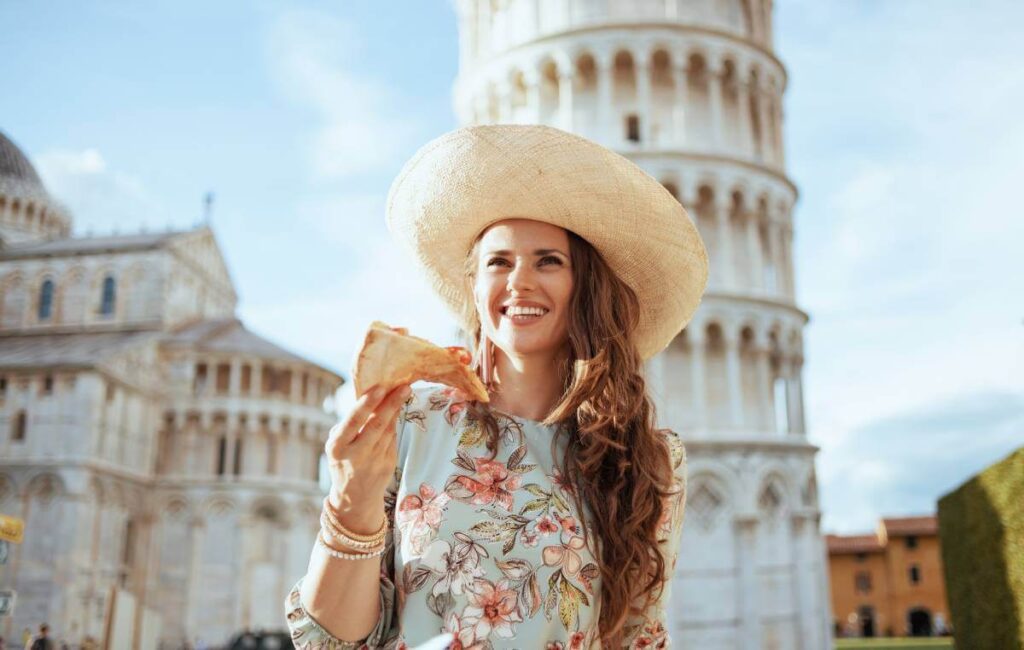
Pisa has a rare ability to surprise. Its worldwide fame may begin with the Leaning Tower, but the city’s character is much broader and more layered. It is a place of Romanesque masterpieces, historic squares, elegant palaces and scientific memory, closely connected to Galileo Galilei and to the long intellectual tradition of its university.
The city also has a softer, more everyday beauty. The Arno river cuts through Pisa with a quiet elegance, creating some of its most atmospheric views. The Lungarni, with their pastel buildings and historic façades reflected in the water, show a different side of the city: less monumental, more contemplative, perfect for a slow walk at sunset.
Why Pisa is perfect for a short city break
Pisa works beautifully for a short stay because many of its main attractions are concentrated within a manageable distance. You can arrive at Pisa Centrale, walk through the modern and commercial heart of the city, cross the river and reach the historic centre without needing a complicated itinerary.
This makes Pisa especially appealing for a one-day visit or a relaxed weekend. The city offers enough art, architecture and local flavour to fill your time, but it never feels overwhelming. You can move from a famous landmark to a quiet street, from a busy square to a riverside view, from a museum visit to a traditional Tuscan meal with ease.
Italy’s Outdoor Markets: A Guide to Shopping and Local Flavours
Explore Italy’s outdoor markets to discover vintage finds, fresh produce, and rare antiques. This guide offers a journey through the local lifestyle and rich traditions.
Starting from Pisa Centrale
Piazza Vittorio Emanuele
A natural starting point for exploring Pisa is Piazza Vittorio Emanuele, just a short walk from Pisa Centrale. This broad, open square introduces the city with a lively urban rhythm: cafés, shops, porticoes and people crossing in every direction.
It is not the most ancient part of Pisa, but it is a useful and pleasant gateway into the city. From here, the route towards the historic centre unfolds naturally. Piazza Vittorio Emanuele gives visitors the sense of arriving in a real Tuscan city, where daily life and tourism overlap without losing authenticity.
Corso Italia
From Piazza Vittorio Emanuele, continue along Corso Italia, one of Pisa’s main pedestrian streets. This is the city’s commercial spine, lined with shops, cafés and elegant buildings. It is perfect for a first stroll because it leads you gradually towards the Arno and the older part of Pisa.
Corso Italia is also a good place to pause for a coffee, browse local boutiques or simply enjoy the easy pace of the city. As you walk, Pisa begins to shift: the more modern atmosphere around the station gives way to historic streets, river views and the architectural harmony that defines the centre.
The best things to see in Pisa
Piazza dei Miracoli
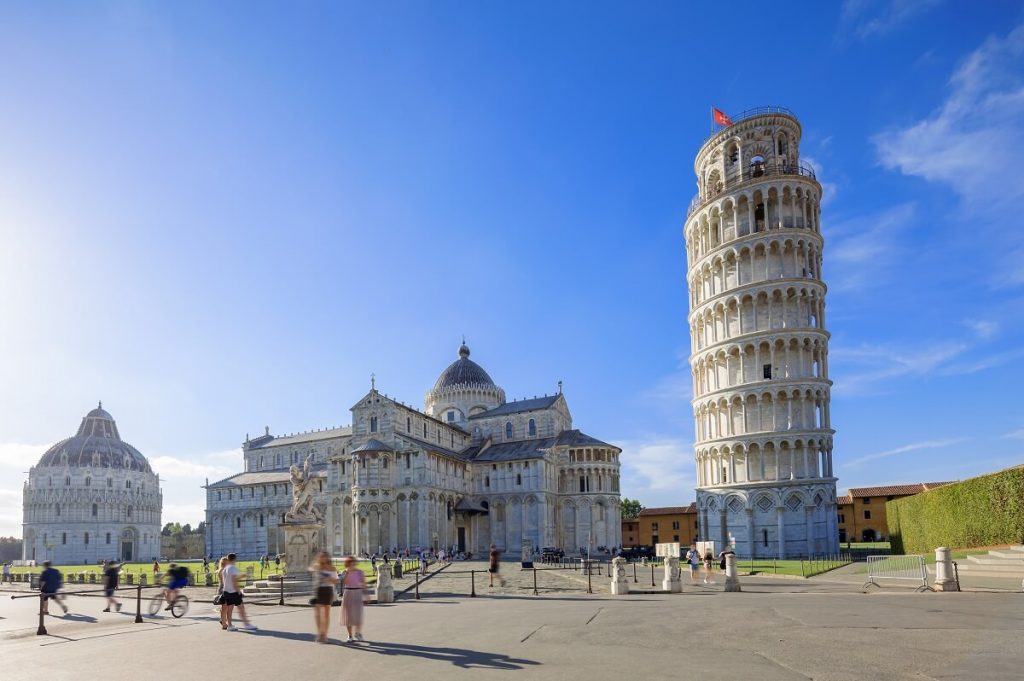
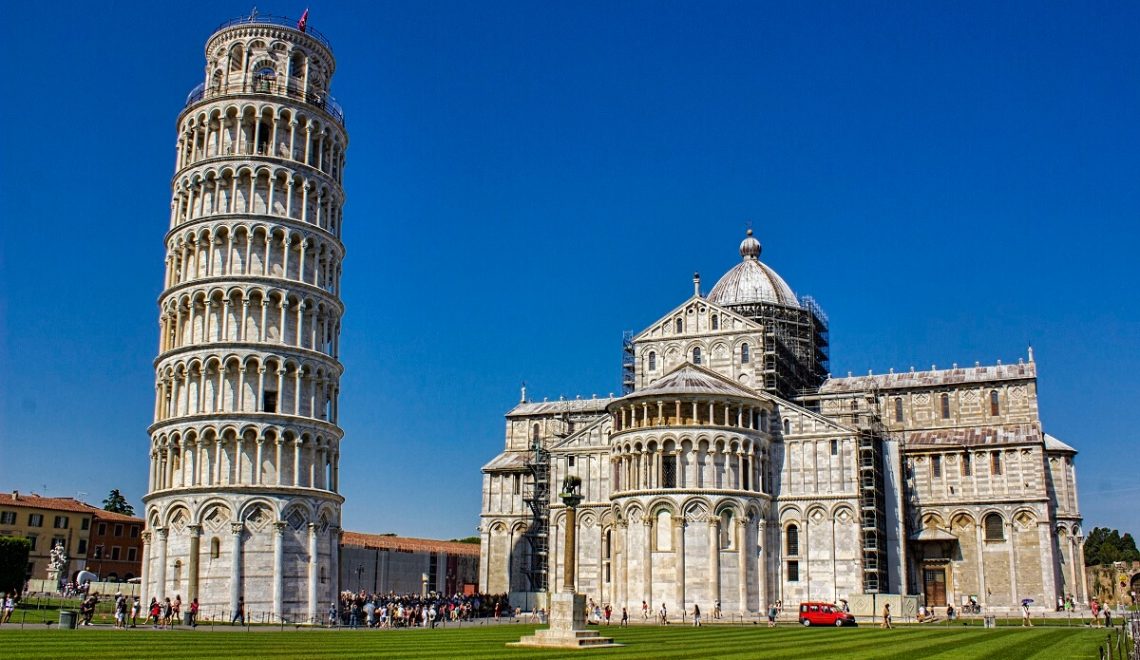
No visit to Pisa can ignore Piazza dei Miracoli, one of the most extraordinary monumental spaces in Italy. The square is famous for its composition: the Leaning Tower, the Cathedral, the Baptistery and the Monumental Cemetery stand together on a wide green lawn, creating a setting that feels almost theatrical.
What makes Piazza dei Miracoli so memorable is not only the presence of individual masterpieces, but the way they communicate with one another. White marble, open space and geometric balance create an atmosphere of grandeur and calm. It is the kind of place that rewards both a quick visit and a slower, more attentive exploration.
The Leaning Tower
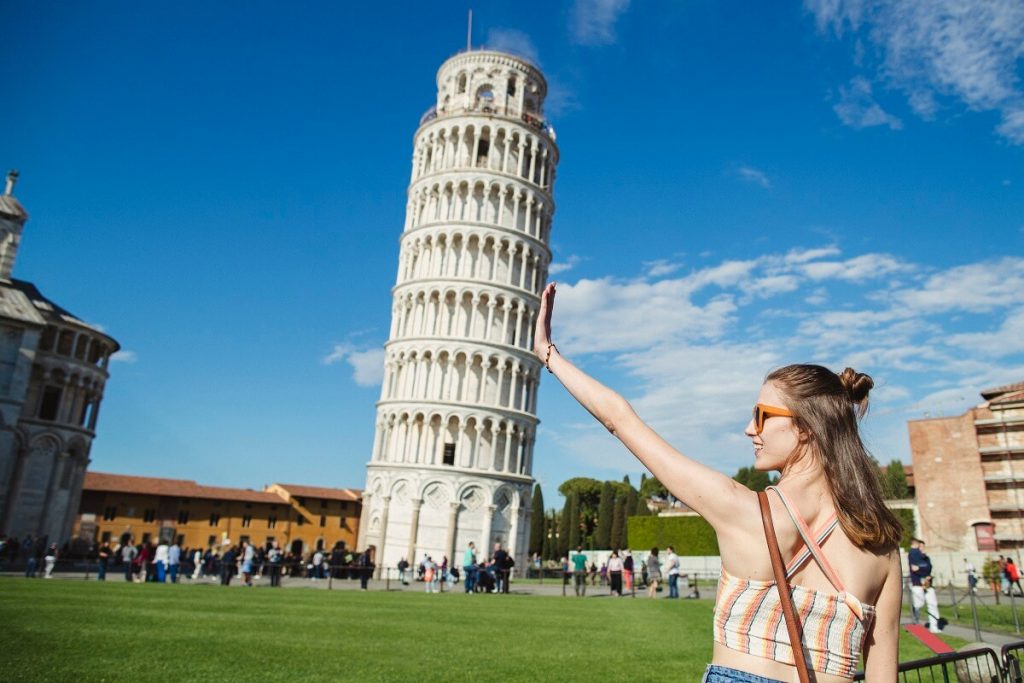
The Leaning Tower is Pisa’s most iconic attraction and one of the most recognisable monuments in the world. Its tilt has made it famous, but its beauty should not be overlooked. The tower is a refined bell tower, decorated with columns and arcades that give it elegance and lightness.
Climbing the tower is one of the most memorable things to do in Pisa. The ascent offers unusual sensations because of the slope, and the view from the top opens over Piazza dei Miracoli and the city beyond. Even from the ground, however, the tower remains captivating: familiar from countless images, yet much more impressive when seen in person.
Cattedrale di Santa Maria Assunta
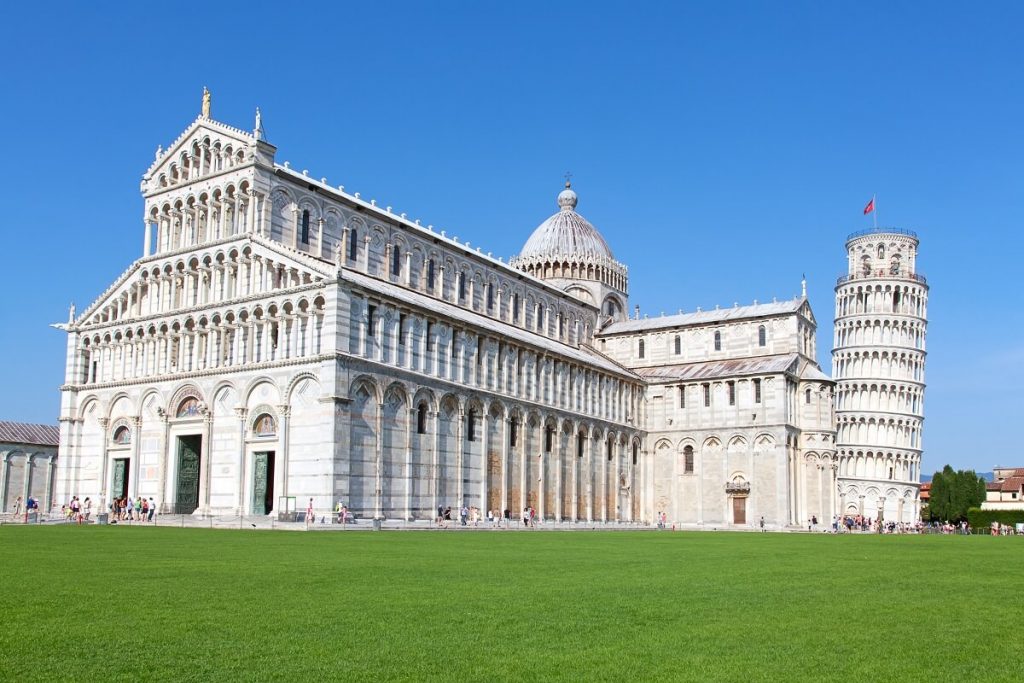
At the heart of Piazza dei Miracoli stands the Cattedrale di Santa Maria Assunta, a masterpiece of Pisan Romanesque architecture. Its façade is richly decorated with marble, arches and sculptural details, while the interior conveys the historic power of Pisa as a maritime republic.
The cathedral deserves time and attention. Inside, the space is solemn and luminous, filled with artistic details that reveal the city’s medieval wealth and cultural ambition. Visiting the cathedral helps place the Leaning Tower in context: the tower was never meant to stand alone, but as part of a wider sacred and architectural complex.
Baptistery of Saint John
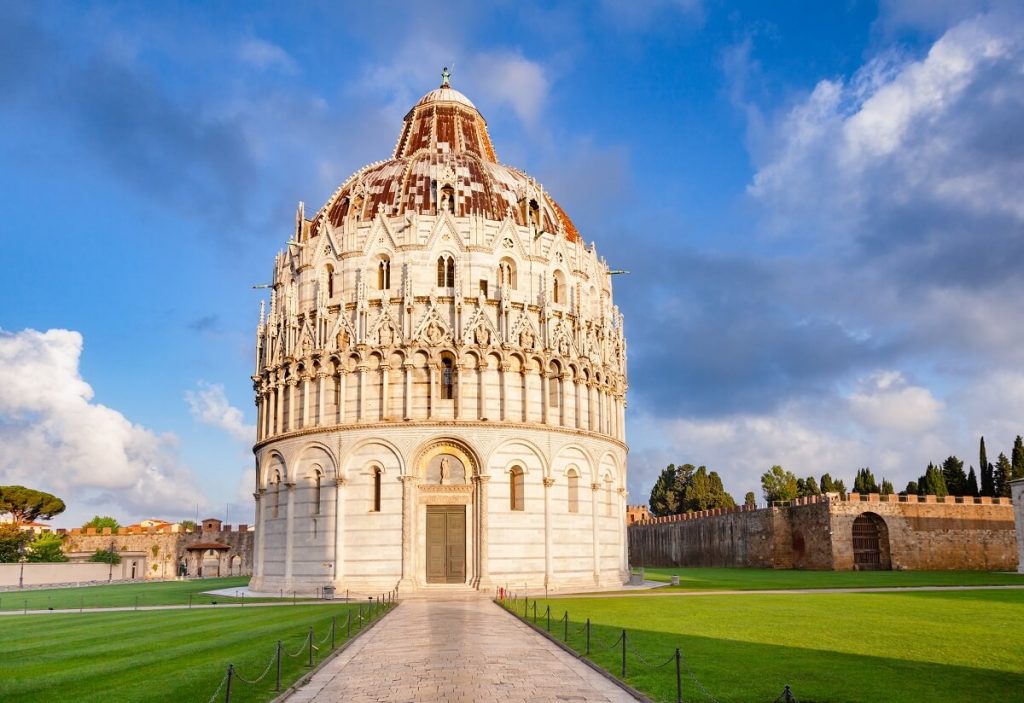
The Baptistery of Saint John is another essential stop in Piazza dei Miracoli. Its rounded form and layered decoration make it immediately distinctive, while its interior is known for its remarkable acoustics and sense of vertical harmony.
The building brings together Romanesque and Gothic elements, creating a fascinating dialogue between styles. From certain viewpoints, the Baptistery also offers one of the most beautiful perspectives on the square, especially when seen together with the Cathedral and the Tower.
Cimitero Monumentale
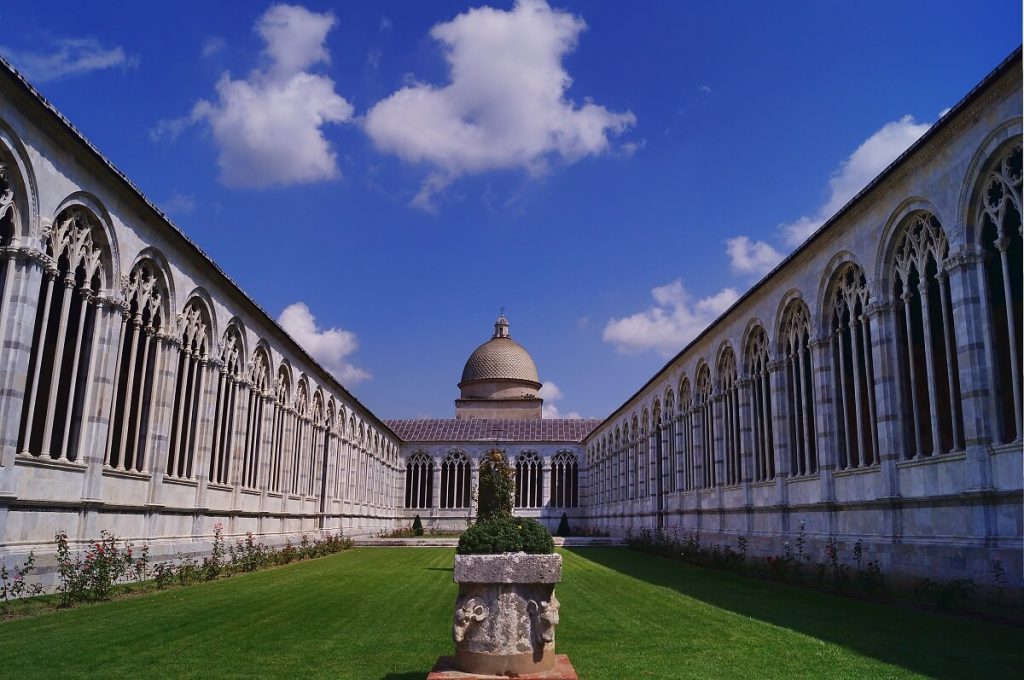
The Cimitero Monumentale, or Monumental Cemetery, is one of the most evocative places in Pisa. Quiet and solemn, it offers a very different atmosphere from the open energy of the square outside. Its cloisters, frescoes and funerary monuments invite visitors to slow down and observe.
This is a place where history feels layered and contemplative. Walking through the cemetery allows you to experience the spiritual and artistic depth of Piazza dei Miracoli beyond its most photographed landmarks.
Piazza dei Cavalieri
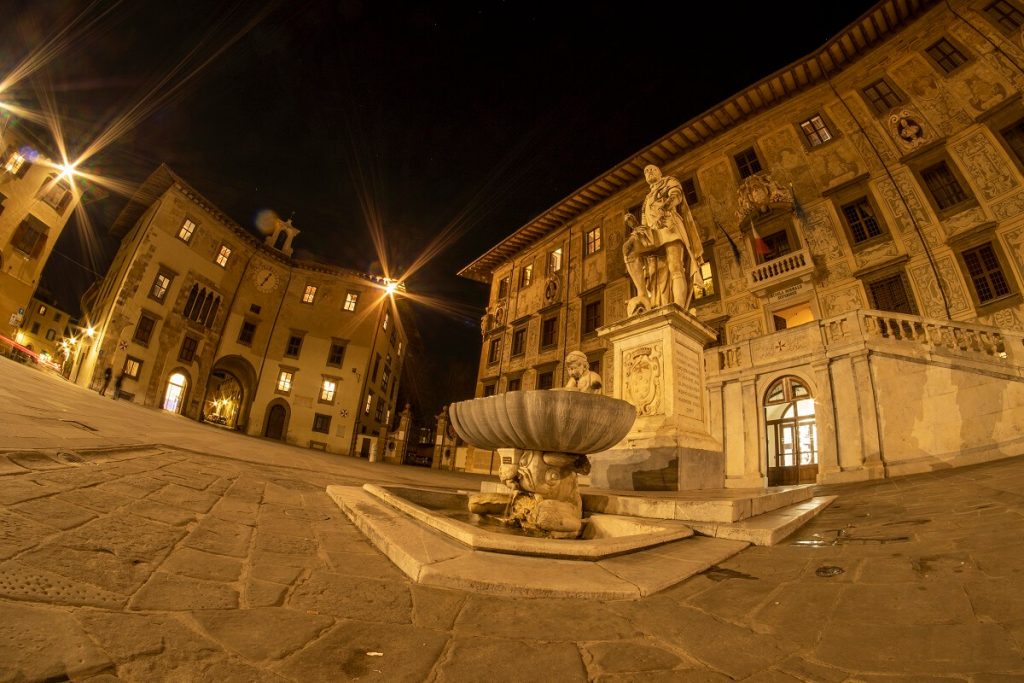
After visiting Piazza dei Miracoli, continue towards Piazza dei Cavalieri, one of Pisa’s most elegant historic squares. Once the political heart of the city, today it is associated with culture, learning and academic life.
The square is framed by impressive buildings, including the striking Palazzo della Carovana. Its decorated façade gives the space a refined, almost scenographic quality. Piazza dei Cavalieri is less crowded than Piazza dei Miracoli but equally important for understanding Pisa’s identity.
What to do in Pisa beyond the main attractions
Walk along the Lungarni
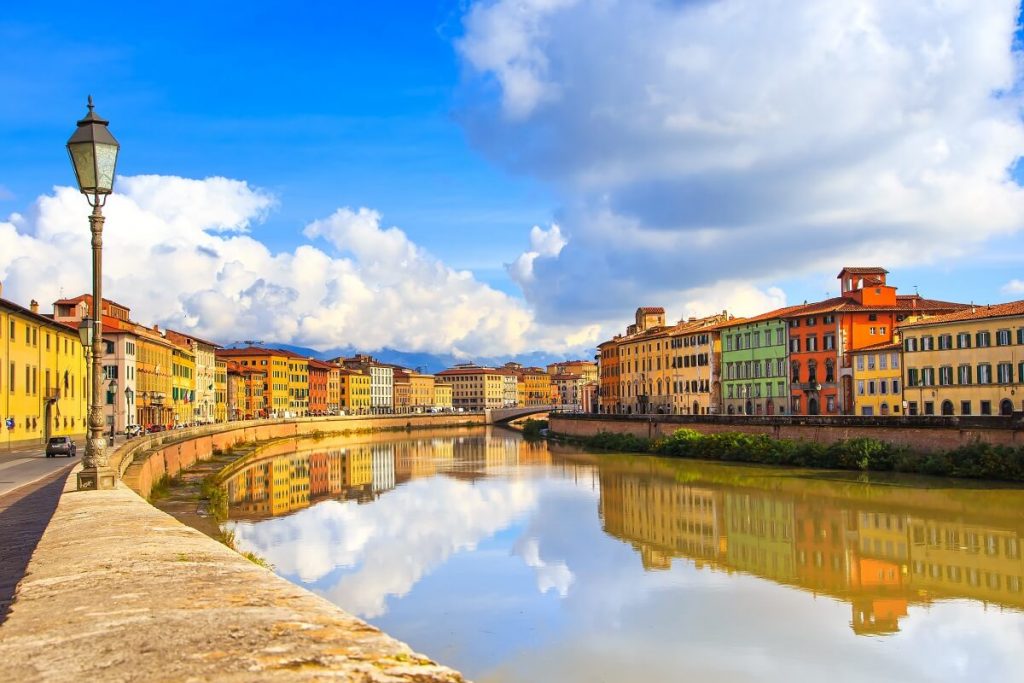
The Lungarni are among the most beautiful areas of Pisa. These riverside streets follow the Arno and offer a more intimate view of the city, especially in the late afternoon when the light softens and the buildings reflect on the water.
Walking along the Lungarni means discovering Pisa at a slower pace. You pass historic palaces, churches, bridges and quiet corners that reveal the city’s elegance. It is one of the best experiences for travellers who want to move beyond the classic postcard image.
Discover Piazza delle Vettovaglie
For a livelier and more local atmosphere, head to Piazza delle Vettovaglie. This historic market square is one of the most characteristic places in the city centre, surrounded by arcades, food shops, cafés and restaurants.
During the day, it has the feel of a traditional market area; later, it becomes a convivial meeting point. It is a good place to stop for a casual meal, an aperitif or simply to enjoy the everyday rhythm of Pisa.
Explore Pisa’s historic centre
Beyond the main squares, Pisa’s historic centre is full of small discoveries. Narrow streets, university buildings, hidden churches and lively corners create a pleasant urban fabric that is best explored without rushing.
The area between Piazza dei Cavalieri, Borgo Stretto, Piazza delle Vettovaglie and the Lungarni is especially rewarding. Here, Pisa feels both historic and lived-in, with students, residents and travellers sharing the same streets.
Hidden gems and unusual places to visit in Pisa
The mural by Keith Haring
One of Pisa’s most unexpected attractions is Tuttomondo, the large mural created by Keith Haring near the church of Sant’Antonio Abate. Colourful, energetic and symbolic, it brings a contemporary note to the city’s artistic landscape.
The mural is easy to include at the beginning or end of your itinerary, especially if you are arriving or leaving from Pisa Centrale. It is a reminder that Pisa’s visual identity is not limited to the medieval past.
The church of Santa Maria della Spina
On the Lungarno, the small church of Santa Maria della Spina is a jewel of Gothic architecture. Its delicate marble decoration makes it one of the most beautiful sights along the river.
Despite its modest size, the church has a strong visual impact. Seen from the opposite bank or approached up close, it adds a poetic touch to any walk along the Arno.
Giardino Scotto and the city walls
For a quieter break, visit Giardino Scotto, a green space set within a historic fortress area. It is a pleasant place to rest, especially during warmer months, and it offers a more relaxed perspective on the city.
Pisa’s city walls are another interesting way to experience the urban landscape. Walking along sections of the walls allows you to see the city from above and appreciate the relationship between its monuments, rooftops and green spaces.
What to eat in Pisa
Traditional Tuscan dishes to try
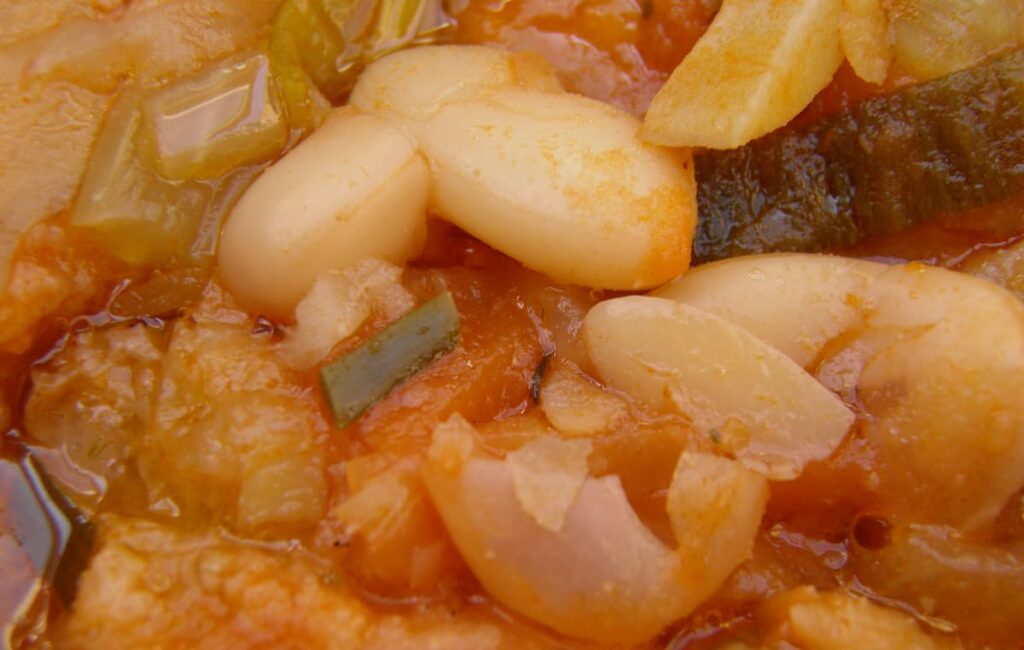
A visit to Pisa should also include time for Tuscan cuisine. Look for simple, flavourful dishes rooted in local tradition: ribollita, pappa al pomodoro, soups, grilled meats, seasonal vegetables, pecorino cheese and rustic bread.
Pisa also has its own culinary identity, influenced by the countryside, the river and the coast. Dishes with chickpeas, stockfish or local game may appear on traditional menus, while Tuscan wines make every meal feel more complete.
Where to enjoy a relaxed break in the city centre
For a relaxed break, the areas around Piazza delle Vettovaglie, Borgo Stretto and the Lungarni are especially convenient. You can choose a casual trattoria, a wine bar or a café with outdoor tables and enjoy Pisa without rushing.
The best approach is to let the itinerary breathe. After visiting the monuments, a slow lunch or aperitif becomes part of the experience, giving you time to absorb the city’s atmosphere.
Getting to Pisa with Italo
Arriving by train and starting from Pisa Centrale
Reaching Pisa with Italo allows you to begin your trip in a practical and comfortable way. Once you arrive at Pisa Centrale, the city is easy to approach on foot, starting from Piazza Vittorio Emanuele and continuing along Corso Italia towards the historic centre.
This makes the journey feel smooth from the very beginning. There is no need to overcomplicate the visit: Pisa is compact, well suited to walking and ideal for travellers who want to move directly from arrival to exploration.
How to explore Pisa comfortably on foot
Pisa is one of those cities that rewards walking. From the station to Piazza dei Miracoli, the route naturally connects many of the main points of interest: Piazza Vittorio Emanuele, Corso Italia, the Lungarni, Piazza delle Vettovaglie, Piazza dei Cavalieri and finally the monumental complex with the Leaning Tower.
Exploring on foot also allows you to notice the details that make Pisa memorable: a quiet courtyard, a river reflection, a student-filled square, a small church appearing unexpectedly between streets. The Leaning Tower may be the reason many travellers come, but the city itself is the reason they remember the visit.