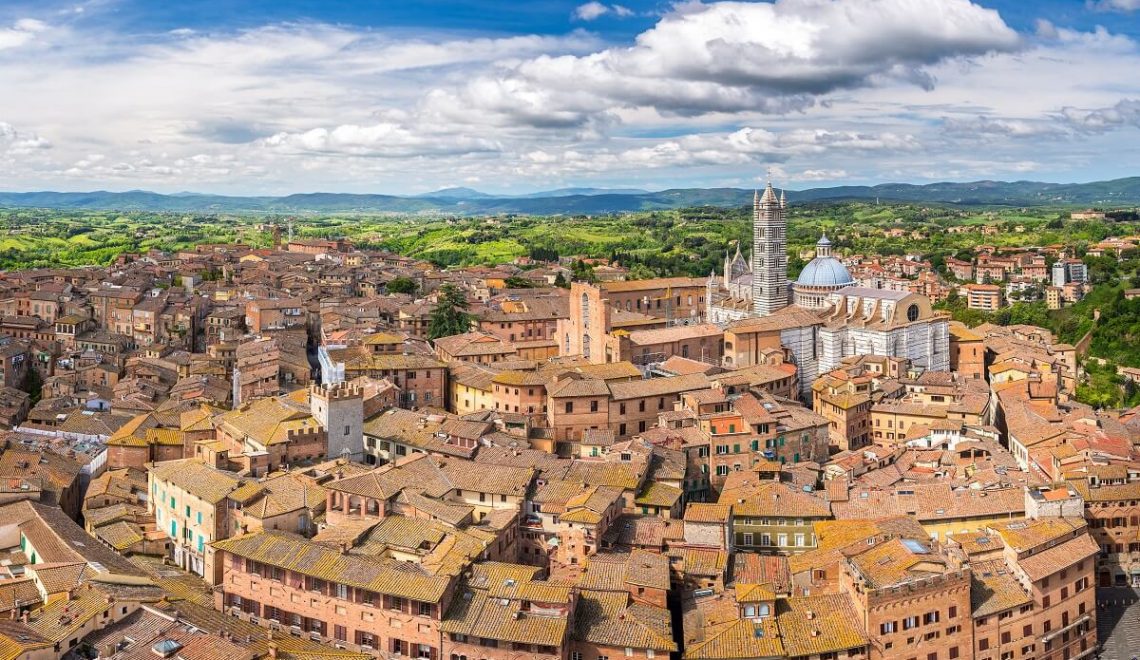
From the Cathedral to Piazza del Campo and beyond, Italo takes you to discover Siena, one of Tuscany’s most beautiful and atmospheric cities. A place where medieval architecture, deep-rooted traditions, and breathtaking landscapes come together to create an experience that feels both timeless and intensely alive. Arriving here with Italo means stepping straight into a city that has preserved its soul, its colors, and its rituals—ready to reveal them to curious travelers.
Why visit Siena: a timeless Tuscan gem
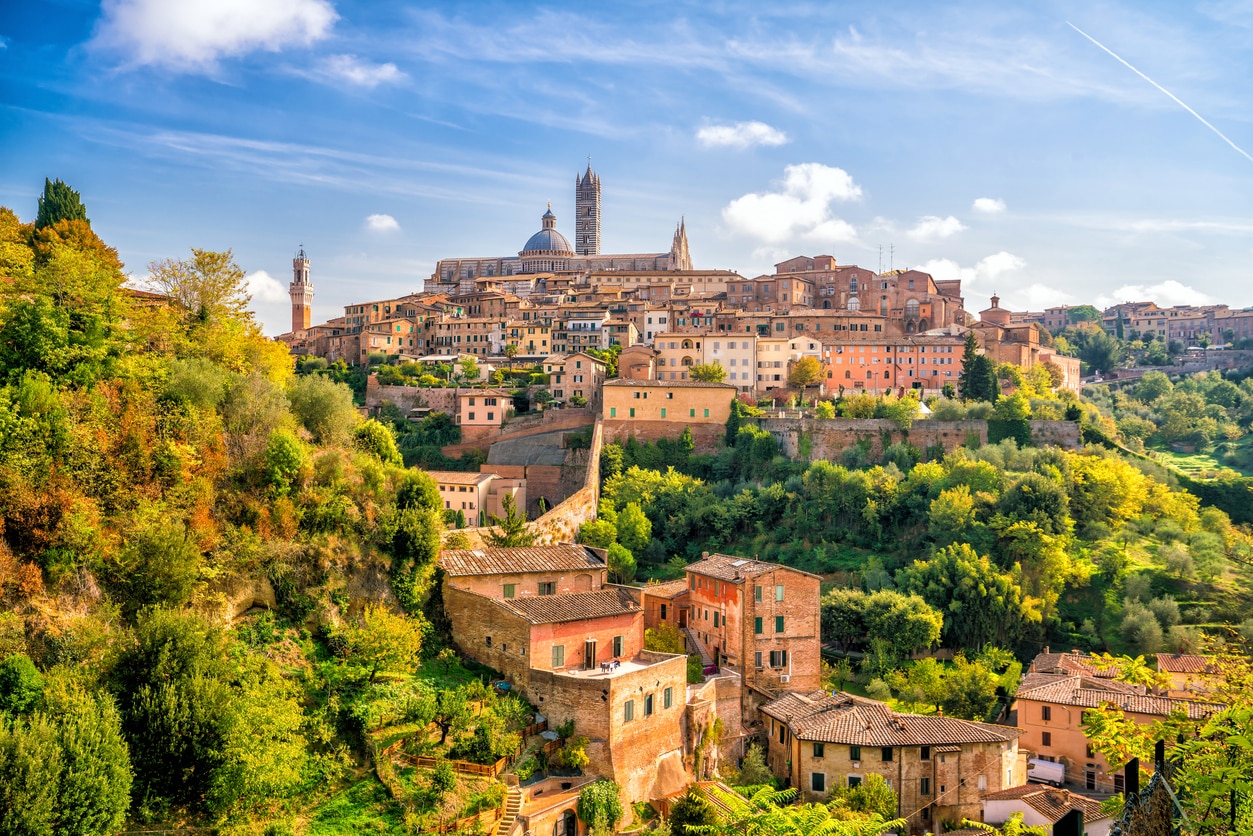
Siena is often described as one of the best-preserved medieval cities in Europe—and not without reason. Its compact historic center, a UNESCO World Heritage Site, offers a perfectly preserved urban landscape where you can stroll through centuries of history without ever stepping out of the atmosphere that shaped the city’s identity.
Art, history and the heritage of the contrade
Siena is synonymous with the Palio, but the story of the city goes far deeper. The tradition of the contrade—the 17 historic neighborhoods—has shaped social life here for generations. Each contrada has its own emblem, colors, museum and powerful sense of belonging. This cultural fabric lends Siena a vibrancy that is still very much alive today, from religious processions to local festivals and everyday life in the streets.
Exploring Siena’s historic heart
The best way to understand Siena is to start where the city converges: its legendary square.
Piazza del Campo and the spirit of the Palio
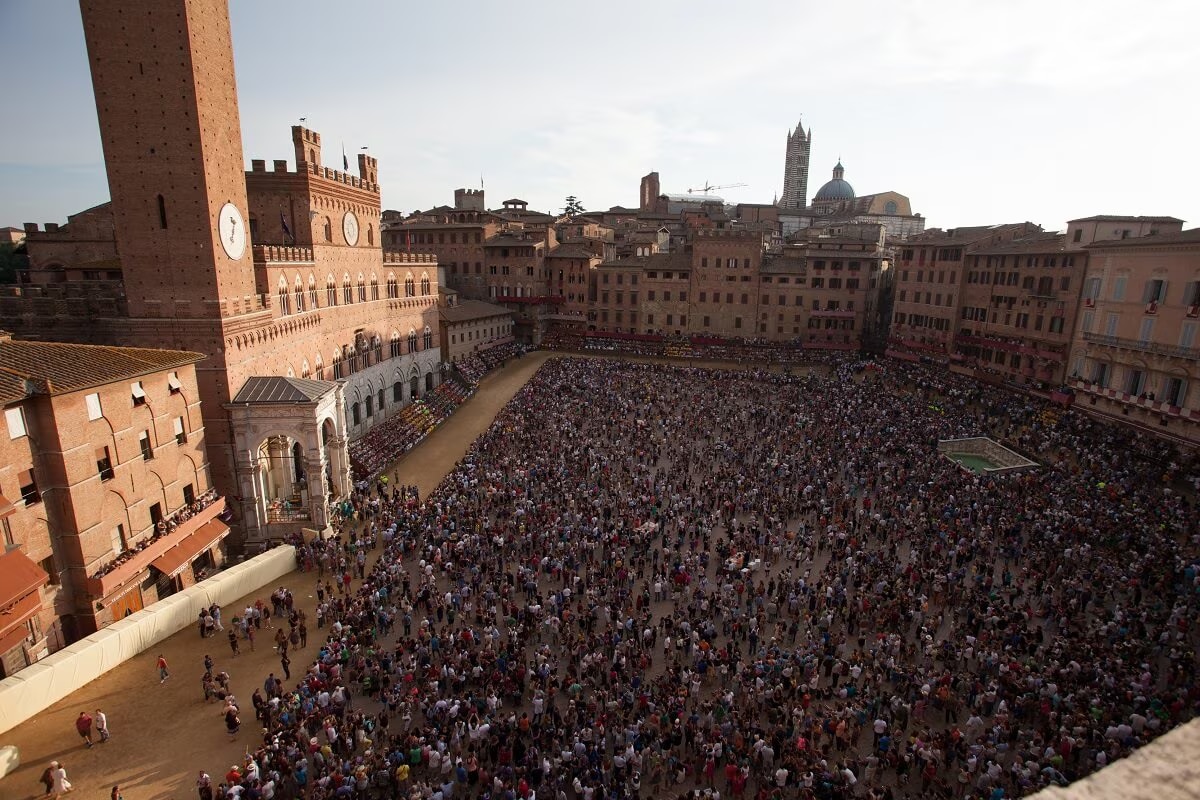
Piazza del Campo is one of the most dramatic public spaces in Italy—a huge, shell-shaped square sloping gently toward the Palazzo Pubblico. Twice a year, it becomes the stage for the Palio, the fiercely competitive historical horse race that unites and divides the contrade in an explosion of passion. Even outside the festivities, the square offers an irresistible charm: cafés, open-air life, and the sense of standing in a place where history is still unfolding.
Torre del Mangia: stunning views over the city
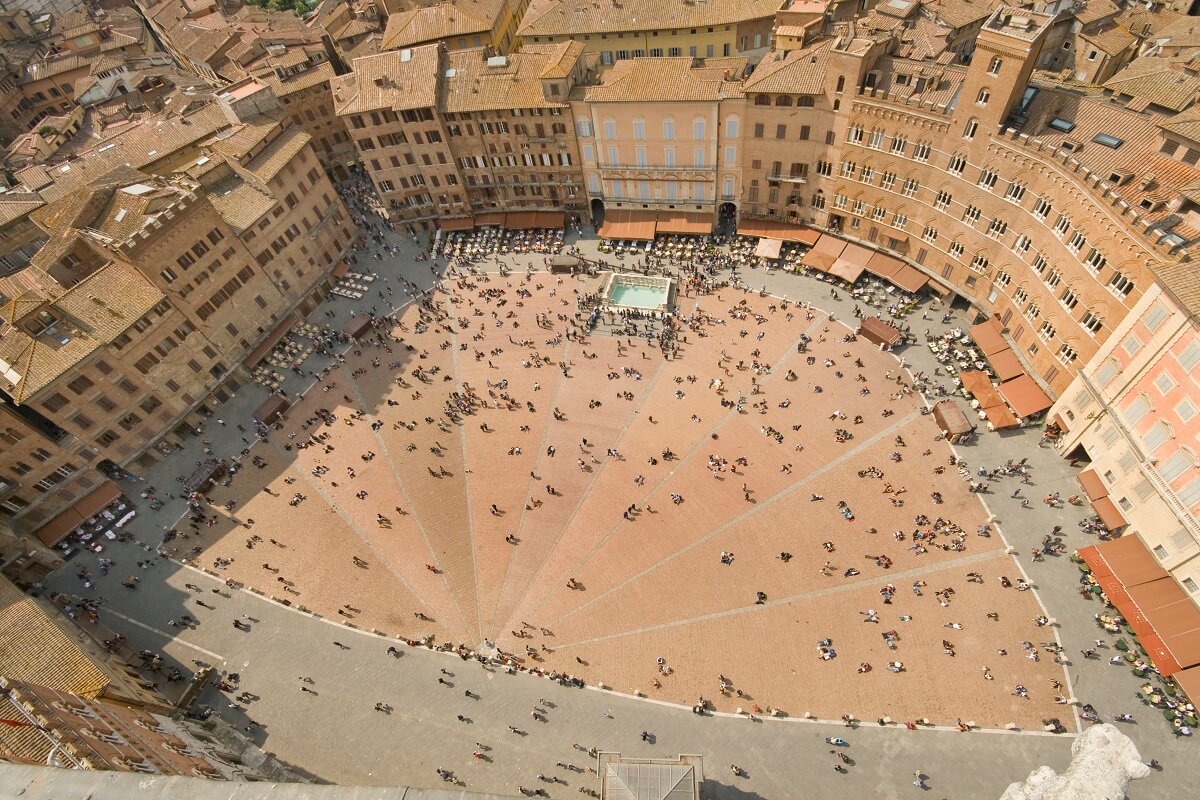
Attached to the Palazzo Pubblico rises the Torre del Mangia, Siena’s slender and elegant bell tower. Climbing its steps is a small challenge, but the reward is extraordinary: a 360-degree view over terracotta rooftops, rolling Tuscan hills and the geometry of Piazza del Campo below. It is unquestionably one of the best places in Siena to take in the city’s landscape.
Palazzo Pubblico and the Civic Museum
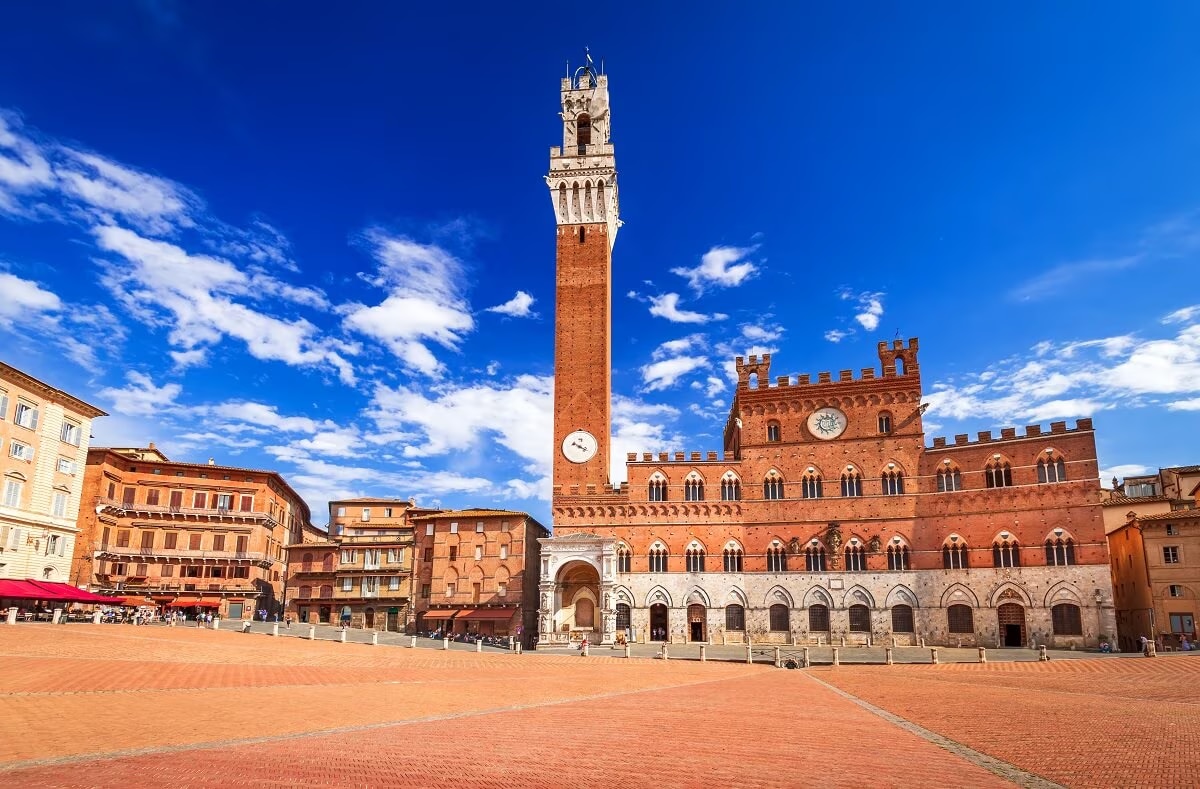
Inside the Palazzo Pubblico you’ll find the Museo Civico, home to masterpieces such as Ambrogio Lorenzetti’s Allegories of Good and Bad Government—a fresco cycle considered one of the most important civic artworks of the Middle Ages. The building itself is a masterpiece of Gothic architecture, preserving Siena’s long history of self-governance.
The Cathedral complex and its masterpieces
Siena’s Duomo complex is a treasure chest of artistic wonders, each space revealing a new masterpiece.
Siena Cathedral (Duomo)
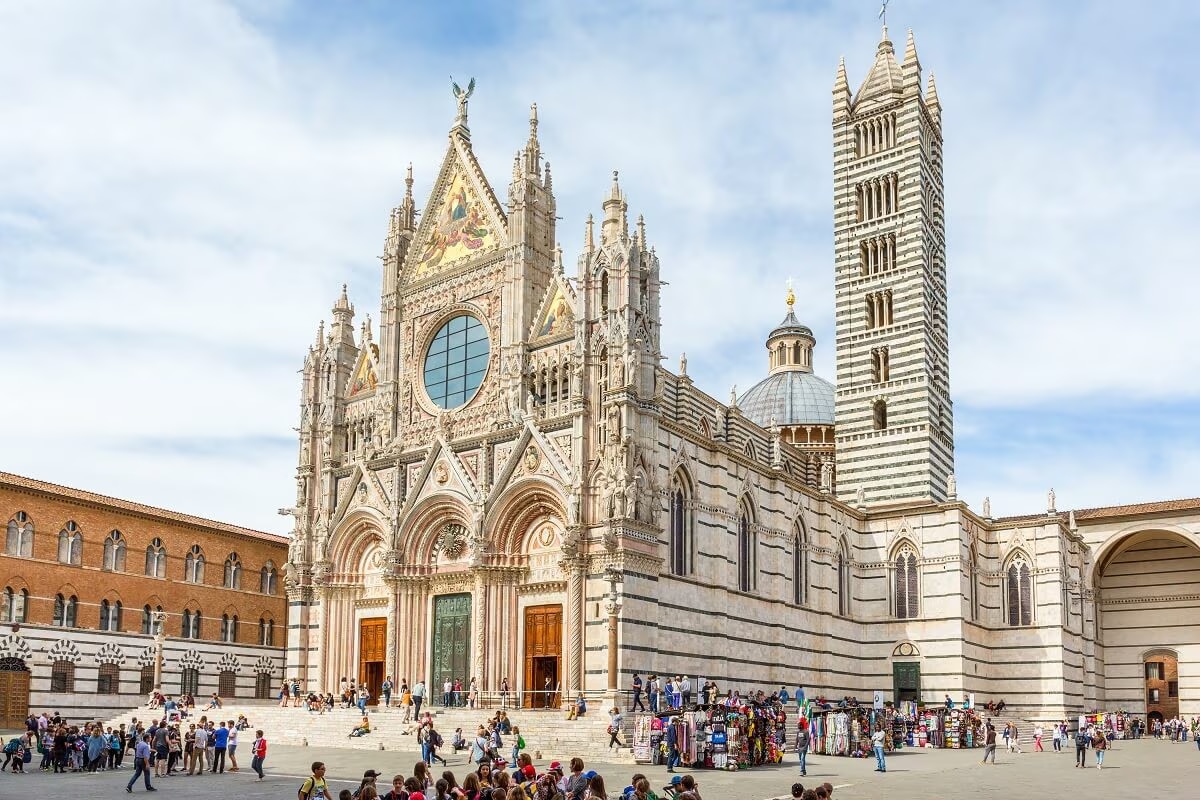
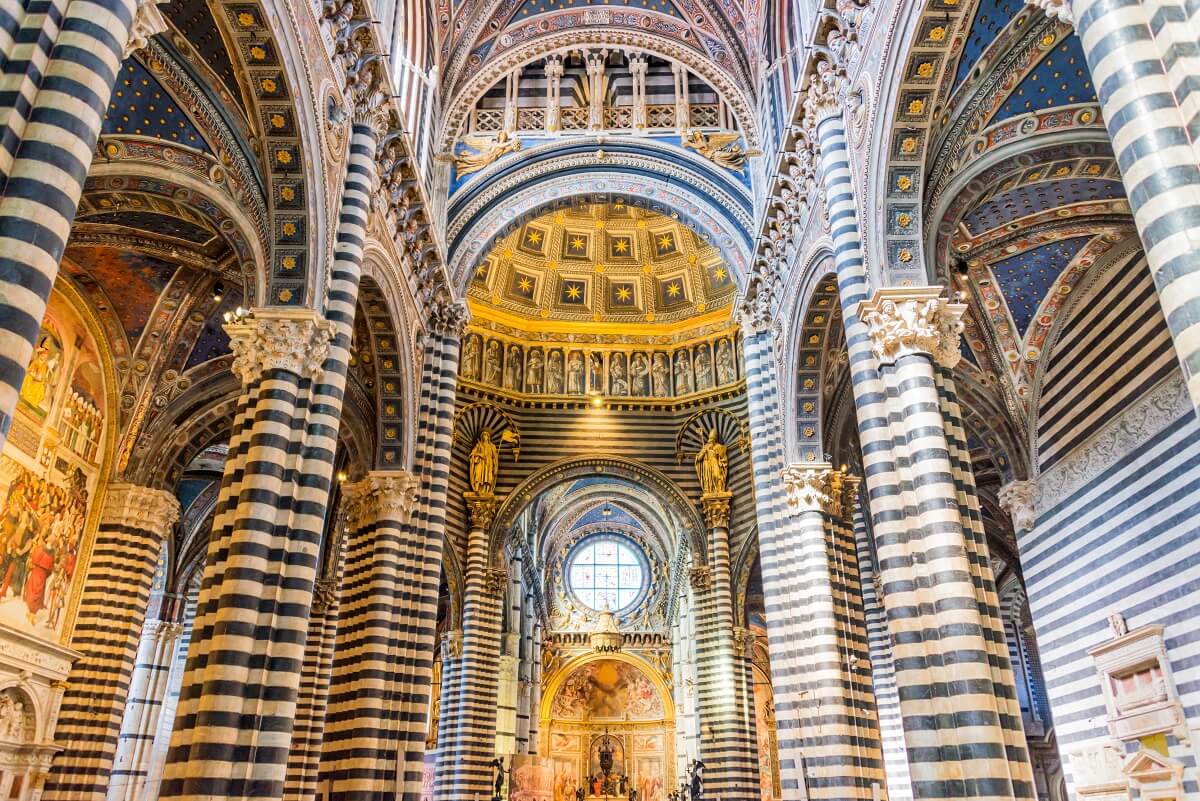
The Cathedral of Santa Maria Assunta is one of Italy’s most striking Gothic churches. Its façade of white, green and red marble sets the tone for the breathtaking interior: black-and-white striped columns, intricate sculptures by Pisano, and remarkable pavement mosaics that remain one of the cathedral’s unique features.
Piccolomini Library
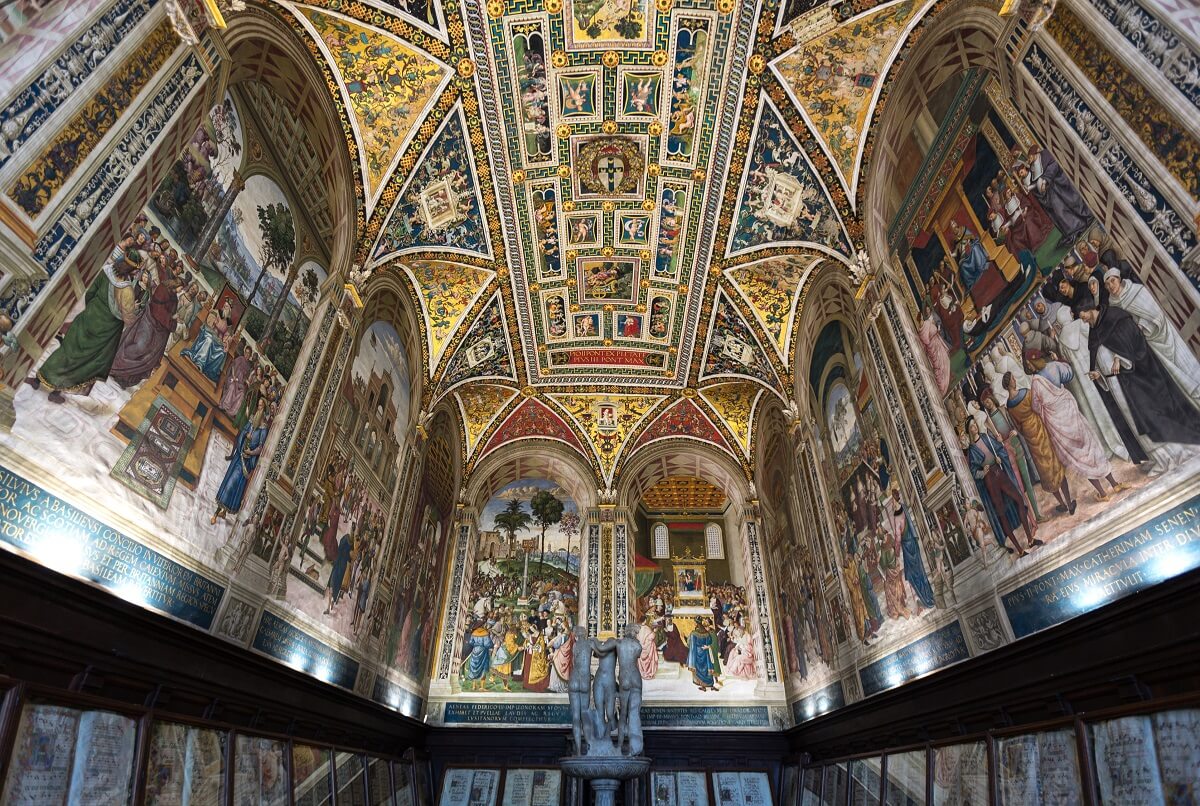
Inside the cathedral, the Piccolomini Library captures attention with its vivid Renaissance frescoes by Pinturicchio. The colors are dazzling, the details intricate, and the atmosphere almost dreamlike—an artistic jewel that transports you straight into the world of humanism and papal politics.
Facciatone panoramic terrace
For an unforgettable viewpoint, head up to the Facciatone, the unfinished façade of the cathedral’s ambitious extension. From its terrace you’ll admire a sweeping view over the city’s rooftops and the patchwork of olive groves and vineyards that define the Tuscan countryside.
Beyond the major landmarks, Siena reveals its beauty in its quieter corners.
Via di Città and Via Banchi di Sopra
These two streets form the spine of the historic center. Lined with elegant palaces, boutiques and cafés, they are ideal for an unhurried stroll. Their gentle slopes and narrow width preserve the charm of the medieval urban layout, offering a perfect blend of shopping, history and everyday life.
Unexpected viewpoints and quiet alleys
Siena is full of surprise vistas: a sudden opening between buildings revealing a sweeping hillside, a tiny courtyard tucked behind a church, a staircase leading to a peaceful terrace. Give yourself time to wander aimlessly—these detours often become the most memorable part of your visit.
The contrade: Siena’s living soul
The contrade gives Siena a unique identity that goes far beyond the famous race.
Traditions, symbols and neighborhood identity
Each contrada has its own headquarters, oratorio, museum and traditional events. Locals can instantly tell where someone is from by the colors they wear. These traditions foster a strong sense of continuity—a civic heritage passed down from one generation to the next.
Visiting a contrada museum
Several contrade open their museums to visitors, offering a fascinating glimpse into their world: ancient Palio banners, costumes, relics and artworks that narrate centuries of victories and community life. It’s one of the best things to do in Siena if you want to understand the city from within.

Best places to visit in Italy: top cities and must-see attractions
Italy is one of those destinations that travelers dream of for a lifetime. With its blend of ancient history, breathtaking landscapes, artistic treasures, and culinary delights, it offers something for every kind of explorer.
Tastes of Siena: what to try and where
No visit to Siena is complete without savoring its culinary heritage.
Typical sweets and local dishes
Siena is famous for its traditional sweets such as:
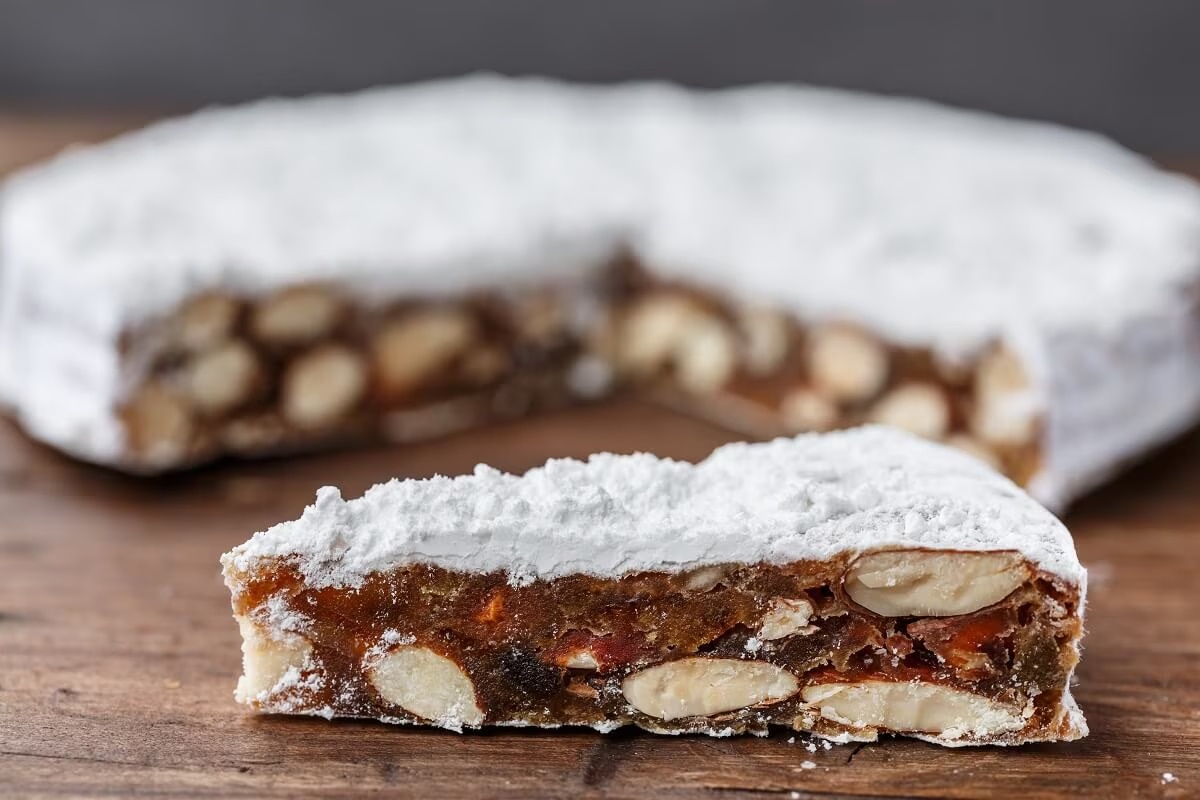
- Panforte, a dense, spiced cake with nuts and candied fruit
- Ricciarelli, soft almond cookies with a delicate texture
- Cantucci with Vin Santo, a classic Tuscan pairing
For savory dishes, try pici all’aglione, ribollita, or a hearty cinghiale stew accompanied by a glass of Chianti Classico.
Where to enjoy an authentic Tuscan meal
For a truly local experience, choose one of the trattorias tucked into the medieval lanes. Many offer seasonal, home-style dishes made with regional ingredients—the kind of cuisine that tells the story of the territory through every bite.
How to reach Siena with Italo
Travel times and convenient connections
Reaching Siena is easy and comfortable: Italo high-speed trains connect major Italian cities, such as Milan, Rome, Naples and Venice to Florence, where a quick regional connection completes the journey to Siena. Thanks to Italy’s efficient rail network, you can arrive rested and ready to explore.
Why choose high-speed rail for your trip
Choosing Italo means enjoying:
- modern, spacious trains
- fast travel times
- seamless connections to Tuscany
- a stress-free way to begin your adventure
Arriving by train is also the most sustainable option—an added bonus when visiting a region as environmentally precious as Tuscany.