One week on the Amalfi Coast is long enough to enjoy the classics without turning the journey into a race. In seven days, you can move between famous villages, quieter corners, panoramic terraces, beaches, gardens and sea crossings with a rhythm that feels rewarding rather than exhausting. This stretch of Campania runs from Positano to Vietri sul Mare, is recognised as a UNESCO World Heritage Site, and combines dramatic landscapes with towns shaped by maritime history, local craftsmanship and an unmistakably Mediterranean sense of beauty.
- 1 What makes 7 days ideal for exploring the Amalfi Coast
- 2 How to plan your Amalfi Coast itinerary
- 3 Day 1 in Sorrento: the perfect starting point for your itinerary
- 4 Day 2 in Positano and Praiano: iconic views and a slower pace
- 5 Day 3 in Amalfi and Atrani: maritime history and postcard scenery
- 6 Day 4 in Ravello: gardens, villas and panoramic terraces
- 7 Day 5 along the coast: Furore, Conca dei Marini and hidden gems
- 8 Day 6 choose your experience: Capri or the Path of the Gods
- 9 Day 7 in Vietri sul Mare and Salerno: ceramics and a graceful finale
- 10 Tips to make the most of one week on the Amalfi Coast
- 11 Reach the Amalfi Coast with Italo
What makes 7 days ideal for exploring the Amalfi Coast
The coast stretches for roughly 55 kilometres from Positano to Vietri sul Mare and includes a constellation of towns that all feel different from one another. That is exactly why a one-week itinerary works so well: it gives you time to enjoy the coast’s icons without reducing the trip to a checklist. It also gives you breathing room for ferry schedules, beach pauses, slow lunches and those inevitable moments when the view is too good to leave quickly.
How to plan your Amalfi Coast itinerary
The smartest way to plan this trip is to think in small clusters rather than constant hotel changes. Sorrento works beautifully as a first base, especially for arrival day and for reaching Positano and Capri. Amalfi or Ravello are excellent for the central stretch of the trip, while Vietri sul Mare or Salerno make a graceful final stop on the eastern side of the coast. In the warmer months, ferries are often the most pleasant and reliable way to move between towns, while buses can be crowded and slower than expected, especially from late spring through early autumn.
How to get to Positano
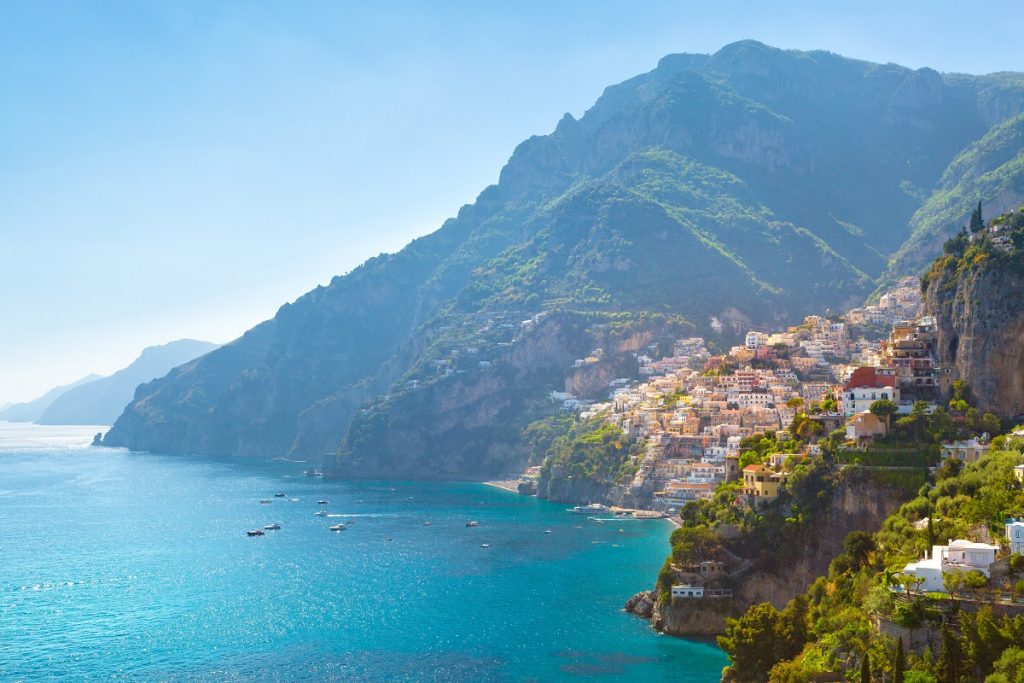
Positano, a picturesque village nestled on the Amalfi Coast, is a destination that captivates visitors with its stunning views, vibrant culture, and rich history. But how do you get there? Let’s delve into the details.
Day 1 in Sorrento: the perfect starting point for your itinerary
Arriving from Naples and easing into the rhythm of the coast
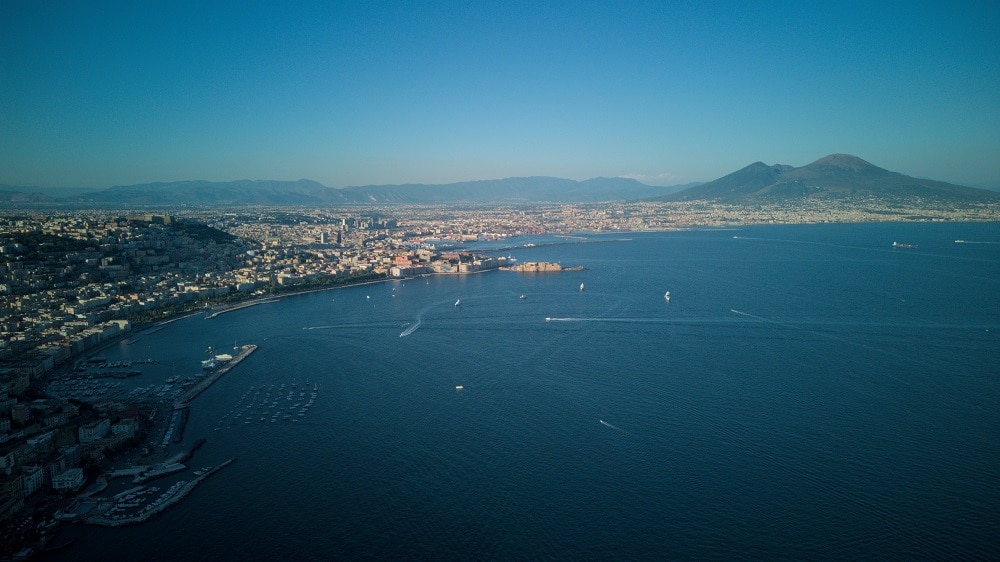
Sorrento is an excellent first stop because it gives the trip a soft landing. Italo offers direct high-speed connections to Naples and also combined train + bus solutions to Sorrento, making it easy to start your itinerary without overcomplicating the first day. Rather than diving immediately into the busiest stretch of the coastline, spend this opening day adjusting to the southern light, sea air and slower pace that define the whole week.
What to see in Sorrento in one day
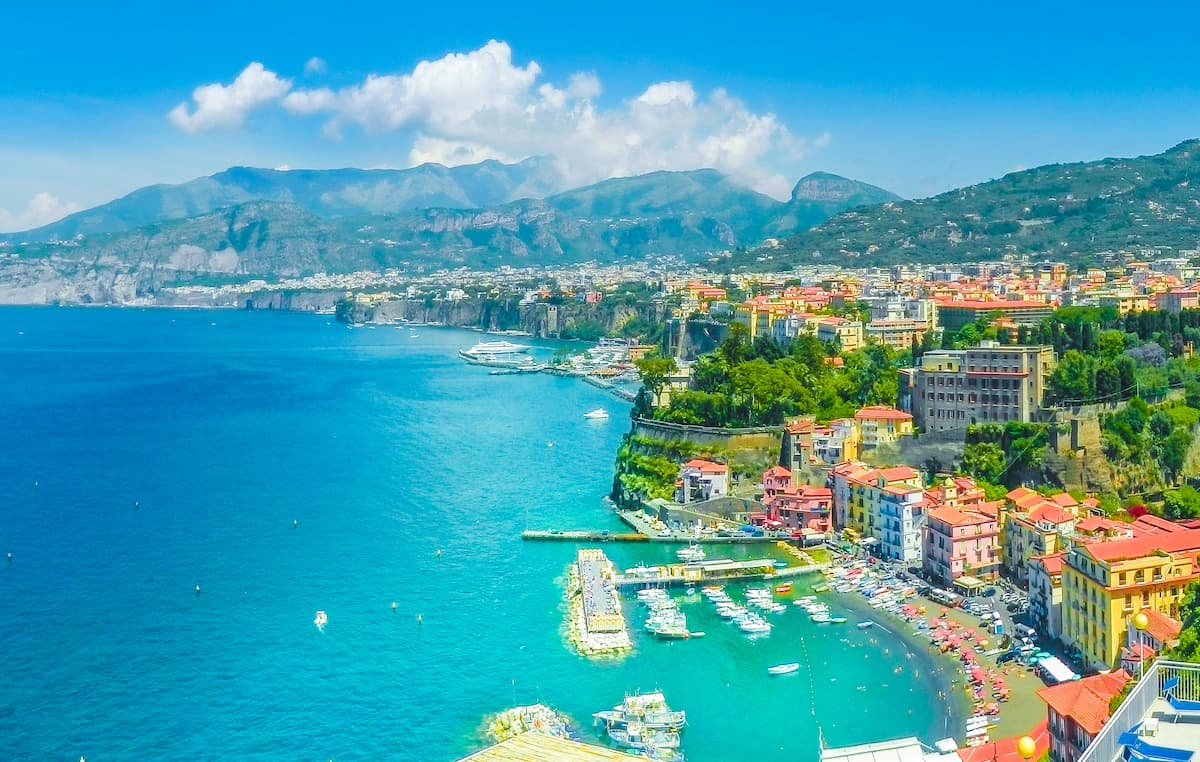
In Sorrento, begin around Piazza Tasso and Corso Italia, then walk towards the Villa Comunale for one of those views that instantly set the tone for the holiday. From there you can reach Marina Piccola, while Marina Grande offers a more traditional and atmospheric side of town. Sorrento has elegance, but it is also practical, lively and easy to navigate, which makes it ideal for your first afternoon and evening on the coast.
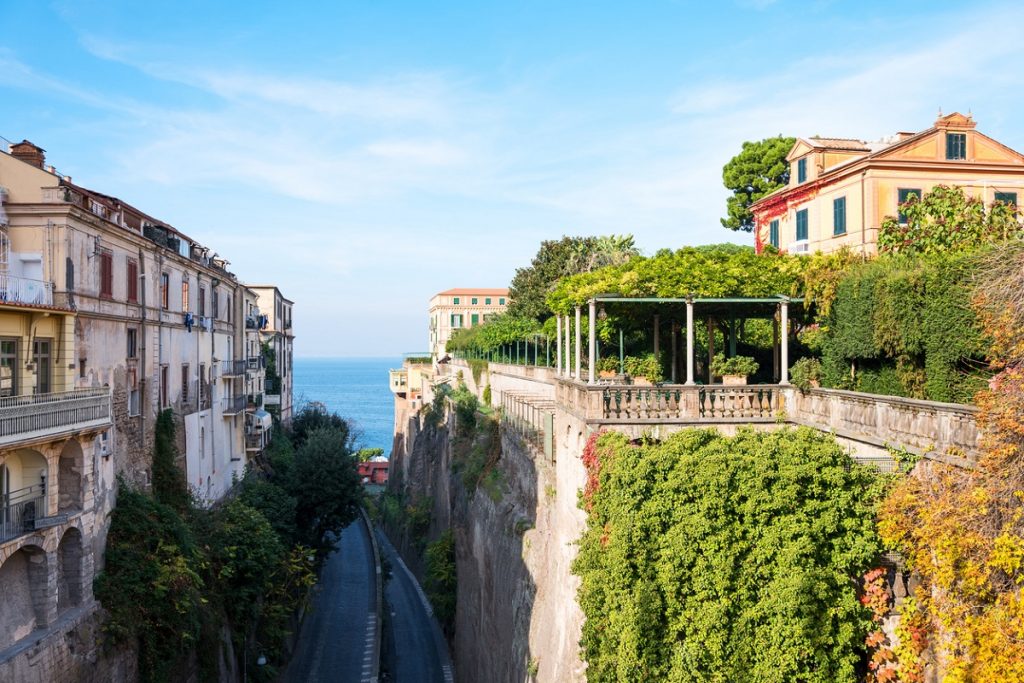
Sorrento in a day: what to do after an afternoon at the beach
Would you like to find out what to see in Sorrento in one day after spending the morning at the beach? Here is a short guide to the beauties of the city!
Day 2 in Positano and Praiano: iconic views and a slower pace
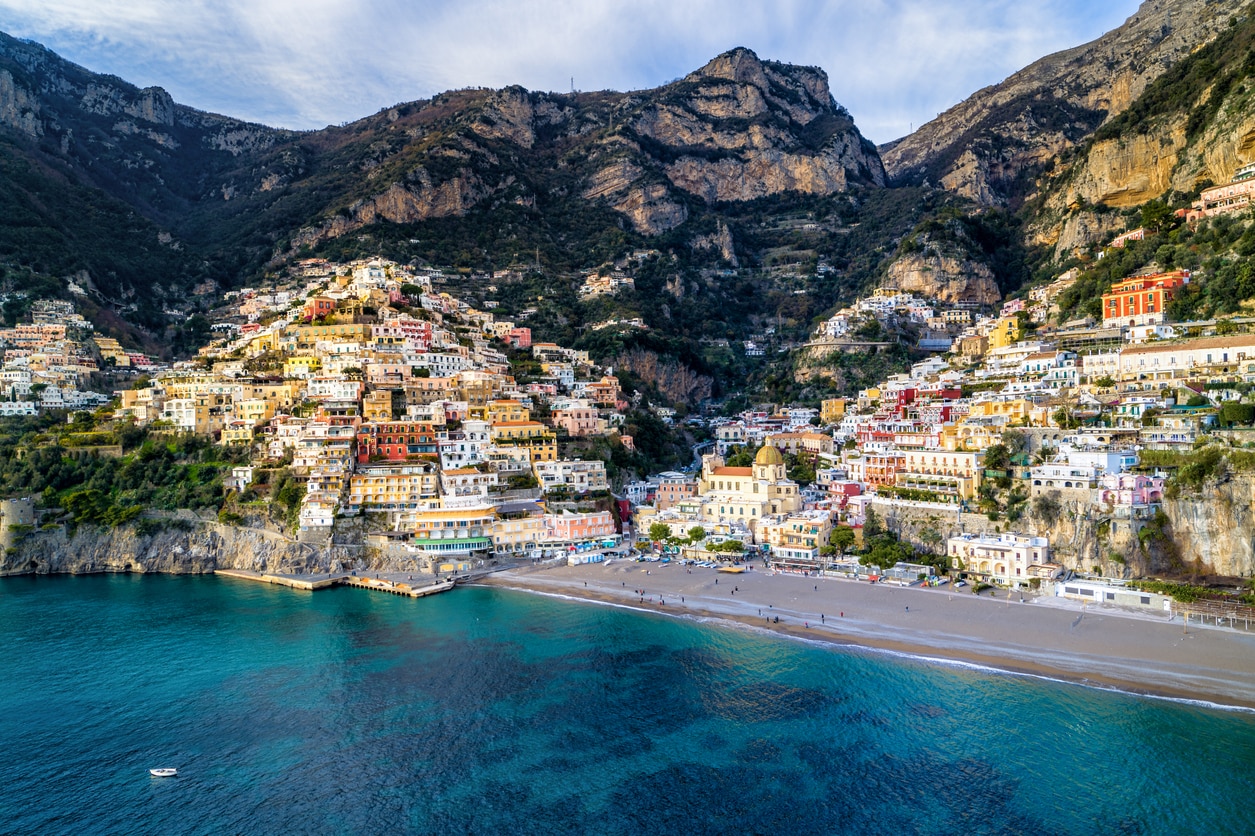
Positano between vertical lanes, boutiques and beaches
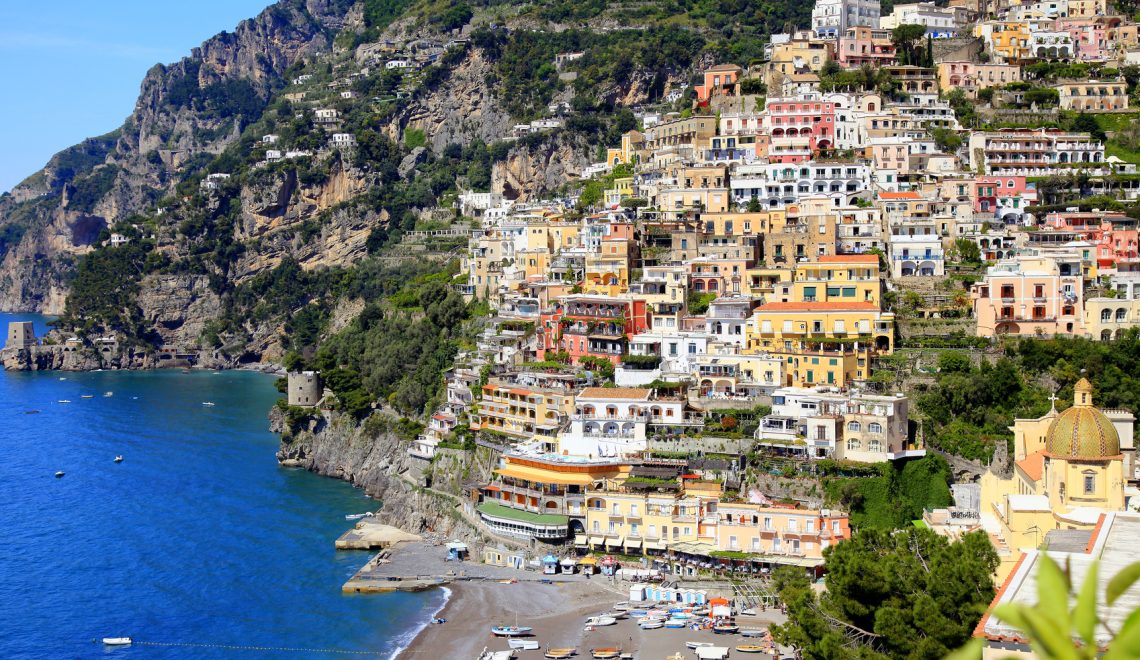
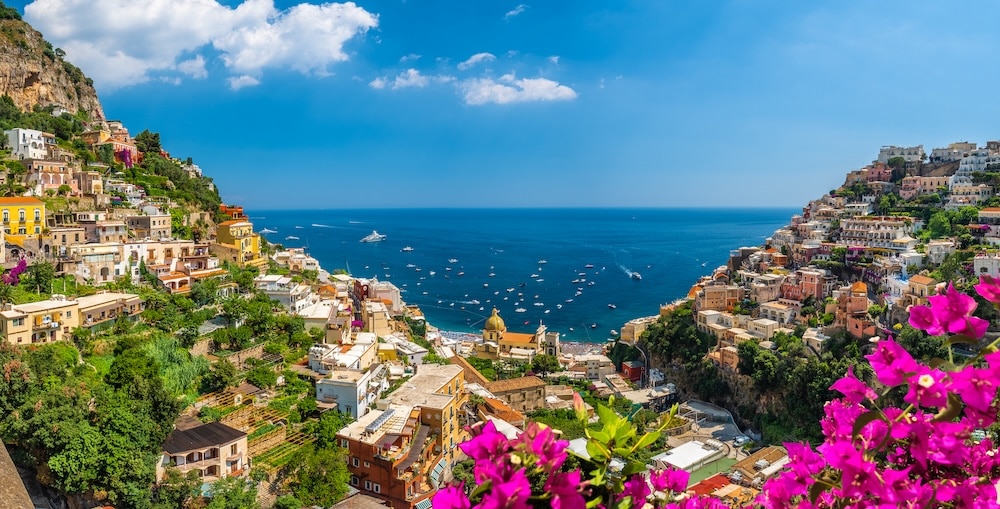
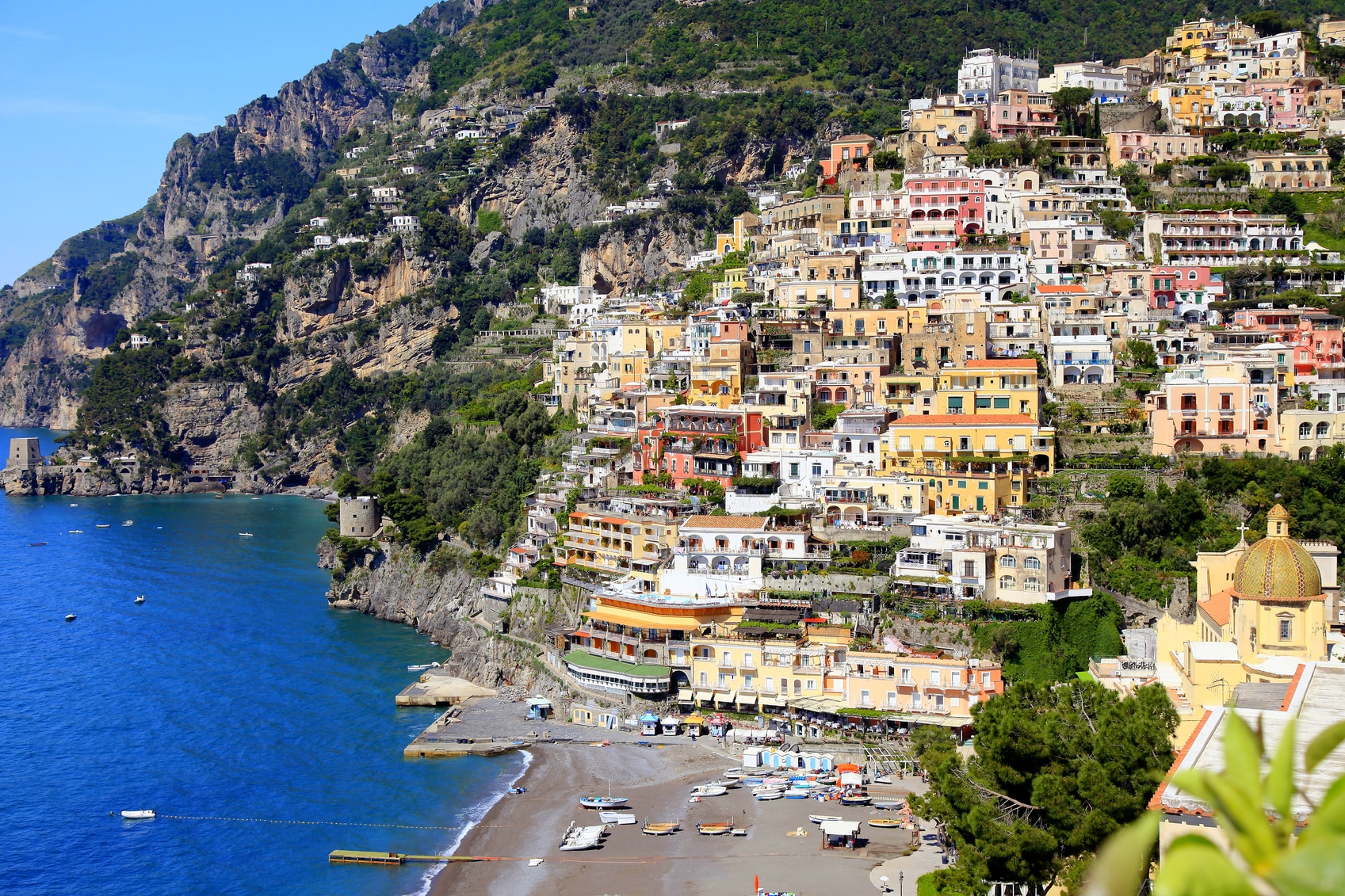
No Amalfi Coast itinerary feels complete without Positano. This is the village of cascading houses, narrow lanes, ceramic details and terraces that seem designed for lingering. Spend the morning wandering downhill through the centre, pausing at artisan shops and sea-view corners, then settle near Spiaggia Grande if you want the iconic postcard setting, or head to Fornillo for a quieter beach break. Positano is busy, yes, but it still earns its reputation because few places stage the meeting of cliff and sea with such theatrical beauty.
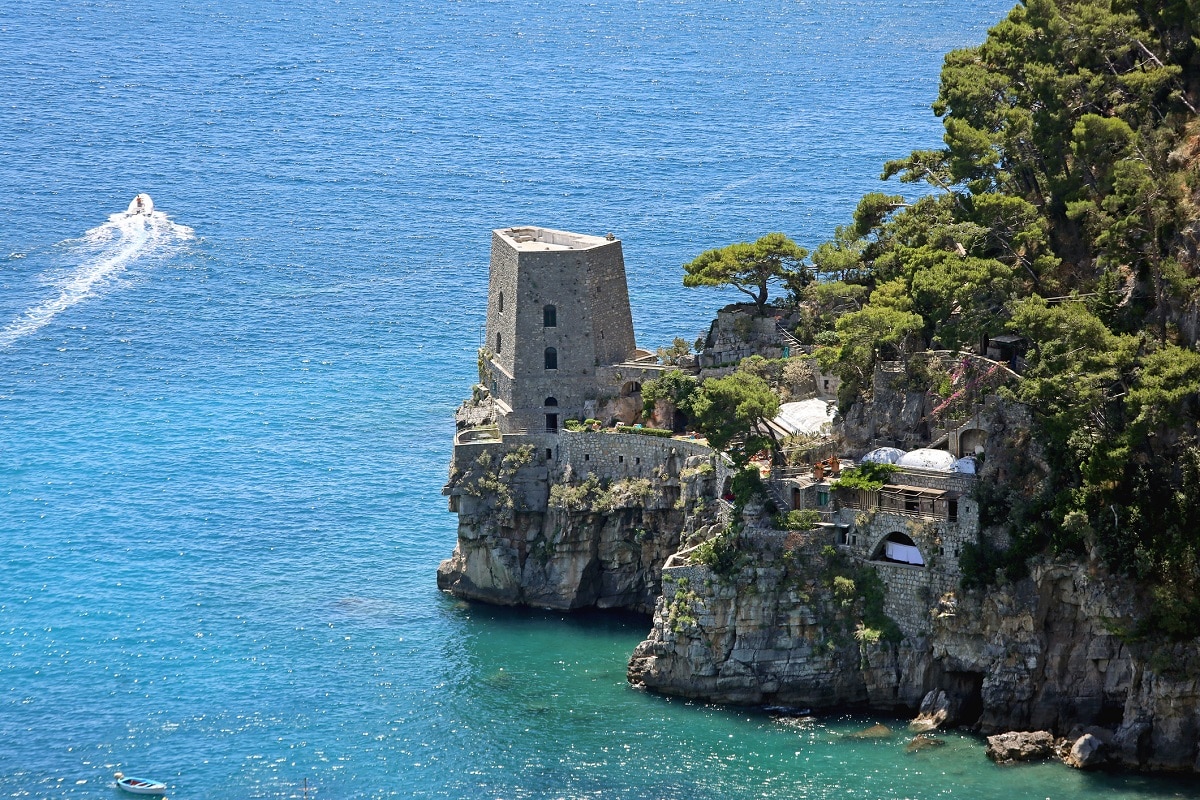
Praiano for sunsets and a quieter side of the coast
In the afternoon, continue to Praiano, which offers an entirely different mood. Where Positano dazzles, Praiano exhales. It is known for a more peaceful atmosphere, beautiful cliffside beaches and some of the most memorable sunsets on the coast, especially around Cala della Gavitella and the panoramic area near San Gennaro. It is the perfect place to slow the pace and remember that the Amalfi Coast is not only about famous views, but also about finding your own quiet one.
Day 3 in Amalfi and Atrani: maritime history and postcard scenery
Amalfi and its historic centre by the sea
Amalfi deserves more than a quick photo stop. Positioned at the heart of the coastline, it combines historic weight with an easy seafront energy. This is the day for wandering through the town centre, absorbing the layered streets and stairways, and giving yourself time to enjoy the rhythm of a place that once stood at the centre of maritime life in southern Italy. Amalfi also works especially well as a hub, because from here many of the coast’s highlights feel naturally connected.
Atrani and the charm of one of the coast’s smallest villages
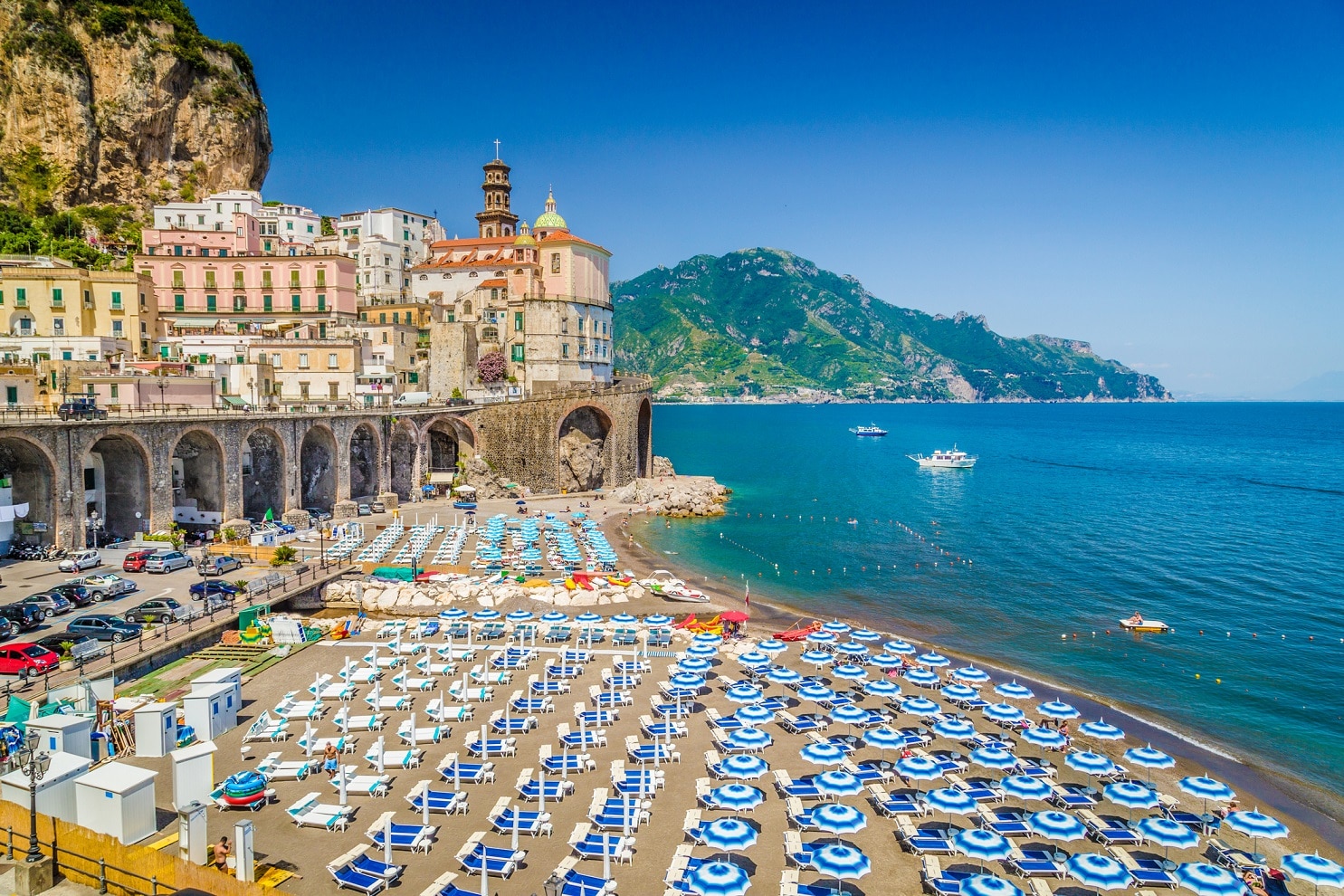
Just minutes away, Atrani feels like a secret that somehow survived beside a famous neighbour. Its medieval fabric, steep passageways and intimate square create one of the most atmospheric settings on the whole coast. This is where the Amalfi Coast becomes more human in scale: quieter, tighter, less polished and, for that reason, often more memorable. Pairing Amalfi with Atrani on the same day works beautifully because the contrast is part of the pleasure.
Day 4 in Ravello: gardens, villas and panoramic terraces
Villa Rufolo and Villa Cimbrone
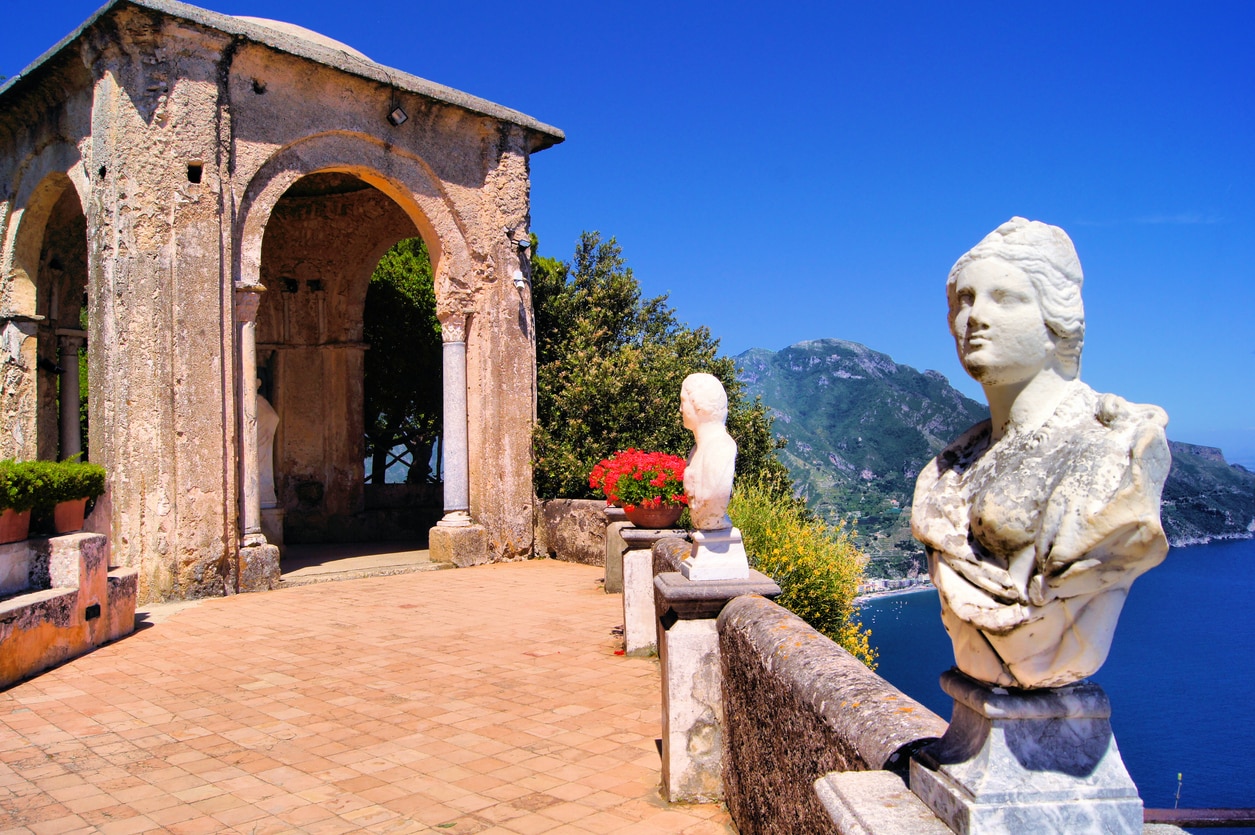
Ravello is the day to dress the itinerary in elegance. Start with Villa Rufolo, whose gardens and terraces are central to the town’s identity, then continue to Villa Cimbrone, where the famous terrace seems to suspend you between sky and sea. These are not just individual sights: together they express Ravello’s special kind of beauty, more cultivated and contemplative than coastal, more about perspective than immediacy.
Why Ravello offers a different side of the Amalfi Coast
Unlike Amalfi and Positano, Ravello sits high above the sea and away from the most intense coastal flow. That alone changes the mood. It feels quieter, more reflective and more attuned to gardens, music and long views than to beaches and harbours. After the more kinetic days of the itinerary, Ravello brings a welcome shift in altitude and atmosphere, reminding you that the Amalfi Coast is not only a shoreline, but also a landscape of terraces, hills and refined hilltop towns.
The Fjord of Furore and the dramatic beauty of the coastline
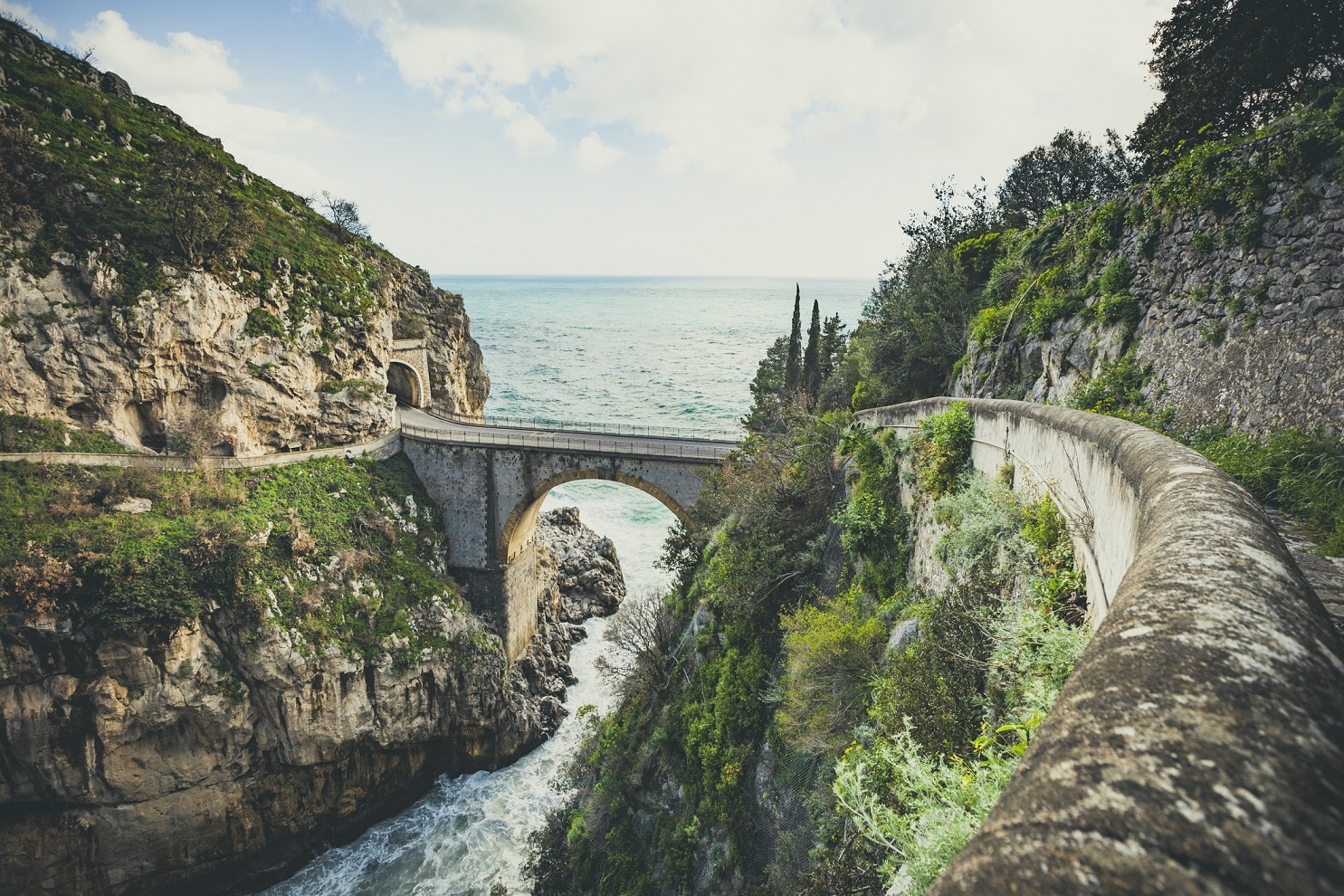
By day five, it makes sense to move beyond the headline names and follow the coast where it becomes wilder. Furore is one of those places that proves how dramatic this landscape really is, with its famous fjord carving a narrow, striking opening into the rock. It is one of the most photogenic points on the coast, but it also gives you a better sense of how steep, fractured and spectacular this geography truly is.
Emerald waters, quiet corners and scenic stops
Continue with Conca dei Marini, a village known for its peaceful scale and its connection to the Emerald Grotto, where light turns the water an extraordinary shade of green. This is a good day to be flexible: stop where the sea looks irresistible, where a terrace feels inviting, or where the crowds thin out. A week on the Amalfi Coast should always include one day that feels less scheduled and more exploratory.
Day 6 choose your experience: Capri or the Path of the Gods
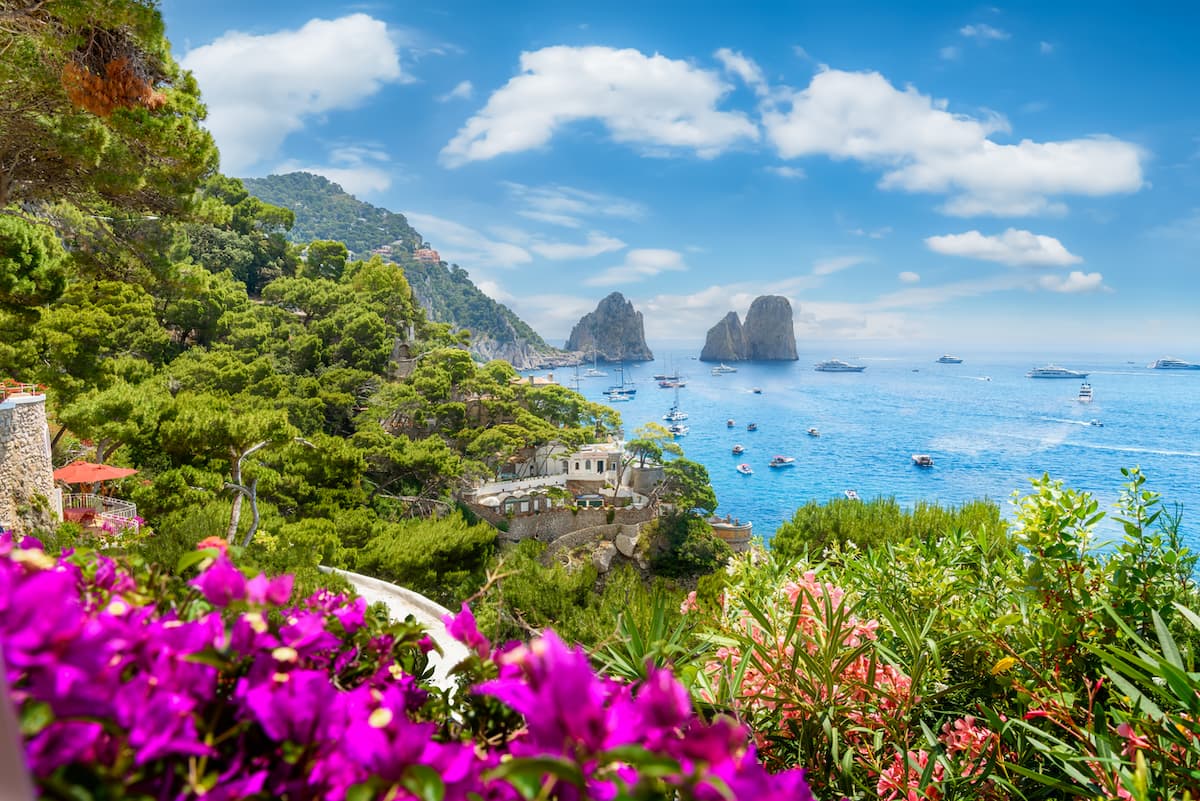
A day trip to Capri for sea views and island atmosphere
Capri is the glamorous option, but it is also a very logical one. In the warmer season, ferries connect the island with Amalfi and Positano, making a day trip straightforward when sea conditions are good. Capri adds a different kind of Mediterranean energy to the week: more island rhythm, more marine horizons, more polished piazzas and viewpoints suspended above intensely blue water. It is a classic for a reason.
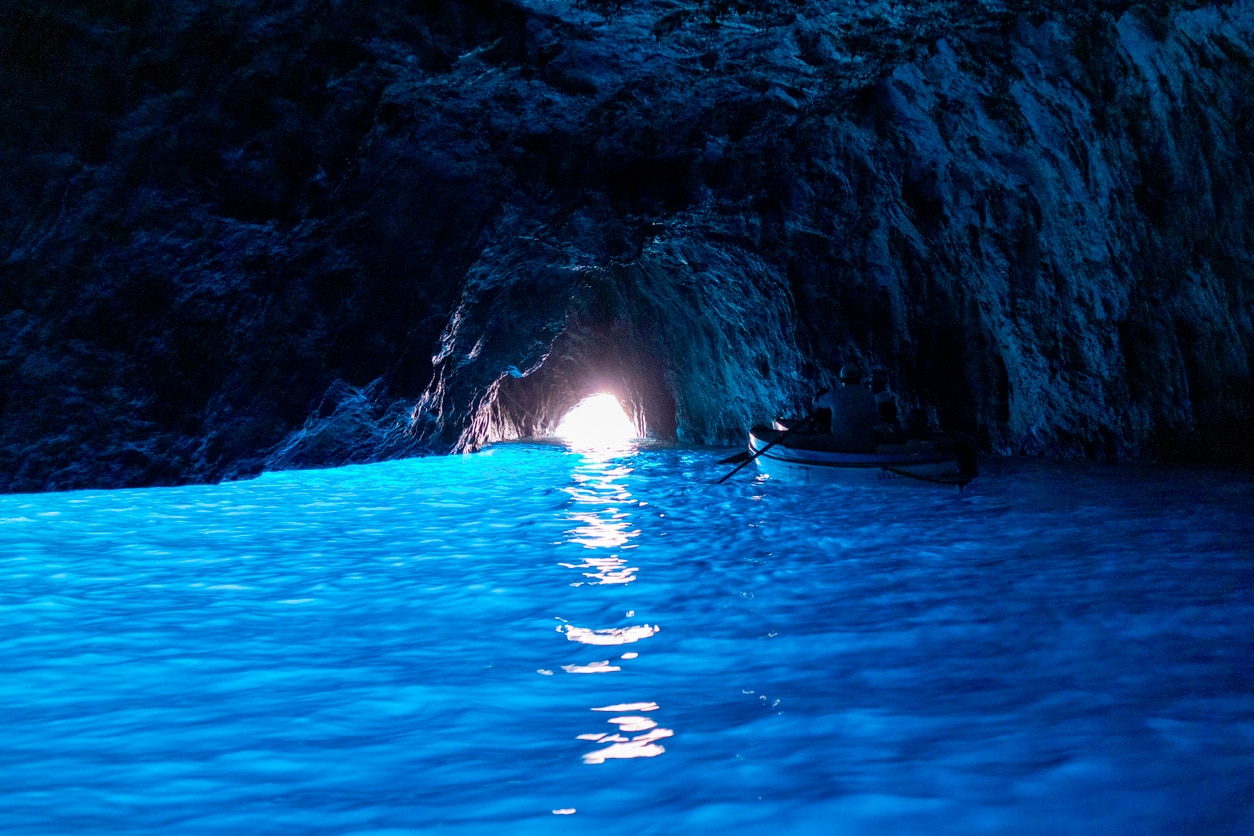
The Path of the Gods for one of the coast’s most memorable walks
If you would rather trade glamour for altitude, choose the Path of the Gods. The classic lower route runs from Bomerano to Nocelle and is the most popular version because it is more panoramic and generally easier to approach. The reward is not only the view of Capri and the Lattari Mountains, but also the sensation of walking above the coastline instead of merely looking at it from below. It is one of the finest ways to understand the coast as a landscape, not just a sequence of villages.
Day 7 in Vietri sul Mare and Salerno: ceramics and a graceful finale
Vietri sul Mare and its colourful artistic identity
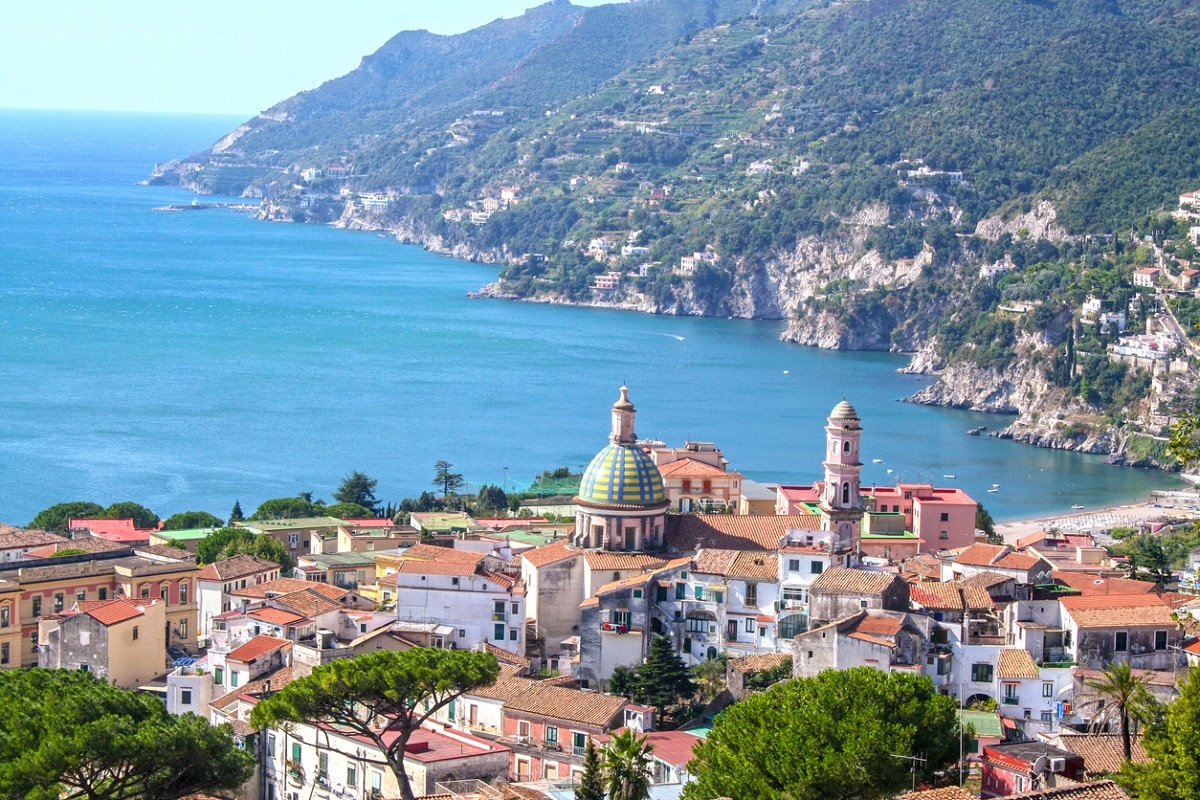
Vietri sul Mare is a fitting final chapter because it feels both authentically coastal and slightly less intense than the central hotspots. The town is especially famous for its ceramics, which colour façades, shops and artisan spaces with a sense of joyful visual identity. It is also the first town you reach coming from Salerno, which makes it a practical and symbolic gateway to the eastern end of the coast.
Salerno for a relaxed last stroll before departure
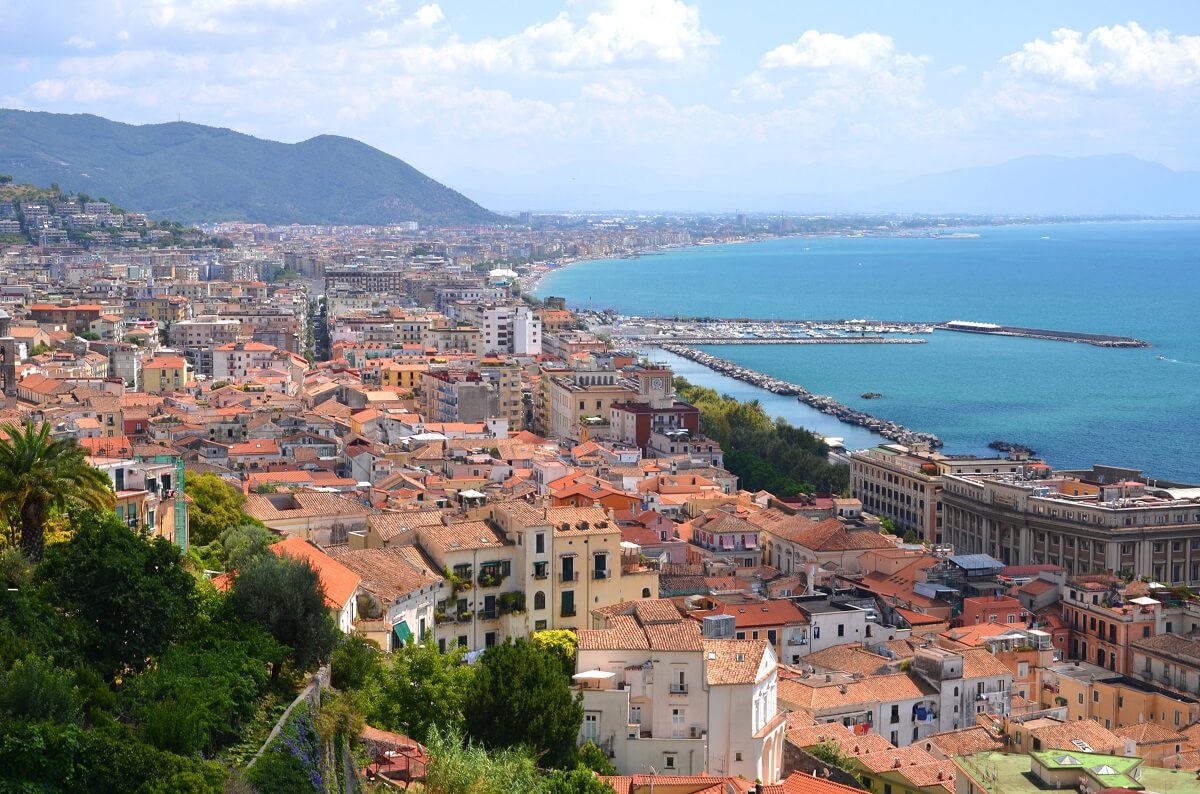
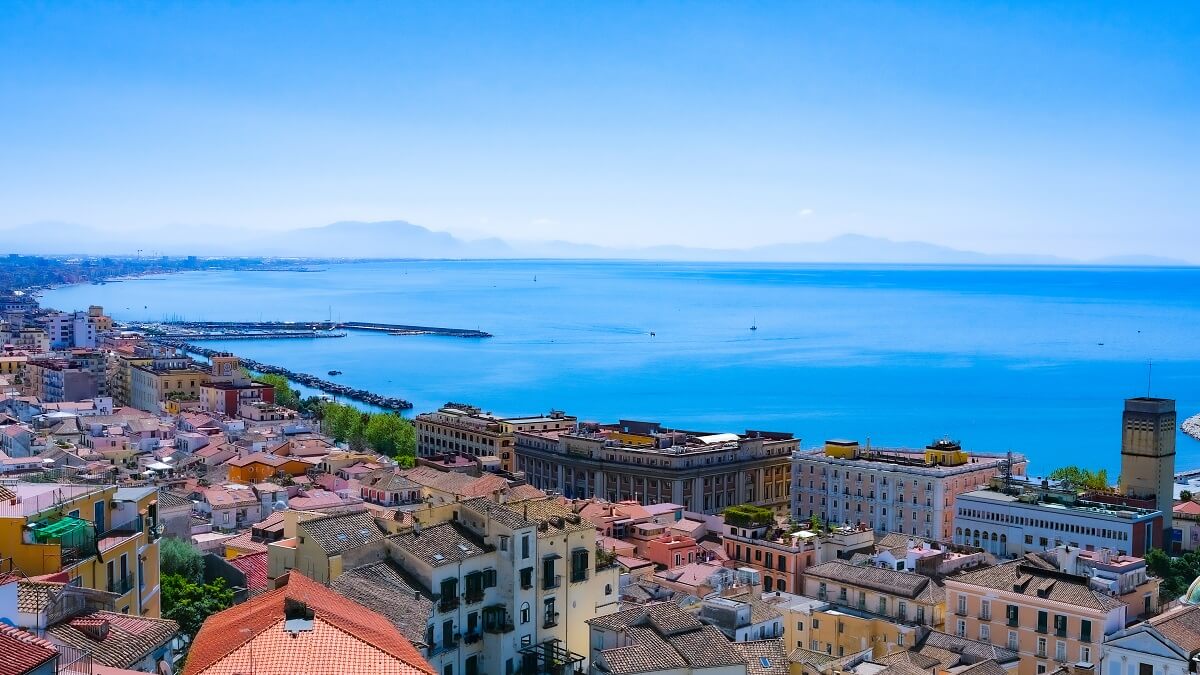
End the journey in Salerno, whose historic centre offers a more urban but still atmospheric finale. A stroll through its lanes, especially around Via dei Mercanti and the cathedral area, brings the week back to a city rhythm without losing the southern character of the trip. After cliffside villages and sea terraces, Salerno feels grounded, elegant and easy — exactly the kind of place that works well before departure.
Tips to make the most of one week on the Amalfi Coast
How to balance sightseeing, beach time and travel times
The real secret to this itinerary is balance. Try not to fill every day with too many transfers. One major town plus one smaller stop is usually enough, especially because the coast is slower than it looks on paper. Ferries are often the smoothest solution between the main towns from spring to autumn, while buses can involve queues and longer waits, particularly in the afternoon and in peak season.
What to book in advance for a smoother trip
For a smoother week, book the essentials early: key transfers, ferries in high season, popular restaurants, boat tours, and beach clubs if you want a specific lido. On the Amalfi Coast, the most desirable experiences tend to fill up quickly from summer onward, and last-minute improvisation is far more enjoyable when it concerns a swim stop or a scenic aperitivo, not the transport that gets you there.
Reach the Amalfi Coast with Italo
Arrive in Naples and start your itinerary from there
Reaching the Amalfi Coast by train is one of the easiest ways to begin this trip well. Italo connects Rome to Naples in about 1 hour, and also links Naples with Salerno in around 35 minutes. For travellers who want to begin on the western side, Italo also offers combined train + bus connections to Sorrento. In practical terms, that means you can arrive comfortably in Naples and shape the week from there, starting west in Sorrento or moving east towards Salerno and Vietri sul Mare.