This practical “How to Italy” guide is designed to help international travellers feel more confident, relaxed and respectful while exploring the country. You do not need to speak perfect Italian to enjoy Italy well: often, a few thoughtful words, a smile and a basic awareness of local habits are enough to make the experience smoother, warmer and more authentic.
Essential Italian phrases to use every day
Italian is a musical and expressive language, but you do not need to master it before your trip. A few simple greetings can already make a big difference, especially in everyday situations such as entering a shop, ordering a coffee, asking for directions or speaking to hotel staff.
Ciao or Buongiorno?
Hello: Ciao
Good morning: Buongiorno
Good evening: Buonasera
Good night: Buonanotte
Goodbye: Arrivederci
Thank you: Grazie
You’re Welcome: Prego
Ciao is probably the most famous Italian greeting. It means both “hello” and “bye”, but it is informal. Use it with people you know, with younger people, or in relaxed settings. In a hotel, restaurant or shop, however, it is usually better to begin with something more polite.
Buongiorno means “good morning” or “good day”. It is one of the most useful words in Italy and can be used from the morning until the afternoon. When you enter a bakery, a bar, a boutique or a small local shop, saying buongiorno immediately gives the conversation a courteous tone.
Buonasera means “good evening” and is used from late afternoon onwards. The exact moment when Italians switch from buongiorno to buonasera can vary, but if it is already evening or the light is beginning to change, buonasera is a safe and elegant choice.
Buonanotte means “good night”, but it is not generally used as a greeting when you arrive somewhere. It is used when someone is going to bed or when you are saying goodbye late at night. For example, after returning to your hotel in the evening, you might say buonanotte to the receptionist before heading to your room.
A small but important tip:
In Italy, it is considered polite to greet people when entering a place. Even if you are only browsing in a shop, a simple buongiorno or buonasera is appreciated. And don’t forget to say “grazie” or “arrivederci” when leaving.

Do Italians speak English? What to realistically expect
If you are planning a trip to Italy and wondering whether English will be enough, the most realistic answer is: sometimes yes, sometimes not entirely.
Food and dietary restrictions in Italy
Vegetarian: Vegetariano
Vegan: Vegano
Gluten: Glutine
Gluten-free: Senza Glutine (Senza = without)
Coeliac: Celiaco/a (o = man, a = woman)
Lactose: Lattosio
Lactose-free: Senza Lattosio
How to ask if a dish is vegetarian
To ask whether a dish is vegetarian, you can say:
È vegetariano? Is it vegetarian?
Or, more specifically:
Questo piatto è vegetariano? Is this dish vegetarian?
If you do not eat meat or fish, it can be useful to add:
Non mangio carne né pesce. I don’t eat meat or fish.
Be aware that some dishes may look vegetarian but include ingredients such as anchovies, cured meat, meat stock or animal-based sauces. Asking is always better than assuming.
How to ask for gluten-free food
For gluten-free options, the most useful phrase is:
È senza glutine? Is it gluten-free?
You can also say:
Avete opzioni senza glutine? Do you have gluten-free options?
If you have coeliac disease, it is important to be more specific:
Sono celiaco/celiaca. I am coeliac.
Use celiaco if you are male and celiaca if you are female. In restaurants, this helps staff understand that cross-contamination may also be an issue, not just the ingredients themselves.
How to ask for lactose-free food
For lactose-free food, you can say:
È senza lattosio? Is it lactose-free?
Or:
Avete latte senza lattosio? Do you have lactose-free milk?
This can be especially useful in cafés when ordering breakfast or a cappuccino. In many places, you may also find plant-based alternatives, but availability can vary. A simple phrase to ask is:
Avete latte vegetale? Do you have plant-based milk?
Ready-to-use phrases for restaurants and cafés
Here are a few practical phrases to keep with you:
Posso vedere il menù, per favore? Can I see the menu, please?
Cosa mi consiglia? What do you recommend?
Ci sono allergeni in questo piatto? Are there allergens in this dish?
Posso avere questo senza formaggio? Can I have this without cheese?
Posso pagare con carta? Can I pay by card?
Il conto, per favore. The bill, please.
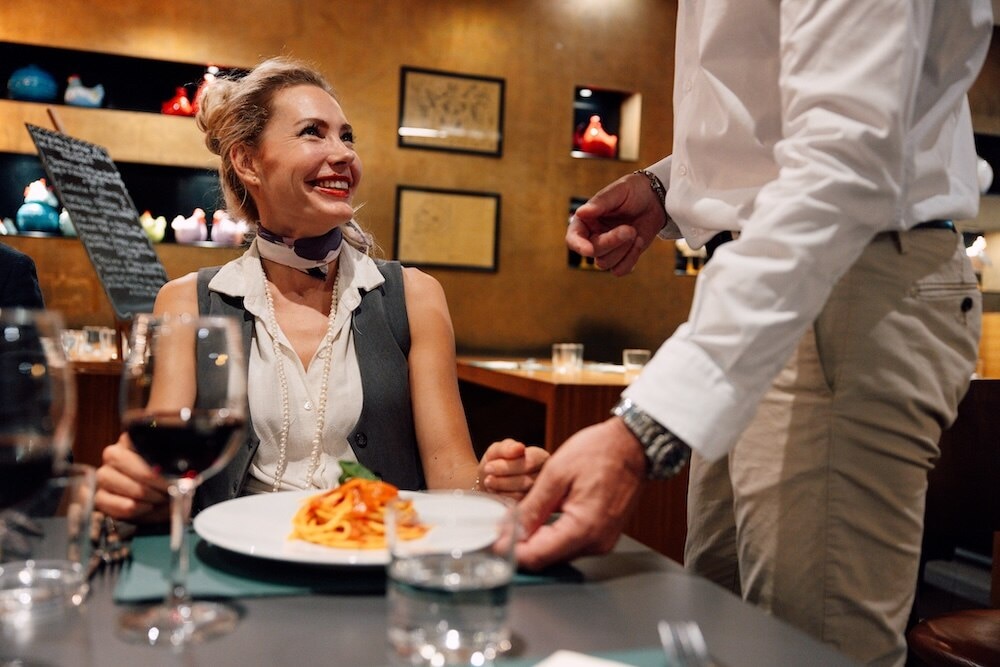
In many Italian restaurants, the meal has a slower rhythm than in some other countries. Staff may not bring the bill immediately unless you ask for it. This is not usually a lack of attention; it is often a way of letting you enjoy the table without feeling rushed.
Italian Food by Region: What to Eat in Every Area
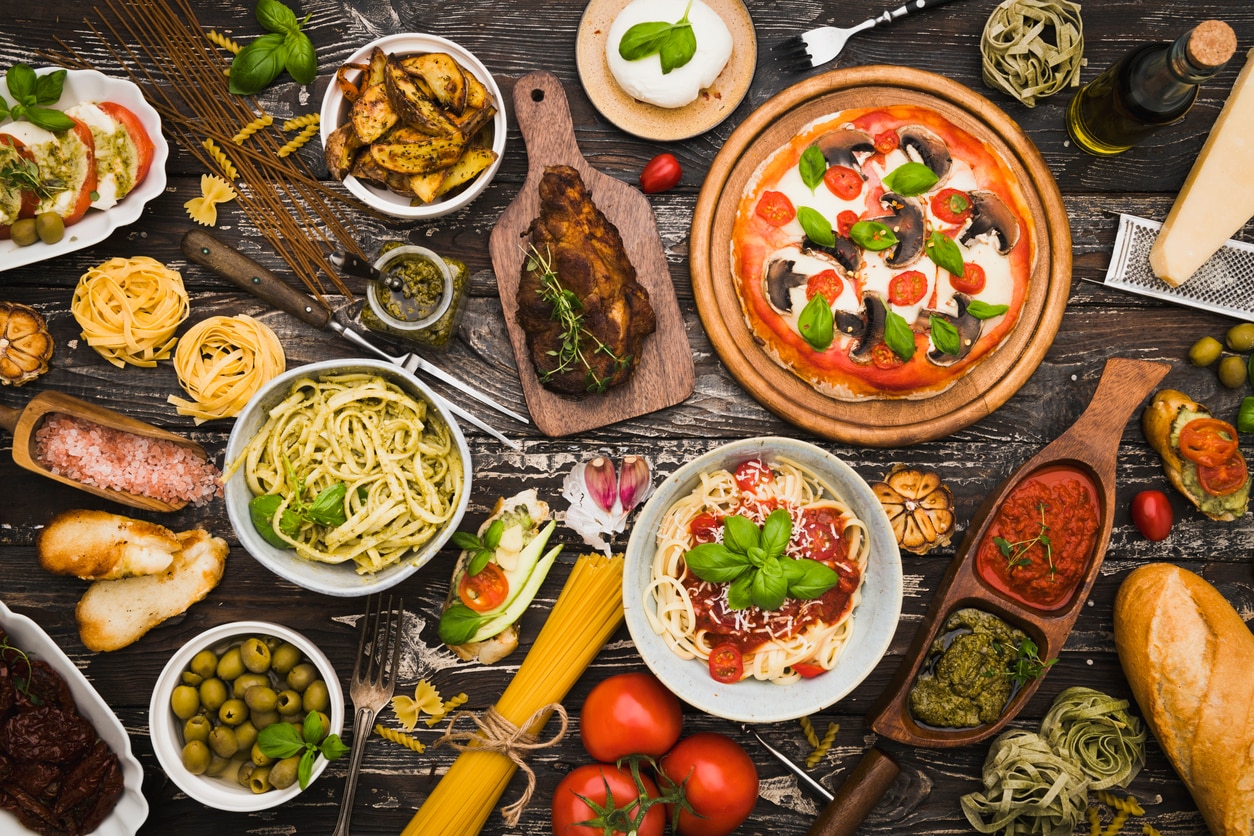
Italy is a culinary paradise, renowned for its diverse and rich food culture. Each of the 20 regions boasts its own unique flavors, ingredients and traditional dishes.
Useful numbers from 1 to 10
Knowing the first numbers in Italian can help in many travel situations: reading seat numbers, confirming platform information, ordering items, understanding small prices or checking hotel room numbers.
Here are the numbers from 1 to 10:
- 1 – uno
- 2 – due
- 3 – tre
- 4 – quattro
- 5 – cinque
- 6 – sei
- 7 – sette
- 8 – otto
- 9 – nove
- 10 – dieci
You may hear these numbers when someone talks about binario 3 meaning “platform 3”, carrozza 5 meaning “coach 5”, or posto 8 meaning “seat 8”. They are also useful when ordering in a café: due caffè, per favore means “two coffees, please”.
For train travel, it is worth becoming familiar with how numbers appear on tickets and station screens. Your ticket may include a train number, departure time, coach number and seat number. Recognising the words around those numbers helps you move with much more confidence.
Travelling by train in Italy: mini glossary
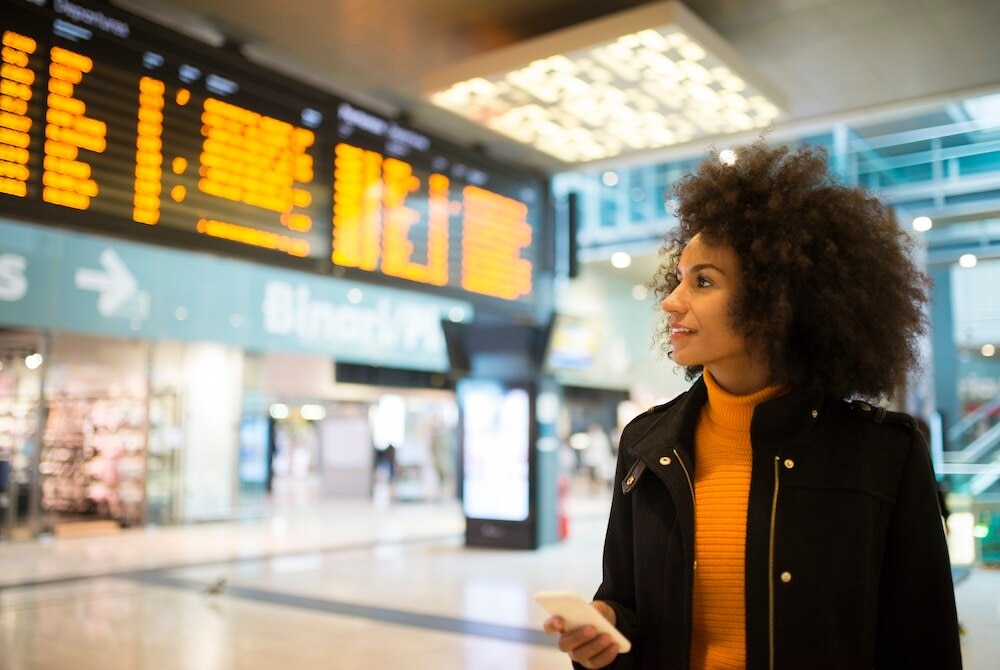
Station: Stazione
Track: Binario
Coach: Carrozza
Seat: Posto
Timetable: Tabellone
Arrival: Arrivi
Train: Treno
Departure: Partenze
Delay: Ritardo
Cancelled: Cancellato
Stazione
Stazione means “station”. You will see it in names such as stazione ferroviaria, meaning railway station. Major cities often have more than one station, so always check the full name before travelling.
For example, in Rome, Milan, Florence, Bologna, Naples and Venice, station names matter. Looking only at the city name is not always enough.
Treno
Treno means “train”. On departure boards, you may see the train number, destination and departure time next to it. When asking for information, you can say:
Dov’è il treno per Roma? Where is the train to Rome?
Or:
Questo è il treno per Firenze? Is this the train to Florence?
Binario
Binario means “platform”. It is one of the most important words to know at the station. You may see or hear:
Binario 4 Platform 4
A practical tip: do not rely only on the platform too early. Platform information can appear closer to departure, and sometimes it may change. Keep an eye on the station screens.
Orario
Orario means “timetable” or “schedule”. It can refer to departure and arrival times. You may see orario di partenza for departure time and orario di arrivo for arrival time.
A useful phrase is:
A che ora parte il treno? What time does the train leave?
Carrozza
Carrozza means “coach” or “carriage”. On your ticket, the coach number tells you where to board. Once on the platform, look for signs or screens indicating where each coach will stop. This is especially useful on high-speed trains, where finding the right coach before boarding makes the journey smoother.
Posto
Posto means “seat”. Your ticket may show posto 12, meaning seat 12. In reserved-seat trains, it is best to sit in your assigned seat rather than choosing freely.
You can ask:
Dov’è il mio posto? Where is my seat?
Ritardo
Ritardo means “delay”. On station screens, you may see a number of minutes next to the train. For example, ritardo 10 minuti means a 10-minute delay.
A useful phrase is:
Il treno è in ritardo? Is the train delayed?
Please avoid saying “Il treno è ritardato”, because in Italian it may sound misleading.
Cancellato
Cancellato means “cancelled”. It is not a word travellers want to see, but it is useful to recognise. If a train is cancelled, check the station screens and ask staff for guidance.
You can say:
Il mio treno è cancellato. Cosa devo fare? My train is cancelled. What should I do?
Italian culture and do’s and don’ts
Italy is welcoming, lively and sociable, but it also has many small unwritten rules. These are not about perfection; no one expects visitors to behave like locals in every situation. Still, understanding a few habits helps avoid misunderstandings and makes everyday interactions more pleasant.
Greetings and good manners
In Italy, greetings matter. When entering a small shop, café, restaurant, hotel reception or ticket office, it is polite to say buongiorno or buonasera before asking a question. Going straight into a request can sometimes feel abrupt.
Instead of beginning with “Where is the bathroom?”, try:
Buongiorno, dov’è il bagno, per favore? Good morning, where is the bathroom, please?
The word per favore means “please”, while grazie means “thank you”. These two words are simple, but they soften almost every interaction.
Another useful expression is:
Mi scusi Excuse me
Use it when you need to ask something, pass through a crowd or get someone’s attention politely.
Coffee and food etiquette
Italian coffee culture has its own rhythm. A caffè in Italy usually means an espresso, not a large cup of filter coffee. If you want something longer, you can ask for un caffè americano.
Cappuccino is.. cappuccino also in italian 🙂 and is traditionally associated with breakfast, often with a pastry such as a cornetto. Many Italians do not drink cappuccino after lunch or dinner, although visitors can of course order what they like. The point is not that it is “forbidden”, but that it may feel unusual in a very traditional setting, so you can probably order a cappuccino at lunchtime in a coffee roastery without raising eyebrows, but pairing it with pasta in a trattoria (italian typical restaurant) is a different story.
Meal times can also differ from what some travellers expect. Lunch is often from around 12:30 to 2:30 pm, while dinner commonly starts from around 7:30 pm or later. In smaller towns, kitchens may close between lunch and dinner, so planning ahead is useful.
Tip: there are many bistros open all day where you can also eat, but restaurants that stay open throughout the afternoon — or serve pasta at six in the evening — are usually tourist-oriented.
A few practical food habits to know:
- Do enjoy a quick coffee standing at the counter if you want a very local experience.
- Do ask before sitting if you are unsure whether there is table service.
- Don’t expect every restaurant to serve food all day.
- Don’t rush a meal too much: in Italy, eating is often part of the experience, not just a pause between activities.
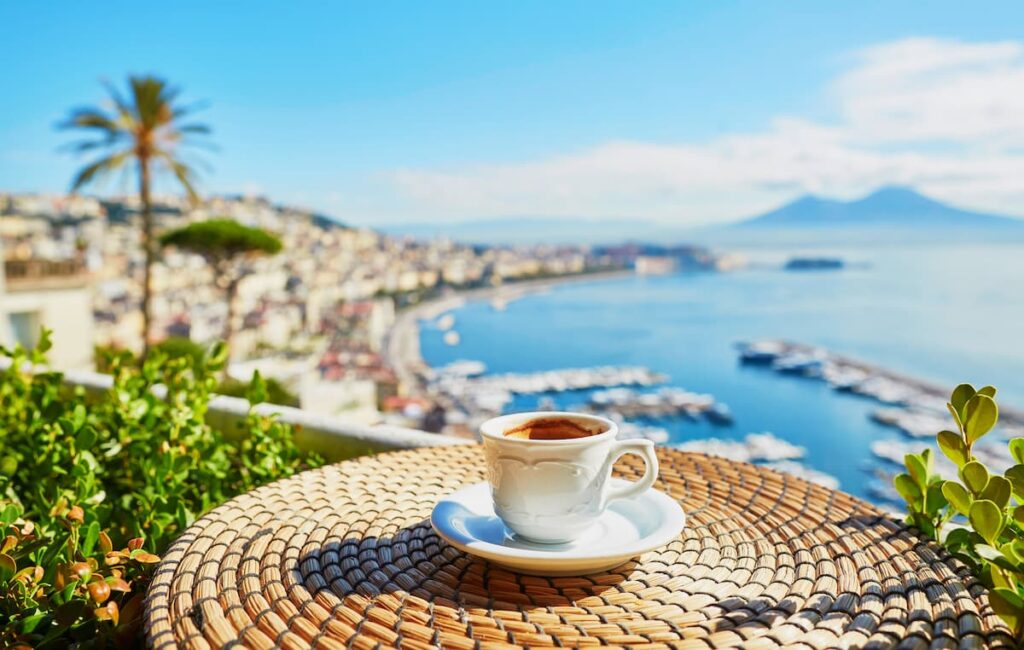
Italian Coffee Culture: Exploring Cafes and Espresso Bars
Explore Italian coffee culture: order a cappuccino before 12pm, discover the real “latte” and coffee names. From iced coffee to historic bars, experience Italy.
Gestures and ways of communicating
Italians are famous for expressive gestures, and many are part of everyday communication. A hand movement can add emphasis, irony, warmth or impatience depending on the context.
One very common gesture is the fingertips gathered together and moved slightly up and down. It often means something like “What do you want?”, “What are you saying?” or “What is going on?” The meaning depends heavily on tone and facial expression.
A raised hand with the palm facing outward can mean “stop” or “wait”. A light touch of the fingers to the lips, followed by opening the hand outward, can mean something is delicious.
However, gestures can be tricky for visitors because the same movement may not mean what it means in your own country. When in doubt, keep gestures simple and let words do the work.
Gestures to avoid
A few gestures are better avoided, especially if you are not sure of their meaning. Avoid pointing aggressively at people, snapping your fingers to call a waiter, or using exaggerated hand signs in frustration. These can come across as rude even if that is not your intention.
To get a waiter’s attention, make eye contact, raise your hand slightly and say:
Mi scusi Excuse me
It is simple, polite and effective.
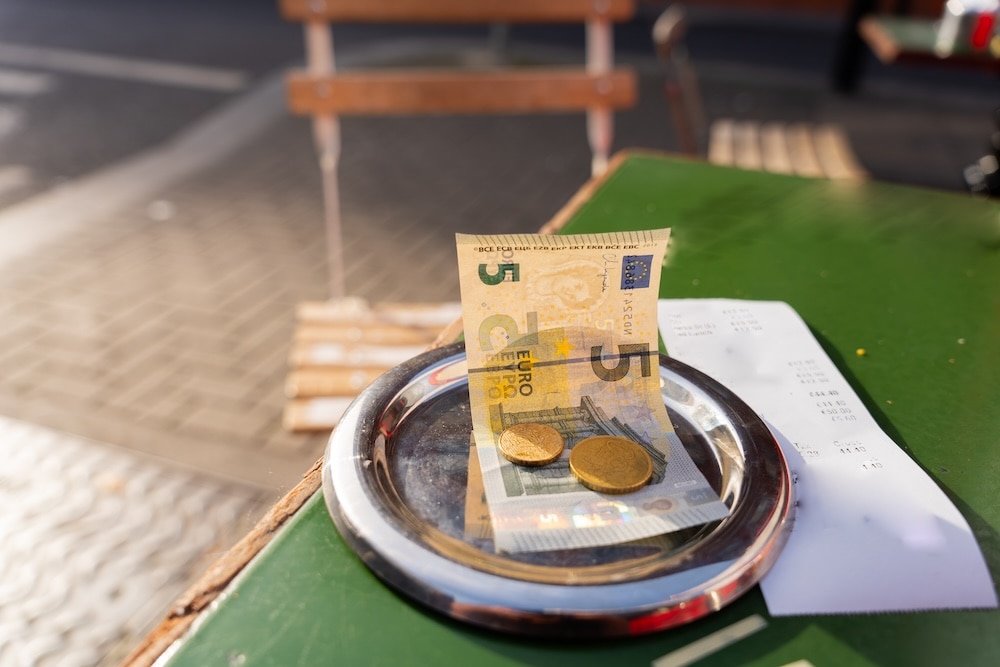
Tipping in Italy: what’s expected and what’s not
If you are planning a trip across Italy, one of the small but surprisingly important questions you may find yourself asking is this: should you tip, and if so, when?
Discover Italy with Italo
From major art cities to food capitals, from historic centres to weekend escapes, travelling with Italo makes it easy to explore Italy with comfort and flexibility. Once you arrive, every city begins with a first word, a first greeting, a first platform, a first coffee at the counter. And with a few essential phrases and cultural tips in mind, your Italian journey can feel even more enjoyable from the very beginning.