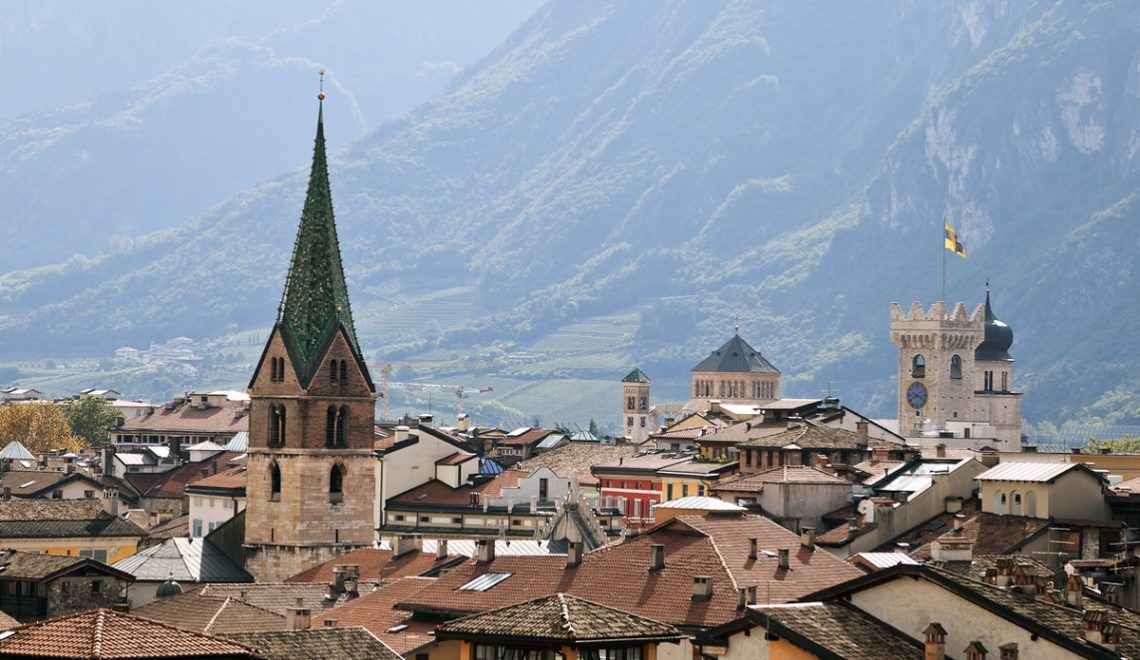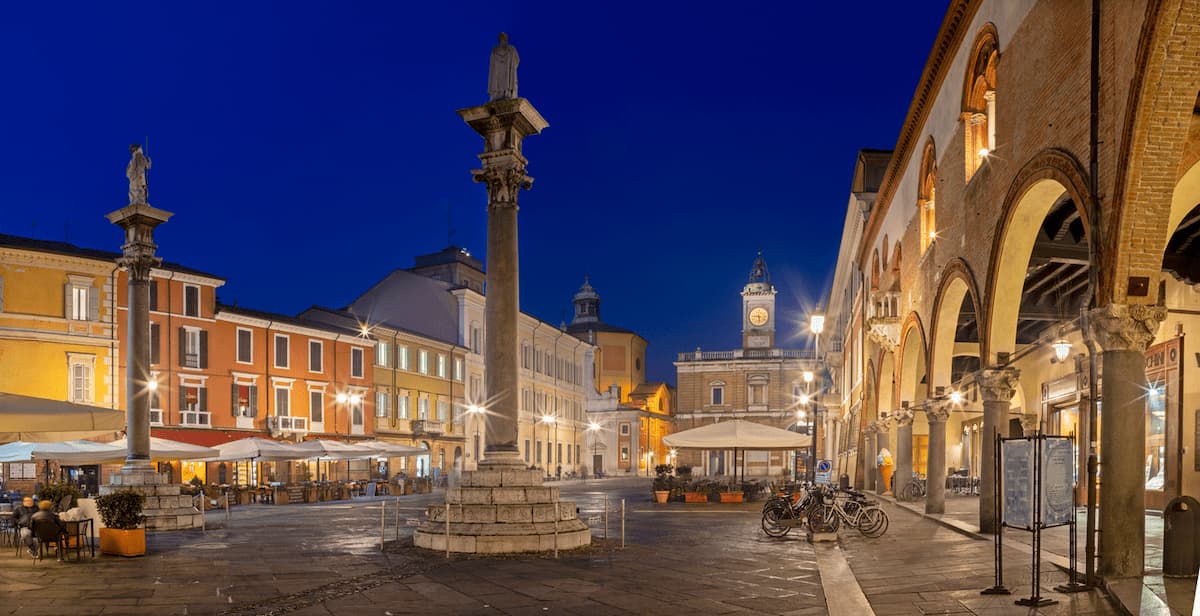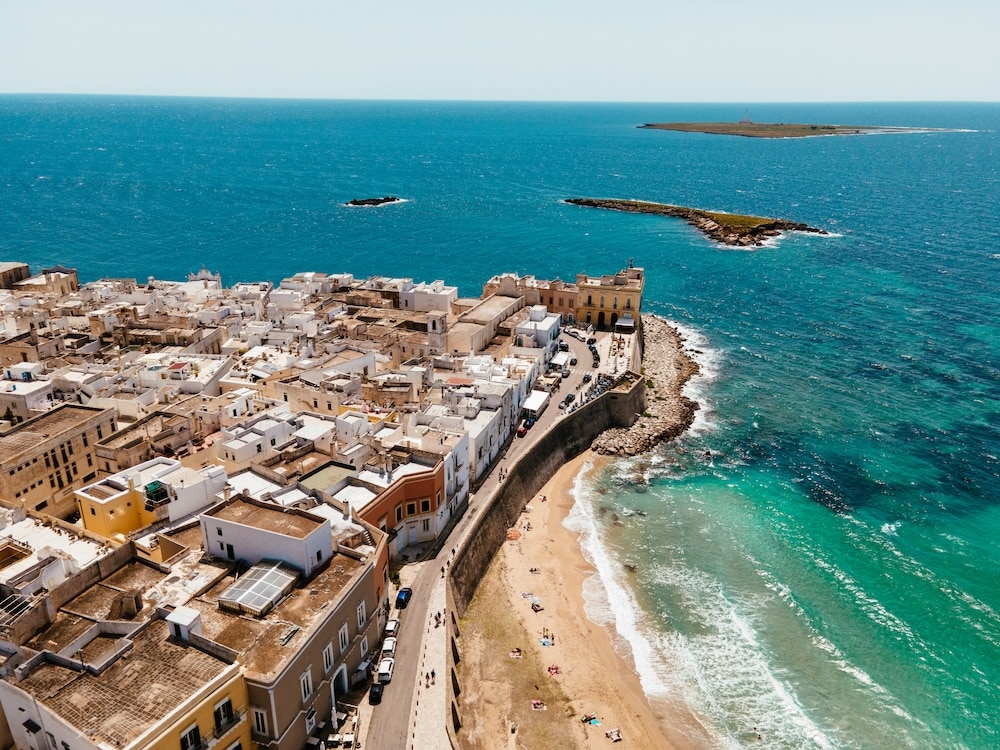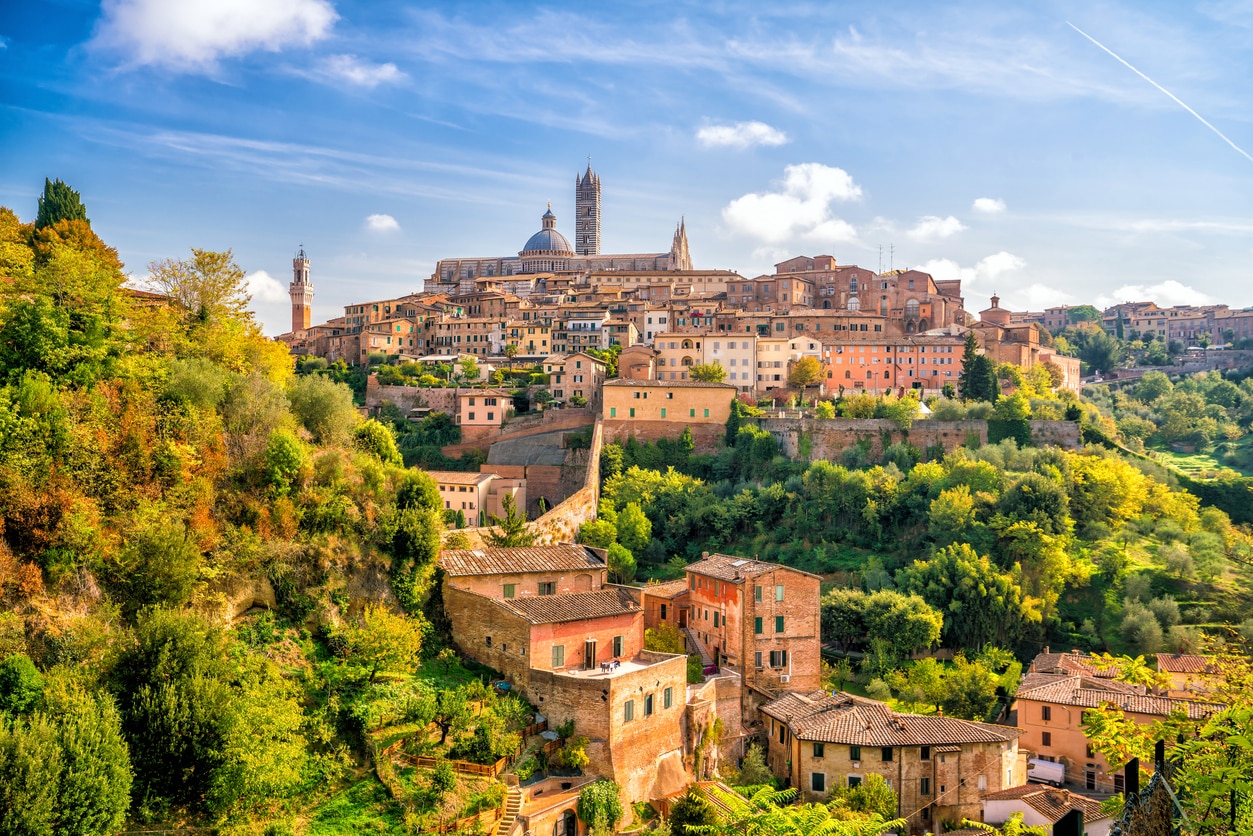
Siena remains perfectly anchored in its medieval golden age, offering a compact, entirely walkable open-air museum wrapped within original defensive walls. For travelers on a tight schedule, exploring this Tuscan jewel in 24 hours is completely seamless. A smart, continuous path beautifully balances iconic Gothic landmarks and panoramic viewpoints with quiet, authentic local corners, maximizing every hour, and local pasta intake, without ever feeling rushed.
- 1 Why Siena is Perfect for a 24-Hour Trip
- 2 Siena in a day itinerary
-
3
One Day in Siena: Itinerary from the Train Station
- 3.1 From Siena Train Station to the Historic Centre
- 3.2 Piazza del Campo and the Heart of the City
- 3.3 Palazzo Pubblico and the Torre del Mangia
- 3.4 A Green Escape Behind the Square: The Orto de’ Pecci
- 3.5 Via di Città and Siena’s Medieval Streets
- 3.6 Siena Cathedral and the Facciatone Panorama
- 3.7 The Baptistery of San Giovanni
- 3.8 Santa Maria della Scala
- 3.9 Fontebranda and the Sanctuary of Santa Caterina
- 3.10 The Basilica of San Domenico
- 3.11 The Fortezza Medicea and Panoramic Views Over Siena
- 4 Where to Eat During Your Day Trip to Siena
- 5 Practical Tips for Visiting Siena in a Day
- 6 How to Reach Siena with Italo and Local Connections
Why Siena is Perfect for a 24-Hour Trip
Siena’s compact geography is tailor-made for a single, high-impact day. Since the pedestrian core spans just three ridges, you can cross the entire city in under thirty minutes, a layout that naturally eliminates any logistical transit. This seamless walkability ensures that the full weight of Sienese history, from towering Gothic palazzi to the living heritage of the seventeen Contrade, unfolds continuously as you move, making a 24-hour window both comprehensive and deeply satisfying.
Siena in a day itinerary
Map of the one-day Siena itinerary
| Time | Activity | Area |
| 09:00 – 09:45 AM | Arrive by train, ride the escalators up, and grab a quick breakfast along Via Camollia. | Porta Camollia |
| 09:45 – 10:15 AM | Enter Piazza del Campo, snap photos of Fonte Gaia, and relax on the open shell-shaped square. | Piazza del Campo |
| 10:15 – 12:00 PM | Tour Palazzo Pubblico (frescoes) and climb the Torre del Mangia (accounting for lines, bag lockers, and stairs). | Piazza del Campo |
| 12:00 – 12:45 PM | Walk down to cool off in the hidden green valley of Orto de’ Pecci. | Behind Palazzo Pubblico |
| 12:45 – 02:15 PM | LUNCH BREAK: Sit down at a traditional osteria, followed by a scenic stroll up Via di Città. | Historic Centre / Via di Città |
| 02:15 – 03:45 PM | Explore Siena Cathedral (Duomo), its pictorial marble floor, and the stunning Piccolomini Library inside. | Cathedral Hill |
| 03:45 – 04:30 PM | Climb the Facciatone wall panorama (timed entry group) and head around the back to the Baptistery. | Cathedral Complex |
| 04:30 – 05:45 PM | Explore the massive complex, ancient underground tunnels, and halls of Santa Maria della Scala. | Cathedral Square |
| 05:45 – 06:30 PM | Walk down to Fontebranda medieval fountain and step into the quiet Sanctuary of Santa Caterina. | Fontebranda Valley |
| 06:30 – 07:15 PM | Visit the Basilica of San Domenico and enjoy the postcard view of the cathedral ridge from the terrace. | Camporegio Hill |
| 07:15 – 08:15 PM | Walk along the ramparts of Fortezza Medicea to watch the golden hour sunset over Siena’s red roofs. | Medicean Fortress |
| 08:15 PM onwards | TRADITIONAL DINNER: Return to the historic center for a classic dinner featuring local pici pasta and Tuscan red wine. | Historic Centre Alleys |
One Day in Siena: Itinerary from the Train Station
Arriving by train is one of the easiest ways to reach Siena, completely cutting out the stress of tight traffic zones and impossible medieval parking. The city’s layout is incredibly smart, built so that your entire day flows like a continuous loop rather than a frustrating back-and-forth. Once you enter the upper town walls, the main streets naturally funnel you downhill toward the iconic central square before guiding you back up toward the cathedral hill, keeping your walking route completely fluid.
From Siena Train Station to the Historic Centre
To get started, simply cross the street from the station platform and follow the indoor escalator path. It carries you straight up the hillside in just a few minutes, delivering you right at Porta Camollia, the impressive stone gateway marking the entrance to the old town. Passing through the ancient arch, you will step onto Via Camollia, a street that offers a wonderful, authentic introduction to Sienese daily life. It is lined with independent bakeries and small cafés where locals grab their morning espresso before the town gets busy. As the road narrows and the stone facades tower above you, the modern world completely disappears.
Piazza del Campo and the Heart of the City
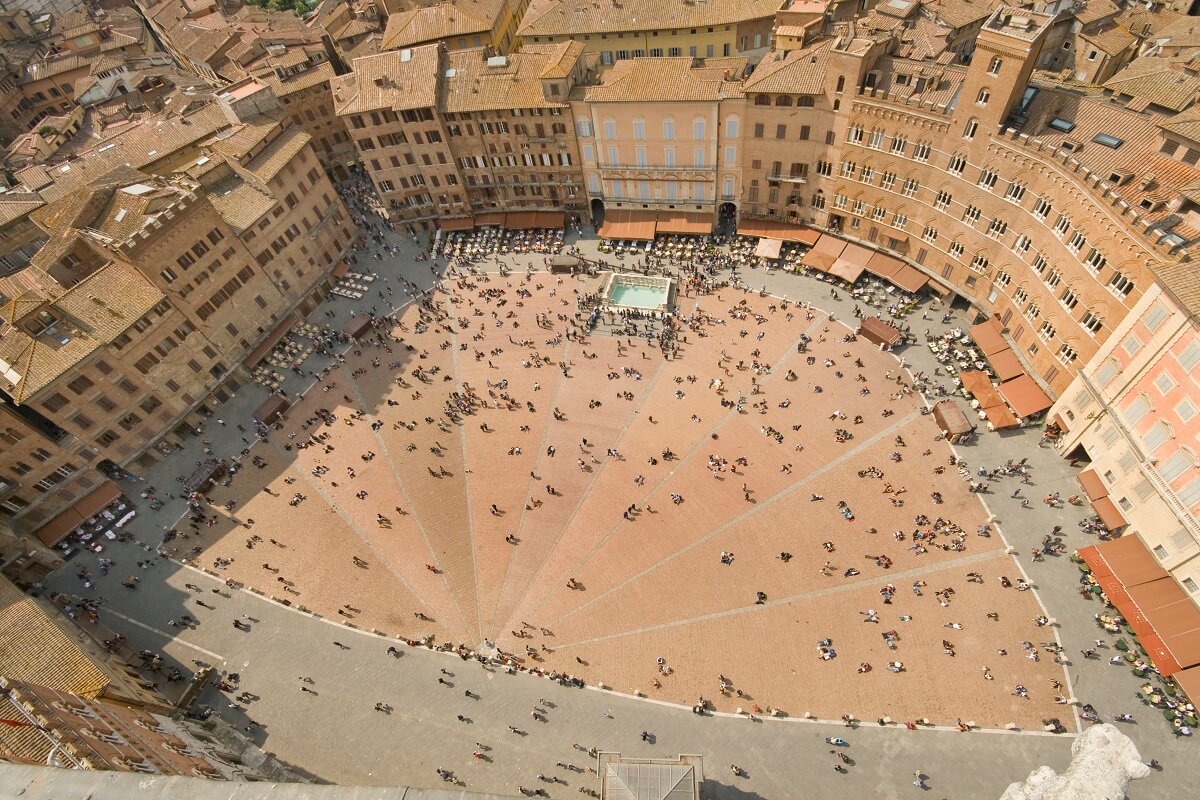
As you follow the curve of the narrow stone streets, they suddenly give way to the massive, sunlit expanse of Piazza del Campo. The transition from shadowed medieval alleys to this wide-open space is incredible. Shaped like a giant scallop shell, the red-brick ground slopes gently downward toward the town hall, beautifully divided into nine distinct sectors that honor the city’s medieval rulers. Instead of just snapping a quick photo and moving on, try to slow down. Do what the locals do: find a spot directly on the sun-warmed pavement or grab an outdoor café table. Take a moment to admire the Fonte Gaia fountain at the top and just watch the daily rhythm of the square unfold. Surrounded by Gothic palaces completely unchanged since the 1300s, the entire place feels less like a tourist stop and more like a living piece of history.
Italy’s Festivals and Celebrations: A Guide to Local Culture and Traditions
Explore Italy’s rich history and vibrant culture through its seasonal festivals and traditions. Discover the elegance of traditional dresses and the lively tunes of traditional music, showcasing Italy’s communal spirit and storied past.
Palazzo Pubblico and the Torre del Mangia
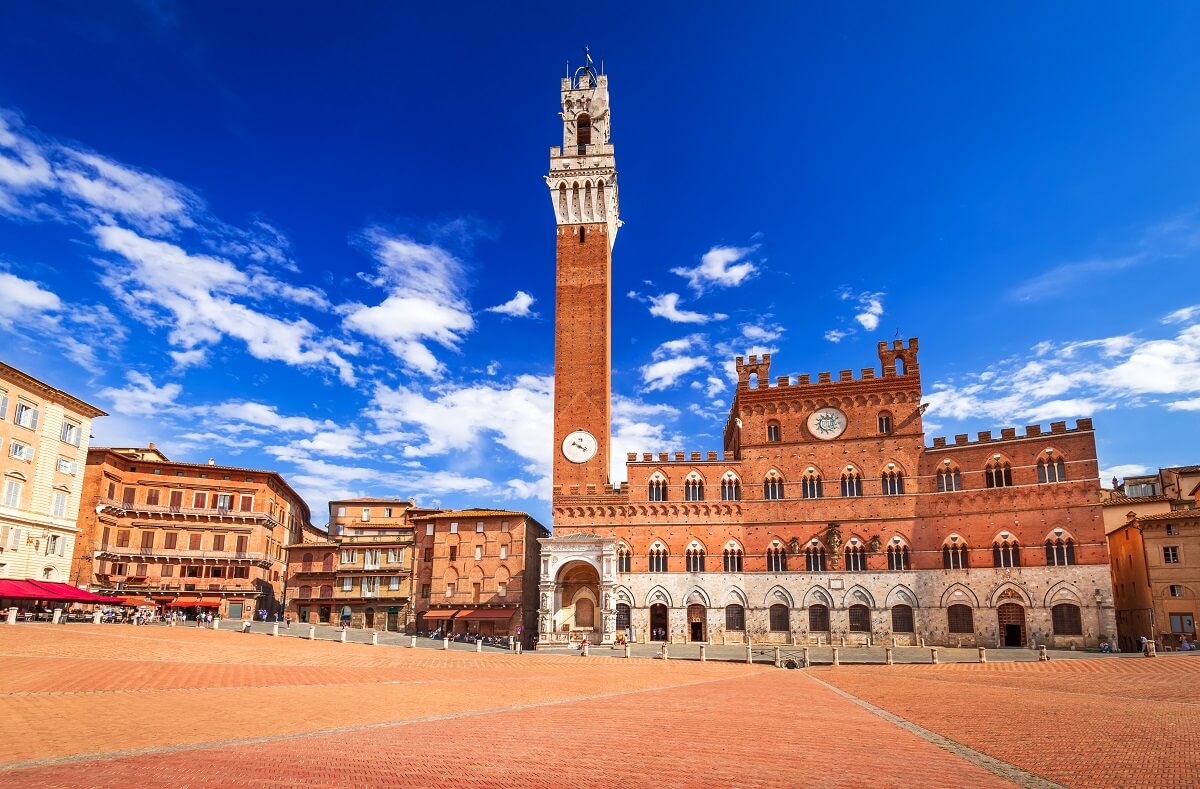
Sitting at the lowest point of the square is the Palazzo Pubblico, which still handles the city’s daily government business. Inside, the Museo Civico is worth a look just for Ambrogio Lorenzetti’s Allegory of Good and Bad Government—a fascinating fresco that shows exactly how medieval citizens thought a society should be run. Right next door, the Torre del Mangia shoots straight into the sky. Climbing its 400 narrow steps is a serious leg workout, but the reward is a classic postcard view over the sea of red-tiled roofs. If you’re not feeling the climb, just standing at the base and looking up is an experience on its own.
A Green Escape Behind the Square: The Orto de’ Pecci
Just a five-minute walk behind the town hall lies the Orto de’ Pecci, a secret valley that most first-time tourists completely miss. Back in the day, locals used this hidden green space to grow crops; today, it’s a peaceful oasis of olive groves, organic gardens, and roaming farm animals. Walking down here gives you a fantastic, upside-down view of the Torre del Mangia peeking over the trees. It’s the ultimate spot to escape the midday crowds, give your feet a break from the hard cobblestones, and enjoy some quiet countryside vibes without actually leaving the city center.
Via di Città and Siena’s Medieval Streets
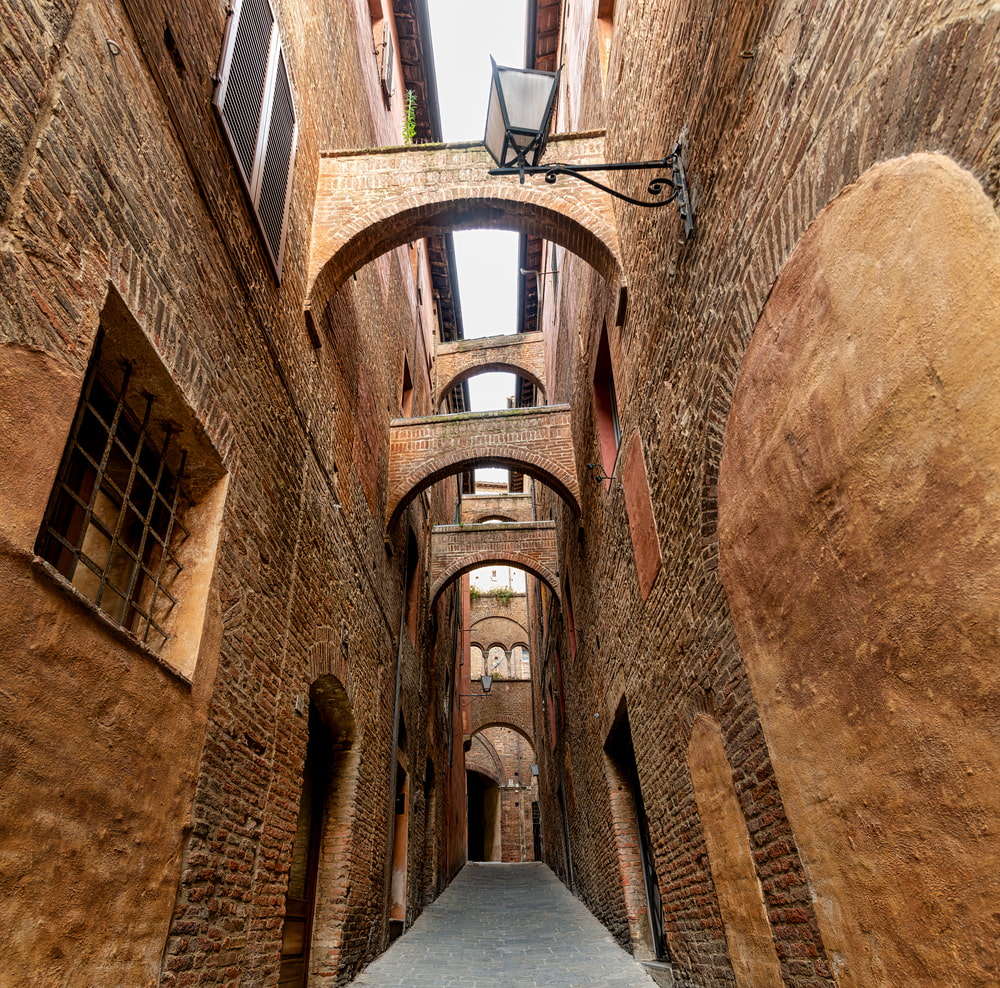
Leaving the square behind, head back uphill along Via di Città, a bustling medieval road lined with imposing stone palaces. This is the historic spine of Siena’s old commercial district, where independent boutiques rub shoulders with artisan workshops selling handmade leather goods and painted ceramics. The real magic here is in the detours. Make sure to glance down the steep, shaded side alleys branching off the main path, they often frame unexpected views of the Tuscan hills or lead to tiny, quiet courtyards that feel frozen in time.
Siena Cathedral and the Facciatone Panorama
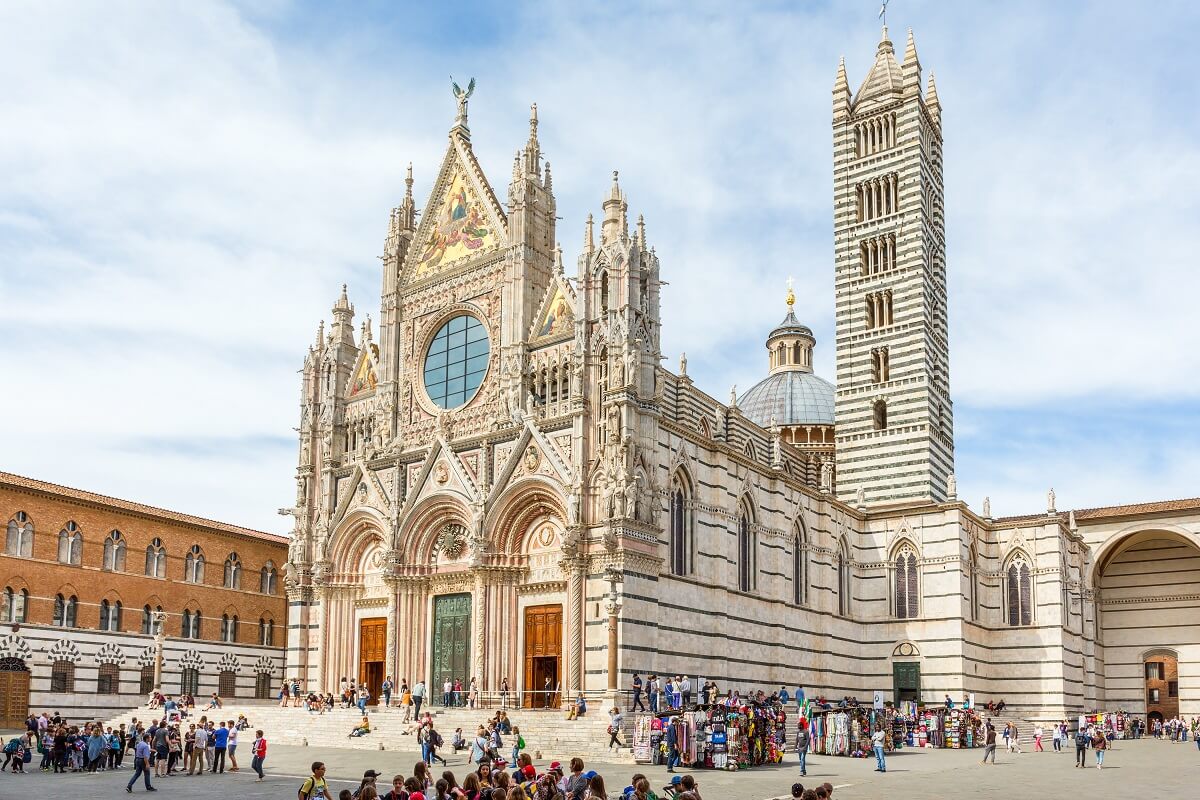
As you hit the highest point of the town, the Duomo di Siena suddenly appears, and it is an absolute stunner. Its dramatic dark green and white marble stripes make it one of Italy’s finest Gothic churches. Inside, the art is everywhere, from the beautifully carved pulpit to a massive marble floor that reads like a giant picture book.
Afterward, use your ticket to climb the Facciatone, the massive, unfinished wall from an abandoned 14th-century cathedral expansion. The open-air terrace on top gives you a sweeping view over the entire city and the surrounding countryside. It is a fantastic alternative to the main town hall tower because it gives you those same jaw-dropping panoramic views, but with way fewer stairs to climb.
The Piccolomini Library
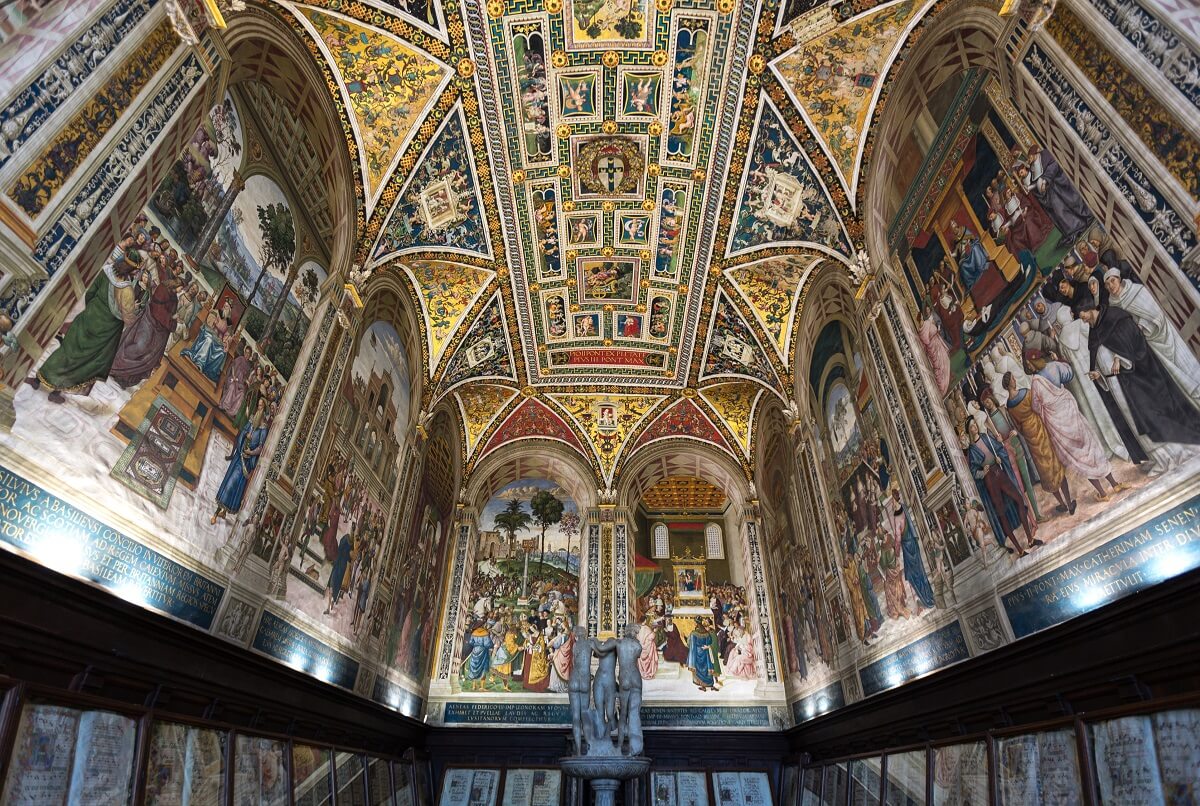
While exploring the inside of the church, make sure to visit the Piccolomini Library tucked right inside the main nave. This small room is an absolute showstopper, covered from floor to ceiling in vivid Renaissance frescoes. The colors and gold accents are so incredibly bright that they look like they were painted yesterday. Originally built to hold a precious collection of music books, stepping into this space feels like walking straight inside a life-sized, glowing manuscript.
The Baptistery of San Giovanni
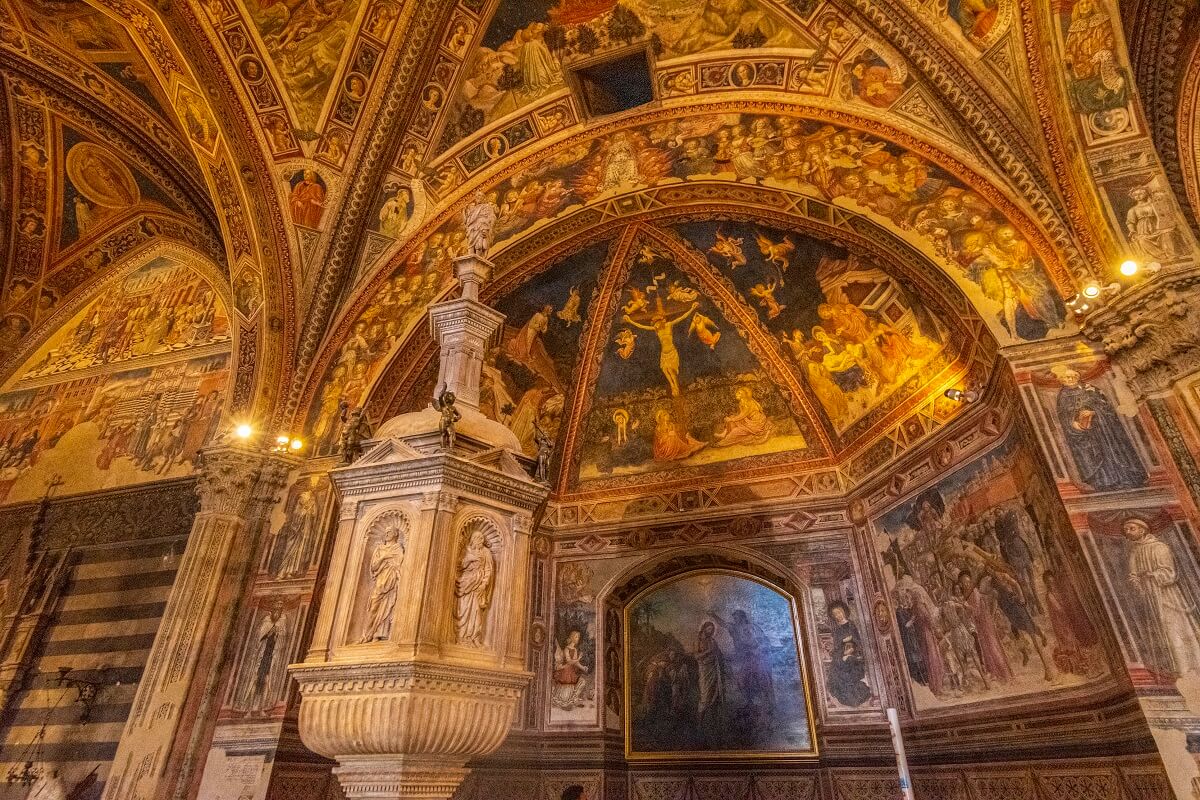
Head around the back of the cathedral and walk down the massive marble steps to find the Baptistery of San Giovanni. The building is a clever piece of medieval engineering, tucked right underneath the cathedral’s main floor to anchor it to the hillside. While the walls inside are covered in gorgeous 15th-century paintings, the real star is the bronze and marble baptismal font. It’s a masterclass in early Renaissance art, featuring intricate relief panels sculpted by legendary masters like Donatello and Ghiberti.
Santa Maria della Scala
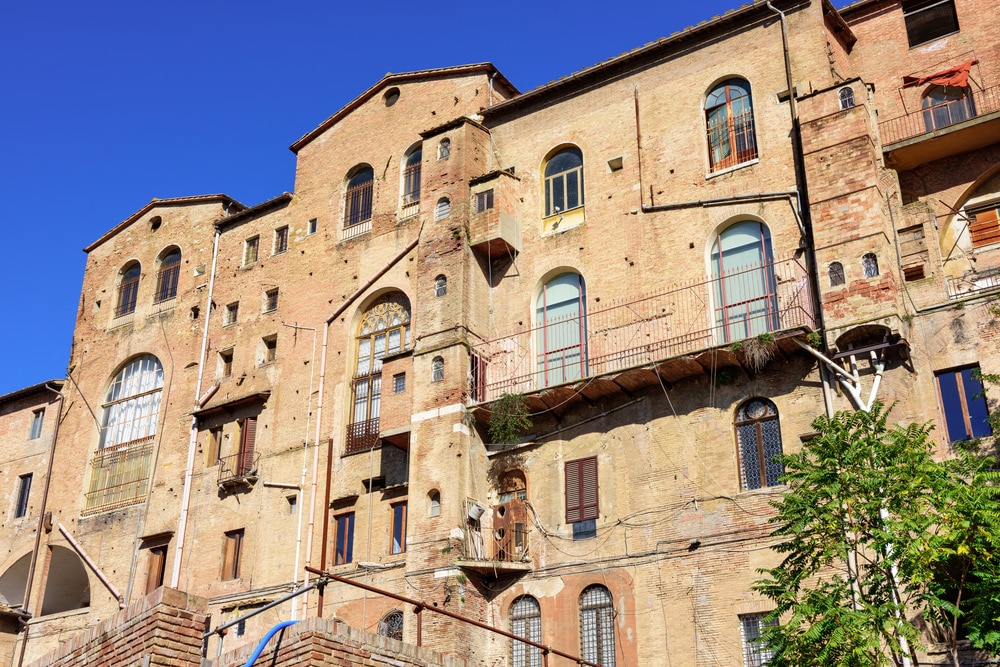
Directly across the square from the cathedral doors sits Santa Maria della Scala, a massive complex that served as one of Europe’s very first hospitals for pilgrims walking the historic Via Francigena. Today, it has been transformed into a fascinating labyrinth of a museum. Exploring it takes you from grand, frescoed halls showing how doctors treated patients centuries ago, down into deep, shadowy brick tunnels and ancient underground dig sites. It’s a brilliant look at how the city took care of its people for over a thousand years.
Fontebranda and the Sanctuary of Santa Caterina
Next, head down the steep slopes toward Fontebranda, the oldest and most impressive medieval fountain in town. It’s still fed by the city’s ancient underground aqueduct system, and its heavy brick arches once supplied water to the local tanners and wool workers who built Siena’s wealth. Just a quick walk up the hill from there brings you to the Sanctuary of Santa Caterina, built right around the childhood home of Italy’s patron saint. The site is full of quiet, arcaded courtyards and small chapels that offer a peaceful, spiritual breather away from the main museum rush.
The Basilica of San Domenico
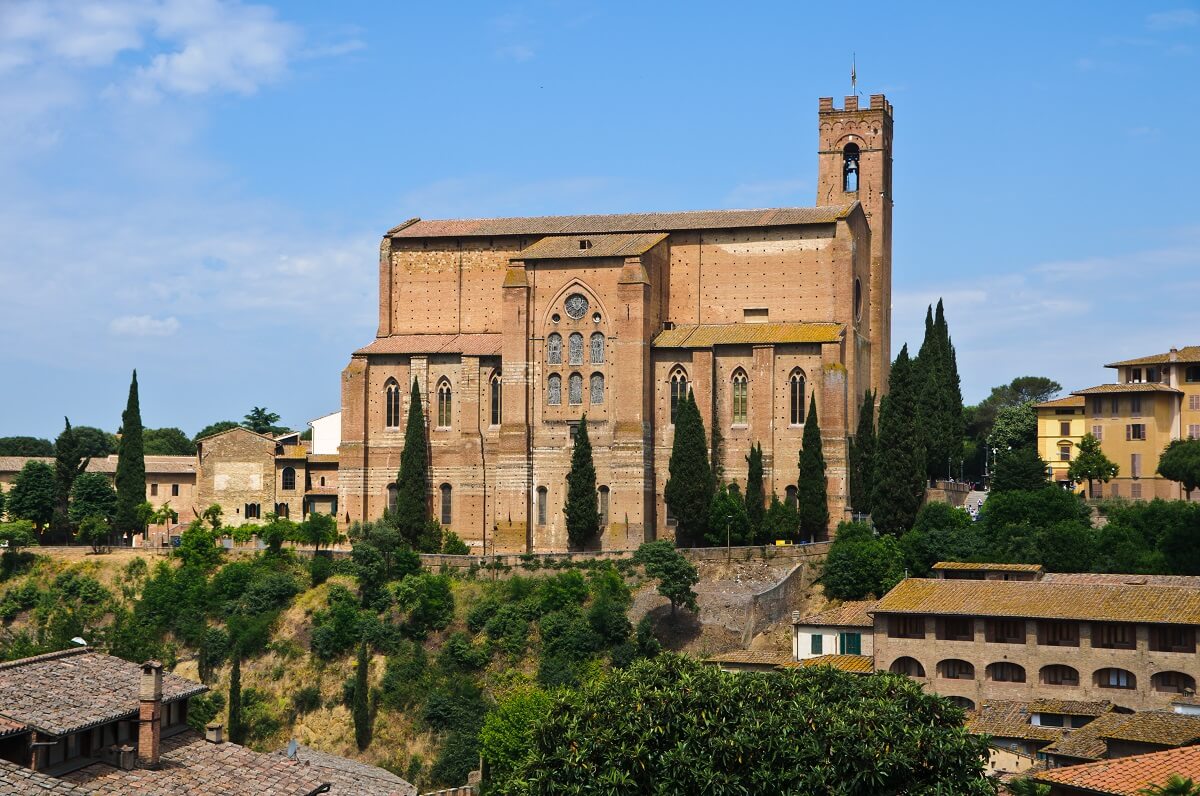
Perched on a prominent hill right across from the cathedral is the Basilica of San Domenico, a massive, plain brick church. The inside is vast and simple, designed that way on purpose to hold the huge crowds of medieval worshippers who gathered to hear sermons. The church holds the sacred relics of Saint Catherine, surrounded by beautiful old paintings. But even if you aren’t an art buff, the terrace right outside the church doors is a must-visit, it offers one of the picture-perfect scenery of the entire cathedral ridge cutting across the skyline.
The Fortezza Medicea and Panoramic Views Over Siena
Wrap up your sightseeing route by walking over to the Fortezza Medicea, a massive 16th-century brick fortress built by the Florentine Medici family. Today, the old military walls have been totally reclaimed by locals as a favorite public park for running or walking dogs. The wide walkways along the top of the ramparts are perfect for a late afternoon stroll. It’s the ideal spot to watch the sunset over the city, catching the perfect view of the Duomo and the town hall tower glowing in the golden evening light.
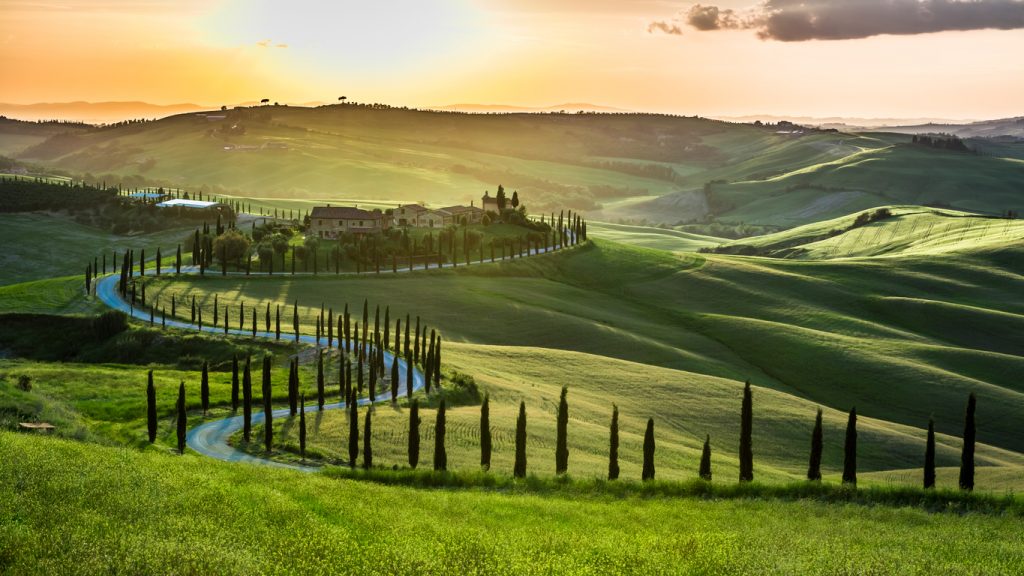
Tuscany in 7 days: the perfect one-week itinerary
Experience Tuscany’s best in seven unhurried days, blending rich art, culture, fine wine, and iconic landscapes.
From Florence and Pisa to Chianti and Val d’Orcia, explore historic towns and rolling hills without feeling rushed.
Where to Eat During Your Day Trip to Siena
Traditional Sienese Dishes to Try
Sienese cuisine is wonderfully rustic, focusing on rich flavors, high-quality local meats, and ancient recipes. The star of any local menu is pici, a thick, hand-rolled pasta that pairs perfectly all’aglione (a rich, sweet garlic tomato sauce) or a hearty wild boar ragù (cinghiale).
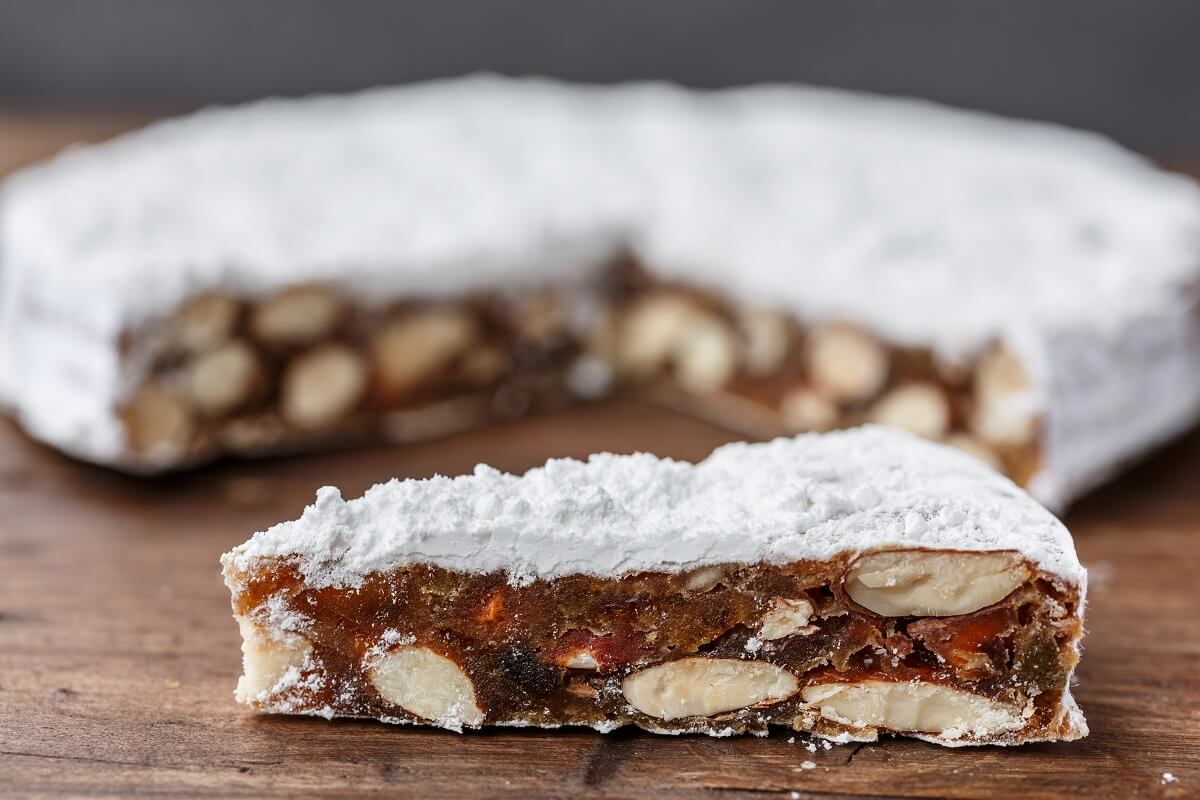
For dessert, the city relies on its spice-trading history. Try panforte, a dense, chewy cake packed with candied fruits, nuts, and pepper, or ricciarelli, delicate, soft almond paste cookies dusted with powdered sugar that melt in your mouth.
Local Bakeries, Wine Bars and Quick Lunch Options
If you want to maximize your sightseeing time, skip the formal sit-down lunch and visit a traditional forno (bakery) for a slice of freshly baked focaccia topped with local prosciutto. Another fantastic option is an enoteca (wine bar), where you can order a custom platter of aged Pecorino di Pienza cheese and local cured meats. Pair your food with a glass of local Chianti Colli Senesi while sitting outside, soaking in the neighborhood energy.

Italian Food by Region: What to Eat in Every Area
Italy is a culinary paradise, renowned for its diverse and rich food culture. Each of the 20 regions boasts its own unique flavors, ingredients and traditional dishes. This article serves as your Italian food guide, highlighting the must-try dishes from each region, perfect for food tourism and culinary travel enthusiasts.
Practical Tips for Visiting Siena in a Day
How Much Walking to Expect
Be prepared for a physically active day out. While distances between major monuments are short on a map, Siena is built entirely on hills, meaning you will constantly be navigating steep inclines, stone staircases, and historic cobblestones. Plan to walk anywhere from 8 to 12 kilometers during your visit, so wearing supportive, broken-in walking shoes is absolutely vital to enjoying the trip.
The Best Time of Year to Visit Siena
Spring (April to May) and autumn (September to October) offer the most pleasant weather conditions, featuring crisp air, mild temperatures, and beautiful natural lighting for photography. Summer brings incredible energy with the Palio races on July 2nd and August 16th, but the city becomes exceptionally crowded and hot during these specific weeks, requiring careful planning.
How-to To Italy: essential phrases, food tips and cultural advice for your trip
This practical “How to Italy” guide is designed to help international travellers feel more confident, relaxed and respectful while exploring the country. You do not need to speak perfect Italian to enjoy Italy well to make the experience smoother, warmer and more authentic.
Tickets and Advance Reservations (Opa Si Pass vs Torre del Mangia)
To make the most of a single day, purchasing the Opa Si Pass is highly recommended. This single combined ticket grants you priority access to the Cathedral, Piccolomini Library, Baptistery, and the Facciatone terrace, saving you significant time at individual ticket counters. If you have your heart set on climbing the Torre del Mangia, remember that it requires a separate ticket with strict, timed entry slots that should be secured online well ahead of your travel date.

Italy travel updates 2026: what to know before your trip
A practical, up-to-date resource for foreign visitors planning a trip to Italy. Whether it’s your first visit or your fifth, this page keeps you informed on what’s new, what’s changed, and what to know before you go.
How to Reach Siena with Italo and Local Connections

Getting to this medieval treasure is incredibly smooth when utilizing Italy’s high-speed rail network. By booking a trip with Italo, you can travel swiftly from major national hubs like Rome, Naples, or Milan directly into central stations like Florence Santa Maria Novella. From Florence, frequent, direct regional train connections carry you straight through the scenic Tuscan landscape to Siena in around an hour and a half.
Arriving by train completely eliminates the stress of navigating restrictive ZTL (Limited Traffic Zone) driving areas, high parking fees, and narrow roads. Instead, you simply step off the platform, ride the convenient city escalators up through the ancient stone walls, and immediately begin your day. By turning what could be a stressful road trip into a seamless journey, your biggest challenge becomes deciding whether to climb the old cathedral walls or order a second plate of local pici pasta—the ultimate proof that with a smart rail connection, a single day is all you need to experience the absolute best of Siena.