Step back in time to AD 79 with Pompeii’s ruins. From the political heart of the Forum to the moving Garden of the Fugitives, the site reveals the secrets of a Roman city frozen in time. Discover hidden frescoes, skip-the-line tips, and the ultimate travel routes to make your journey through history truly unforgettable.
- 1 Why Pompeii remains Italy’s most captivating wonder
-
2
Things to see in Pompeii: the must-see ruins
- 2.1 Visit the Antiquarium of Pompeii
- 2.2 The Forum, the heart of ancient Pompeii
- 2.3 The Basilica and the city’s public buildings
- 2.4 The Temple of Apollo
- 2.5 Walk along Via dell’Abbondanza
- 2.6 The House of the Faun
- 2.7 The House of the Vettii
- 2.8 The Villa of the Mysteries
- 2.9 The Stabian Baths
- 2.10 The Great Theatre and the Odeon
- 2.11 The Amphitheatre of Pompeii
- 2.12 The Garden of the Fugitives
- 3 Practical tips for visiting Pompeii
- 4 What to see near Pompeii
- 5 How to reach Pompeii with Italo and Itabus
Why Pompeii remains Italy’s most captivating wonder
Walking through Pompeii is a deeply emotional journey rather than a simple museum visit. When Mount Vesuvius erupted nearly two thousand years ago, it did not merely destroy a thriving city; it permanently captured a single, vivid day in Roman life. Today, you can stroll down stone streets still grooved by ancient chariot wheels, peer into fast-food counters that served hot stews, and admire private gardens where families once gathered. This raw, unfiltered connection to the past makes Pompeii an unparalleled monument to human history, revealing that ancient Romans were remarkably like us in their daily joys, struggles, and routines.
Things to see in Pompeii: the must-see ruins
The archaeological site is vast, sprawling across more than sixty-six hectares of historic terrain. To truly appreciate its grandeur without feeling overwhelmed, you need a carefully structured route that highlights the architectural masterpieces while leaving room for spontaneous exploration. Pompeii’s most significant monuments reveal the political, spiritual and domestic life of this ancient society. Behind their silent stone walls lie stories that, together with the historical context surrounding them, bring these remarkable ruins vividly back to life.
Visit the Antiquarium of Pompeii
Before stepping onto the ancient cobblestones, your journey starts at the newly redesigned Antiquarium of Pompeii. Located right at the main entrance of Porta Marina, this modern exhibition space acts as the perfect historical gateway for your party. Inside, delicate gold jewelry, bronze kitchen utensils, and carbonized loaves of bread escape the ashes of Vesuvius. This immediate encounter with Roman domestic life provides an essential emotional anchor for the rest of your walk. Armed with these vivid images of daily reality, the silent, grey stone ruins ahead suddenly spring back to life as warm, vibrant family homes.
The Forum, the heart of ancient Pompeii
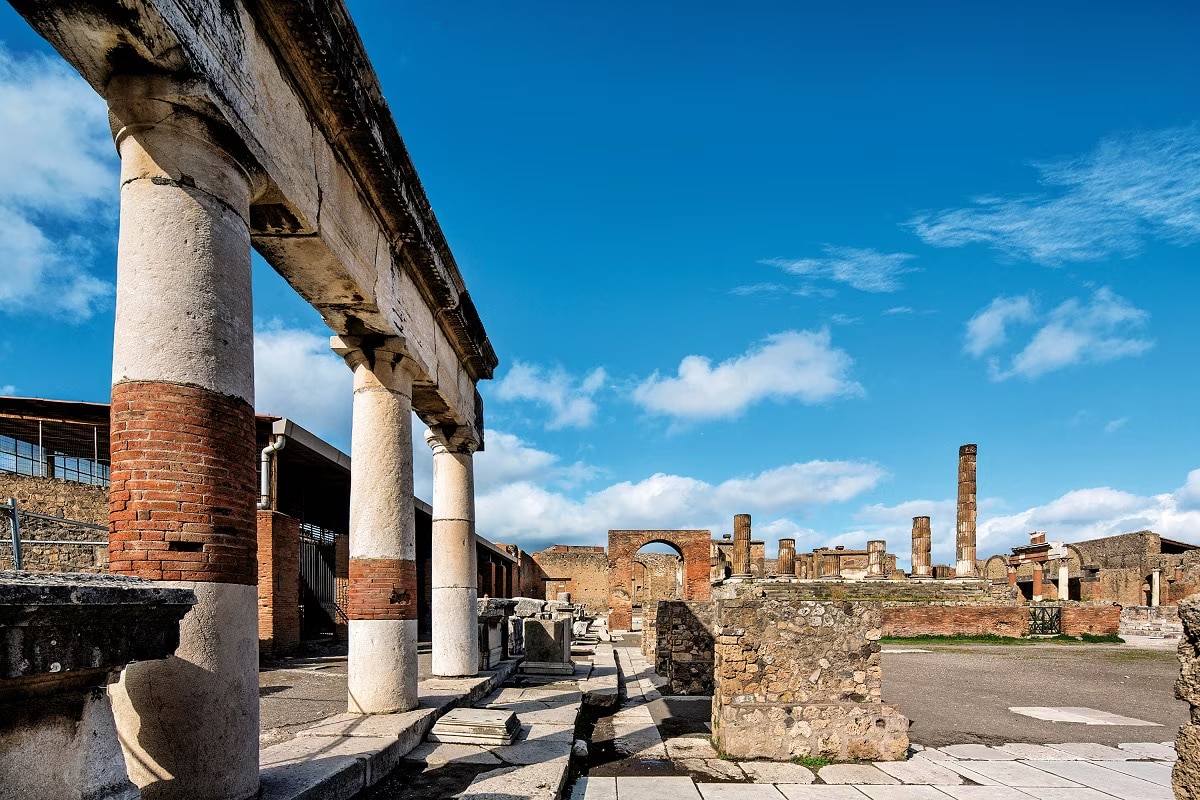
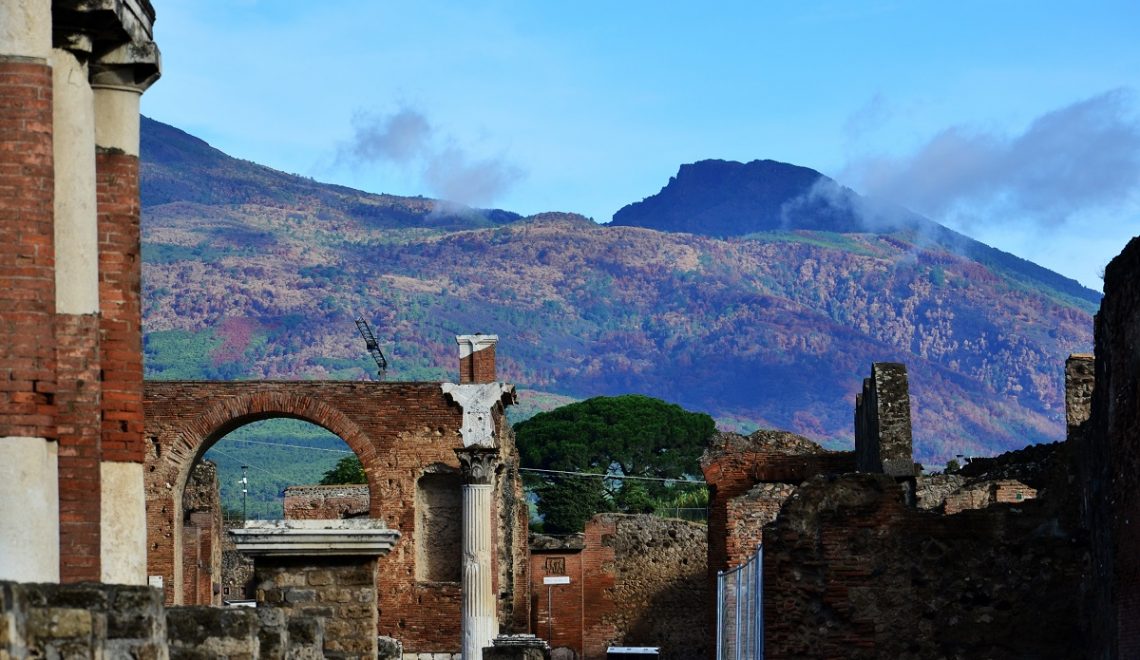
As the natural starting point of your exploration, the Forum served as the pulsing heart of daily life. This massive rectangular piazza was the ultimate hub for politics, commerce, and religion, where citizens gathered to trade, debate, and worship. Standing in the center today, with the majestic silhouette of Mount Vesuvius looming in the distance, offers a powerful perspective on the city’s scale. The surrounding ruined columns and grand pedestals whisper stories of a once-busy marketplace that defined the civic pride of ancient Pompeii.
The Basilica and the city’s public buildings
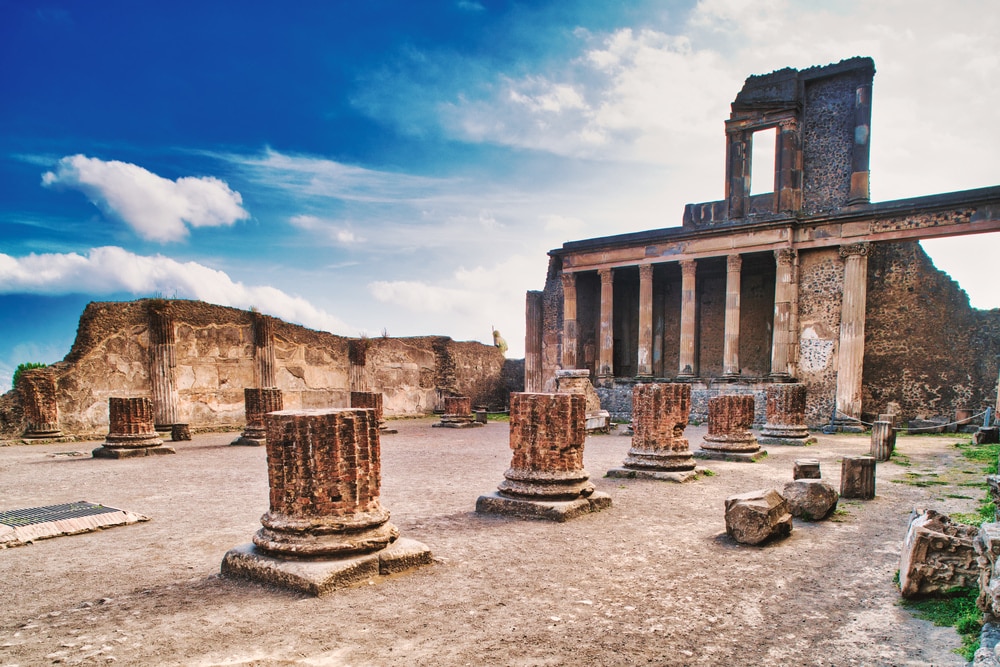
Located just off the main square, the Basilica stands as one of Pompeii’s most imposing public structures. Contrary to the modern meaning of the word, this grand space did not serve as a place of worship, but rather as the city’s courthouse and financial center. Here, magistrates settled legal disputes while wealthy merchants negotiated complex business contracts. Its towering columns and the nearby municipal offices reflect the remarkable organisation and sophistication of Roman civic life.
The Temple of Apollo
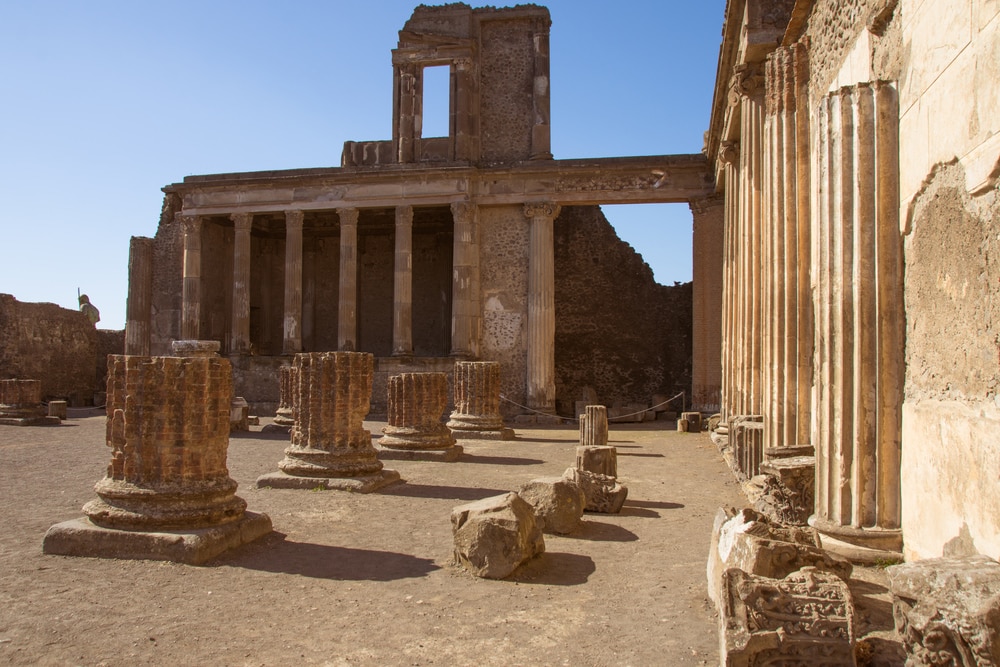
Directly adjacent to the Forum, the Temple of Apollo is one of the oldest and most sacred sanctuaries on the site. It beautifully illustrates the evolution of Pompeian religious architecture, blending early Greek influences with later Roman designs. The elegant columns and replicating bronze statues of Apollo and Diana create a dramatic, timeless atmosphere. Taking a moment to appreciate this courtyard allows you to grasp the deep spiritual connection the citizens maintained with their protective deities throughout the centuries.
Walk along Via dell’Abbondanza
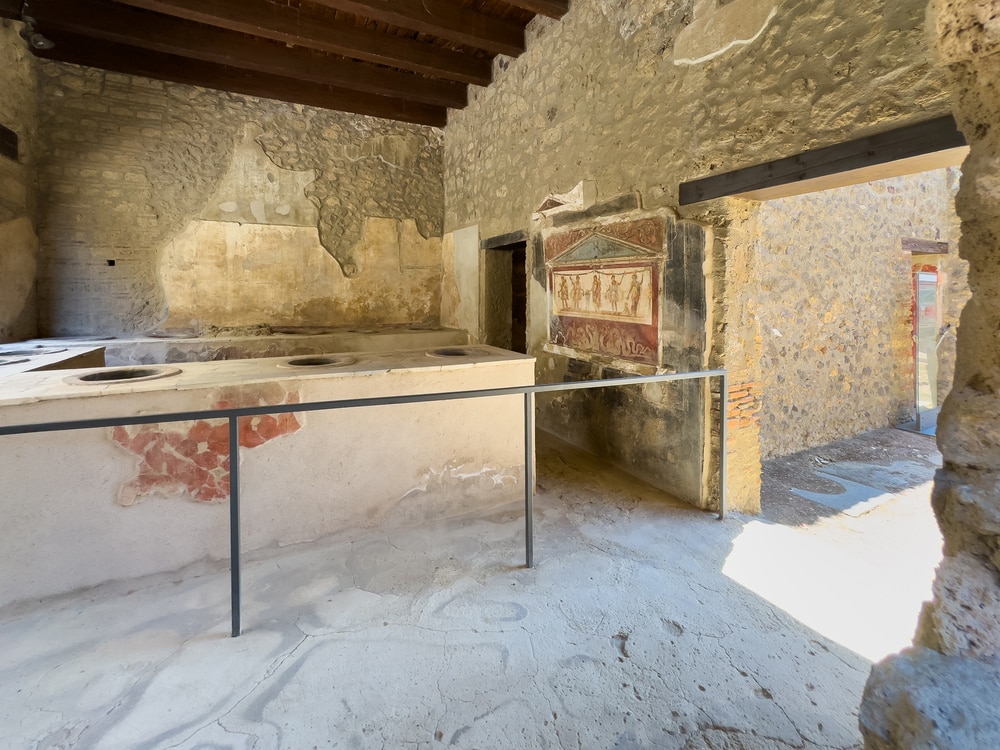
Leaving the Temple of Apollo and the adjacent monumental ruins of the Forum, the path leads directly into the bustling heart of Roman commercial life along Via dell’Abbondanza (Street of Abundance). This ancient high street connects the grand civic sanctuaries to the residential quarters, shifting the focus from public religion to daily business. Underfoot, heavy basalt pavers bear deep ruts carved by rolling chariot wheels, while raised stepping stones keep pedestrians out of the flowing rainwater. Faded red political graffiti and tavern signs still cling to the walls, where a continuous sequence of bakeries and workshops echoes with the pulse of a long-lost neighborhood.
The House of the Faun
Spanning an entire city block, the House of the Faun is a breathtaking example of elite Roman residential architecture. This aristocratic mansion reflects the immense wealth and high social status of its mysterious owners through its vast reception halls and twin courtyards. It famously housed the legendary Alexander Mosaic, a masterpiece depicting Alexander the Great in battle, and is named after the delicate bronze dancing faun statue in the atrium. Walking through its grand entrance offers an intimate glimpse into the lavish lifestyles of Pompeii’s ruling class.
The House of the Vettii
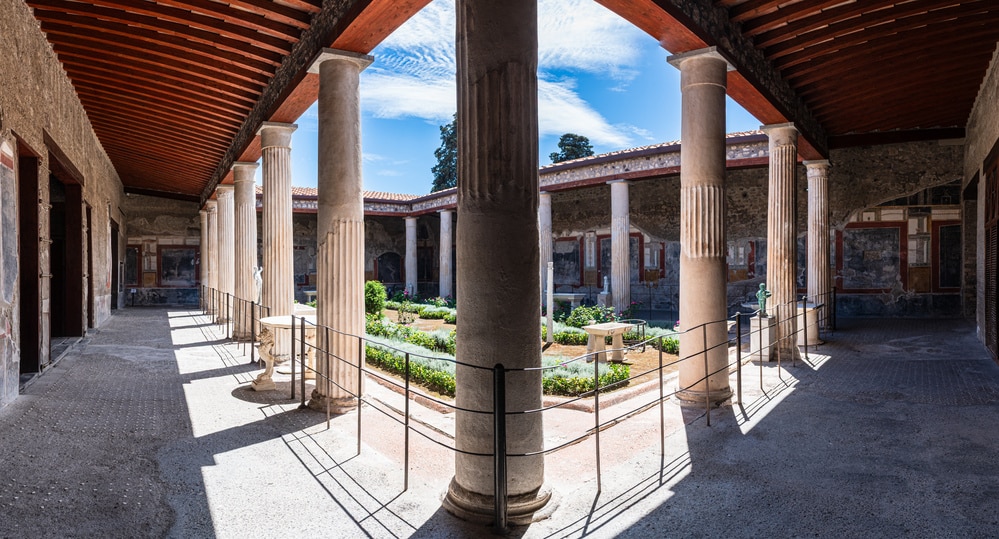
Having recently reopened after a meticulous multi-year restoration, the House of the Vettii is an absolute must-see. Belonging to two wealthy freedmen who climbed the social ladder, this residence is celebrated worldwide for its vibrant, incredibly preserved frescoes. The walls are adorned with elaborate mythological scenes, rich crimson borders, and playful cupids engaged in various ancient trades. The beautifully restored peristyle garden, complete with working fountains, showcases the Roman art of transforming a private home into a theatrical display of status.
The Villa of the Mysteries
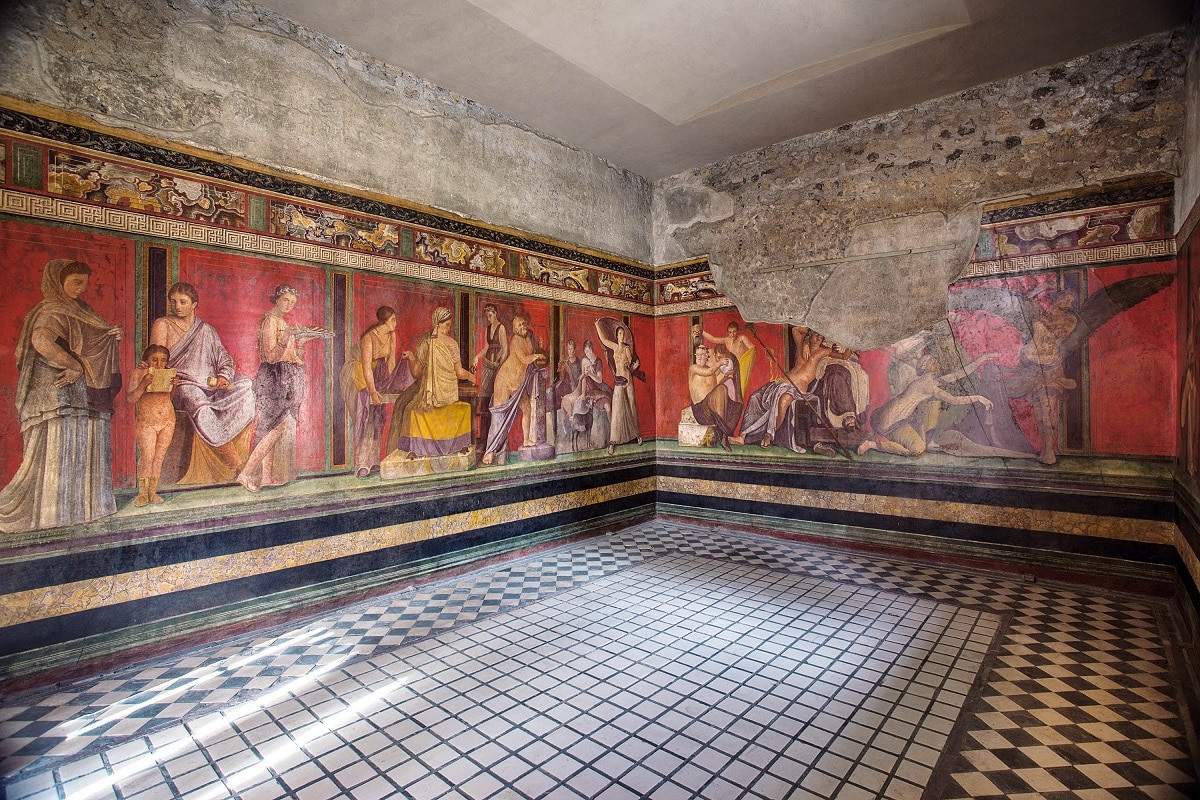
Located just outside the city walls, this suburban villa rewards travelers who venture slightly off the beaten path. The Villa of the Mysteries is world-famous for its extraordinary dining room, where vivid life-sized frescoes cover the walls. These breathtaking paintings depict a young woman undergoing a mysterious initiation ritual, likely associated with the cult of Dionysus. The intense Pompeian red background and the dramatic expressions of the painted figures create an immersive, almost mystical experience that remains unparalleled in ancient art.
The Stabian Baths
Public bathing was a cornerstone of Roman social culture, and the Stabian Baths show exactly how this ritual was enjoyed. As the oldest bathing complex in the city, it features a highly advanced heating system with hollow floors and walls circulating hot air. Visitors can wander through the cold, warm, and hot rooms, marveling at the intricate stucco decorations on the ceilings. It was a lively community center where citizens came not just to clean themselves, but to gossip, exercise, and negotiate business.
The Great Theatre and the Odeon
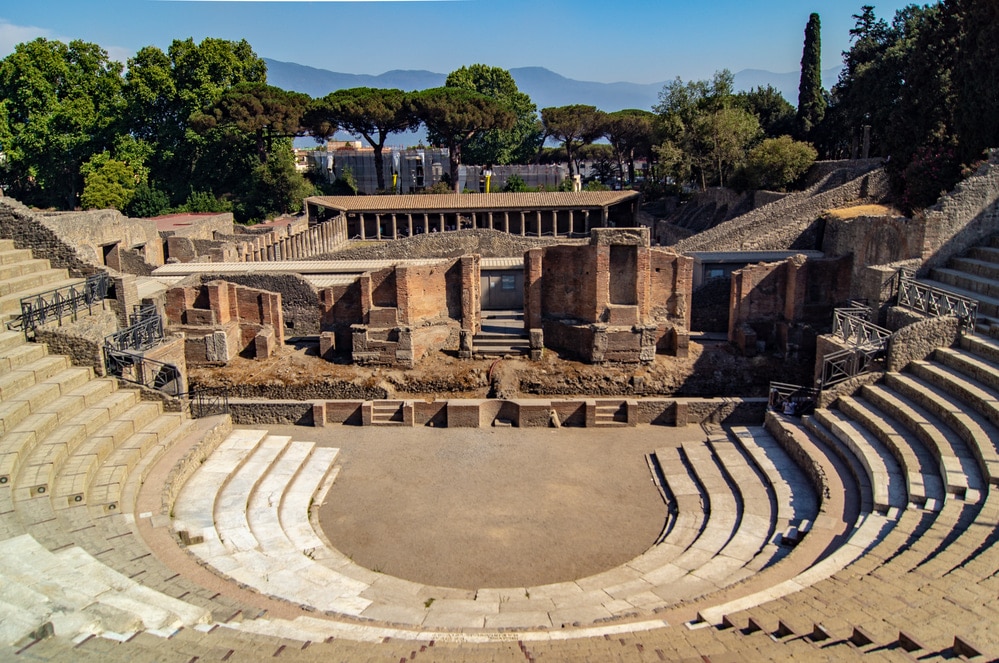
Pompeii’s love for the arts is beautifully preserved in its neighboring theatrical venues. The Great Theatre, carved directly into a natural hillside, could seat thousands of enthusiastic spectators for popular comedies and tragedies. Right next to it, the smaller, roofed Odeon hosted more intimate poetry readings and musical performances. The ancient stone tiers and semicircular stages still evoke the cheers, voices and music that once filled these remarkable performance spaces.
The Amphitheatre of Pompeii
Positioned at the far edge of the city to manage massive crowds, this is the oldest surviving Roman amphitheater. Long before the Colosseum in Rome was built, gladiators fought bloody battles in this grand stone arena. It could hold up to twenty thousand spectators, drawing visitors from all the neighboring towns for spectacular games. The route from the Forum to the amphitheatre crosses quieter residential streets and historic shopfronts, gradually revealing a less crowded and more intimate side of Pompeii.
The Garden of the Fugitives
This quiet garden serves as a deeply moving reminder of the human tragedy that unfolded in AD 79. Here, archaeologists discovered the voids left by thirteen victims who were overcome by toxic gases while trying to escape the eruption. By carefully injecting plaster into these hollows, they created hauntingly detailed casts of the citizens in their final moments. Preserved in desperate attempts to protect themselves, these figures give the tragedy an unmistakably human face and transform Pompeii from an archaeological site into a powerful memorial.
Practical tips for visiting Pompeii
A little preparation makes visiting Pompeii far more comfortable. The site is largely outdoors, with limited shade and uneven ancient streets, so practical planning helps you focus on the ruins rather than the logistics.
Planning the visit: optimal seasons and duration

A thorough exploration of Pompeii’s highlights requires at least four to five hours of walking. For deeper historical interest, dedicating an entire day allows for quiet wandering into outlying villas. Rather than attempting to see every single structure, focusing on a curated selection of key ruins ensures a much more rewarding journey. Experiencing this ancient urban space at a leisurely pace, rather than following a frantic checklist, remains the most effective approach.
Seasonally, the mild temperatures of spring and autumn provide the most comfortable conditions for navigating the open archaeological park. These shoulder months facilitate extensive walking without the intense heat of the Mediterranean summer. During July or August, commencing the tour precisely at the morning opening hour helps avoid high temperatures and heavy crowds. Alternatively, winter brings a peaceful atmosphere with minimal tourist traffic, though planning must account for shorter daylight hours and occasional coastal rain.
Tickets, entrances and advance booking
To avoid long queues, especially during weekends and peak travel seasons, booking tickets online in advance is highly recommended. The park features multiple entrance gates, with Porta Marina being the most popular and closest to the local train station. Selecting the correct gate based on the arrival method prevents unnecessary walking before the tour even begins. Hiring a certified local guide at the entrance is an excellent way to bring the fascinating history to life with engaging storytelling.
What to wear and bring during the visit

Wearing sturdy walking shoes with excellent grip is the single most important decision for a comfortable day. The ancient Roman basalt paving stones are highly irregular, often polished smooth by centuries of use, making them surprisingly slippery. Packing a reusable water bottle, high-factor sunscreen, and a wide-brimmed hat is essential to protect against the intense Mediterranean sun. Keeping luggage light is also advised, as large backpacks are prohibited inside the ruins and must be left at the cloakrooms.
Visiting Pompeii with children
The ancient city becomes an absolute paradise for families when the visit is framed as a thrilling treasure hunt. Exploring ancient stepping stones, preserved bakeries with stone ovens, and the grand gladiator arena naturally captivates young minds. Keeping the itinerary highly varied, taking frequent breaks in shaded areas, and focusing on the most interactive ruins ensures a balanced day. Bringing plenty of snacks and choosing a shorter, high-impact route maintains high energy levels, keeping everyone happy, curious, and motivated throughout the historic exploration.

How to spend a summer holiday in Italy with children
With its rich history, stunning landscapes, and delectable cuisine, Italy is a fantastic destination for family holidays. Summer provides the perfect opportunity to explore, as the weather is warm and inviting.
Where to eat near Pompeii
After hours of navigating the demanding stone streets and managing the physical logistics of the day, a transition to physical rest and local gastronomy becomes the natural next step. Fortunately, the modern town of Pompeii, situated directly outside the ancient archaeological gates, features an array of authentic local pizzerias, family-run trattorias, and quiet cafés. Selecting regional specialties like traditional Neapolitan pizza or fresh pasta dressed with locally grown San Marzano tomatoes ensures a genuine gastronomic experience. Bypassing the immediate tourist venues facing the main gates and walking a few streets inland leads to true Campanian hospitality and traditional flavors.

Best Places to Eat Pizza in Naples
Naples, Italy, is famed for its pizza, the birthplace of this iconic dish. Discover the best pizzerias, from historic spots to local favorites, perfect for any pizza enthusiast exploring the city.
What to see near Pompeii

With appetite and energy restored, the exploration of the region can easily extend beyond the ancient city walls into the wider wonders of Campania. Hiking to the spectacular crater of Mount Vesuvius provides breathtaking panoramic views over the Bay of Naples, while the nearby ruins of Herculaneum offer a differently preserved perspective on Roman life. To the north, the vibrant city of Naples houses world-class museums containing Pompeii’s original treasures, while to the south, Salerno serves as an elegant gateway to the stunning Amalfi Coast. These surrounding destinations expand the historical journey, serving as perfect regional hubs for a broader itinerary.
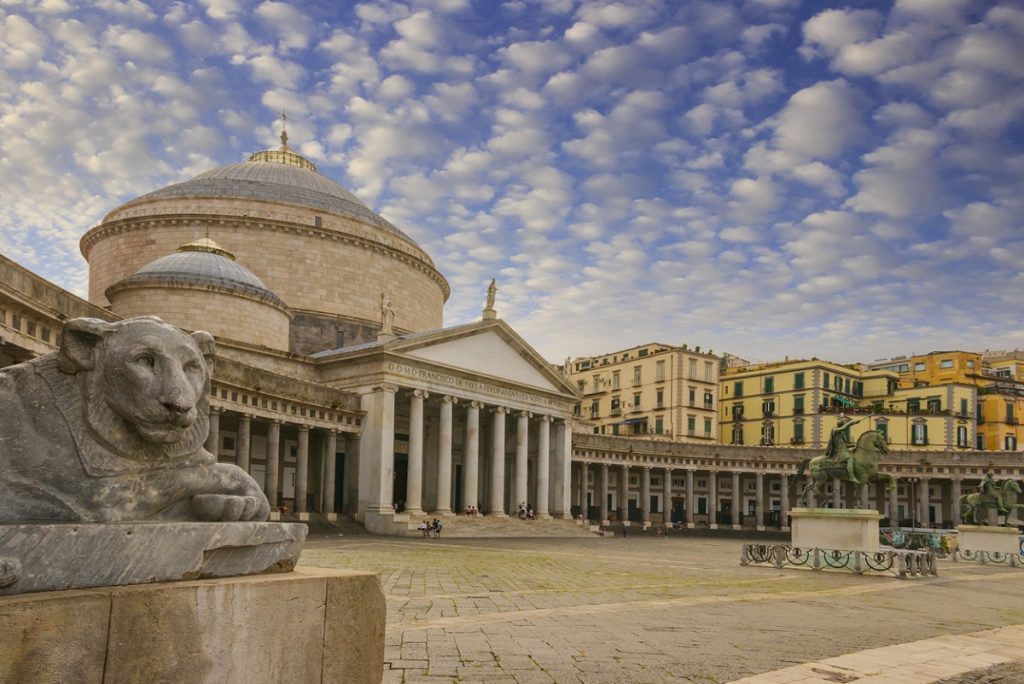
3-Day Itinerary in Naples
Can you explore Naples in just three days and see the highlights? Absolutely! Follow this itinerary to experience the best of this vibrant city.
How to reach Pompeii with Italo and Itabus
Travelling from major Italian cities to Pompeii
Pompeii is easy to reach with the combined Italo high-speed train and Itabus connections. Travellers departing from several major Italian cities can reach Napoli Centrale onboard Italo train and continue towards Pompeii by bus. Both parts of the journey can be purchased together, making it easier to organise the transfer without booking the train and bus separately.
Those already staying in Naples can reach Pompeii even using the local transport connections serving the modern town and the archaeological park. Leaving early in the morning provides enough time to explore the ruins at a relaxed pace before returning to the city in the evening.
Travelling from Salerno to Pompeii
Salerno is a useful alternative for travellers exploring the southern part of Italy. After reaching the city with Italo, the journey to Pompeii continues using local transport connections.
Unlike the combined Italo and Itabus service through Naples, this option requires a separate onward journey. It can nevertheless fit naturally into a broader itinerary combining Pompeii, Salerno and other destinations in Campania.
With an ancient Roman city waiting at the end of the journey, all that remains is to choose your departure point and set off on an unforgettable trip through history!