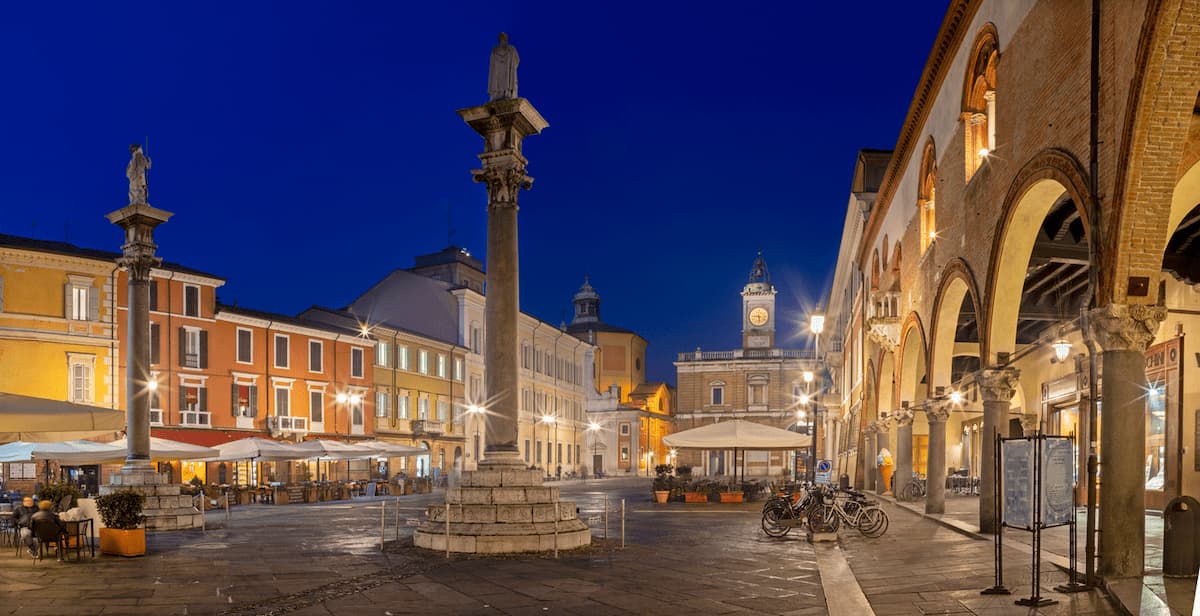
A west-to-south journey through Campania, moving from Naples’ urban energy to Salerno’s coastal atmosphere and onward through Agropoli, Sapri and Vallo della Lucania in the Cilento area. The route is designed around a gradual change of pace: first archaeology and city culture, then waterfront promenades, beaches, fishing traditions, hill towns and rural landscapes. Italo links the main bases with comfortable high-speed travel, leaving more time for the places themselves and keeping the journey practical, scenic and easy to follow.
- 1 14-Day Campania Itinerary Overview & Quick Snapshot
-
2
Day-by-Day Itinerary
- 2.1 Day 1 – Arrive in Naples and Discover Spaccanapoli
- 2.2 Day 2 – Naples Archaeology: the National Archaeological Museum and Underground City
- 2.3 Day 3 – Vomero Views, Street Food and the Bay of Naples
- 2.4 Day 4 – Italo Train to Salerno and the Historic Center
- 2.5 Day 5 – Salerno’s Waterfront, Gardens and Local Cuisine
- 2.6 Day 6 – Amalfi Coast Atmosphere from Salerno
- 2.7 Day 7 – Travel to Agropoli and Explore the Old Town
- 2.8 Day 8 – Agropoli’s Harbor, Beaches and Cilento Flavors
- 2.9 Day 9 – Paestum and the Greek Temples
- 2.10 Day 10 – Italo Train to Sapri and the Gulf of Policastro
- 2.11 Day 11 – Sapri’s Seafront and the Legend of Pisacane
- 2.12 Day 12 – Coastline Walks, Coves and Slow Cilento Living
- 2.13 Day 13 – Travel to Vallo della Lucania and Discover the Cilento Hinterland
- 2.14 Day 14 – Vallo della Lucania, Local Traditions and a Quiet Farewell
- 3 Extra Days & Beyond the Hub
- 4 Practical Travel Tips
- 5 Plan Your Campania Journey
14-Day Campania Itinerary Overview & Quick Snapshot
- Days 1–3: Naples
- Days 4–6: Salerno
- Days 7–9: Agropoli
- Days 10–12: Sapri
- Days 13–14: Vallo della Lucania
Main rail transfers:
- Naples → Salerno
- Salerno → Agropoli
- Agropoli → Sapri
- Sapri → Vallo della Lucania
Day-by-Day Itinerary
Day 1 – Arrive in Naples and Discover Spaccanapoli
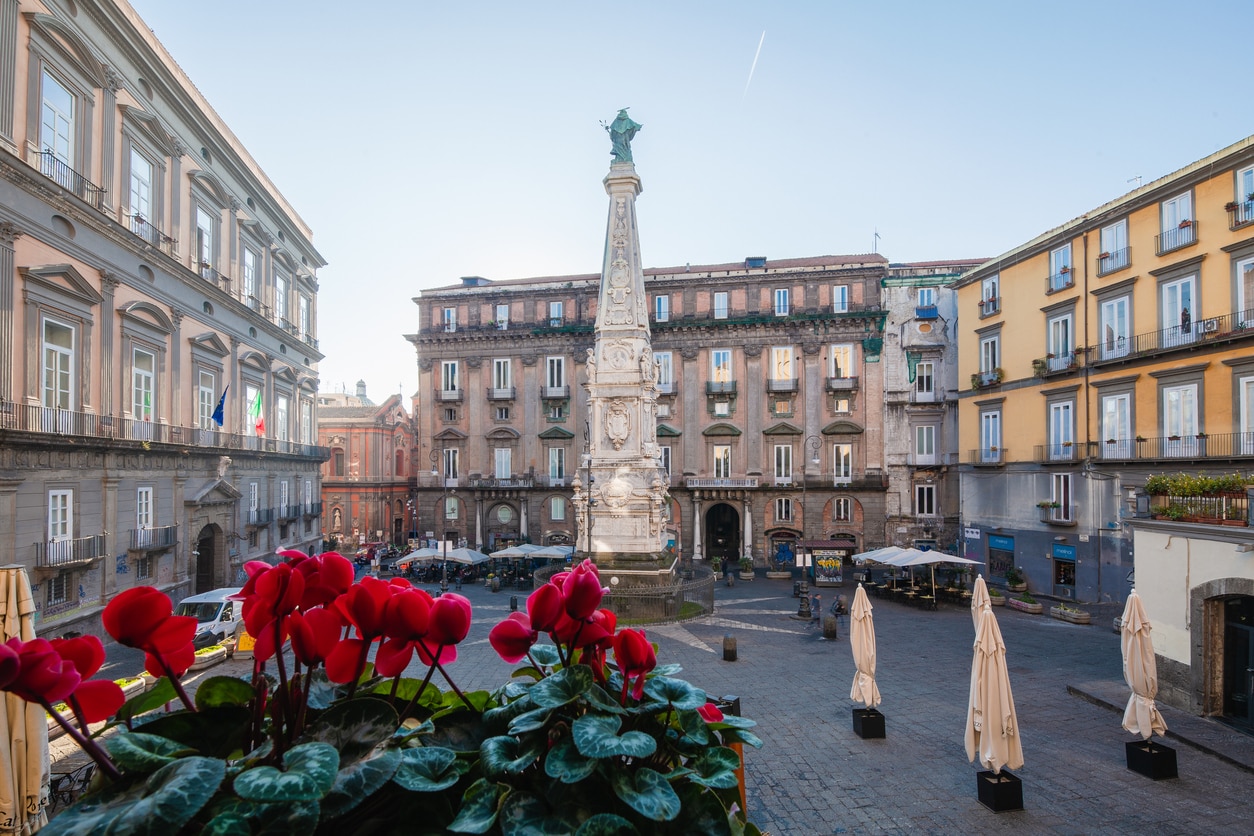
Your first afternoon in Naples begins amid the vibrant rhythm and narrow alleys of the historic center. Spaccanapoli provides a natural route through this UNESCO-listed district, passing centuries-old artisan workshops, stone-paved alleys, and quiet courtyards tucked behind heavy palace doors.
At Piazza del Gesù Nuovo, stop to admire the rusticated stone façade of its baroque church before stepping inside the peaceful majolica-tiled cloister of Santa Chiara. Continue toward San Domenico Maggiore, taking time to detour into Via San Gregorio Armeno, famous worldwide for its historic nativity craft workshops.
As evening approaches, make your way to Via dei Tribunali. Settle into a traditional neighborhood pizzeria for an authentic Neapolitan pizza, simple, fresh, and perfectly charred, paired with a glass of local Gragnano wine to mark your arrival.
Day 2 – Naples Archaeology: the National Archaeological Museum and Underground City
Start the morning at the National Archaeological Museum (MANN). Home to one of the world’s finest collections of Greco-Roman antiquity, its galleries display extraordinary mosaics, bronzes, and frescoes preserved from the ruins of Pompeii and Herculaneum.
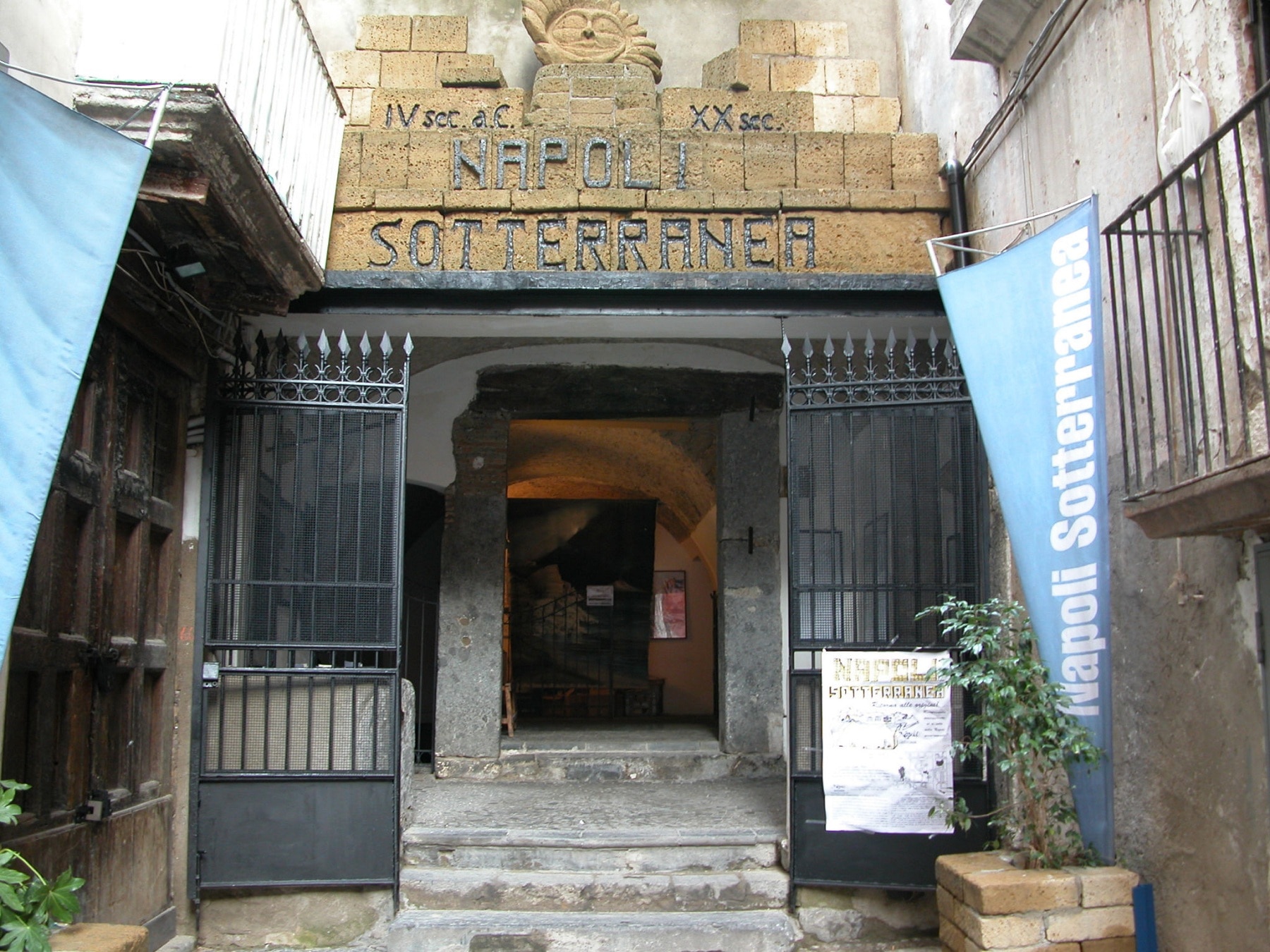
In the afternoon, trade the museum halls for the cool passages of Napoli Sotterranea. Descending dozens of meters below the modern streets, guided routes reveal ancient Greek aqueducts, Roman theater foundations, and air-raid shelters used during World War II.
Emerging back into the daylight, wind down around the lively outdoor tables of Piazza Bellini, framed by 4th-century BC Greek walls, before heading toward the Chiaia district for a quiet dinner away from the central bustle.
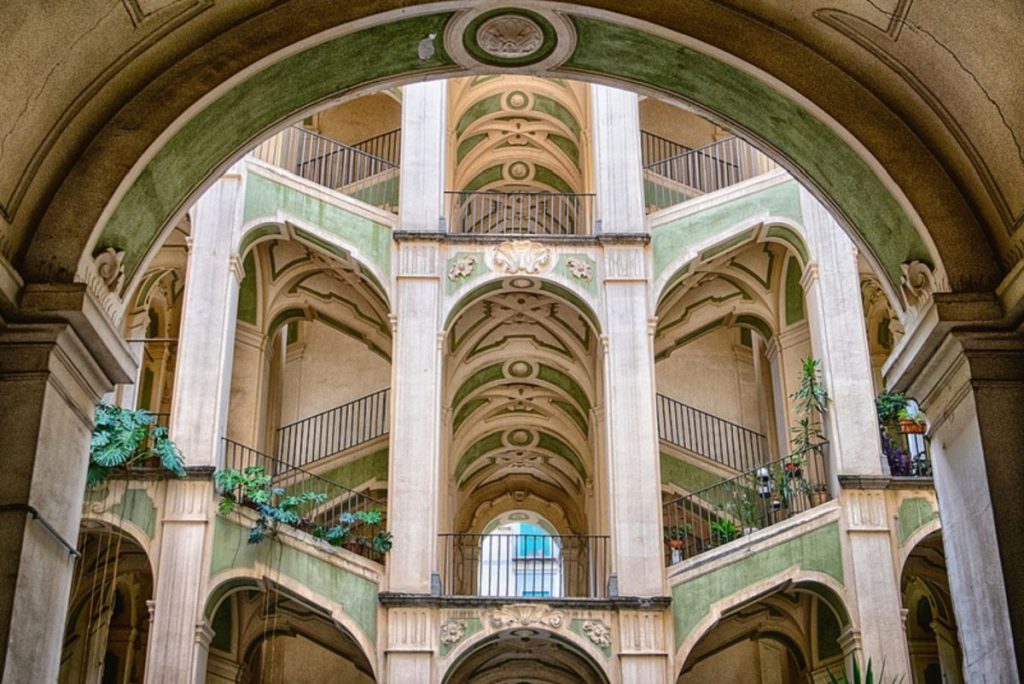
Secret Naples: five unusual places to visit and things to do in the city
Secret Naples: five unusual places to visit and things to do in the city
Day 3 – Vomero Views, Street Food and the Bay of Naples

A short funicular ride leads up to the hilltop Vomero district for sweeping views over the city skyline. From the stone ramparts of Castel Sant’Elmo, the entire Bay of Naples opens up, with Mount Vesuvius dominating the eastern horizon.
Just below the fortress walls sits the Certosa e Museo di San Martino, a former Carthusian monastery featuring tranquil cloisters and intricate baroque interiors. Its elevated gardens offer a quiet spot to take in the coastal scenery away from the street traffic below.
After descending back to the historic core, a warm sfogliatella pastry from a local bakery makes a simple afternoon pause.
Toward sunset, a walk through Piazza del Plebiscito leads down to the Santa Lucia promenade, where the evening lights reflect off the water around Castel dell’Ovo.

Best Places to Eat Pizza in Naples
Naples, Italy, is famed for its pizza, the birthplace of this iconic dish. Discover the best pizzerias, from historic spots to local favorites, perfect for any pizza enthusiast exploring the city.
Day 4 – Italo Train to Salerno and the Historic Center
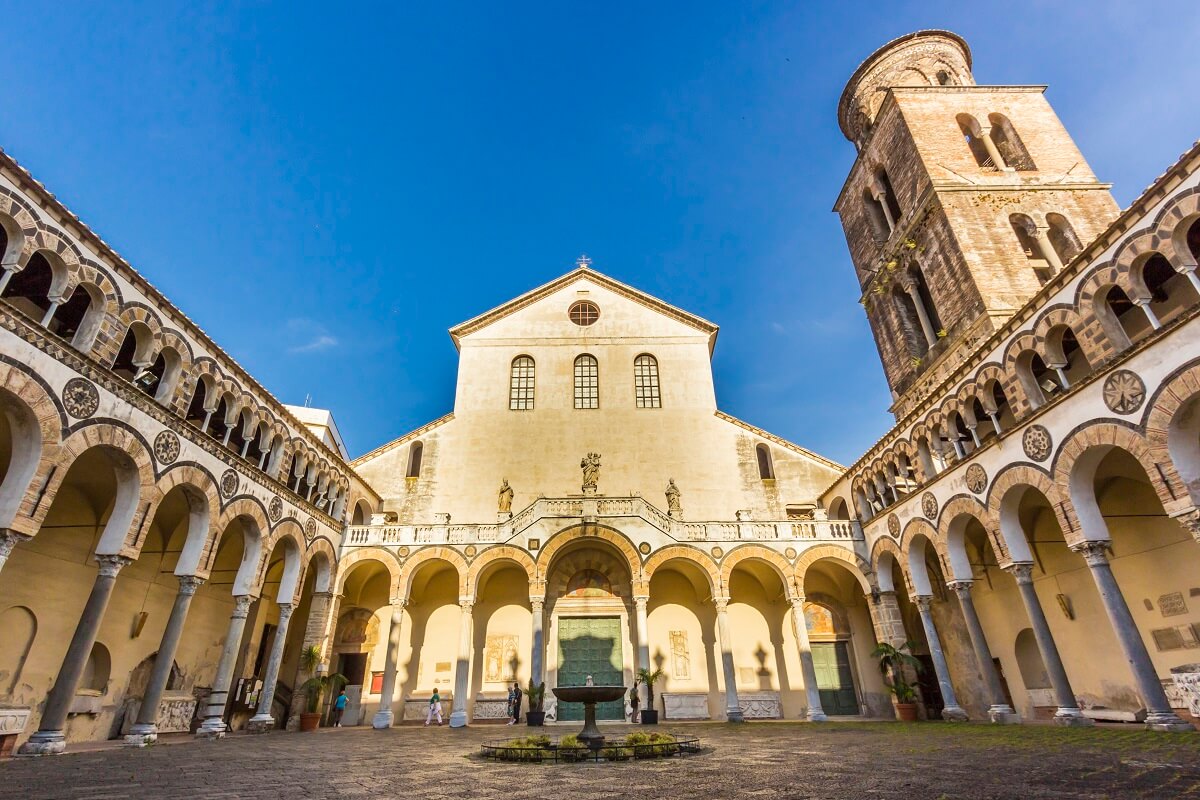
The High-Speed Italo train ride from Naples to Salerno traces the coast south, marking a transition to a more relaxed coastal pace. After checking in, Via dei Mercanti serves as an inviting starting point, leading through a pedestrian medieval quarter lined with small boutiques, craft shops, and cafés.
Inside the Duomo of Salerno, a magnificent columned atrium opens into a quiet interior featuring remarkable 12th-century mosaics and a marble-clad crypt. From the cathedral, stone-paved alleys wind uphill to the Giardino della Minerva, a terraced botanical garden where medieval physicians cultivated medicinal plants overlooking the gulf.
As dusk settles, local life gathers along Corso Vittorio Emanuele, offering a pleasant atmosphere for an early evening drink before dining in the old town.
Day 5 – Salerno’s Waterfront, Gardens and Local Cuisine

Morning in Salerno is best spent along the broad, palm-lined Lungomare Trieste, an expansive seafront promenade stretching beside the water with open views toward the Cilento hills.
High above the rooftops, the Castello di Arechi dominates the landscape. Exploring this ancient Byzantine-Lombard fortress provides an extraordinary perspective over the Gulf of Salerno, along with museum exhibits detailing the region’s medieval defenses.
Back in the town center, lunch at a coastal osteria highlights fresh seafood and seasonal vegetables.
The afternoon continues with an unhurried visit to the San Pietro a Corte archaeological complex, home to ancient Roman baths and early medieval chapel ruins, leaving the evening free for dinner near Piazza Portanova.
Day 6 – Amalfi Coast Atmosphere from Salerno
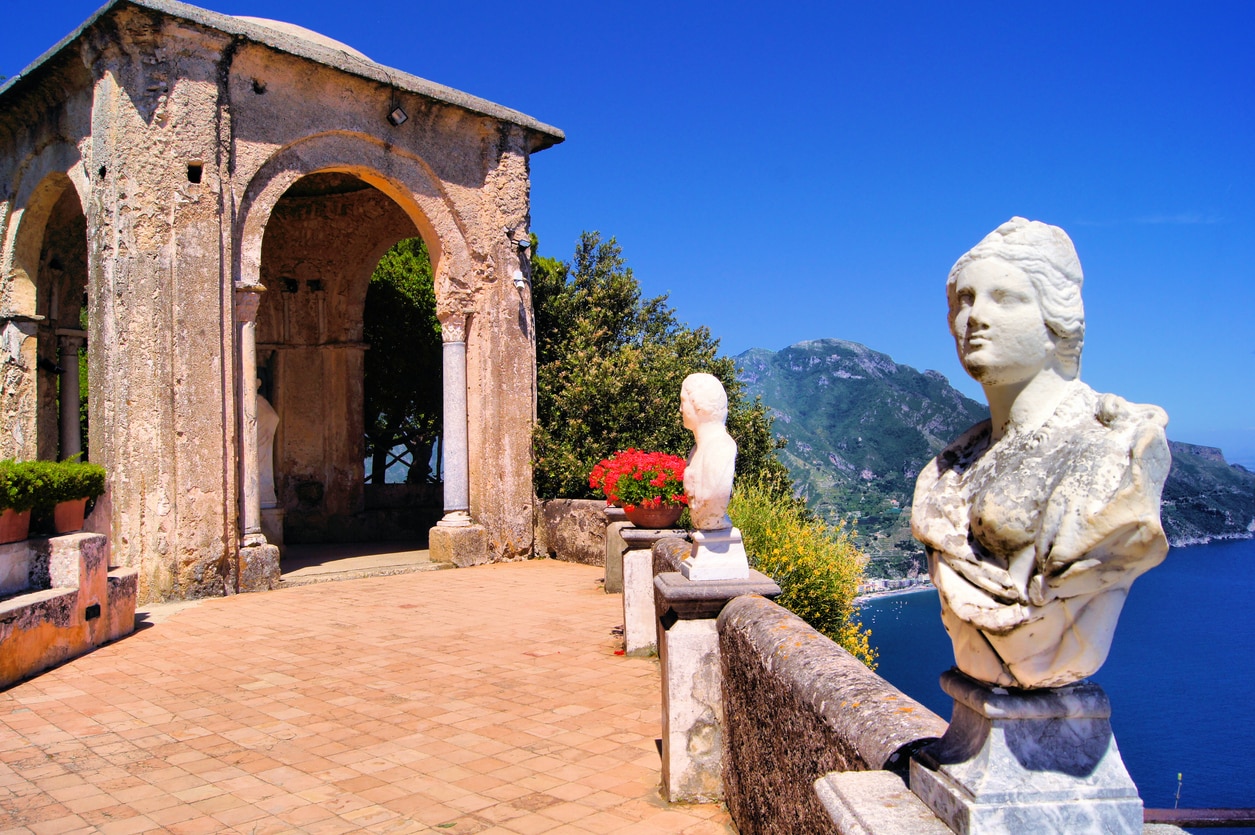
Salerno’s maritime hub provides an ideal jumping-off point for exploring the Amalfi Coast without changing hotels. From Molo Manfredi, seasonal ferries trace the dramatic coastline by sea, offering spectacular cliffside views while bypassing the heavy road traffic.
Upon arriving in Amalfi, the path leading inland up the Mill Valley reaches the Museo della Carta, a preserved medieval paper mill tucked away from the main square. A short bus ride higher up the cliffs leads to Ravello and Villa Cimbrone, where stone walkways wind through quiet gardens toward the cliffside Infinity Terrace (Terrazza dell’Infinito).
During the boat ride back, the dramatic rock fissure of Furore Fjord and the quiet fishing cove of Erchie stand out along the shoreline. The day ends back on land near Piazza Portanova in Salerno for a relaxed coastal dinner.
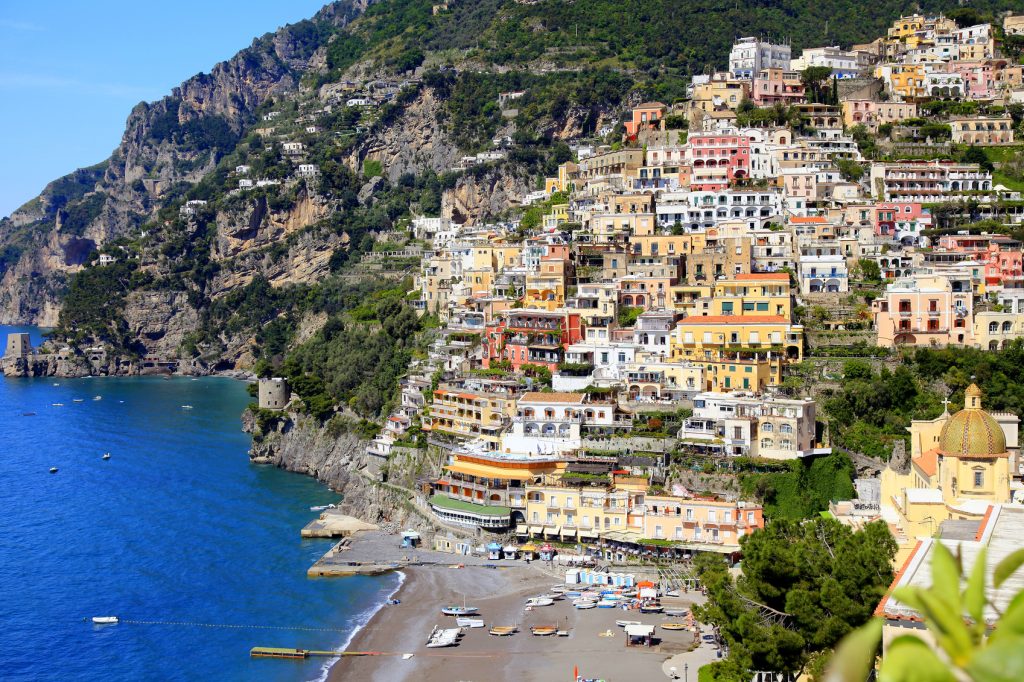
Amalfi Coast guide: what to see, do and explore along the coast
The Amalfi Coast rewards travellers who look beyond its most famous views.
Between towns shaped by the sea and hillside paths, every stop offers a new way to experience the landscape.
From local traditions and beaches to villages with distinct personalities,
a well-planned journey reveals a coastline far richer than its postcard image.
Day 7 – Travel to Agropoli and Explore the Old Town
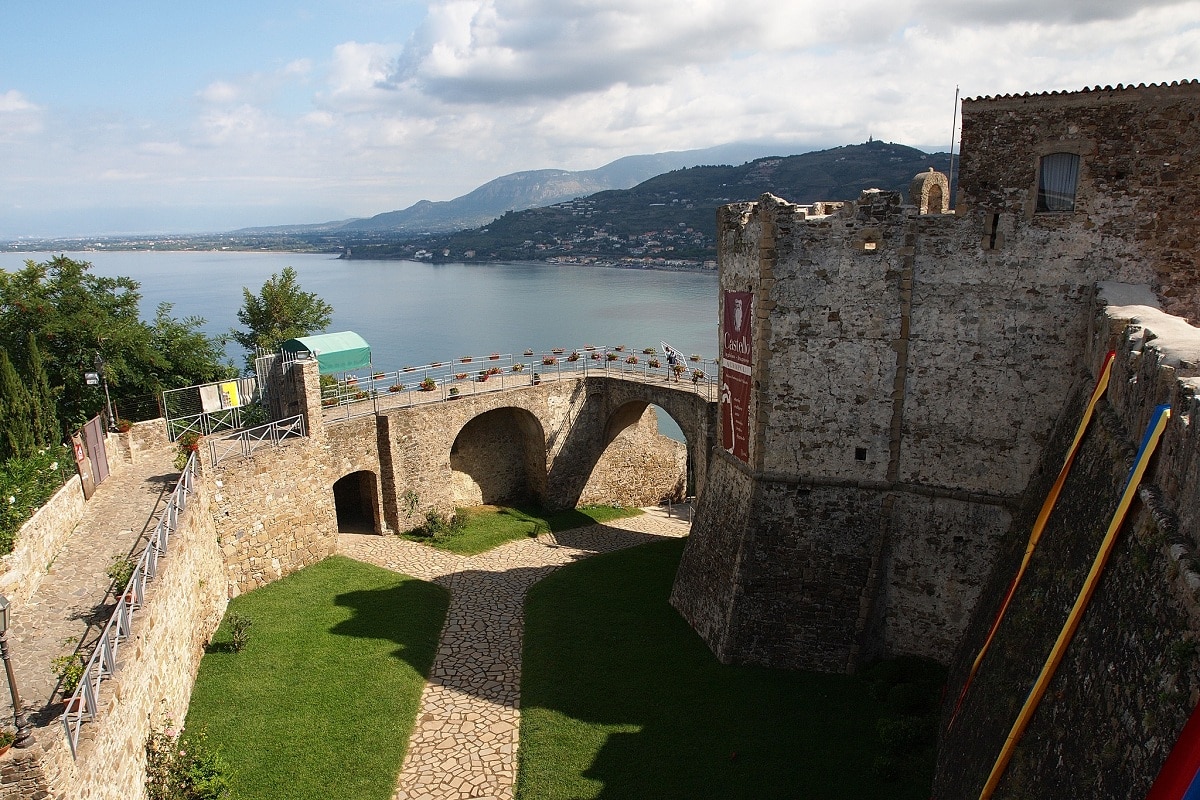
A quick High-Speed Italo train ride brings the journey to Agropoli, the gateway to the Cilento region. Above the modern lower town, the historic quarter stands behind an ancient stone gate, where stepped alleys climb past white-washed houses toward the Agropoli Castle.
From the castle ramparts, the view opens over the fishing harbor and the crescent-shaped coastline below. The surrounding lanes feature small squares and stone benches, encouraging a slow walk back down toward the water.
In the evening, local life centers around the small harbor promenade. Settle into a waterfront table for a dinner of freshly caught local fish as the sun dips behind the headland.
Day 8 – Agropoli’s Harbor, Beaches and Cilento Flavors

Mornings in Agropoli begin naturally along the shoreline. Instead of a busy sightseeing schedule, the day favors a walk toward the Trentova Bay, a protected natural area known for its turquoise waters and coastal vegetation.
A hiking trail from the bay leads along the wooded slopes of Punta del Tresino, passing olive groves, coastal pines, and old stone watchtowers used to spot pirate ships in centuries past. The elevated path offers quiet sea views away from populated beach areas.
After returning to town, the afternoon remains completely open for a coffee in the main square or a quiet hour by the water. Dinner in the old town highlights simple local dishes, accompanied by olive oil and wine produced in the surrounding Cilento hills.
Day 9 – Paestum and the Greek Temples
Today’s excursion leads to Paestum and its monumental Greek temples dedicated to Hera, Poseidon, and Athena, and becomes striking as you walk along the original Roman paved roads.
Inside the adjacent Archaeological Museum of Paestum, delicate painted tomb slabs (including the famous Tomb of the Diver) and terracotta votive statues offer a personal look at ancient Greek and Lucanian life.
After hours among ancient ruins, a stop at a nearby dairy farm (caseificio) introduces the authentic production of Mozzarella di Bufala Campana. Fresh cheese, tomatoes, and local crusty bread provide a classic mid-day meal before returning to Agropoli.

Five experiences in Cilento: an inland journey through history, art and nature
The sea is not Cileto’s only jewel, it has natural parks, archaeological sites, and medieval villages. Come with us and discover five places to visit in Cilento that will leave you absolutely breathless!
Day 10 – Italo Train to Sapri and the Gulf of Policastro

The southern train route onboard Italo follows the very edge of the coastline toward Sapri. From the train window, the scenery shifts as sandy beaches give way to the rugged limestone cliffs and dense forests of the Cilento coast.
Upon arrival at Sapri’s station, a walk through Piazza Plebiscito leads toward the sweeping horseshoe bay. The main shopping street, Corso Umberto I, leads directly to the municipal gardens and the waterfront promenade.
Down at the small fishing harbor on the eastern end of the bay, family-run kiosks serve fresh anchovy skewers and grilled squid straight off the morning boats, offering an immediate introduction to the town’s maritime heritage.
Day 11 – Sapri’s Seafront and the Legend of Pisacane
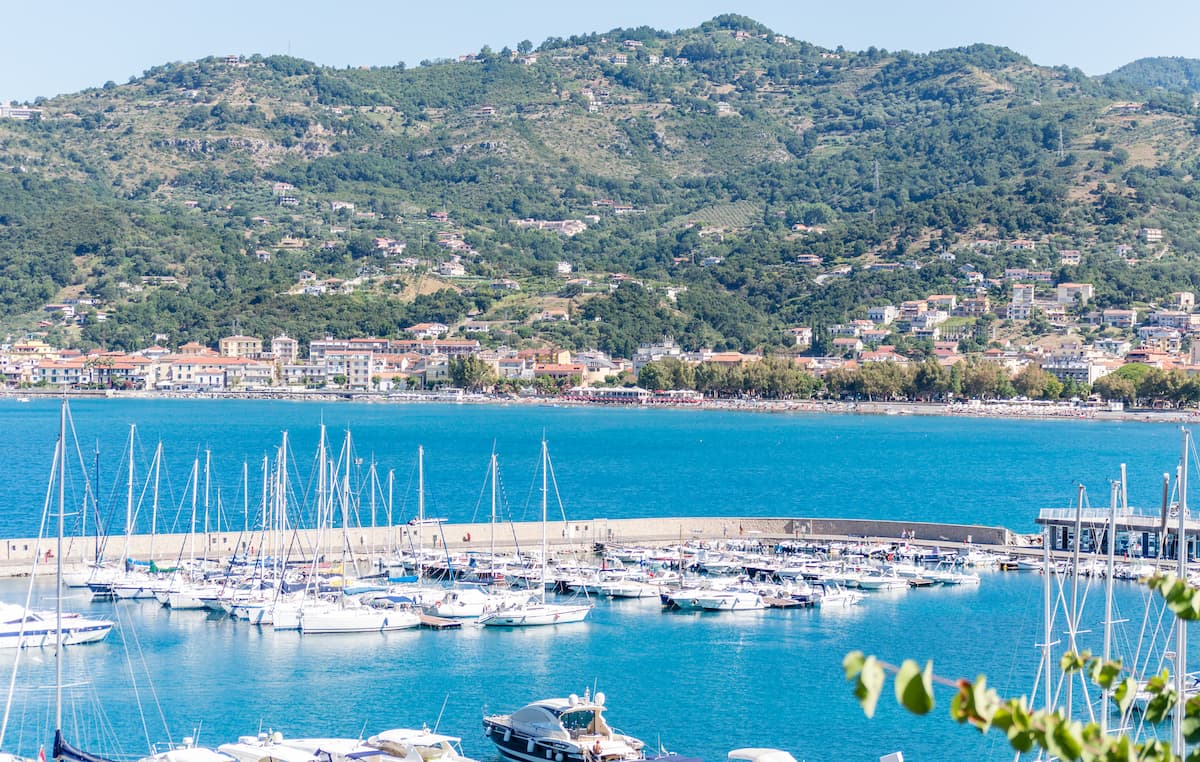
Morning light along the seaside promenade highlights the Statue of the Gleaner (La Spigolatrice), perched on a rocky outcrop in the water. The bronze monument honors Carlo Pisacane’s ill-fated 1857 expedition against Bourbon rule, a pivotal chapter in Risorgimento history.
Inland from the seafront, quiet lanes lead to Piazza San Giovanni, the historic core of Sapri. Exploring this older neighborhood reveals stone archways, narrow alleys, and the Specola di Sapri, a 19th-century astronomical tower built by local priests.
As evening approaches, the town’s culinary focus turns to its rustic roots. A traditional neighborhood trattoria offers a bowl of lagane e ceci—a regional handmade pasta served with chickpeas and wild oregano—reflecting the deep agricultural traditions of the surrounding hills.
Day 12 – Coastline Walks, Coves and Slow Cilento Living
Dedicate your final day to the Apprezzami L’Asino trail, a historic cliffside mule path that once served as the sole trade route connecting southern Campania to Basilicata. The track winds through fragrant Mediterranean scrub, past wild rosemary and limestone crags, before dropping down to the pebbled beach of Cala del Caicco. It is a secluded spot to spend the morning swimming in clear waters or exploring the sea caves carved into the cliff face.
By late afternoon, local life moves to the outdoor terraces along the bay. A glass of chilled Fiano Cilento makes a fitting companion for a quiet pause before a sunset walk to the Punta del Fortino lighthouse, where fishing boats return to the harbor as dusk falls.
Day 13 – Travel to Vallo della Lucania and Discover the Cilento Hinterland
Leave the coast behind as the train climbs inland toward Vallo della Lucania-Castelnuovo station, where olive groves and chestnut forests replace the sea views. Take a short local bus or taxi into the historic heart of Vallo, starting at Piazza Vittorio Emanuele II, the bustling town square lined with outdoor cafés and historic townhouses.
Just outside the town center lies the Badia di San Pantaleone in Pattano, one of the best-preserved Byzantine-Italo-Greek monastic complexes in southern Italy, easily recognized by its distinctive 10th-century stone bell tower. Back in town, the artisan shops along Via Pinto display local crafts and regional specialties like Mozzarella nella Mortella (buffalo mozzarella wrapped in myrtle branches).
Evening in the mountains calls for an authentic inland dinner. A cozy osteria provides the ideal setting to try Fusilli Cilentani—handmade pasta rolled around an iron rod and served with a slow-cooked goat ragù.
Day 14 – Vallo della Lucania, Local Traditions and a Quiet Farewell

Spend your final morning enjoying a slower pace in the shadow of Mount Gelbison. Walk up to the Church of Santa Maria delle Grazie for a panoramic view over the surrounding Alento Valley and the surrounding peaks of the Cilento National Park.
If time allows before departure, a brief ride leads up to Novi Velia, a medieval hamlet perched on a rocky ridge above Vallo, where cobblestone alleys lead to an ancient Norman tower.
Before returning to the station, a quick stop at a local shop provides a chance to pack edible souvenirs such as wild Cilento oregano, aged cacioricotta, or local olive oil. From Vallo della Lucania-Castelnuovo station, the direct Italo connection brings you seamlessly back north to Naples or Rome, making the return journey as effortless as the arrival.
Extra Days & Beyond the Hub
These suggestions are additional days and are not included in the core 14-day itinerary. They can be added between stops or scheduled after Day 14.
Between Naples and Salerno: Pompeii or Herculaneum
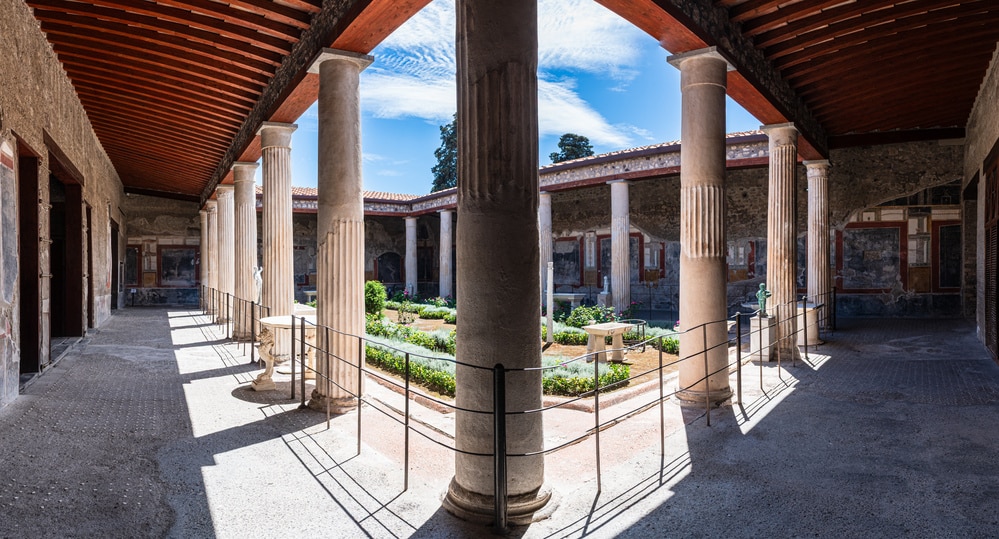
Pompeii and Herculaneum offer two completely different ways to experience Roman history. Covering a massive city layout, Pompeii takes a full day of walking through forums, temples, and ancient streets. Herculaneum, by contrast, fits easily into a morning, its smaller footprint holds remarkably preserved wooden roofs and intact upper floors. Pick just one; both tie directly into the artifacts seen at Naples’ MANN museum.
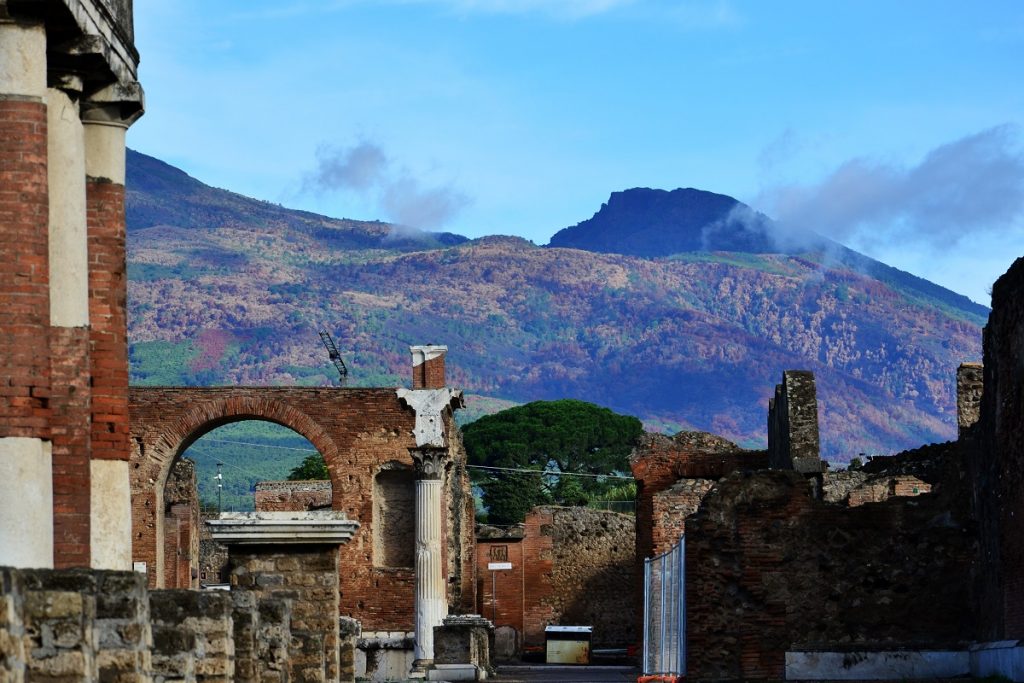
Pompeii travel guide: must-see ruins and tips for visiting
Step back in time to AD 79 with Pompeii’s ruins. From the political heart of the Forum to the moving Garden of the Fugitives, the site reveals the secrets of a Roman city frozen in time. Discover hidden frescoes, skip-the-line tips, and the ultimate travel routes to make your journey through history truly unforgettable.
Discovering Castellabate among Salerno and Agropoli

Perched on a hilltop above the Cilento coastline, the medieval village of Castellabate is ideal for a half-day stop between Salerno and Agropoli. Stepped alleys lead through stone arches up to the 12th-century castle terraces, offering clear views over the sea below. Grab a late lunch in the shade of Piazza X Luglio before taking the winding road down toward Agropoli.
Palinuro: exploring Coves, Caves and Coastal Views
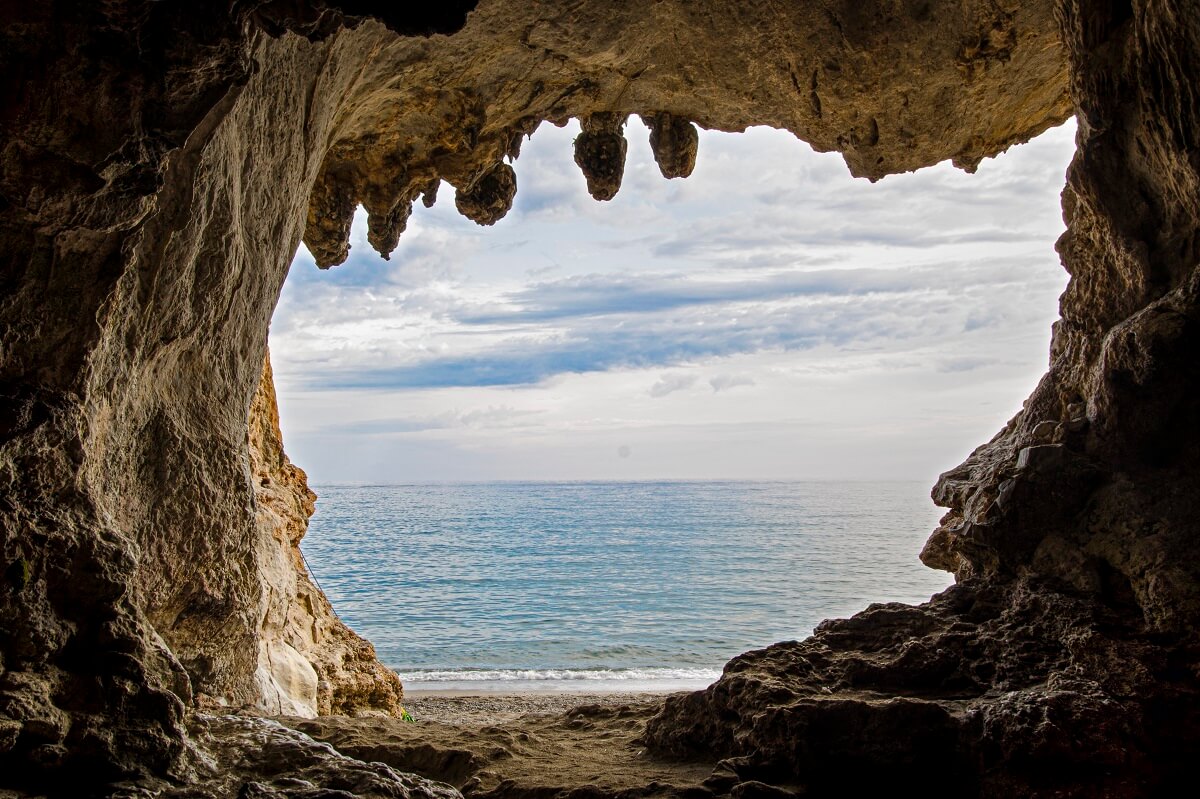
For a day focused purely on the sea, Palinuro brings a drastic change of scenery. Small local boats leave the harbor regularly to visit the Capo Palinuro sea caves, including the famously luminous Grotta Azzurra. Because boat trips depend heavily on weather and sea conditions, treat this as an optional excursion rather than a fixed milestone in your schedule.
Practical Travel Tips

- Book Italo tickets in advance: Reservations are particularly useful for summer weekends and holiday periods. Early booking usually provides a wider choice of departure times and fares, while traveling outside peak hours can make the rail journeys more relaxed.
- Pack light: The itinerary includes several hotel changes, walks through historic centers and local transfers. A compact suitcase or sturdy carry-on will be easier to manage than heavy luggage.
- Leave time for local connections: Buses, taxis and seasonal boats may run less frequently than trains once you leave the main stations. Coastal journeys can also take longer than the map suggests.
- Balance active days with slower experiences: Alternate archaeological sites and city visits with time for beaches, villages, Cilento landscapes and local food. This changing rhythm keeps the tour varied without making every day feel rushed.
Plan Your Campania Journey
Ready to leave Naples behind and follow the coast toward the quieter landscapes of Cilento? Check Italo schedules and plan your journey through Salerno, Agropoli, Sapri and Vallo della Lucania, traveling comfortably from one distinctive corner of Campania to the next.
With the main rail transfers arranged in advance, you can spend your energy where it belongs: exploring ancient temples, walking beside the sea and lingering over Campanian meals. Historic cities, hidden coves and hillside villages are waiting along the way.