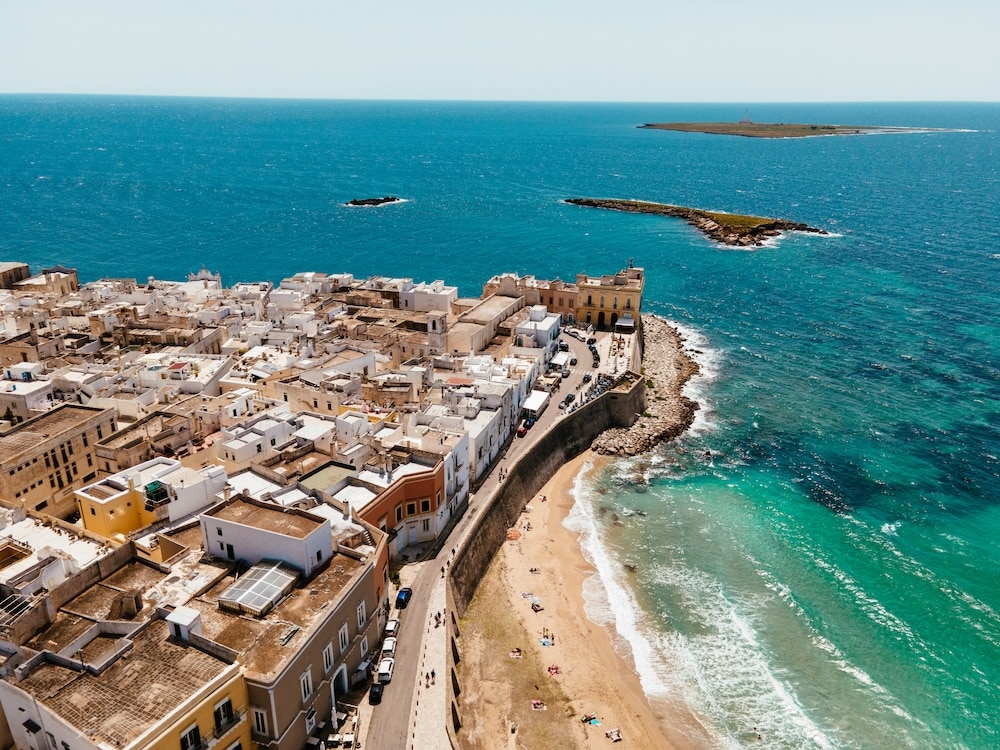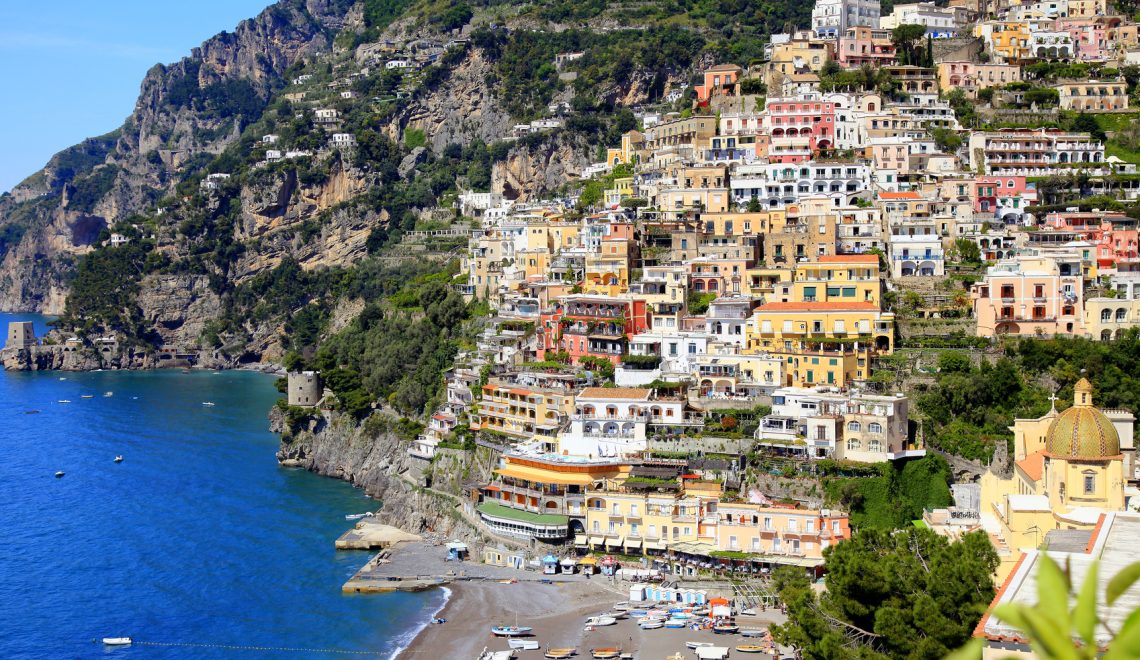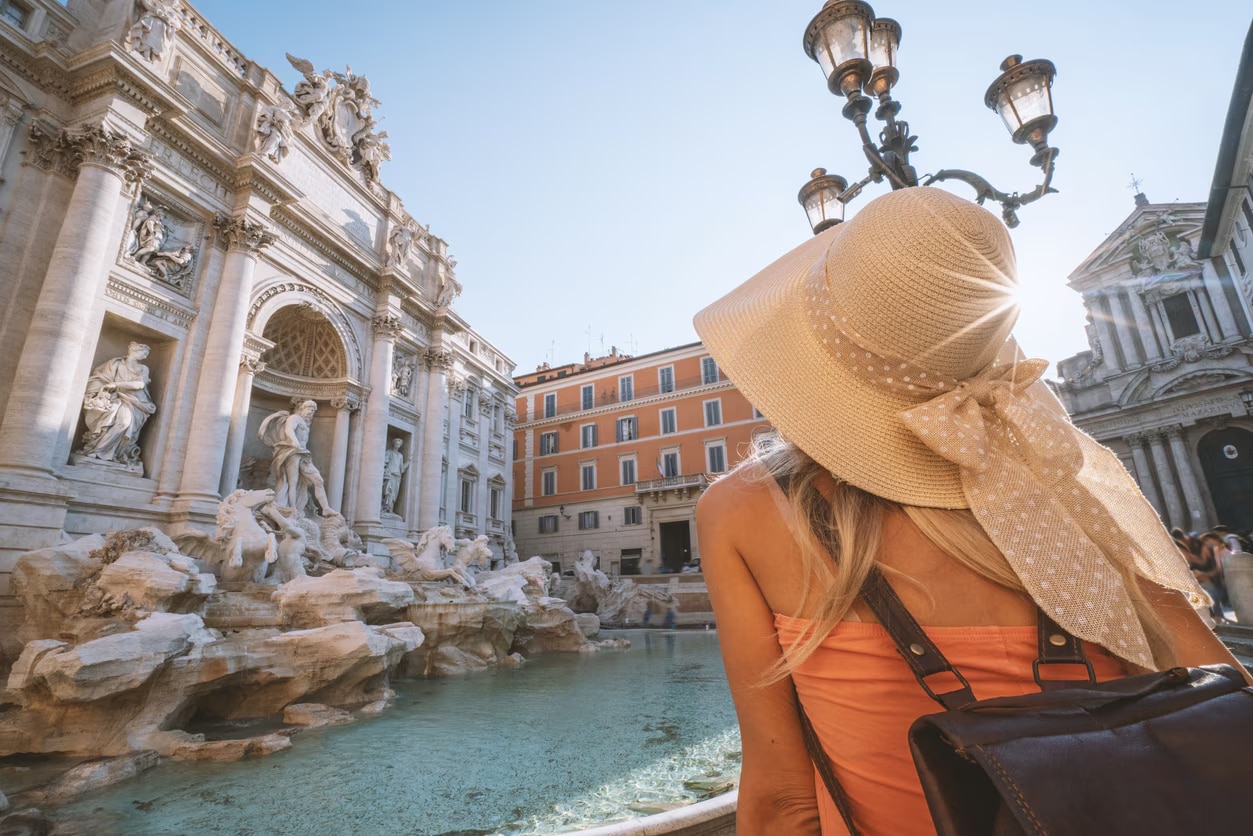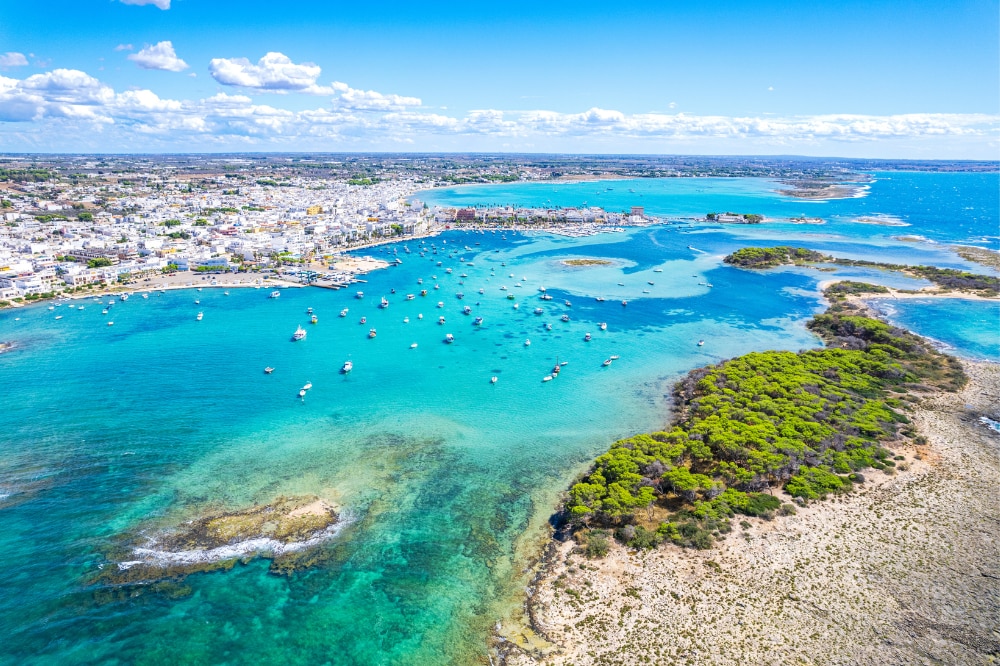
This northbound itinerary follows one clear line through Puglia, connecting the Adriatic gateway of Bari with the historic cities of Trani and Barletta before reaching Foggia and the landscapes of the Tavoliere. Direct Italo trains make the transfers between the four main bases comfortable and straightforward, leaving more time to explore Romanesque architecture, medieval history, coastal culture and the food traditions shared by the region’s cities and countryside.
- 1 14-Day Historic Puglia Itinerary Overview & Quick Snapshot
-
2
Day-by-Day Itinerary
- 2.1 Day 1 – Arrive in Bari and Explore Bari Vecchia
- 2.2 Day 2 – Basilica of Saint Nicholas, the Cathedral and the Seafront
- 2.3 Day 3 – Bari’s Food Traditions and Local Markets
- 2.4 Day 4 – Murat District, Theaters and Everyday Bari
- 2.5 Day 5 – A Slow Final Day in Bari
- 2.6 Day 6 – Italo Train to Trani and the Cathedral by the Sea
- 2.7 Day 7 – Trani’s Harbor, Historic Center and Jewish Quarter
- 2.8 Day 8 – Castles, Palaces and Coastal Walks in Trani
- 2.9 Day 9 – Seafood, Local Wines and Trani at Sunset
- 2.10 Day 10 – Travel to Barletta and Discover the Old Town
- 2.11 Day 11 – Barletta’s Colossus, Castle and Medieval Heritage
- 2.12 Day 12 – Art, Theater and the Adriatic Atmosphere
- 2.13 Day 13 – Italo Train to Foggia and the Tavoliere Landscape
- 2.14 Day 14 – Foggia’s History, Markets and Regional Flavors
- 3 Extra Days & Beyond the Hub
- 4 Practical Travel Tips
- 5 Start your historic Puglia journey with Italo
14-Day Historic Puglia Itinerary Overview & Quick Snapshot
- Days 1–5: Bari
- Days 6–9: Trani
- Days 10–12: Barletta
- Days 13–14: Foggia
Main rail transfers:
- Bari → Trani
- Trani → Barletta
- Barletta → Foggia
Day-by-Day Itinerary
Day 1 – Arrive in Bari and Explore Bari Vecchia
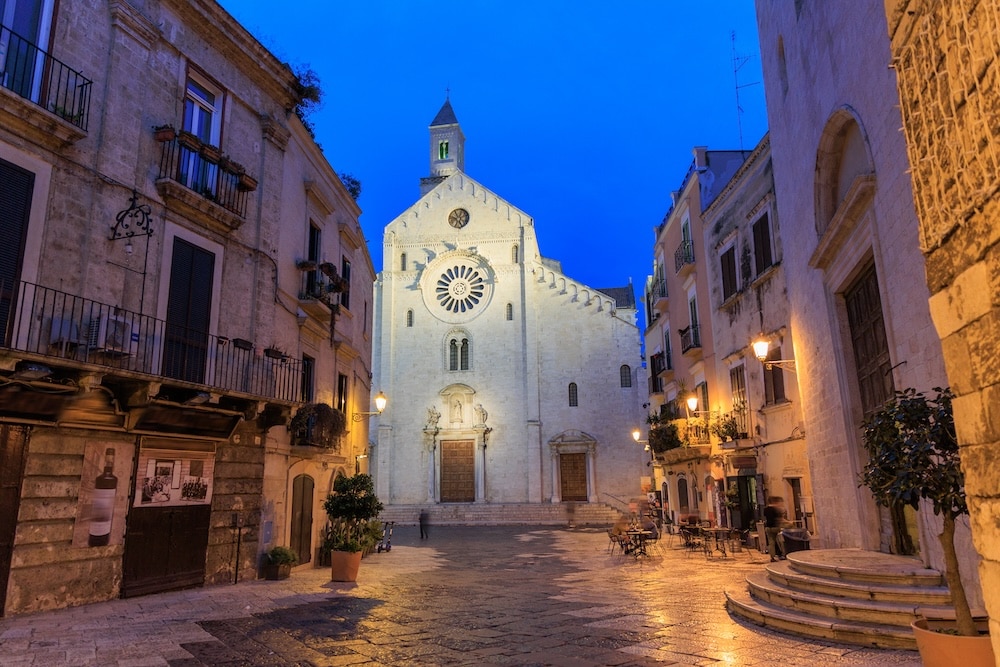
Check in near Bari Centrale or on the edge of the old town, then resist the urge to cover too much. Your first walk should be about orientation: cross the Murat grid, pass Piazza del Ferrarese and enter Bari Vecchia through its web of lanes. Laundry hangs above stone archways, small shrines appear at corners and the city’s domestic life carries on beside centuries-old churches.
Follow the old walls toward Piazza Mercantile and the seafront, pausing for focaccia barese from a neighborhood bakery. The classic version, pressed with tomatoes and olives, is substantial enough for a light lunch.
A traditional trattoria in Bari Vecchia offers a quiet taste of regional cooking. Seasonality guides the menu: orecchiette with bitter turnip greens when autumn arrives, or light tomato sauces during the warmer months.
Day 2 – Basilica of Saint Nicholas, the Cathedral and the Seafront
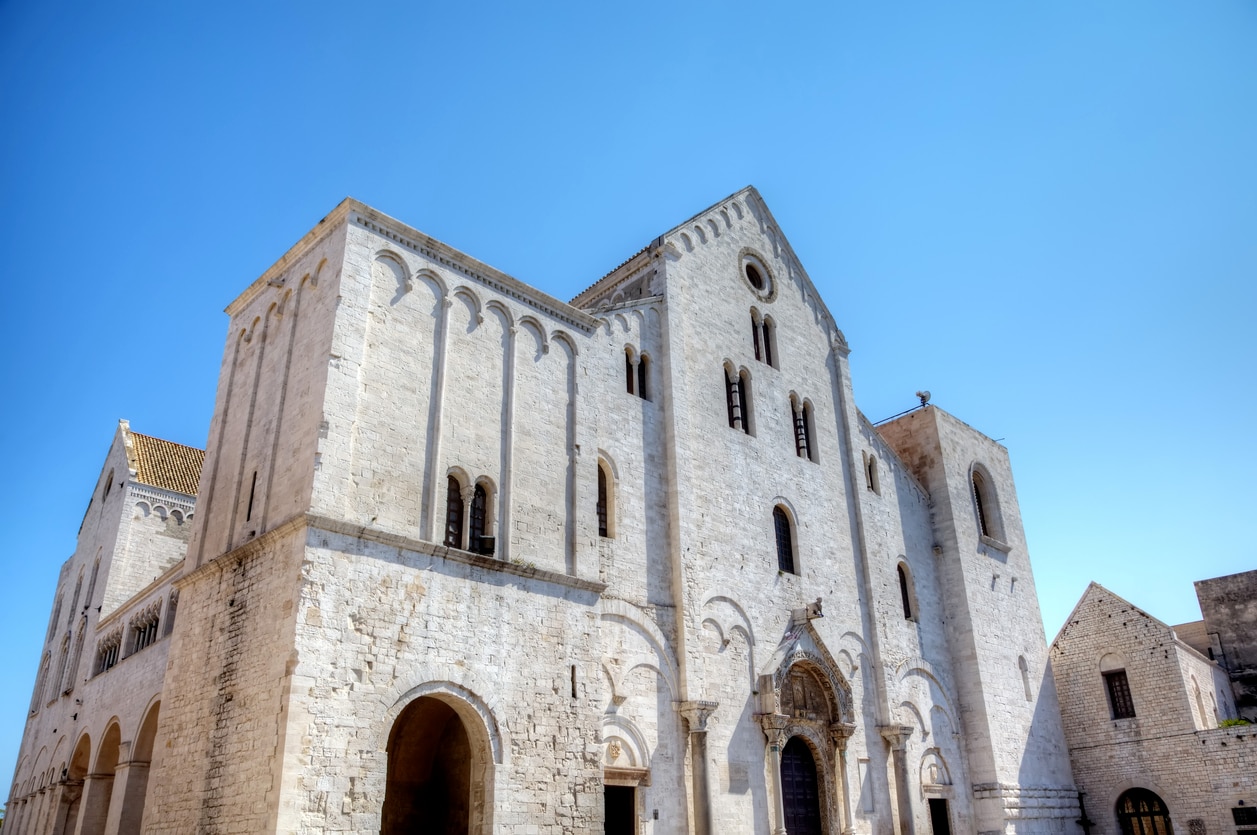
Begin at the Basilica of Saint Nicholas before the busiest visiting hours. Its solid Romanesque exterior gives little away, but the crypt below is both a place of Catholic devotion and a destination for Orthodox pilgrims. Give the building time. Look at the carved capitals and the bishop’s throne rather than treating the crypt as the only reason to enter.
A few streets away, Bari Cathedral is dedicated to Saint Sabinus. The quieter atmosphere makes it a useful companion to the basilica, and the two churches help you read the Romanesque language that will return farther north.
Late afternoon favors the broad seafront of Lungomare Nazario Sauro. Near the old harbor, the last fishing boats pull in against a changing sky, marking the transition from a busy working day to the quiet hum of dusk.
Day 3 – Bari’s Food Traditions and Local Markets
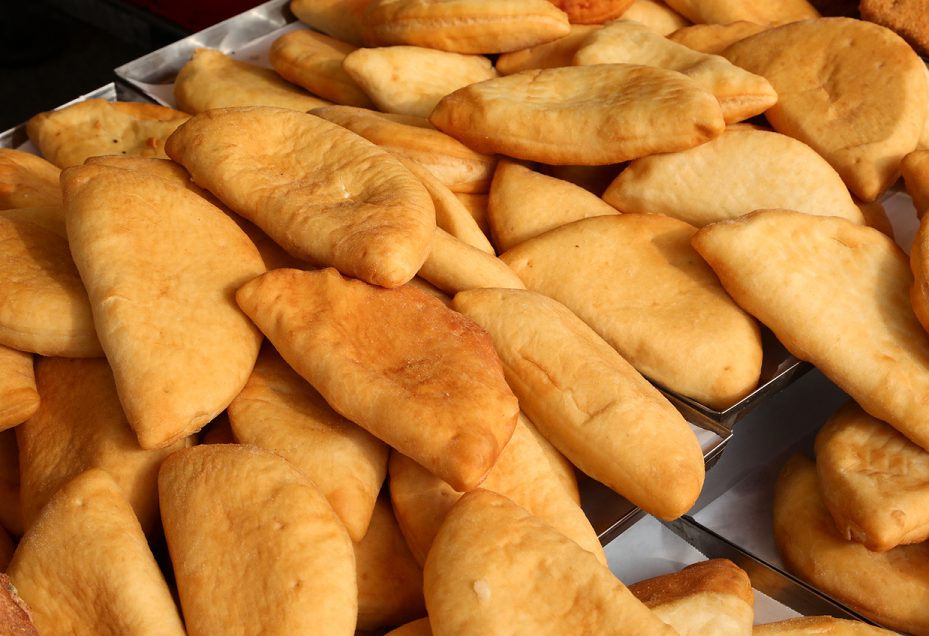
Food is the day’s map. Start with espresso and a small pastry, then browse a produce market or a cluster of independent food shops for local tomatoes, olives, cheeses and taralli. In Bari Vecchia, Via Arco Basso is closely associated with women shaping orecchiette by hand. Watch respectfully, ask before taking close-up photographs and buy only what you can cook or transport properly.
Leave space for lunch at a simple counter serving panzerotti or sgagliozze, squares of fried polenta. Later, consider a cooking class that explains dough texture and sauce pairings instead of merely supplying a photo opportunity.
Shared plates of mussels, rice, and potatoes—the layered casserole known as tiella—bring a sense of domestic warmth to the end of an active day.
Day 4 – Murat District, Theaters and Everyday Bari

The Murat district presents a very different Bari. Its straight avenues, nineteenth-century blocks and busy storefronts belong to the modern commercial city. Walk Via Sparano and Corso Cavour, but look above the shop windows at balconies, stonework and changing architectural styles. This is also a good morning for practical errands or a long café stop among local office workers.
Bari’s theater story unfolds within a compact area. The Petruzzelli is the grand opera house; Teatro Margherita, built over the water, now hosts exhibitions; Teatro Piccinni adds another layer to the city’s performing-arts life. Check programs in advance if you would like a performance or guided visit.
Warm streetlights transform the rigid grid of the Murat, casting long shadows across grand 19th-century façades as the commercial center quietens down.
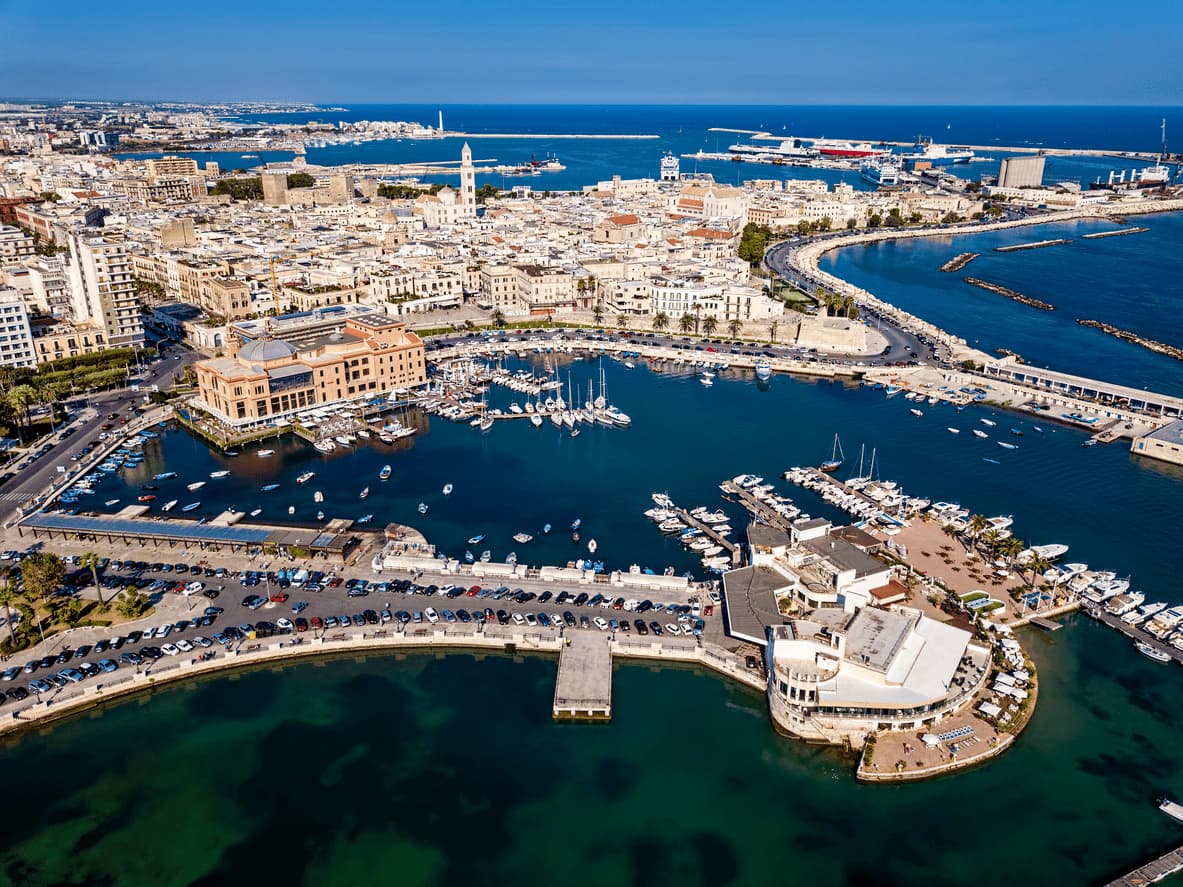
What to see in Bari: wonders and curiosities of the Apulian capital
Bari is a city that surprises with remarkable naturalness: it has the slow pace of seaside towns, the lively character of Southern cities and a layered history that can be felt in every corner, among Romanesque churches, squares open to the wind, alleys full of voices and the scent of focaccia.
Day 5 – A Slow Final Day in Bari
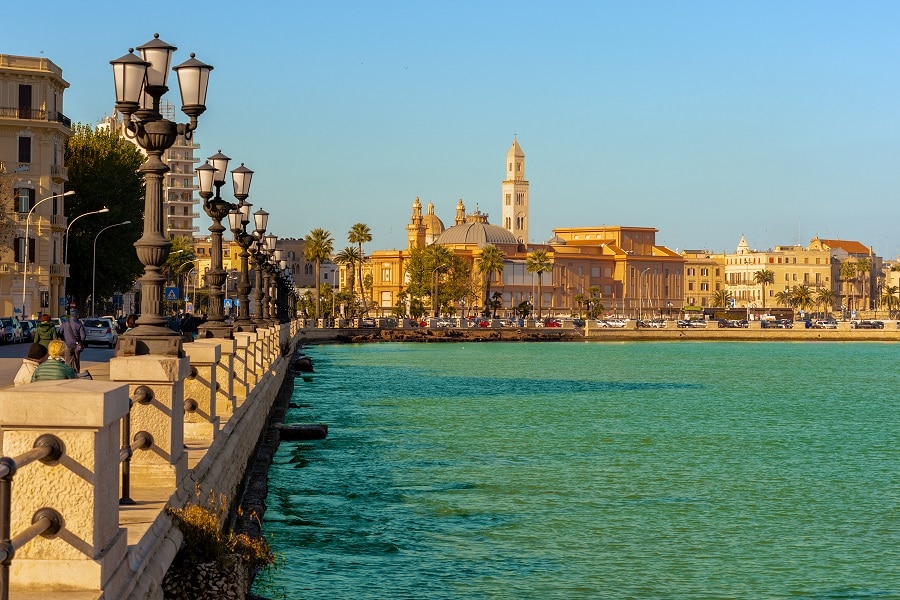
Keep the last Bari day flexible. The Norman-Swabian Castle gives the most substantial historical option, with a fortress complex shaped by Norman beginnings and Frederick II’s rebuilding. Museum access and exhibitions can change, so verify the current opening information before setting out.
Afterward, return to whichever part of the city you rushed earlier. It might be the benches above the old walls, the broad seafront or a bakery whose focaccia deserves a second visit.
A quiet hour spent packing and preparing for tomorrow’s short journey ensures that the morning departure feels as unhurried as the rest of the stay.
Day 6 – Italo Train to Trani and the Cathedral by the Sea

Take the direct Italo train from Bari Centrale to Trani. The scheduled journey can be around 30 minutes, depending on the service, and arriving by rail keeps the day light: no car pickup, parking search or long transfer. Trani station is within walking distance of the center, though a taxi is useful with heavier bags. Drop off your luggage before heading toward the harbor.
Trani Cathedral rises on an open strip of land beside the sea, its pale stone changing color with the light. First walk around the entire exterior to understand the building’s unusual relationship with the water. Inside, move through the layered worship spaces and crypt at an unhurried pace. The cathedral is active, so dress for a religious site and avoid visiting during services unless you intend to attend.
Low evening light strikes the white limestone of the harbor walls, turning the water to pale silver as fishing boats sway gently at their moorings.
Day 7 – Trani’s Harbor, Historic Center and Jewish Quarter

Morning is the best time to see the port at work. Walk its curve, then turn inland through the lanes between the harbor and Via La Giudea. Trani had a notable medieval Jewish community, and the former Scola Grande synagogue, now the Sant’Anna Jewish History Museum, preserves material connected with that history. Scolanova functions again as a synagogue; interior visits are limited and generally require advance arrangements, so check access rather than assuming the door will be open.
Continue through the historic center without hurrying from marker to marker. Stone portals and small courtyards tell as much about Trani’s mercantile past as the larger monuments.
Soft light washes over the quiet alleys around Via La Giudea, bringing a peaceful atmosphere to the ancient stone lanes.
Day 8 – Castles, Palaces and Coastal Walks in Trani

Set aside the morning for Trani’s Swabian Castle, built at the water’s edge under Frederick II. Its severe geometry is a sharp counterpoint to the cathedral nearby. A cumulative ticket with Castel del Monte may be available, which can be useful if you plan the optional extra day later in the trip; check the current museum terms before purchase.
Back in town, notice the noble façades around Via Ognissanti and the harbor. Palazzo Caccetta is among the most recognizable, while Palazzo delle Arti Beltrani often provides an indoor cultural stop.
Cool sea breezes accompany the walk along the Colonna peninsula, where the horizon widens as twilight settles over the Adriatic.
Day 9 – Seafood, Local Wines and Trani at Sunset

This is a deliberately loose day. Reserve a seafood lunch and let the kitchen guide the order according to the catch: grilled fish, octopus, cuttlefish or a simple pasta may be more memorable than a fixed list of specialties. Ask about local sourcing, especially when menus are long.
Trani also gives its name to Moscato di Trani, a dessert wine traditionally made from Moscato Reale grapes. Try a measured tasting at an enoteca, ideally beside an almond-based sweet, rather than building the entire afternoon around alcohol.
Returning to the cathedral precinct around sunset reveals a dramatic shift in tone, as the limestone walls absorb the warm pinks and golds of the fading daylight.
Day 10 – Travel to Barletta and Discover the Old Town

The next move is short. Travel from Trani to Barletta on a direct Italo service when the timetable fits, keeping in mind that high-speed departures on this local stretch are limited. Book ahead if you want a particular train, then walk or take a taxi from Barletta station to your lodging.
Spend the afternoon tracing the old town from the Cathedral of Santa Maria Maggiore to the lanes associated with the 1503 Challenge of Barletta. The Cantina della Disfida recalls the episode that pitted 13 Italian knights against 13 French knights, but the city’s story is broader than the famous contest.
Passing through Porta Marina leads directly to the coastal edge, where the sound of breaking waves replaces the narrow echo of medieval streets.
Day 11 – Barletta’s Colossus, Castle and Medieval Heritage
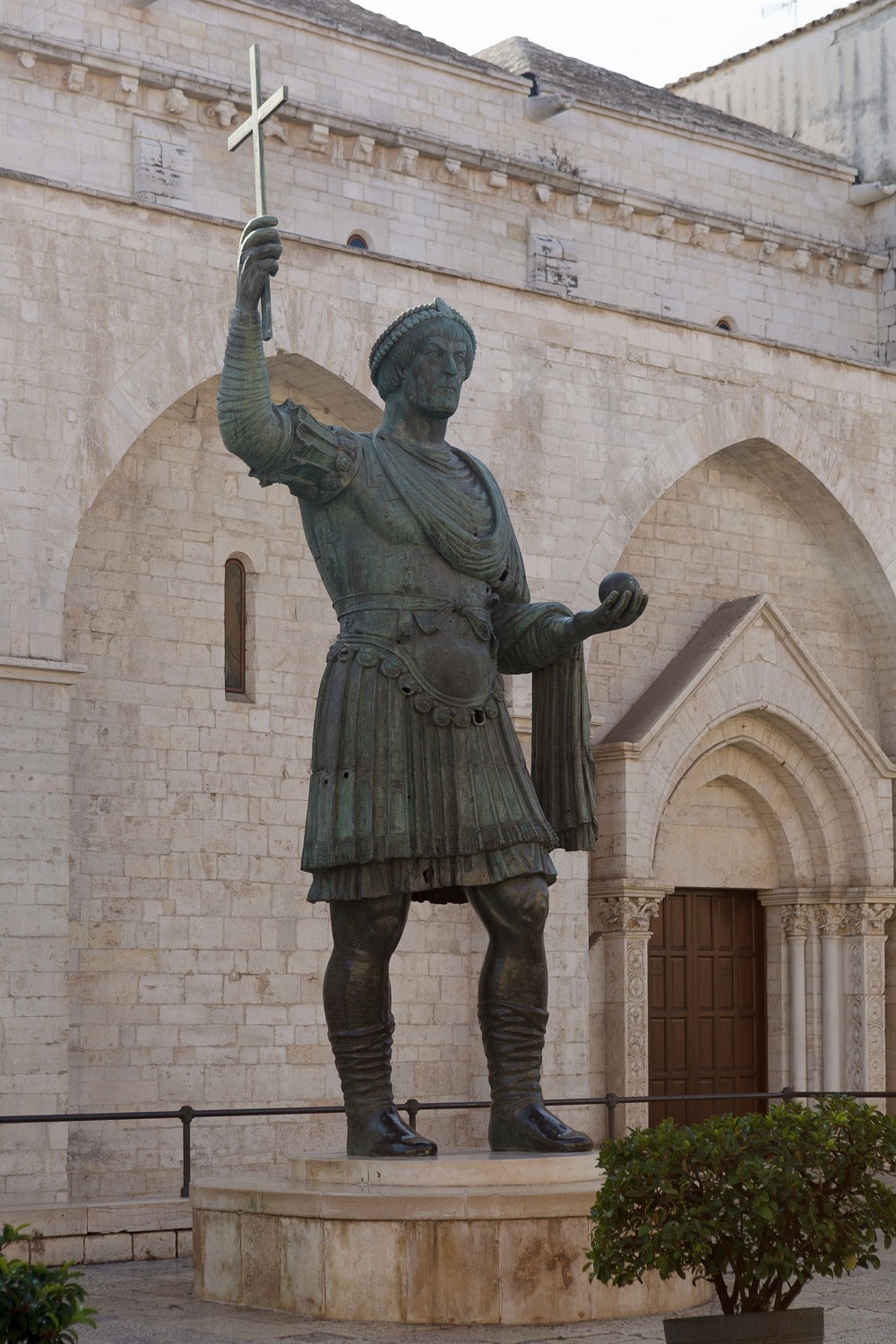
Start with the Colossus of Barletta, the large bronze figure known locally as Eraclio, standing near the Basilica of the Holy Sepulchre. Its identity has long been debated; enjoy the scale and survival of the statue without forcing a neat answer. Step into the basilica afterward, then continue toward the cathedral quarter.
The Swabian Castle deserves the largest block of the day. The fortress bears evidence of several phases, and its current Renaissance form encloses the Civic Museum and a lapidarium. Leave enough time for the exhibits rather than touring only the courtyard.
Long shadows stretch across the castle gardens as the afternoon heat fades, offering a cool green space to linger before nightfall.
Day 12 – Art, Theater and the Adriatic Atmosphere
Barletta changes register at Palazzo della Marra, home of the Pinacoteca Giuseppe De Nittis. Born in Barletta and active in Paris and London, De Nittis painted modern streets, social scenes and shifting weather with unusual immediacy. Confirm the gallery’s current access before your visit, as temporary closures or exhibition changes can affect what is on view.
Continue to Teatro Curci, an elegant nineteenth-century theater that still anchors the city’s cultural calendar. A performance makes an excellent final evening in Barletta, but the exterior and surrounding streets are worthwhile even without a ticket.
A quiet final stroll along the beach offers a vast view of the open sea under the first evening stars.
Day 13 – Italo Train to Foggia and the Tavoliere Landscape

Board an Italo train from Barletta to Foggia for the final transfer. Some direct services cover the journey in about 27 minutes, though schedules should always be checked for your date. The route leaves the tight sequence of coastal towns and enters the Tavoliere, one of Italy’s largest plains. Wheat fields, vineyards and long horizons signal a different Puglia before you even reach the station.
After checking in, walk from the station through the Villa Comunale and into the center. Piazza Umberto Giordano introduces the composer born in Foggia, while nearby streets show the city’s nineteenth- and twentieth-century civic face.
The vast skies of the Tavoliere plain dim into deep amber, framing Foggia’s wide avenues in a warm, inland glow.
Day 14 – Foggia’s History, Markets and Regional Flavors
Begin at the Cathedral of Santa Maria Assunta, rebuilt and altered after earthquakes while retaining important traces of its medieval fabric. The nearby Civic Museum is the logical next stop when open, particularly for archaeological material from the Tavoliere and collections that explain local life. Check current access in advance, as municipal museum arrangements can change.
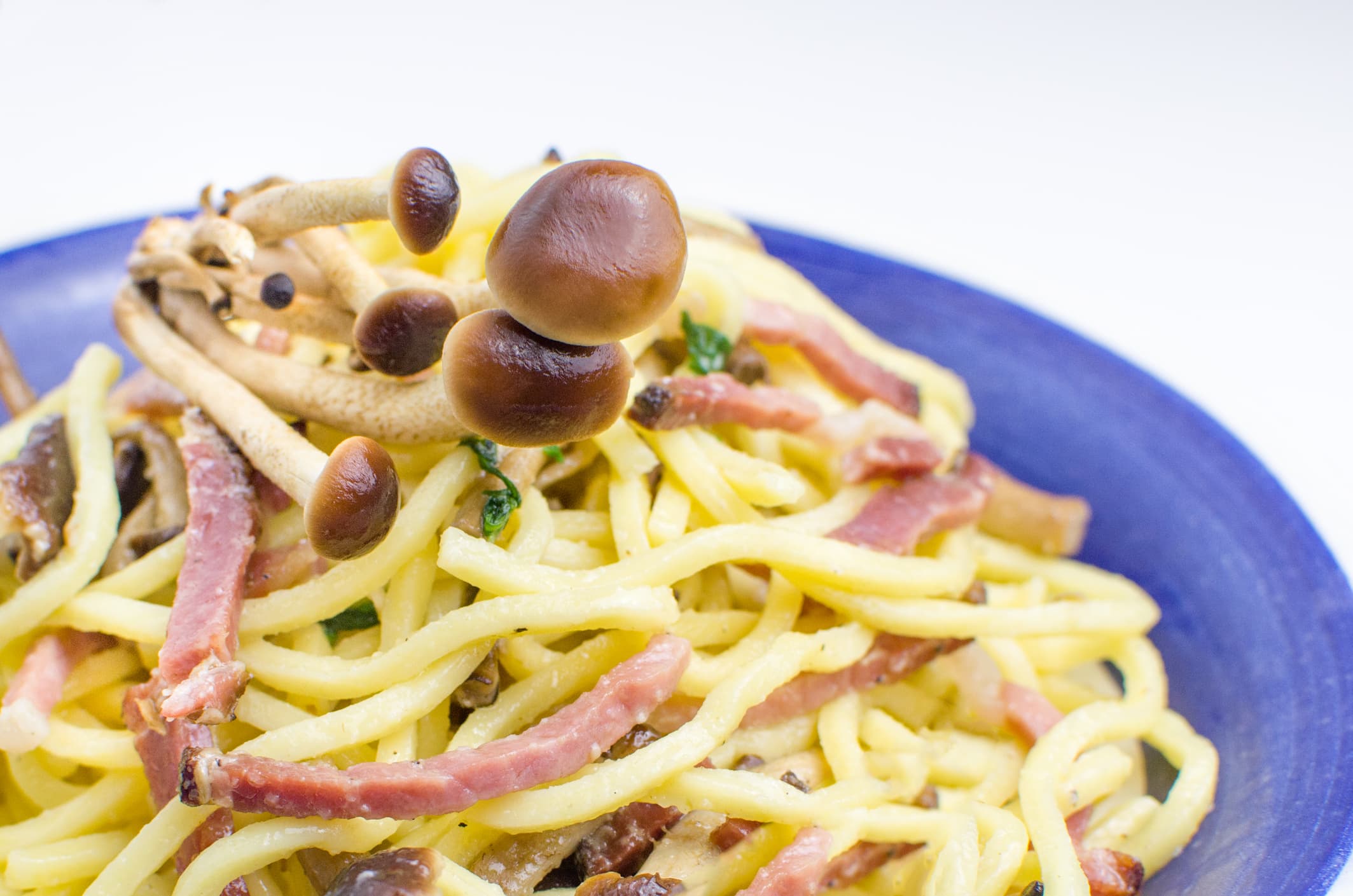
For the final lunch, look for dishes tied to the grain and pastoral traditions of the province: troccoli pasta, seasonal vegetables, legumes, local cheeses and Nero di Troia wine. A market hall, bakery or well-stocked food shop can supply edible souvenirs that travel well.
Ending the journey at the historic Church of the Crosses brings a reflective pause, surrounded by the quiet rhythm of inland life before the return train.

Do you need to validate train tickets in Italy? The definitive explanation
Mastering Italy’s train ticket validation rules is essential to avoid unexpected fines and travel with total peace of mind. Discover exactly how the activation process works today, from physically stamping paper tickets at station achines to completing mandatory digital check-ins before boarding.
Extra Days & Beyond the Hub
Each excursion below adds one full day to the trip. Schedule it between the named bases or after the core itinerary, but do not count it as one of the 14 days. These destinations are not used as Italo high-speed hubs; reach them by local train, bus, organized transfer or taxi after checking the latest connections.
Bitonto: between Bari and Trani
Add Bitonto while you are still based in Bari, then continue to Trani the following day. Local commuter rail connects Bari with Bitonto, but station names and operators vary by service, so confirm the correct departure point before leaving. The town’s Romanesque cathedral is the centerpiece, with a sculpted façade, rose window and archaeological remains below. Pair it with the National Gallery of Puglia in Palazzo Sylos Calò and a walk through the compact old center.
Bitonto is closely associated with olive cultivation, making this a good place to taste or buy extra-virgin olive oil from a reputable producer. Return to Bari for the night. Moving your luggage to Bitonto would add friction without improving the day.
Castel del Monte: A Medieval Detour Linking Trani and Barletta
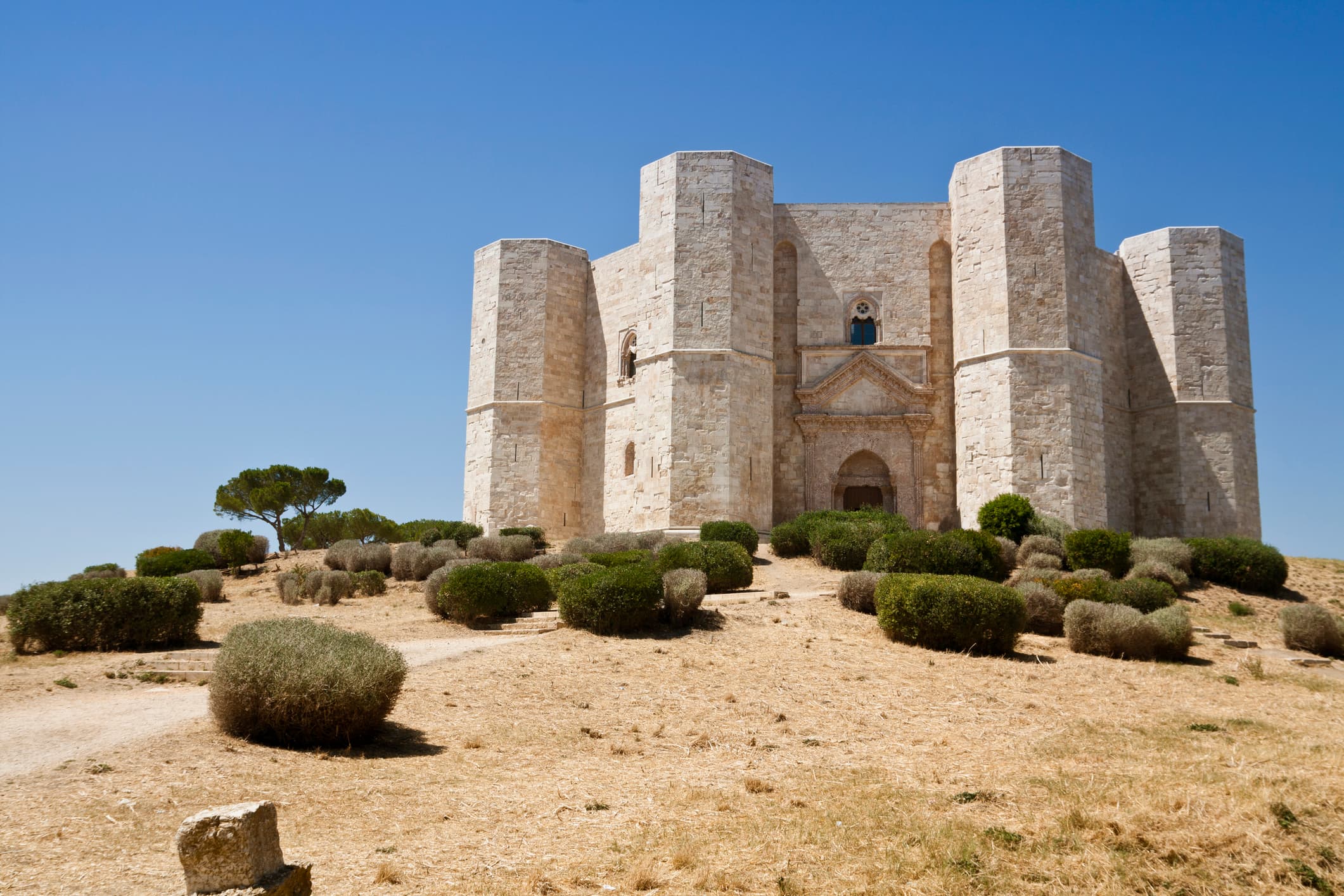
Castel del Monte sits inland near Andria, so this extra day needs more planning than the coastal transfers. Travel locally from Trani toward Andria, then use the seasonal shuttle, a taxi or a prearranged transfer for the final climb. Service levels can change outside peak months; confirm the return journey before setting out.
Commissioned by Frederick II in the thirteenth century, the castle is famous for its octagonal plan, eight corner towers and disciplined geometry. It has been on the UNESCO World Heritage List since 1996. Book an entry slot when required and allow time to walk outside as well as through the interior rooms. Return to Trani that evening and travel to Barletta the next day, preserving the sequence of the core itinerary.
Excursion to Canosa di Puglia: Hypogea and Ancient Ruins
Use Barletta as the base for Canosa di Puglia, then move to Foggia on the following day. Regional rail and bus options serve the area, but archaeological sites are spread across town and may operate by reservation. A taxi or guided tour can be worthwhile if you want to combine several locations without watching the clock.
Canosa layers Daunian, Roman and early Christian history. Prioritize one hypogeum complex, such as the Lagrasta tombs when accessible, and pair it with the San Leucio Archaeological Park, the San Giovanni baptistery area or Palazzo Sinesi. Reserve ahead through the local visitor service, then leave margin for lunch and walking time. Trying to collect every site in one day defeats the point of adding the detour.
Puglia travel guide: must-see towns and coastal gems
From dramatic limestone cliffs to endless fields of ancient olive trees, Puglia stretches down Italy’s sun-drenched heel.
In this beautifully diverse playground, life moves to the rhythm of the sea.
Every stop rewards you with incredible history or local flavors.
This guide maps out the absolute must-see spots to capture the authentic soul of the region.
Practical Travel Tips
- Book key Italo segments early: Bari–Trani, Trani–Barletta and Barletta–Foggia are short, but high-speed departures are limited. Advance booking secures better timing and fares.
- Check live timetables: Journey times and service frequency vary. Treat durations here as references and verify live schedules before buying tickets.
- Travel light: A medium suitcase or carry-on is easier on station platforms and old-town cobblestones.
- Reserve fragile-access sites: Synagogues, hypogea and special museum exhibitions often require advance booking or have limited opening hours.
- Keep meals regional and seasonal: Rely on short, daily-changing menus that feature local catches, vegetables, and regional wines.
Start your historic Puglia journey with Italo
A northbound journey from Bari to Foggia lets Puglia change gradually rather than in abrupt leaps. Begin with Bari’s layered city life, slow down beside Trani’s harbor, follow medieval and modern art through Barletta, then finish among the open horizons and agricultural flavors of the Tavoliere.
When your dates are set, check current Italo schedules for Bari, Trani, Barletta and Foggia, reserve the main rail segments and build the optional inland days around confirmed local connections. Four comfortable bases, one clear route and two weeks at a humane pace: that is the secret to a seamless Puglia journey.