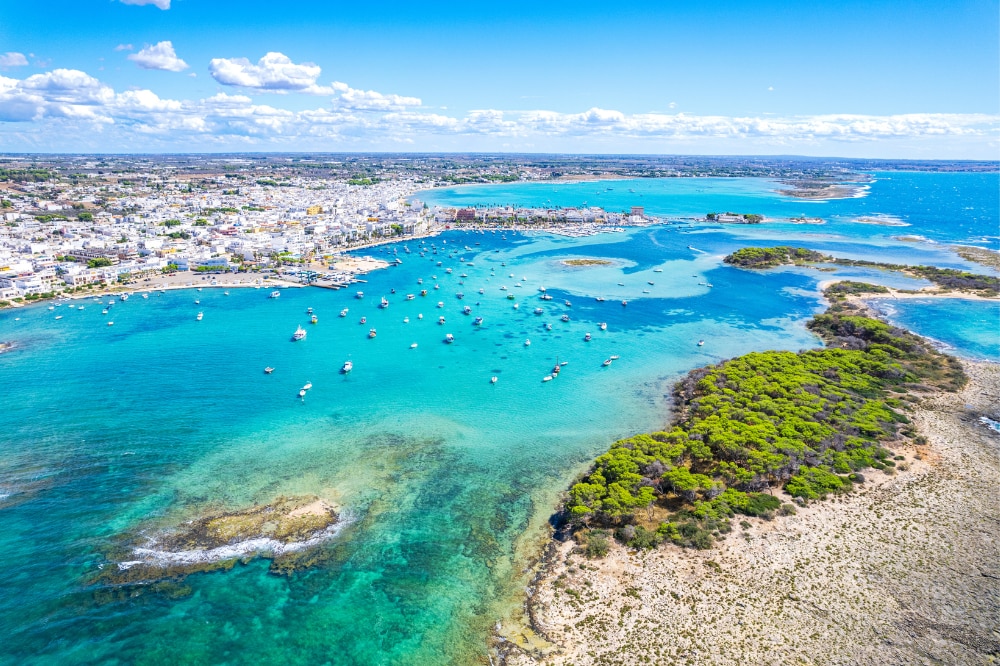
A single week in Puglia offers an unforgettable journey along the sun-drenched heel of Italy, stretching from the vibrant port of Bari down to the secluded beaches of Salento. Spanning over 400 kilometers of coast, this seven-day itinerary balances historic exploration with southern Italy’s relaxed culinary pace, giving you time to savor hand-rolled orecchiette, relax by the sea, and experience authentic local life without ever feeling rushed.
- 1 Puglia itinerary 7 days: how to plan your trip
- 2 7 days in Puglia: itinerary overview
- 3 Day 1: Bari and its historic centre
- 4 Day 2: Polignano a Mare and Monopoli
- 5 Day 3: Alberobello and the villages of the Itria Valley
- 6 Day 4: Ostuni and Cisternino
- 7 Day 5: Lecce and the heart of Salento
- 8 Day 6: Otranto and the Adriatic coast of Salento
- 9 Day 7: Gallipoli and the Ionian coast
- 10 One week in Puglia: practical tips for your itinerary
- 11 When is the best time to spend 7 days in Puglia?
- 12 How to get to Puglia with Italo
Puglia itinerary 7 days: how to plan your trip
Bari serves as the ideal starting point for this route due to its central location and exceptional high-speed rail connections. From the regional capital, the itinerary moves progressively southward toward Polignano a Mare and Monopoli, ventures inland through the rolling landscapes of the Itria Valley, and continues through the “White City” of Ostuni into the heart of Salento. To keep travel seamless and avoid changing hotels every night, you can organize your stay around three strategic hubs: Bari for the first two nights, a central masseria or boutique hotel in the Itria Valley for days three and four, and the Baroque city of Lecce for the final three days.
Navigating this route can be customized based on your preferred travel style and transit choices. The coastal railway line links main hubs like Bari, Monopoli, Lecce, and Polignano with remarkable ease and frequency. For inland sections like the Itria Valley, renting a car for a couple of days or booking regional transfers grants complete flexibility to navigate rural backroads lined with dry-stone walls. Whichever mode of transport you choose, structuring your itinerary in a continuous southbound direction minimizes backtracking and ensures that your travel time remains efficient and enjoyable.
7 days in Puglia: itinerary overview
Map of a one-week itinerary in Puglia
| Day | Location & Focus | Activities (Morning & Afternoon) |
| Day 1 | Bari (Historic Centre & Seafront) | Explore Bari Vecchia (Basilica di San Nicola, Norman-Swabian Castle), then stroll the scenic Lungomare and the elegant Murat district. |
| Day 2 | Polignano a Mare & Monopoli | Admire Polignano’s cliffside views and Lama Monachile, followed by an afternoon wandering Monopoli’s historic harbour and cathedral. |
| Day 3 | Alberobello & Locorotondo | Discover the iconic trulli of Alberobello, then enjoy the whitewashed alleys and panoramic valley views of hilltop Locorotondo. |
| Day 4 | Ostuni & Cisternino | Climb the gleaming alleys of Ostuni (La Città Bianca), then explore the intimate courtyards and medieval watchtowers of Cisternino. |
| Day 5 | Lecce (Baroque Architecture) | Marvel at Lecce’s Baroque masterpieces (Piazza Sant’Oronzo, Basilica di Santa Croce, Piazza del Duomo) and join the evening passeggiata. |
| Day 6 | Otranto & Adriatic Beaches | See the famous “Tree of Life” mosaic in Otranto, then relax by the emerald Cava di Bauxite lake or swim at Baia dei Turchi. |
| Day 7 | Gallipoli & Ionian Sea | Explore Gallipoli’s island-bound historic centre and castle, ending your trip with a sunset on the golden sands of Spiaggia della Purità. |
Day 1: Bari and its historic centre
Bari Vecchia and the Basilica of San Nicola
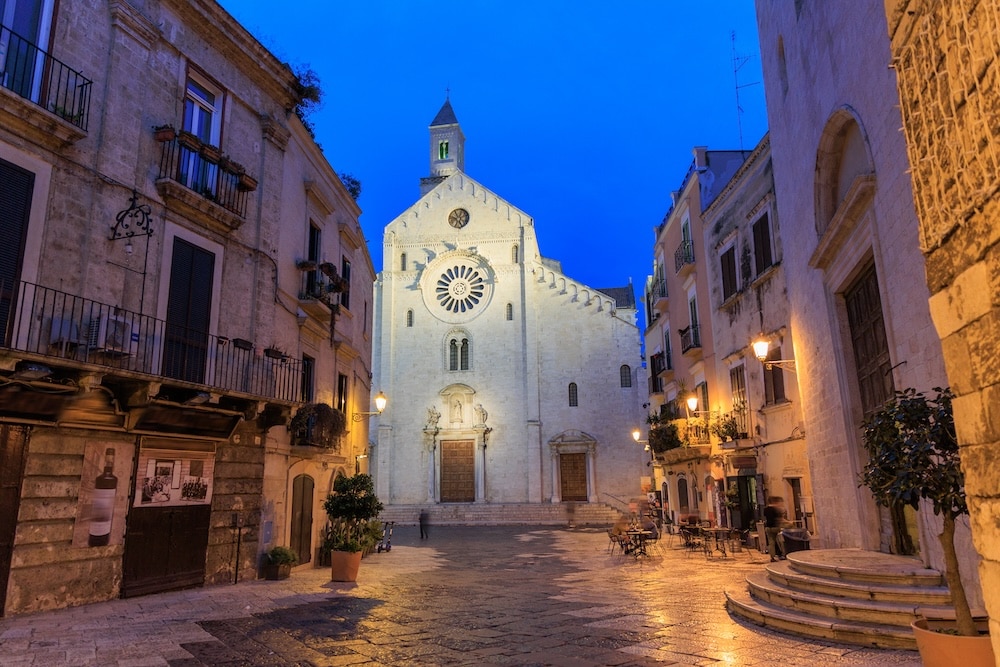
Your journey begins at Bari Centrale, where you step off the train and head straight toward the atmospheric historic heart, Bari Vecchia. This maze of narrow, limestone-paved alleys retains an authentic medieval feel, where local women hand-roll orecchiette pasta right on wooden tables outside their front doors. The main highlight here is the grand Basilica di San Nicola, a masterpiece of Romanesque architecture built to house the relics of Saint Nicholas, making it a sacred site for both Catholic and Orthodox pilgrims. After admiring its carved stone portal and tranquil crypt, walk over to the nearby Cathedral of San Sabino and the imposing Norman-Swabian Castle flanking the old city walls.
The seafront and the Murat district
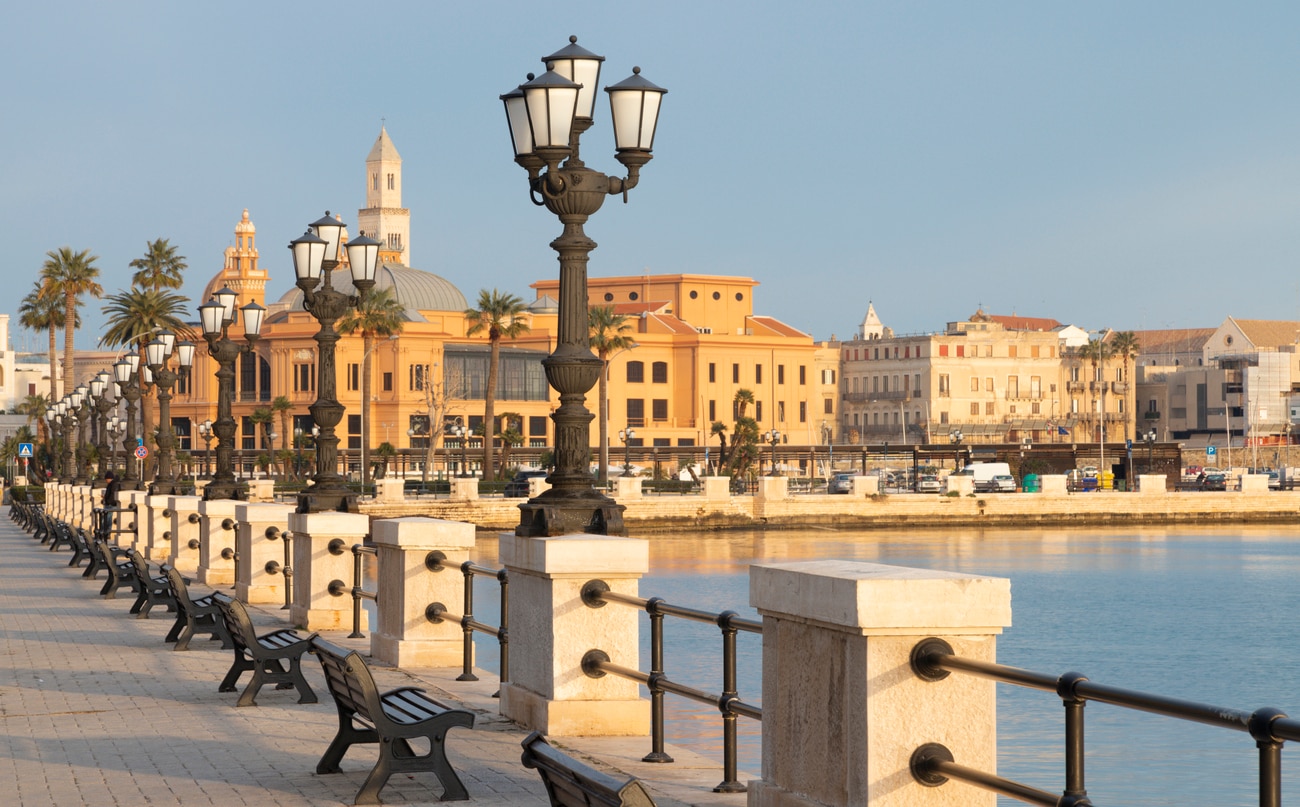
In the afternoon, emerge from the shadowy alleys of the old town onto the expansive Lungomare Nazario Sauro, one of the longest and most elegant seaside promenades in Italy. Walking along this waterfront offers sweeping views across the Adriatic port, where traditional blue fishing boats gently bob in the water. As late afternoon approaches, cross over into the refined Murat district, characterized by its elegant 19th-century grid layout and grand neoclassical avenues. Browse the high-street boutiques along Via Sparano or pause at a sidewalk cafe for a refreshing aperitivo before heading into a local trattoria for your first taste of focaccia barese.
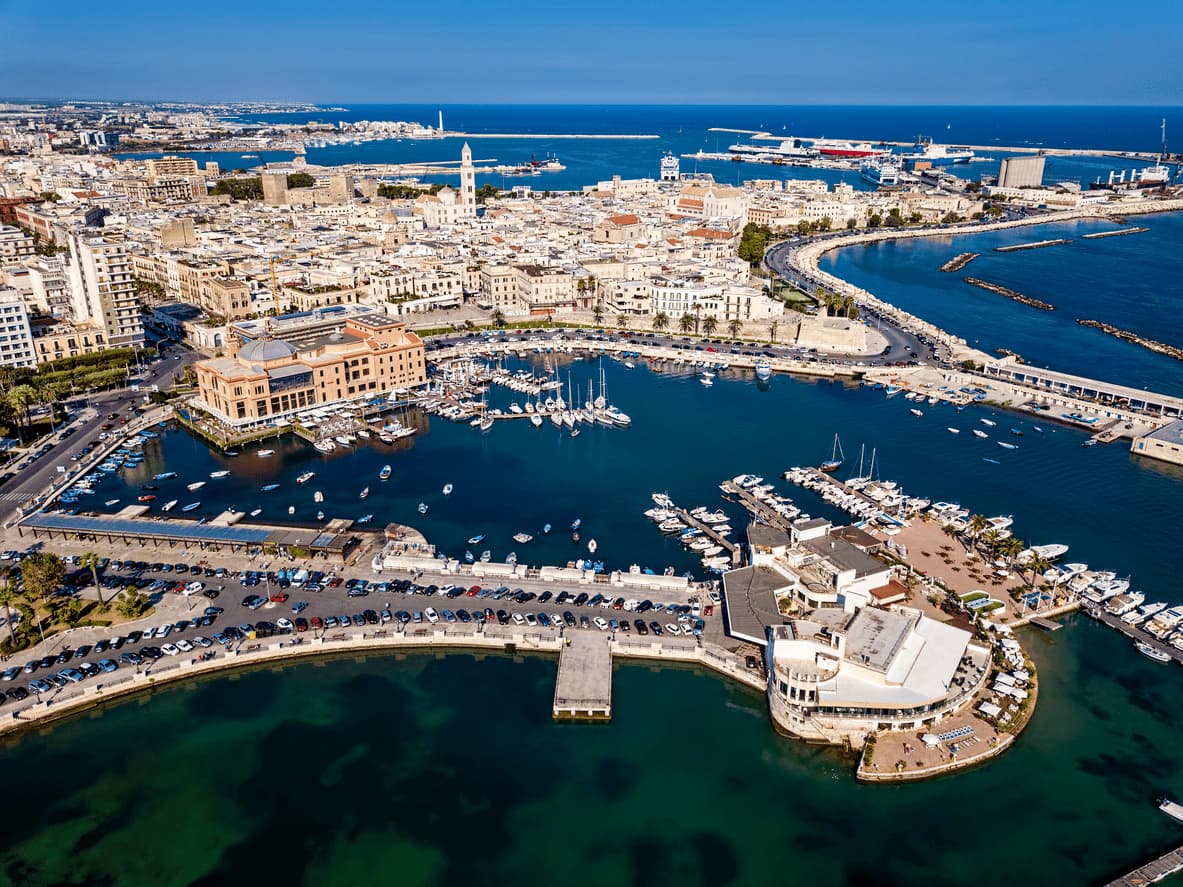
What to see in Bari: wonders and curiosities of the Apulian capital
Bari is a city that surprises with remarkable naturalness: it has the slow pace of seaside towns, the lively character of Southern cities and a layered history that can be felt in every corner, among Romanesque churches, squares open to the wind, alleys full of voices and the scent of focaccia.
Day 2: Polignano a Mare and Monopoli
The cliffs and old town of Polignano a Mare
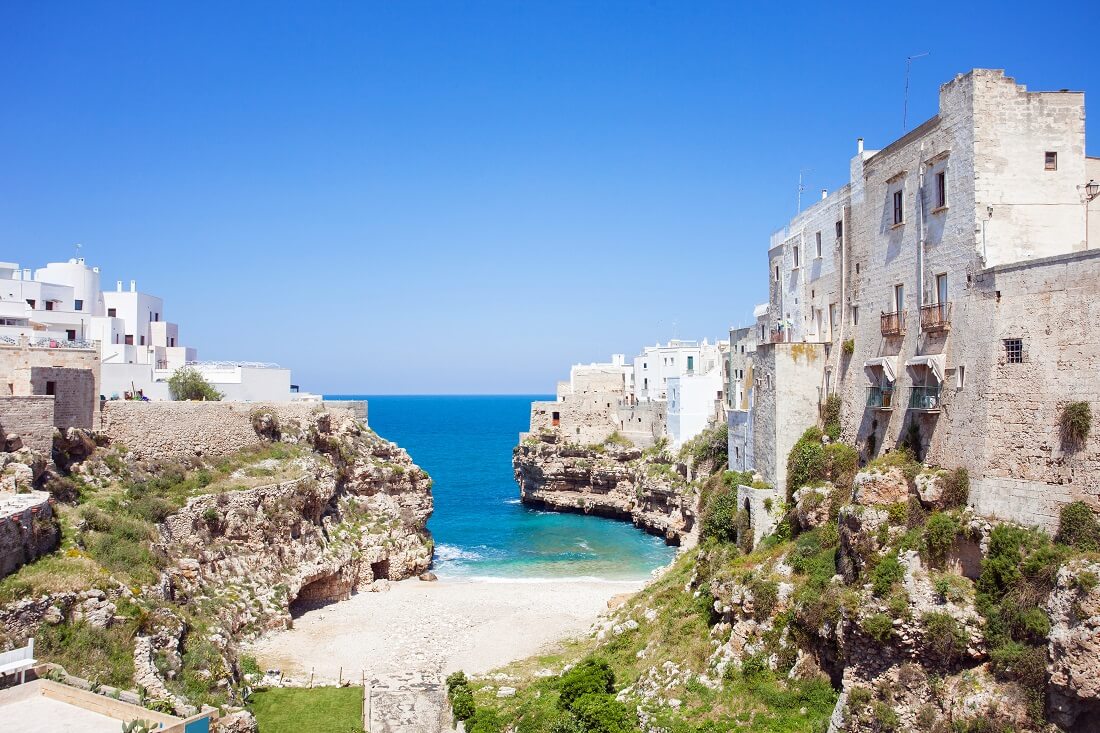
Day two focuses on the breathtaking Adriatic coastline, starting in the perched village of Polignano a Mare. The historic center is built dramatically on the edge of sheer limestone cliffs that plunge directly into turquoise waters below. Enter through the ancient Porta Grande and wander past whitewashed houses decorated with hand-written poetry painted on the stone walls. Make your way to the famous Lama Monachile viewpoint to capture the iconic vista of the pebble cove framed by soaring rock formations and a Roman bridge. Stop by a local bar to sample the town’s famous caffè speciale, brewed with espresso, lemon zest, cream, and amaretto.
Monopoli’s historic centre and harbour
Travel ten minutes further south to reach Monopoli, a historic port town with a distinctly authentic maritime personality. Begin your exploration at the Porto Vecchio, where vibrant wooden fishing boats contrast against the pale stone facade of the Castle of Charles V. Wander through the labyrinthine historic core toward the magnificent Cathedral of Maria Santissima della Madia, renowned for its lavish Baroque chapel and historic icon. The town’s coastal fortifications provide a scenic path for a late afternoon walk, offering quiet stone benches where you can watch local fishermen repair their nets as the sun begins to set over the harbor.
Day 3: Alberobello and the villages of the Itria Valley
Discovering the trulli of Alberobello

Head inland toward the rolling hills of the Itria Valley, a fairytale landscape dominated by red soil, ancient olive trees, and unique stone huts known as trulli. Your first stop is Alberobello, a UNESCO World Heritage site home to over 1,500 of these iconic conical-roofed structures. Explore the dense hillside district of Rione Monti, keeping an eye out for mysterious astrological and religious symbols painted on the grey slate roofs. To escape the biggest crowds, cross over to the quieter Aia Piccola district, where trulli are still lived in by locals, and visit the Trullo Sovrano, the town’s only two-story trullo turned museum.
Locorotondo and its whitewashed streets
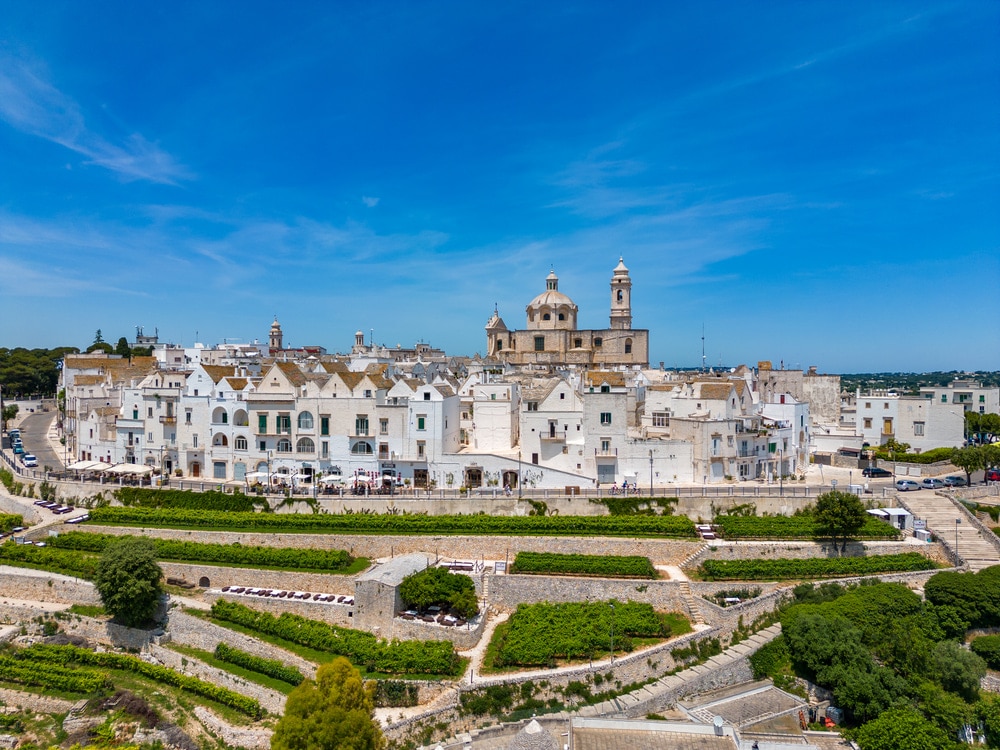
In the afternoon, drive or take a short local train to Locorotondo, officially recognized as one of Italy’s most beautiful villages (borghi). Perched on a hilltop overlooking the valley, its historic core features a rare circular layout filled with pristine whitewashed houses and sloped stone roofs called cummerse. Stroll through the immaculate alleys decorated with vibrant geraniums, stopping at balcony viewpoints that open onto expansive vistas of vineyards and peppered trulli. Before dinner, drop into a local wine bar to sample a glass of crisp, chilled Locorotondo DOC white wine paired with local capocollo di Martina Franca cured meat.
Day 4: Ostuni and Cisternino
Ostuni, the White City
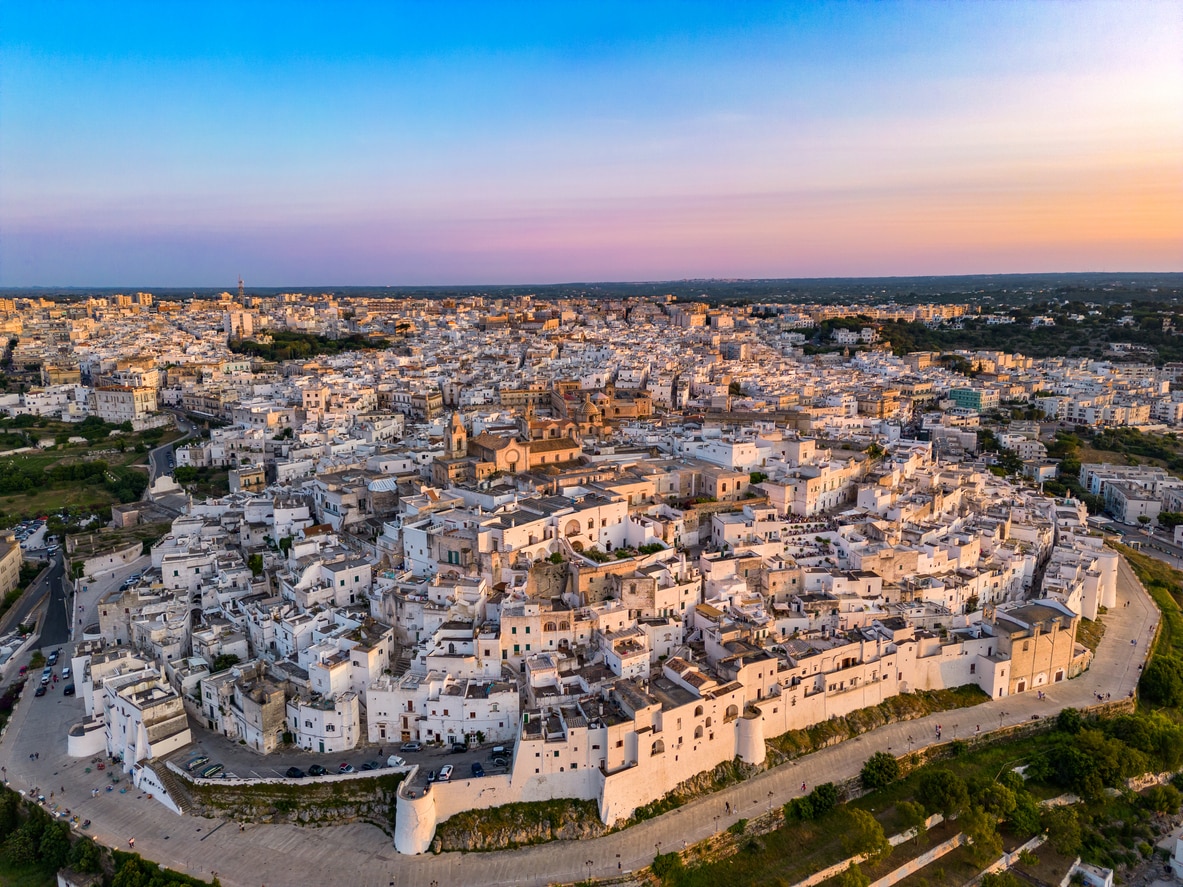
Day four begins with the striking sight of Ostuni, known far and wide as La Città Bianca (The White City) due to its gleaming lime-washed buildings perched across three hills. Enter the historic center via Piazza della Libertà and follow the winding network of stairways, archways, and cobblestone ramps leading upward. At the highest point stands the magnificent 15th-century Ostuni Cathedral, featuring a stunning Gothic rose window. Along the climb, you will find boutique craft shops selling handmade ceramics and local olive oil, as well as panoramic overlooks that offer vistas across endless olive groves stretching directly to the sea.
Cisternino and the authentic atmosphere of the Itria Valley
Continue your exploration in nearby Cisternino, a charming village celebrated for its intimate courtyards, external staircases, and relaxed pace of life. The historic center is a delight to explore without a map, allowing you to stumble upon small hidden plazas, medieval watchtowers, and quiet residential arches. Cisternino is internationally famous for its culinary tradition of fornelli pronti—butcher shops that turn into casual evening eateries where you select raw meats at the counter to be grilled in wood-fired ovens. Ordering the local specialty, bombette (pork rolls stuffed with cheese and herbs), provides an unforgettable dinner experience.
Day 5: Lecce and the heart of Salento
Lecce’s Baroque architecture and historic centre
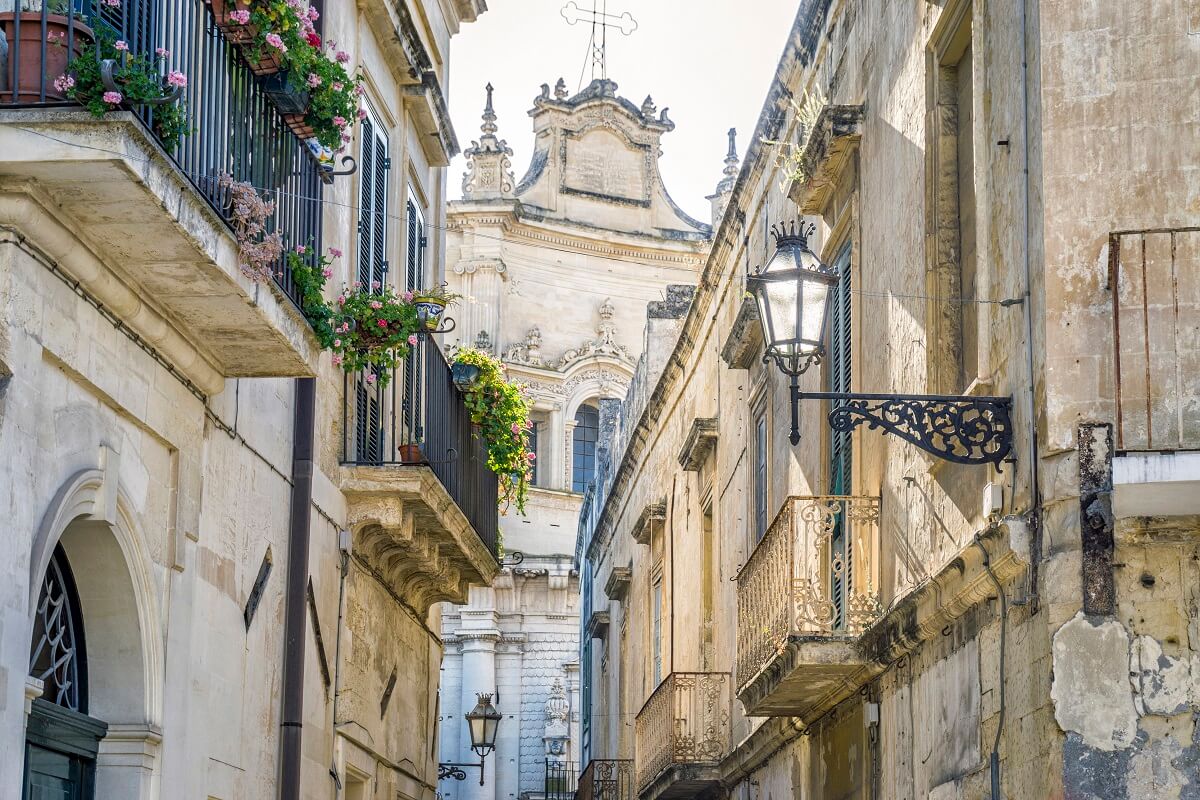
Journey south into the Salento peninsula to discover Lecce, often called the “Florence of the South” due to its opulent architectural heritage. The city’s unique identity stems from pietra leccese, a soft, golden limestone that local sculptors carved into intricate Baroque facades during the 17th century. Start in Piazza Sant’Oronzo, home to a partially excavated Roman amphitheater, before walking to the breathtaking Basilica di Santa Croce. The church’s facade is an explosion of stone gargoyles, floral motifs, and mythical beasts. Finish your architectural tour in Basilica di Santa Croce, a magnificent enclosed square dominated by a towering bell tower and grand cathedral.
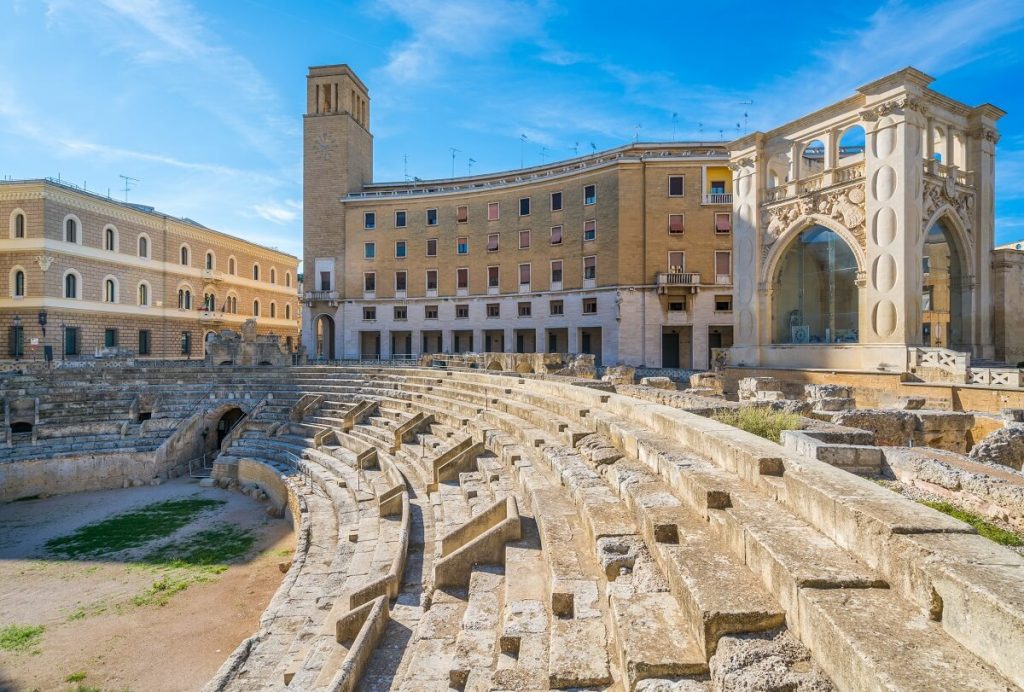
Lecce: Ten things to do and see
Lecce: the city of the Baroque, churches and scents of the Mediterranean. One of Italy’s most fascinating open-air museums, this city is ideal all year round for a holiday break to enjoy culture, food, and wine.
What to eat in Lecce
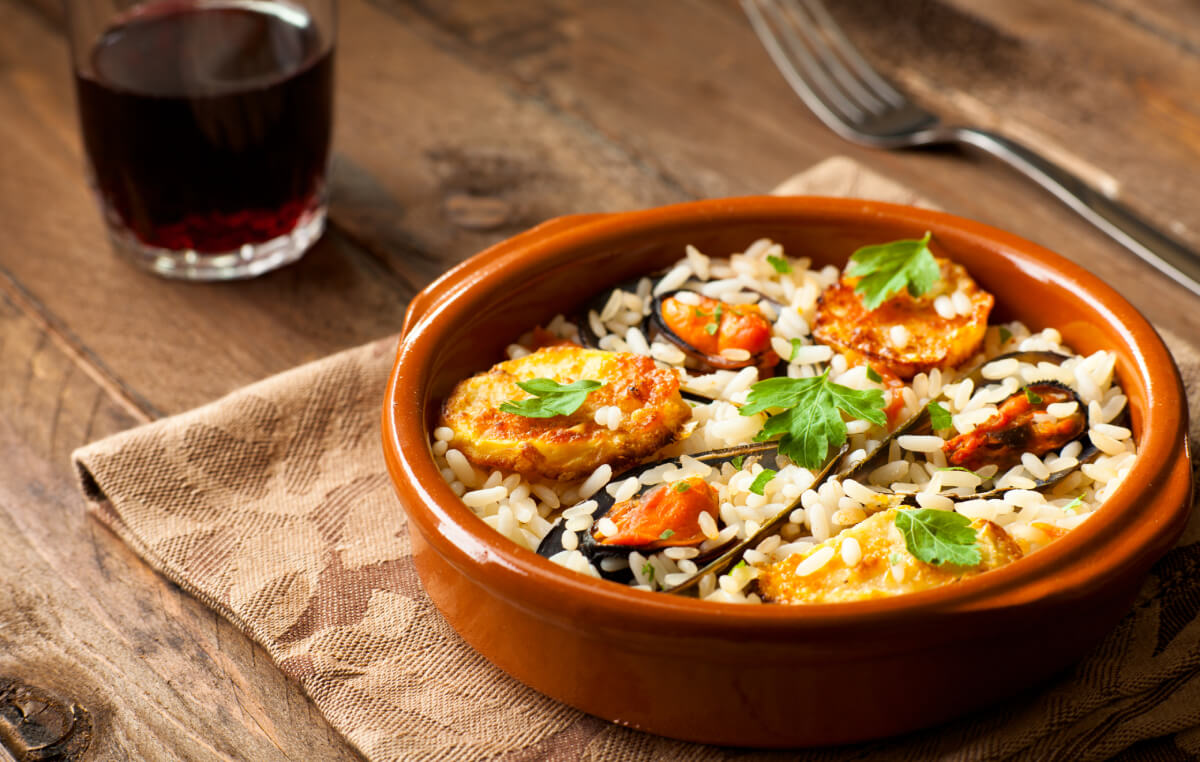
Exploring Lecce requires frequent culinary stops to taste the rich flavors unique to southern Puglia. Start your morning at a traditional pasticceria with a warm pasticciotto—a buttery pastry shell filled with rich pastry cream—paired with an iced caffè leccese served over ice with sweet almond syrup. For lunch or dinner, seek out a cozy local osteria to order ciceri e tria, a traditional dish combining chickpeas with fresh pasta and crispy fried pasta ribbons, or Taieddhra leccese, a savory baked layer of rice, potatoes, mussels, and zucchini. Accompany your meal with a glass of full-bodied Salice Salentino or Primitivo, enjoying the vibrant atmosphere as locals fill the illuminated squares for their evening stroll.

Italy’s Seafood Delights: A Culinary Journey Along the Coast
Embark on a gastronomic journey along Italy’s stunning coasts with Italo Treno. Dive into the vibrant world of Italian seafood, from Naples to Genoa, and uncover the rich flavours and traditions of Mediterranean cuisine.
Day 6: Otranto and the Adriatic coast of Salento
Otranto’s old town and cathedral
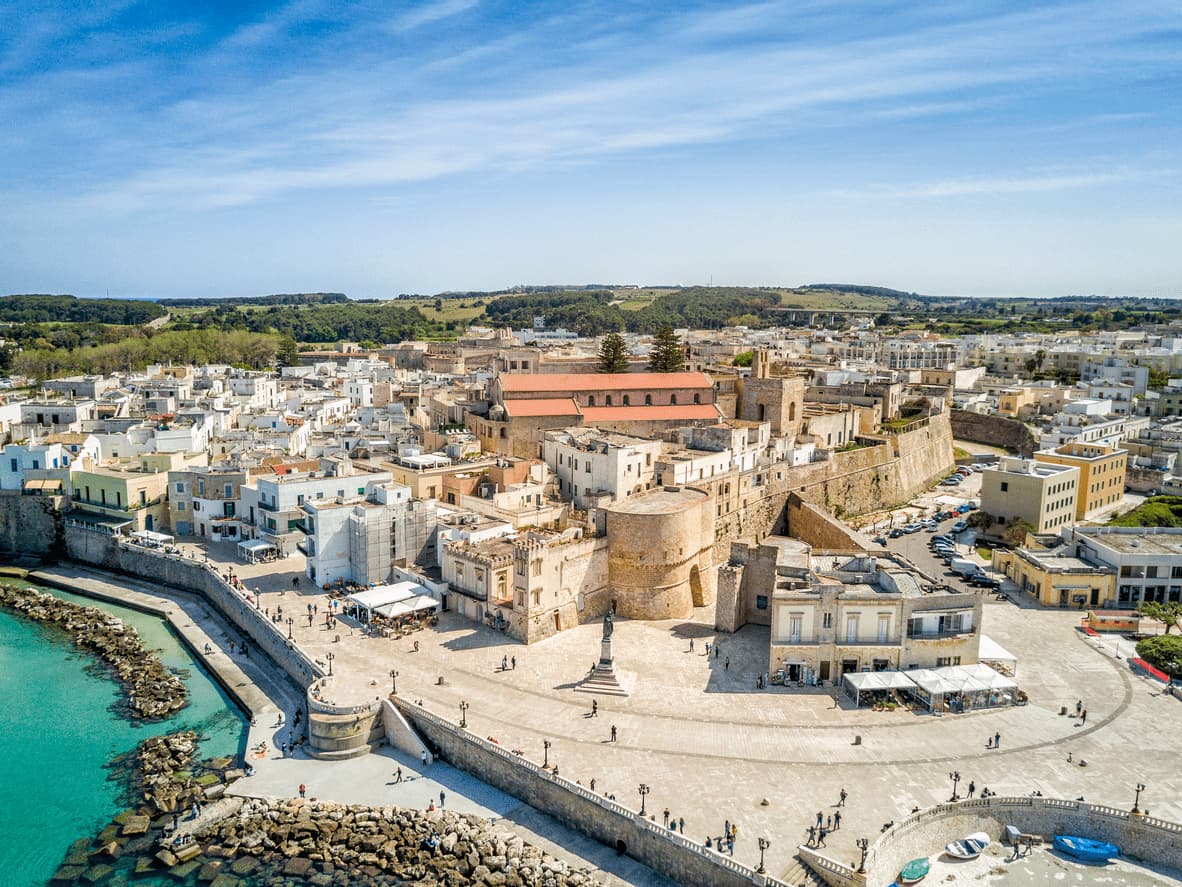
Head to the easternmost point of Italy to explore Otranto, a fortified coastal town steeped in dramatic maritime history. Enter through the thick stone ramparts of the Aragonese Castle and wander through white-walled residential streets toward the Cathedral of Santa Maria Annunziata. Inside, prepare to be awestruck by the massive 12th-century floor mosaic depicting the “Tree of Life,” stretching the entire length of the nave with biblical scenes and mythological creatures. The cathedral crypt, supported by 42 marble columns, houses the chapel of the 800 Martyrs of Otranto, offering a poignant look into the town’s complex medieval past.
Beaches and landscapes around Otranto
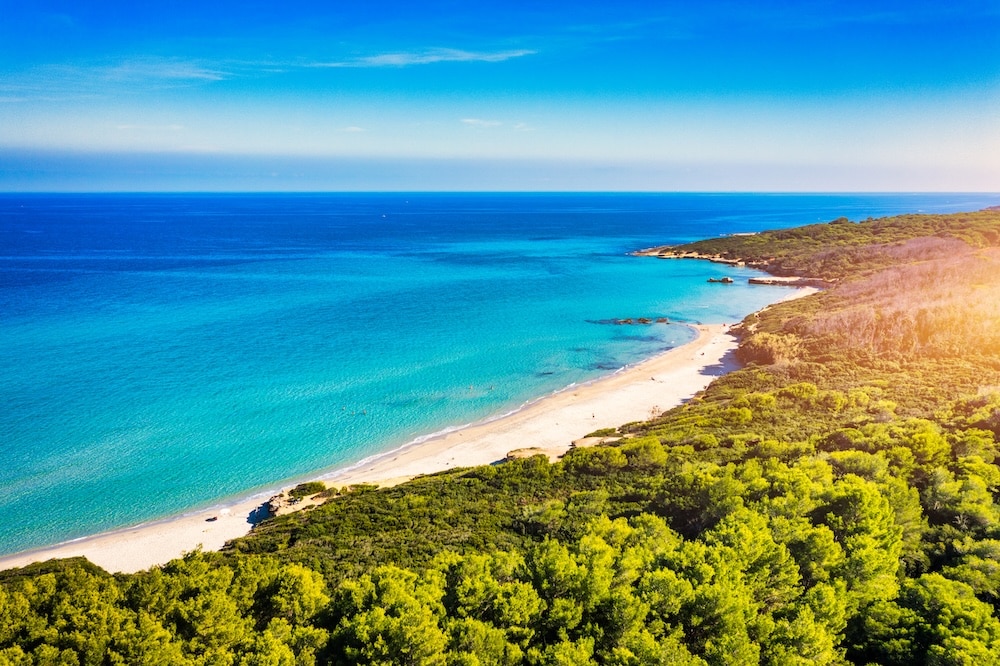
Dedicate your afternoon to experiencing the dramatic natural beauty surrounding Otranto’s coast. Just south of the town lies the striking Cava di Bauxite, a former quarry featuring an emerald-green lake surrounded by fiery red earth cliffs. Alternatively, head slightly north to swim in the crystal-clear waters of Baia dei Turchi, a pine-fringed sandy cove accessible via a short walk through shaded woodland. Whether you choose to lounge on the sandy shores or take a scenic drive along the elevated coastal road toward Capo d’Otranto, this coastline offers some of the most unspoiled sea views in southern Italy.
Day 7: Gallipoli and the Ionian coast
Gallipoli’s historic centre and waterfront
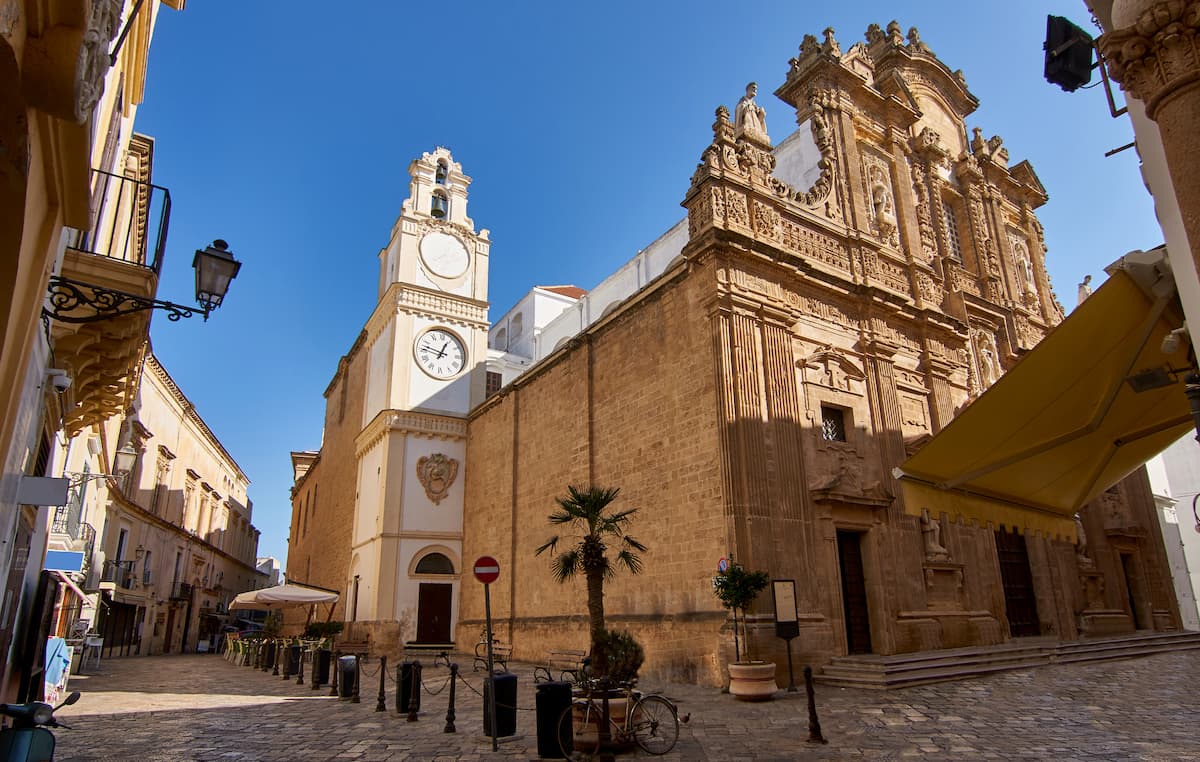
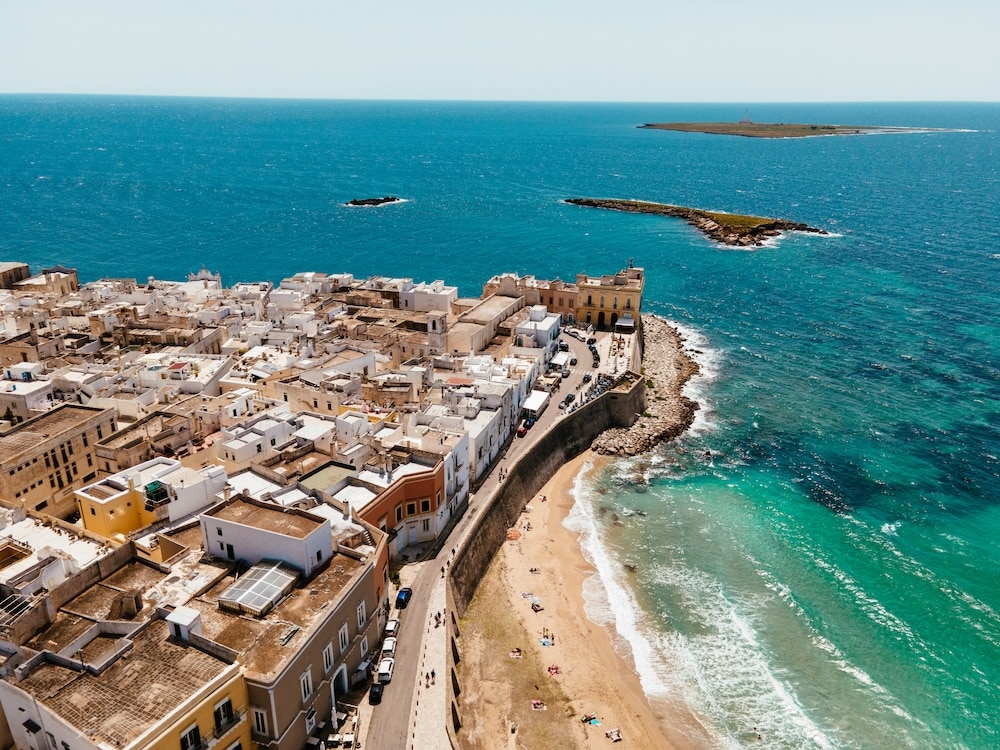
For the final day of your itinerary, cross the peninsula to Gallipoli on the Ionian coast, a town whose name appropriately translates from Greek as “Beautiful City.” The historic center sits on a limestone island connected to the mainland by a 16th-century bridge, guarded by a formidable Byzantine castle. Walk along the surrounding stone ramparts, stopping to admire the opulent Baroque facade of the Cathedral of Sant’Agata hidden within the tight maze of residential streets. Down at the ancient fish market near the bridge, local fishermen hawk their daily catch, selling fresh red prawns and sea urchins directly from their boats.
End your week in Puglia by the sea
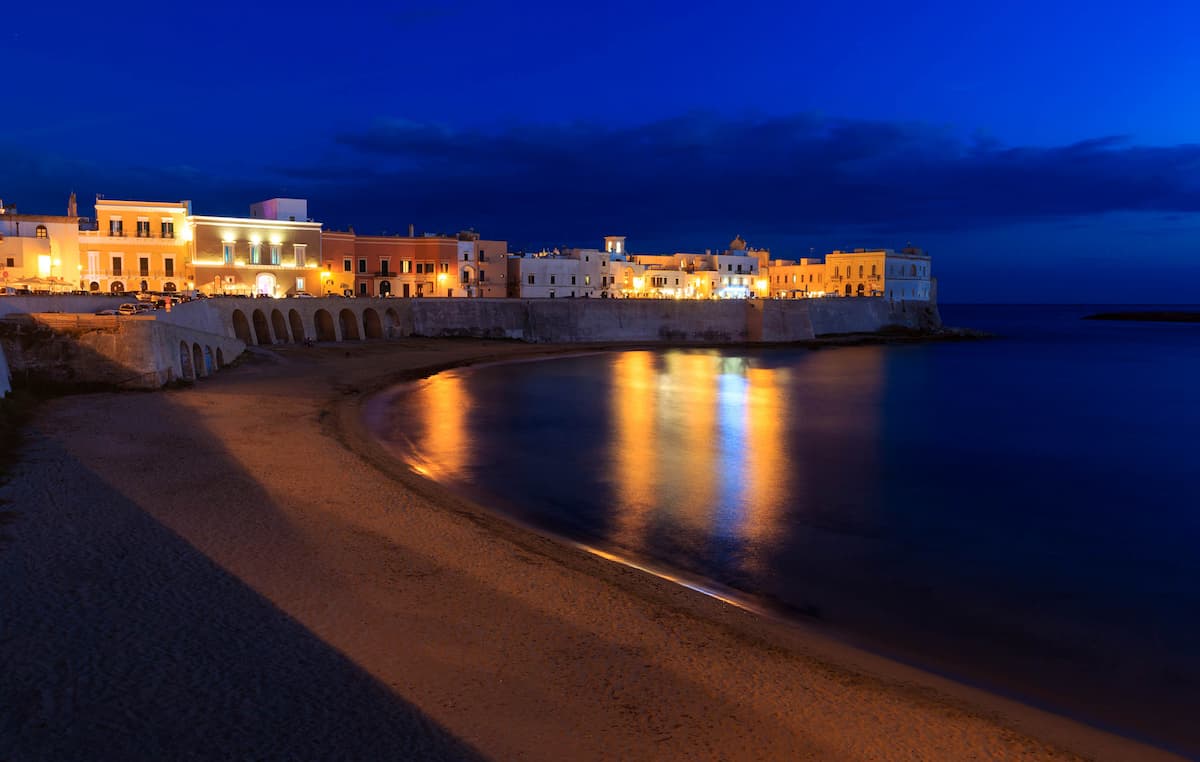
Conclude your Italian journey along Gallipoli’s west-facing coastline, famous throughout the region for offering spectacular sea views. Spend your final afternoon resting on the golden sands of Spiaggia della Purità, a crescent beach tucked right beneath the old city walls, or take a short trip to nearby beach clubs along Baia Verde. As evening approaches, claim an outdoor table at a waterfront bar along the city walls to sip a chilled aperitivo while watching the sun sink directly into the Ionian Sea. It provides a peaceful and memorable finale to a week filled with rich history, stunning landscapes, and unforgettable food.
Italy’s Coastal Escapes: A Guide to the Most Beautiful Towns
Dreaming of an Italian escape? This guide unveils Italy’s most captivating coastal towns, from the iconic Amalfi Coast to hidden gems in Puglia and Sicily. Discover sandy beaches, charming villages, and cultural delights waiting to be explored.
One week in Puglia: practical tips for your itinerary
To make the most of your seven days in Puglia, focus on a well-planned route rather than over-packing your daily schedule with too many stops. Wearing supportive walking shoes is essential, as historic centers are defined by slick limestone pavers, steep stone stairways, and vehicle-free zones that require plenty of walking. If visiting during warmer months, schedule demanding sightseeing for early morning, keeping mid-afternoon free for shaded lunches, museum visits, or coastal dips. Carrying a refillable water bottle and keeping small Euro bills on hand for parking meters and espresso counters will keep your daily routine hassle-free.
Choosing multi-night stays rather than moving accommodation every single night significantly enhances your overall travel experience. Basing yourself in central hubs like Bari, a rural masseria in the Itria Valley, and Lecce allows you to unpack once while taking easy day trips across surrounding areas. Additionally, remain open to adjusting your daily plans based on local recommendations or unexpected discoveries along your route. Whether you stumble upon a village food festival (sagra), an ancient olive oil mill, or a hidden cove, these spontaneous moments often become the highlights of your journey.
When is the best time to spend 7 days in Puglia?
- Late Spring (May to June) & Early Autumn (September to October): The absolute best times for this itinerary. You will enjoy pleasantly warm weather for exploring historic towns on foot, long daylight hours, and comfortable sea temperatures without heavy summer crowds.
- Spring vs. Autumn Vibe: Springtime covers the Itria Valley in blooming wildflowers and lush greenery, while September retains a lively summer atmosphere with warm waters and vibrant evening piazzas.
- Peak Summer (July to August): Great for dedicated beach lovers, but expect scorching heat and heavy domestic tourism, especially in coastal hotspots like Polignano and Gallipoli. Early reservations for hotels, popular restaurants, and beach clubs are mandatory.
- Late Autumn & Winter: Ideal for a quiet, culture-focused getaway. While sea swimming is off the table, you will enjoy peaceful historic monuments, lower accommodation prices, and an authentic glimpse into daily life in cities like Lecce and Bari.

Best Family Holiday Destinations for the May Half Term
As spring unfolds, families across the UK look forward to the Spring Bank Holiday and the May Half Term, a perfect opportunity for a getaway. Italy, with its rich culture, stunning landscapes and family-friendly activities, emerges as an ideal destination for this time of year.
How to get to Puglia with Italo

Starting your Puglian vacation by train provides a smooth and stress-free arrival right into the heart of the region. Italo high-speed trains connect Bari Centrale directly with major Italian hubs including Rome, Florence, Bologna, Milan, and Turin, eliminating the headaches of airport transfers, baggage limits, and rental car pick-up lines. Stepping off the train puts you steps away from Bari’s historic center and regional transport connections, allowing you to begin your travel adventure the moment you step onto the station platform.
In addition to serving main stations along the Adriatic corridor—such as Foggia, Barletta, and Bisceglie—integrated Italo and Itabus connections make reaching further destinations in Salento seamless and straightforward. From Bari, your seven-day itinerary unfolds smoothly southward toward the Itria Valley and Salento’s coastlines. A week may not reveal every hidden corner of the region, but traveling high-speed with Italo ensures you maximize your vacation time, leaving you relaxed and eager to return to the heel of Italy.